What a Trough Idler Does on a Conveyor
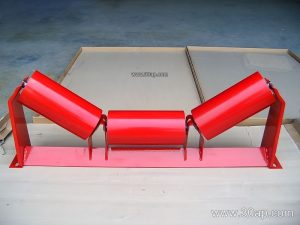
A trough idler is the carrying-side roller assembly that shapes a flat conveyor belt into a shallow trough. By supporting the belt on two or three rolls set at an angle, it keeps bulk material centered and reduces spillage between loading and discharge points. In a quarry or a sand and gravel line, this seemingly simple component directly influences belt tracking, energy draw, and the service life of the conveyor belt itself.
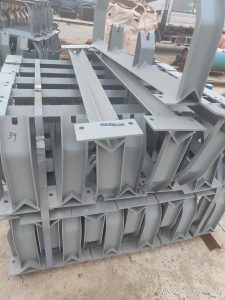
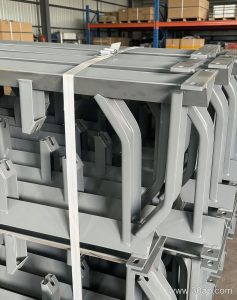
The assembly usually appears as a three-roll troughing set, though two-roll and single-roll versions exist for narrower belts or special duty. The rolls are held in a frame, often called a conveyor bracket, and the whole set is mounted on the conveyor stringer. The term “trough idler” describes the function, while “idler roller” refers to the individual rotating shell inside the set.
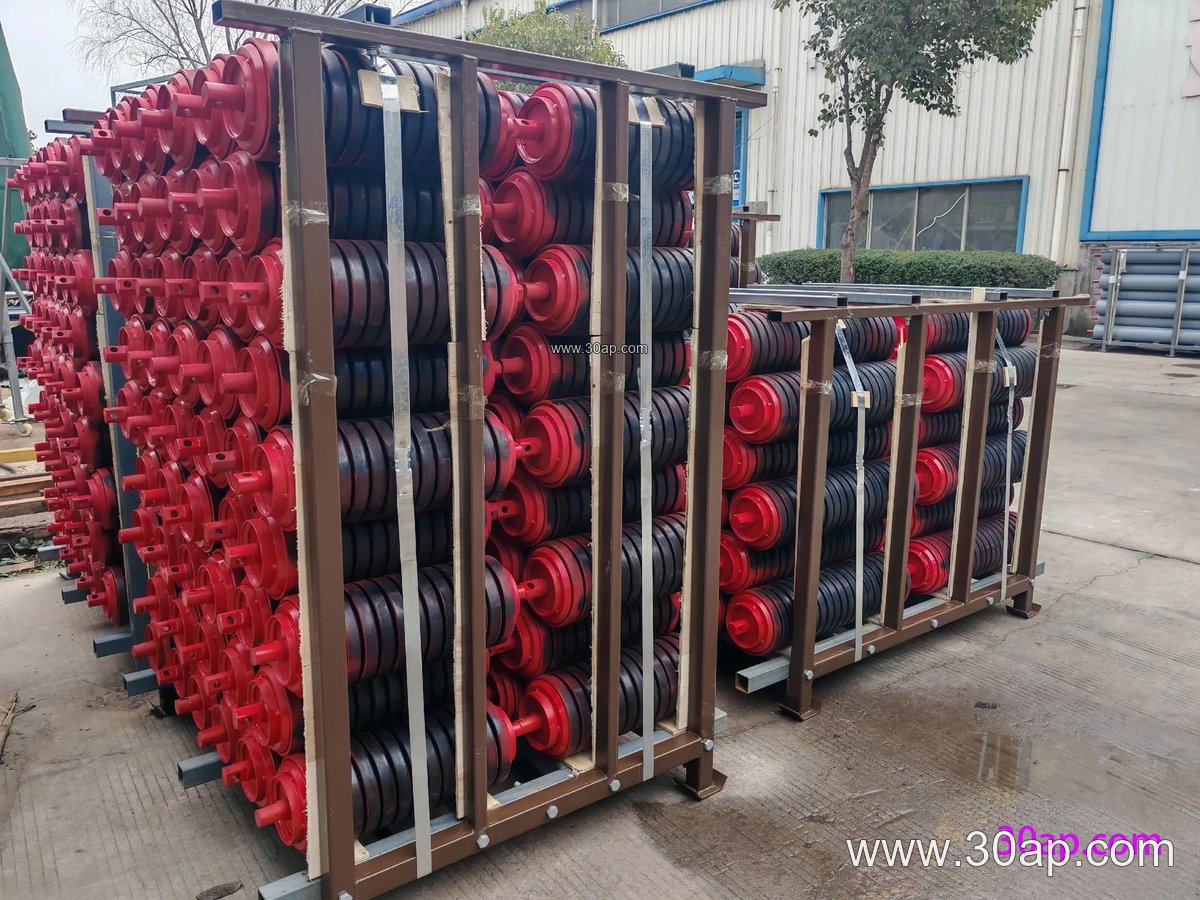
Construction and Common Configurations
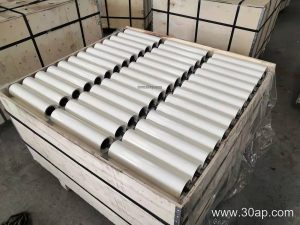
Most trough idlers use steel tubes for the roller shell, fitted with sealed bearings at each end. The shaft is fixed to the bracket, and the shell rotates around it. Roll diameter and bearing size are selected together with belt width, load, and speed; they are not decided by belt width alone. Common roller diameters include Ø89, Ø108, Ø127, Ø133, and Ø159 mm, with larger sizes such as Ø178 and Ø219 mm used in heavy-duty mining and power plant coal handling. Bearings often fall in the 6204 to 6310 range, but the same bearing number can serve more than one roller diameter depending on the duty.
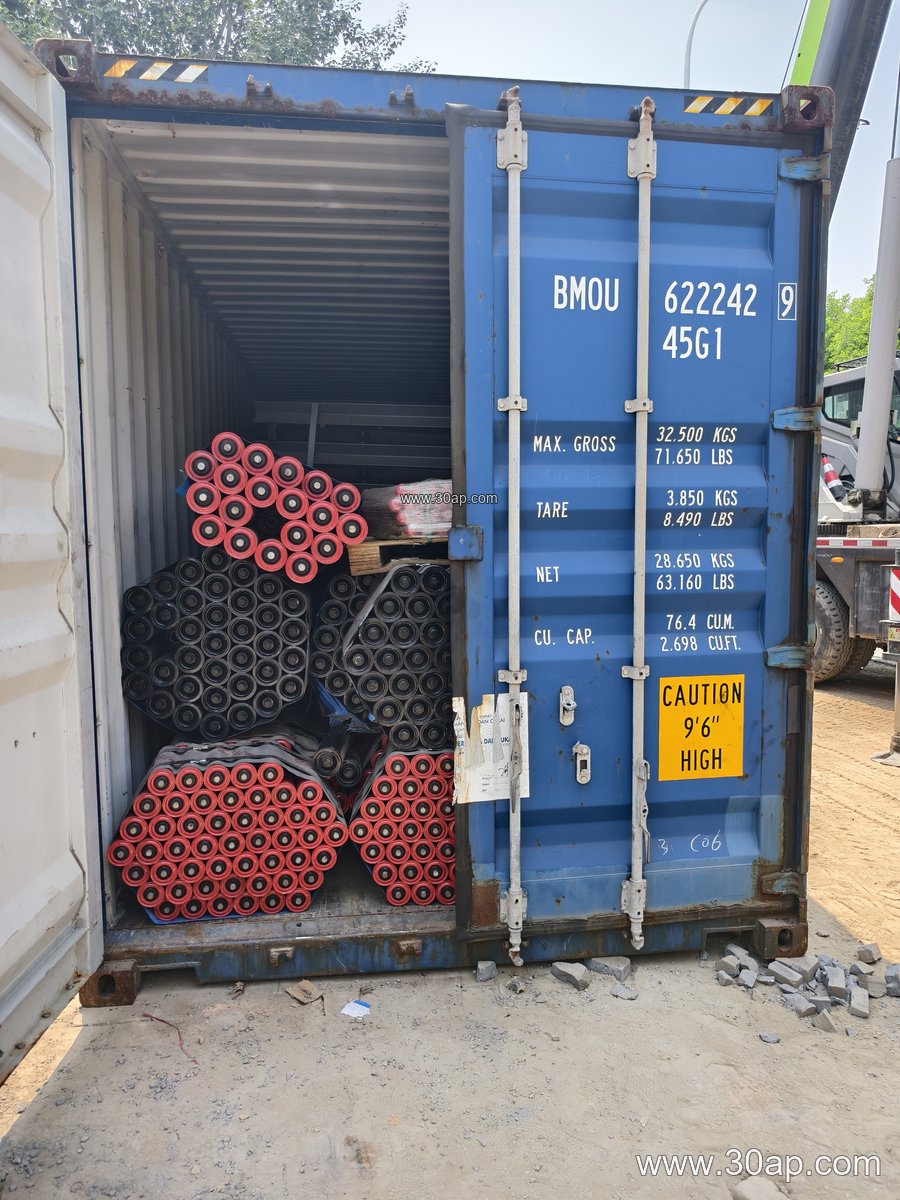
Trough angle is another key variable. A 20-degree set gives a gentle profile for easily spilled materials, while 30, 35, and 45 degrees deepen the trough for higher capacity. The roll length changes with belt width, trough angle, and set arrangement. For example, a three-roll set on a B800 belt commonly uses rolls around 315 mm long, and a B1200 belt around 465 mm. These are reference examples, not fixed rules, because side rolls and center rolls can differ and the final length is set by design.
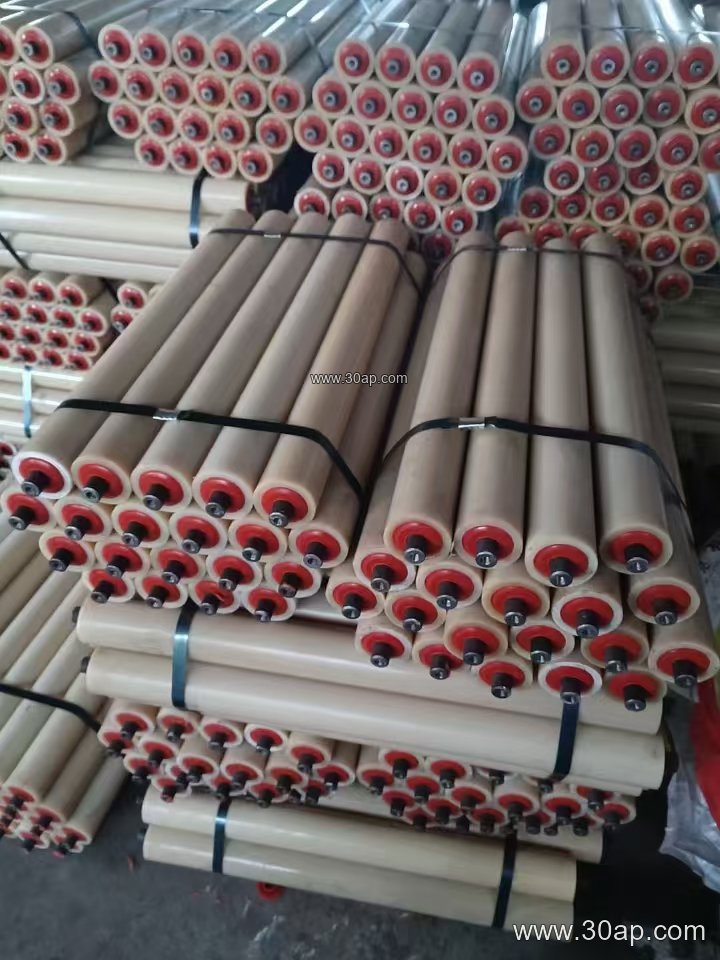
Roll Surface and Sealing Choices
The roller surface may be plain steel, nylon, ceramic, or rubber-covered. Rubber rings are common on impact zones below a crusher or at a transfer point, where lump size and drop height are high. Sealing is equally important in dusty plants: a good labyrinth seal keeps fines out of the bearing cavity and extends idler life in cement plants, coal yards, and iron ore terminals.
Where Trough Idlers Fit in the Conveyor Line
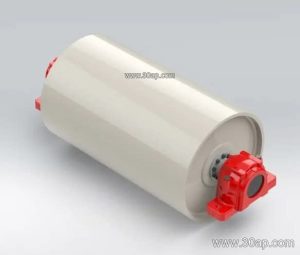
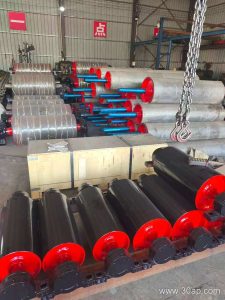
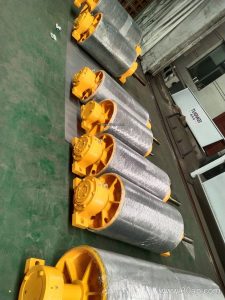
These idlers sit on the carrying run, between the tail pulley and the drive pulley. They are not a substitute for a bend pulley or a tail pulley; those pulleys change belt direction, while trough idlers support the loaded belt. In a typical stone crushing line, trough idlers carry the crushed rock after the crusher and before the screen. In a coal mining conveyor, they support the belt on the surface run and in the transfer house.
The belt itself may be an EP conveyor belt, a steel cord conveyor belt, or a flame retardant conveyor belt for underground service. A heavy-duty mining conveyor belt with high abrasion resistance is often paired with reinforced idler frames, but the idler selection still follows load and speed rather than belt brand alone. For sticky materials, a self-cleaning arrangement or a spiral roller may be considered, while a rubber disc return roller is a different component for the return run.
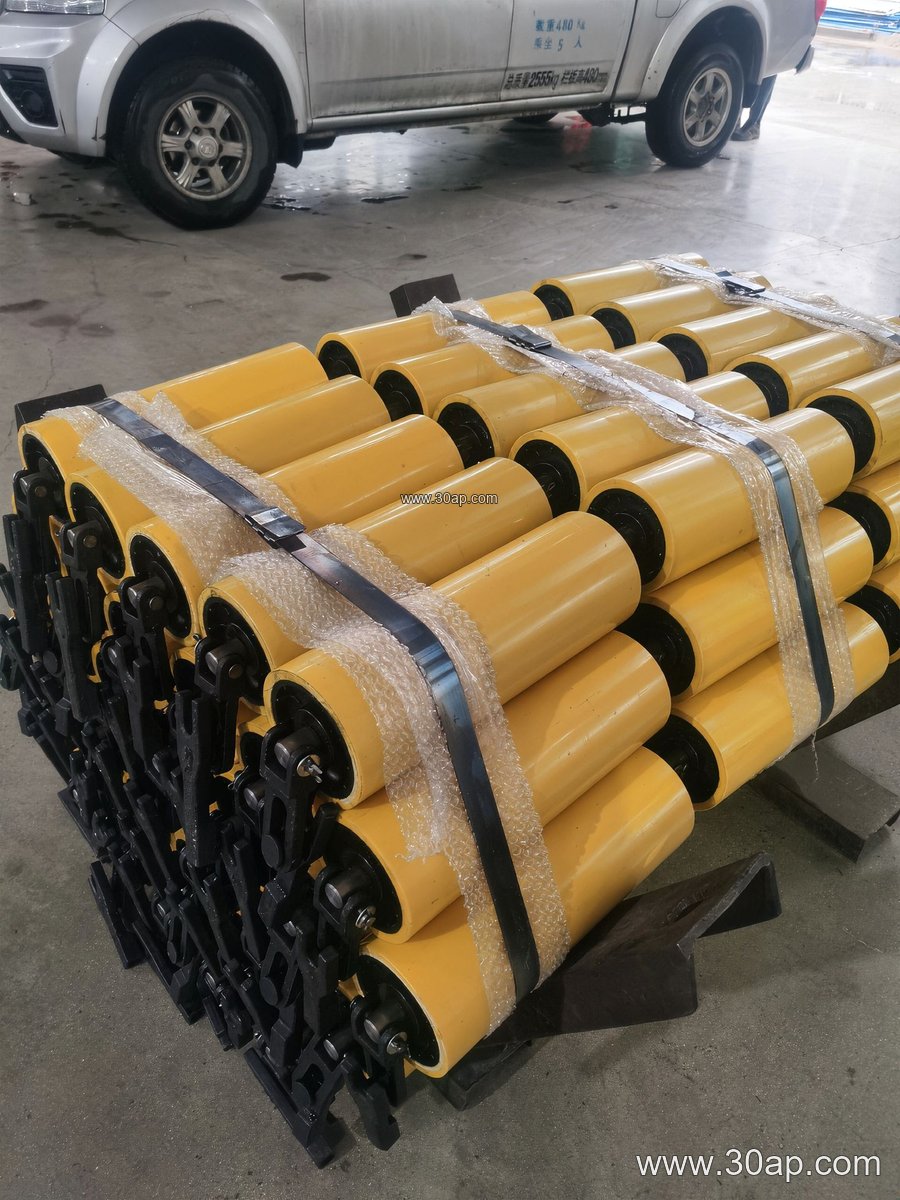
Buyer Checklist for Trough Idler Sets
- Confirm belt width and trough angle before choosing roll length; B650, B1000, and B1400 belts each need a different frame geometry.
- Match roller diameter to load and speed, not to belt width alone. Ø108 and Ø133 mm are common mid-range choices; Ø159 mm and above suit high-tonnage duties.
- Specify the bearing class and sealing type for the site conditions, especially in cement, fertilizer, and port dust.
- Check bracket dimensions and mounting hole spacing against the existing conveyor stringer.
- Decide whether standard steel rolls, rubber-ring impact rolls, or ceramic-covered rolls best fit the loading zone.
For a complete conveyor system, trough idlers work alongside the conveyor pulley, the conveyor belt, and the conveyor bracket. A buyer who treats them as a matched set usually avoids tracking problems and premature belt edge wear. More details on idler roller and conveyor pulley matching can be reviewed at www.beltconveyoridler.com, and related conveyor belt options are listed at www.beltconveyoridler.com/conveyor-belt.
Maintenance Notes
Inspect trough idlers for seized bearings, worn shells, and loose brackets. A failing roller often shows up as a hot bearing housing or a belt that begins to wander. Replacing a single damaged roll is possible on many frames, but in dusty service it is often practical to replace the full set when several rolls show wear. Keep spare rolls in common diameters such as Ø108 and Ø133 mm to reduce downtime in a busy quarry or power plant.