What a Five-Roll Idler Bracket Does
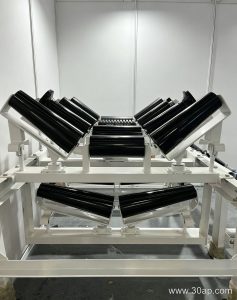
A five-roll idler bracket is the support frame that holds five idler rollers in a single troughing station. Instead of the usual three rolls, the assembly carries two additional rolls, which lets the conveyor belt form a deeper, more enclosed trough. On a bulk material conveyor, that deeper profile keeps material centered and reduces spillage, especially where the belt is wide and the load is heavy. The bracket is a structural part, not a wear part, so it is usually built to outlast several sets of rollers. In a quarry conveyor line or a cement plant transfer point, it is often one of the first components chosen when engineers want a smoother trough transition and better belt guidance.
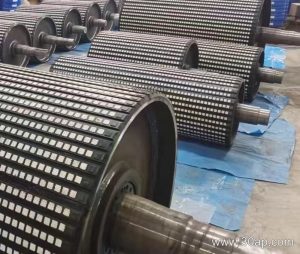
Buyers sometimes confuse the terms. A five-roll idler bracket is also called a five-roll troughing bracket or a five-roll idler support frame. These names describe the same product. They are not the same as a bend pulley or a drive pulley, which are separate conveyor pulley components.
How the Bracket Is Built
Most five-roll idler brackets are fabricated from angle steel, channel steel, or folded steel plate. The frame has a central section and two outer wings, each drilled or slotted for idler mounting. The wings are set at fixed or adjustable angles so the five rolls form a smooth, continuous trough curve. A typical arrangement uses a shallow center pair and steeper outer pairs, which avoids sharp belt bending at the joints.
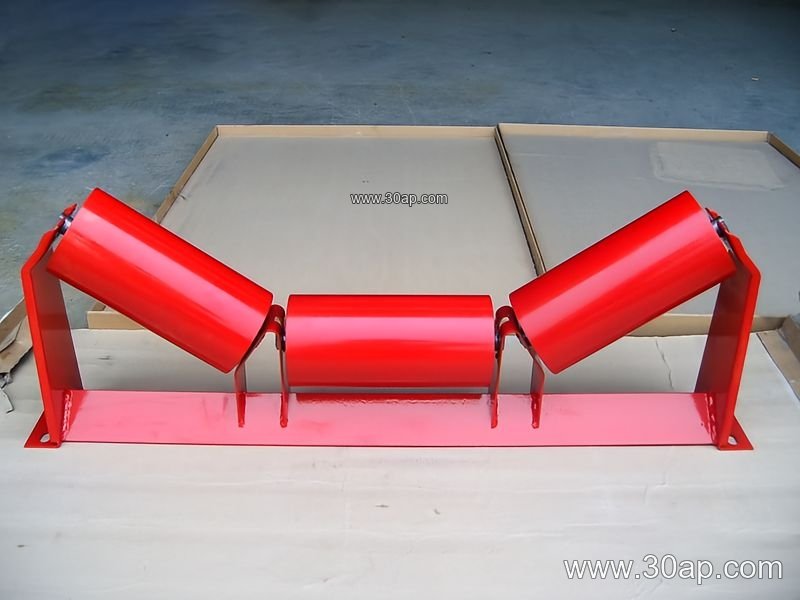
- Material: angle steel, channel steel, or bent steel plate, welded or bolted
- Trough angle: commonly 20°, 30°, 35°, or 45° for the outer rolls
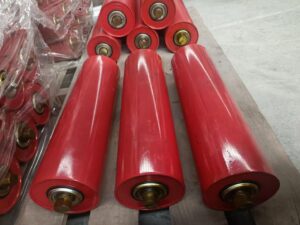
- Roller diameter: often Ø89, Ø108, Ø133, Ø159, or Ø194, selected by load and belt speed
- Mounting: slotted holes for adjustment, or fixed holes for repeatable alignment
- Finish: painted or galvanized, depending on the plant environment
On adjustable versions, the wing angle can be set within a range, so the same bracket family can serve several trough profiles. Fixed brackets are simpler and stiffer, and they suit lines where the trough angle never changes. The mounting hole spacing and crossbeam length are determined by belt width and trough angle, so they should be confirmed with the supplier rather than assumed.
Where Five-Roll Stations Are Used
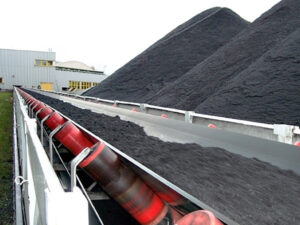
Five-roll idler brackets appear where the belt is wide and the material is loose or abrasive. In a coal handling plant or a power plant coal yard, the deeper trough helps contain dust and reduces spillage at transfer points. In an iron ore or copper ore operation, the extra rolls spread the load and lower the stress on each idler roller. Aggregate and sand plants also use them on wide belt sections feeding crushers and screens.
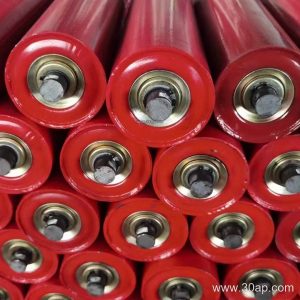
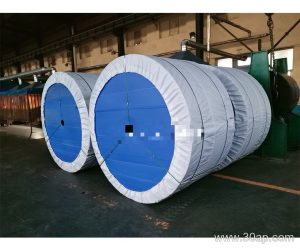
The bracket works with the belt, not on its own. A heavy-duty mining conveyor belt with good transverse rigidity will hold the five-roll profile better than a light fabric belt. For long overland lines, a steel cord conveyor belt is common, while shorter plant lines may use an EP conveyor belt or NN conveyor belt. Abrasion resistant and flame retardant grades are typical in coal and cement service, and a heat resistant conveyor belt is used near kilns or clinker coolers. The bracket itself must be matched to the belt width, the roller diameter, and the load per station.
Selection Notes for Buyers
Start with the belt width and the required trough angle, then check the roller diameter and the load rating of each idler roller. A five-roll bracket is not automatically better than a three-roll bracket; it adds hardware and cost, and it only pays off when the wider, deeper trough improves material containment or belt tracking. For comparison, a three-roll troughing bracket is lighter and simpler, and it remains a good choice on narrow belts and moderate loads. A transition bracket or a buffer bracket may still be needed near the tail and loading points.
Ask for the bracket drawing with hole spacing, wing angle, and crossbeam length. Confirm the steel section and the finish, and check that the bracket matches the idler roller shaft ends. On site, keep the mounting bolts tight and inspect for bent wings after impacts; a distorted bracket will misalign the rollers and shorten belt life. Spare brackets stored with the idlers make maintenance faster during shutdowns.
For matching belts and rollers, see the conveyor belt and idler roller ranges at conveyor-belt-idler.com, and check the conveyor bracket options before ordering a full station set.