What a Ceramic Lagged Bend Pulley Does
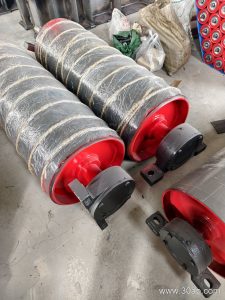
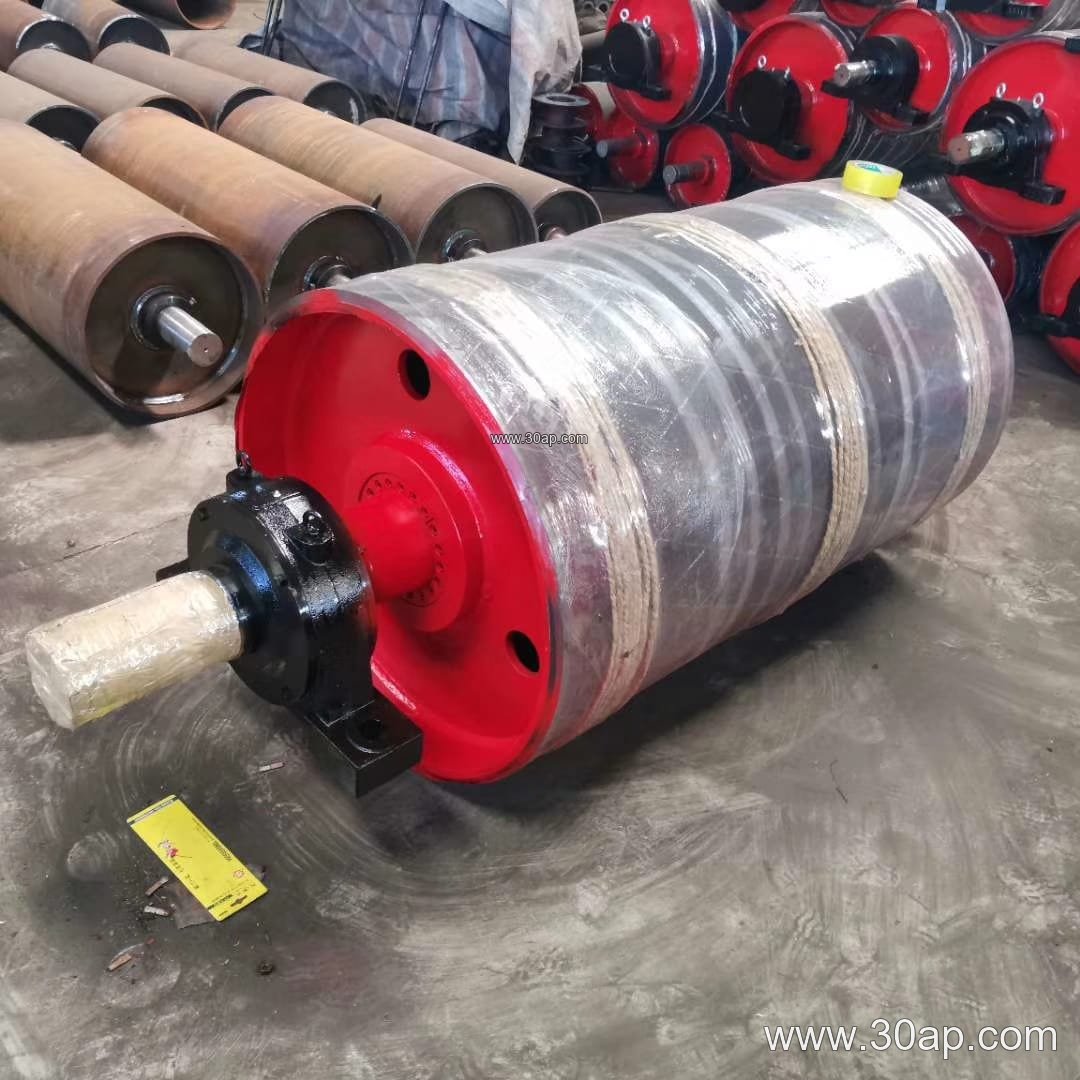
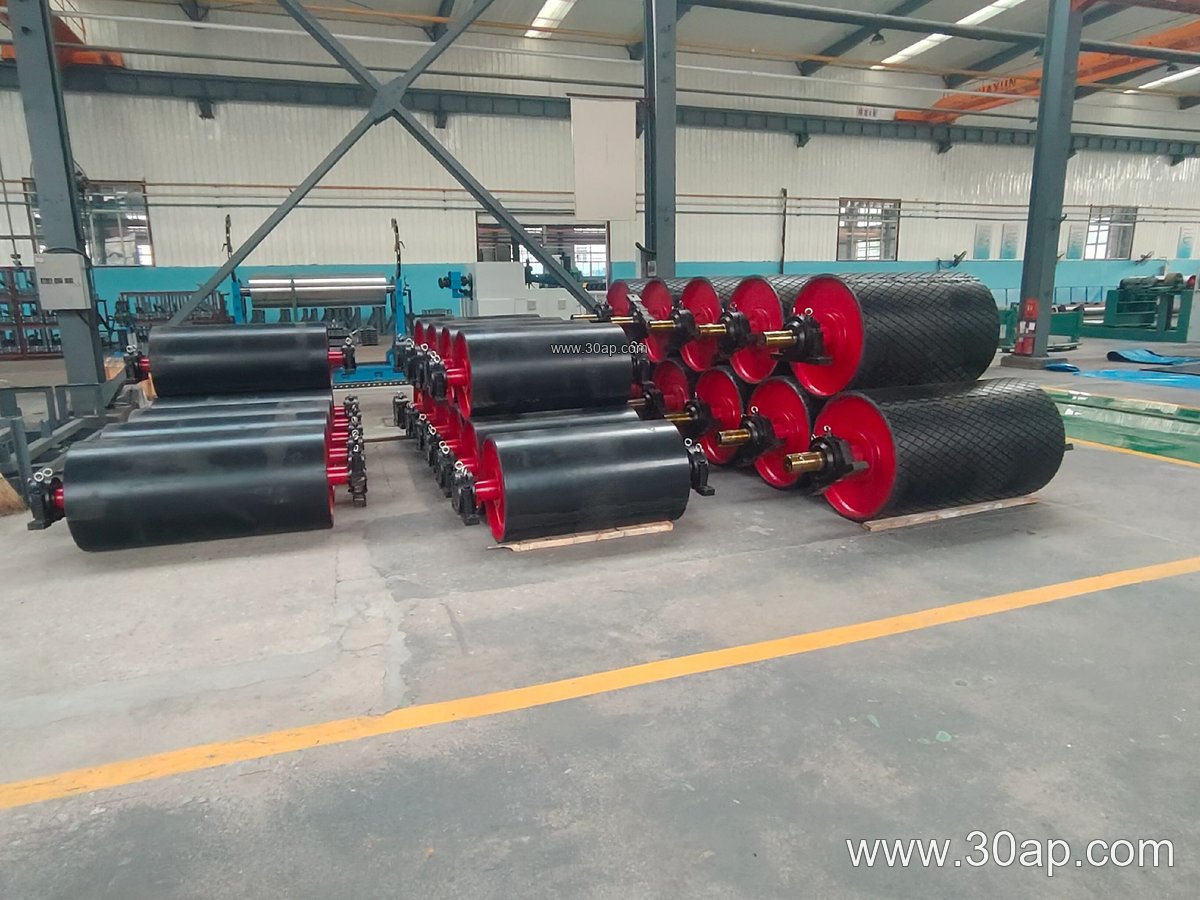
A ceramic lagged bend pulley is a direction-changing pulley used on a belt conveyor to guide the conveyor belt around a curve without driving the belt. It sits between the drive pulley and the tail pulley, often near the take-up or tensioning zone, and its ceramic lagging provides grip and wear resistance where the belt wraps at a relatively low arc of contact. Unlike a drive pulley, which transmits torque, or a tail pulley, which redirects the belt at the loading end, the bend pulley simply changes the belt path. This makes it a supporting component in bulk material handling across quarries, coal washing plants, cement clinker lines, and power station coal yards.
How the Ceramic Lagging Is Built
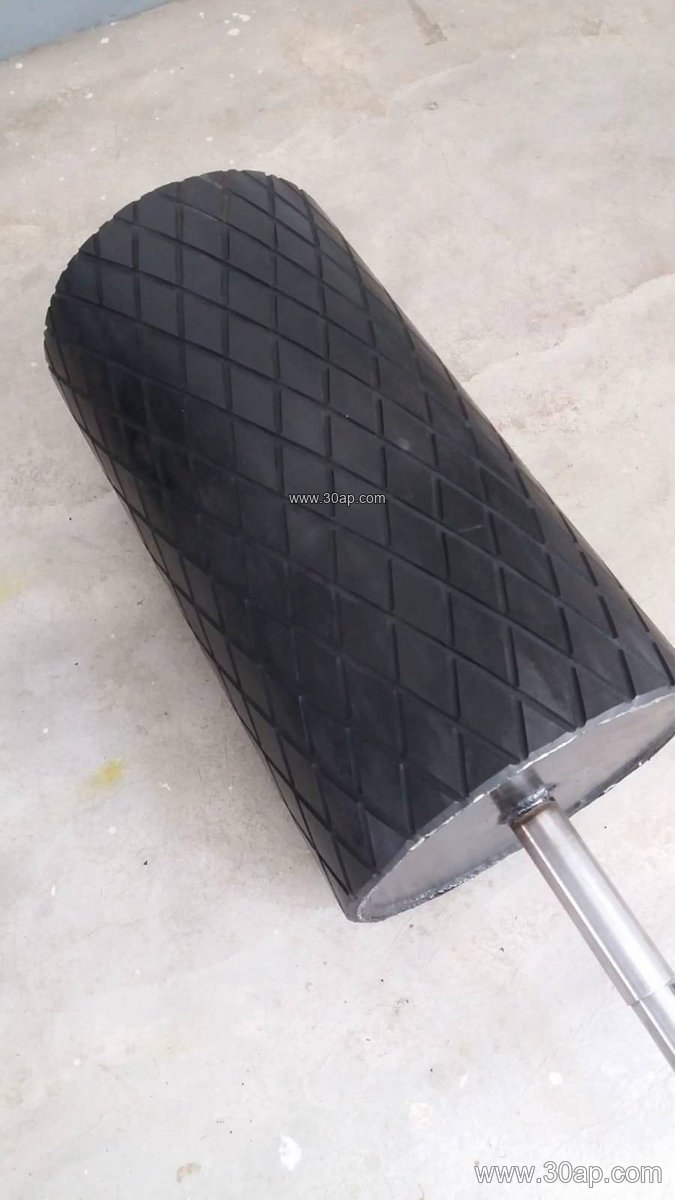
The pulley body is typically a welded steel drum with a machined face. Ceramic lagging is applied as tiles or strips embedded in a rubber or epoxy backing, then bonded to the drum surface. The ceramic elements are hard and abrasion resistant, which helps the pulley cope with fine abrasive dust and occasional slip without grooving the shell. Common lagging thicknesses are 8, 10, 12, 15, and 20 mm, selected according to belt tension and ambient conditions. The ceramic pattern can be flat or profiled, and the tile spacing is designed to allow debris to clear rather than pack into the surface.
Where It Fits on the Conveyor
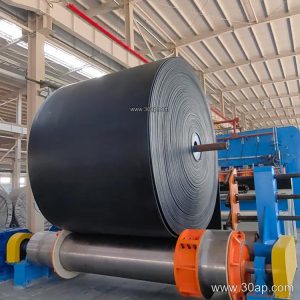
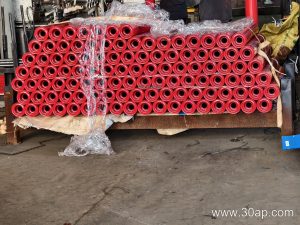
On a typical conveyor, the ceramic lagged bend pulley is mounted on a conveyor bracket and supported by a shaft sized for torque and radial load. It may be used to route the belt around a drive station, to increase wrap angle on a drive pulley, or to guide the return strand. In a quarry conveyor line handling crushed rock, or in a cement plant moving clinker, the bend pulley often works alongside idler rollers and a heavy-duty conveyor belt. The ceramic surface is especially useful when the belt carries abrasive fines that would otherwise polish a plain steel drum.
Common Sizes and Configuration Notes
Bend pulleys are made to match belt width and conveyor layout. The table below gives typical reference combinations; final dimensions are confirmed by the conveyor designer.
| Belt width | Typical pulley face width | Example diameter | Common lagging thickness |
|---|---|---|---|
| B500 | ≈600 mm | Ø315 or Ø400 | 8–12 mm |
| B650 | ≈750 mm | Ø400 or Ø500 | 10–15 mm |
| B800 | ≈950 mm | Ø500 or Ø630 | 10–15 mm |
| B1000 | ≈1150 mm | Ø630 or Ø800 | 12–15 mm |
| B1200 | ≈1400 mm | Ø800 or Ø1000 | 12–20 mm |
| B1400 | ≈1600 mm | Ø1000 or Ø1250 | 15–20 mm |
Face width is usually slightly wider than the belt to allow for misalignment. Shaft diameter is determined by the torque and load at that location; it is not tied to belt width alone. For example, a B1200 conveyor may use a bend pulley with a Ø1000 shell and a shaft in the Ø120–Ø160 range, but the exact value comes from the conveyor calculation.
Buyer Checklist for Ceramic Lagged Bend Pulleys
- Confirm the pulley’s role: bend, take-up, or snub. Drive and tail pulleys are separate items with different design loads.
- Check belt width, pulley face width, and required diameter against the conveyor layout.
- Specify lagging thickness and ceramic pattern based on abrasion and slip risk.
- Provide shaft size, bearing type, and bracket interface so the pulley fits the existing conveyor frame.
- Match the pulley to the conveyor belt type in use, such as an abrasion resistant conveyor belt or a flame retardant conveyor belt for coal mining conveyors.
Maintenance and Compatibility
Ceramic lagging is durable, but it should be inspected for cracked or missing tiles, especially in high-dust areas. Keeping the belt tracking straight reduces edge wear on the ceramic surface. The bend pulley works with the conveyor belt and idler rollers to maintain belt tension and alignment; it does not replace the drive pulley or tail pulley. When selecting a replacement, record the shell diameter, face width, shaft diameter, and lagging thickness from the nameplate or measurement. For conveyors handling sticky or wet material, a smooth ceramic surface may clear better than a deep profile. In coal mining or underground mining conveyors, flame retardant and anti-static properties of the belt are separate considerations from the pulley lagging, and each component should be specified for its own duty.