What a Conveyor Support Leg Does
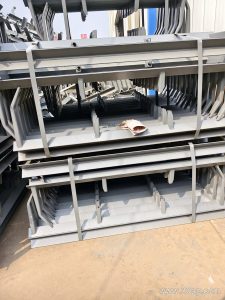
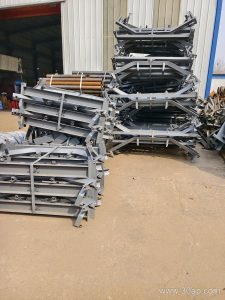
A conveyor support leg is the vertical structural member that carries the weight of a belt conveyor’s idler frames, rollers, and material load down to the floor, foundation, or steel structure. In a typical trestle or gallery section, these legs stand in pairs and connect to a cross beam that holds the idler roller set. The leg is therefore a small part of the conveyor, but it controls alignment, height, and the stability of the whole carrying run. In a quarry or a cement plant, a weak or poorly anchored leg can show up quickly as belt misalignment, frame vibration, and uneven wear on the conveyor belt.
The same component is often called a conveyor support stand, a belt conveyor leg, or a support column for the idler frame. These names describe the same product; they are not different equipment categories.
How the Leg Is Built
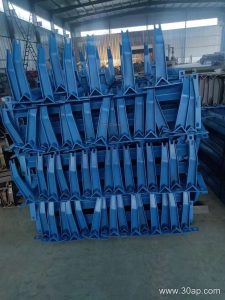
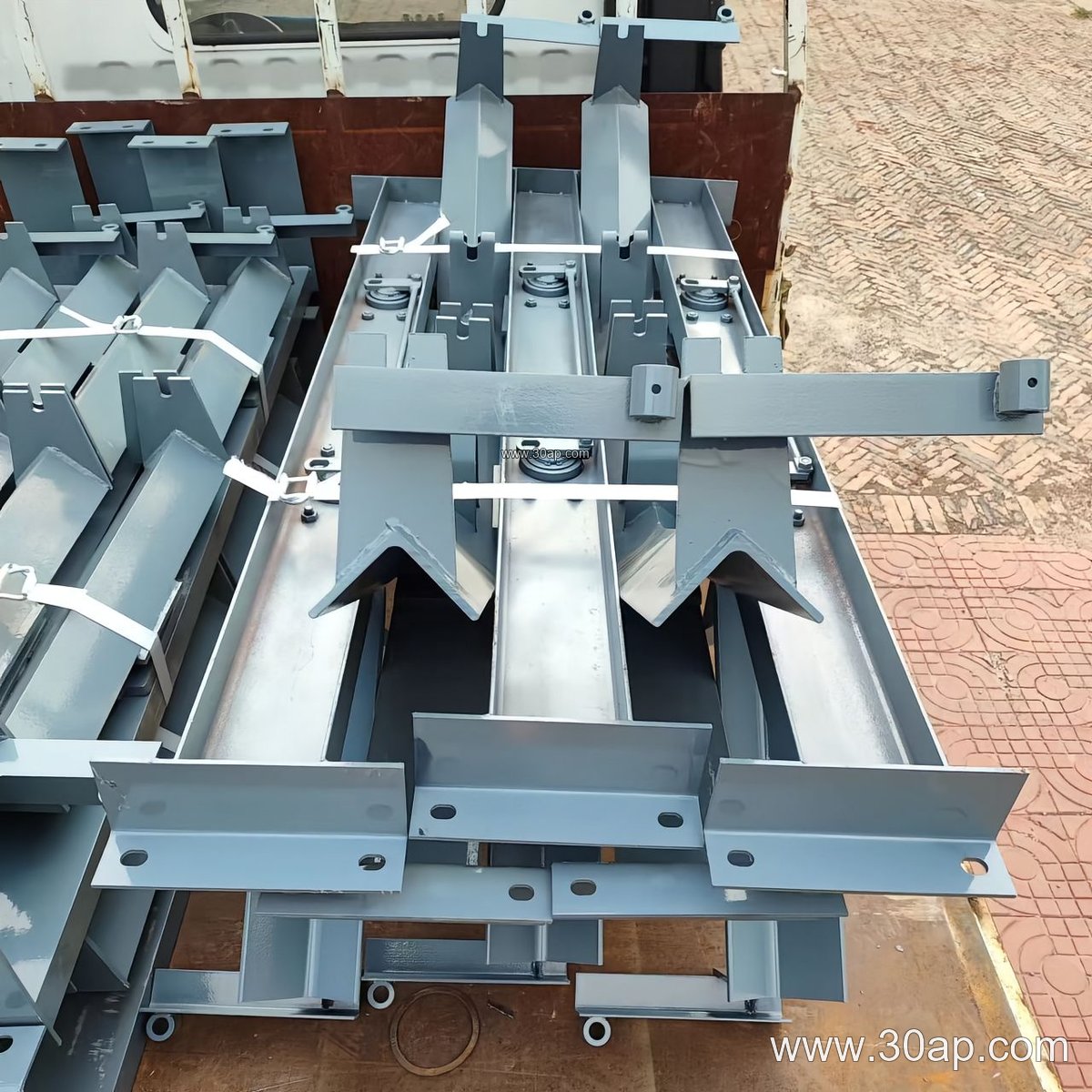
Most support legs are fabricated from angle steel, channel steel, or folded steel plate. The choice depends on load and height. Light sections on a small aggregate conveyor may use angle steel, while a heavy-duty mining conveyor with wide belt and large rollers usually needs channel or folded plate legs with gusseted feet.
Typical features include:
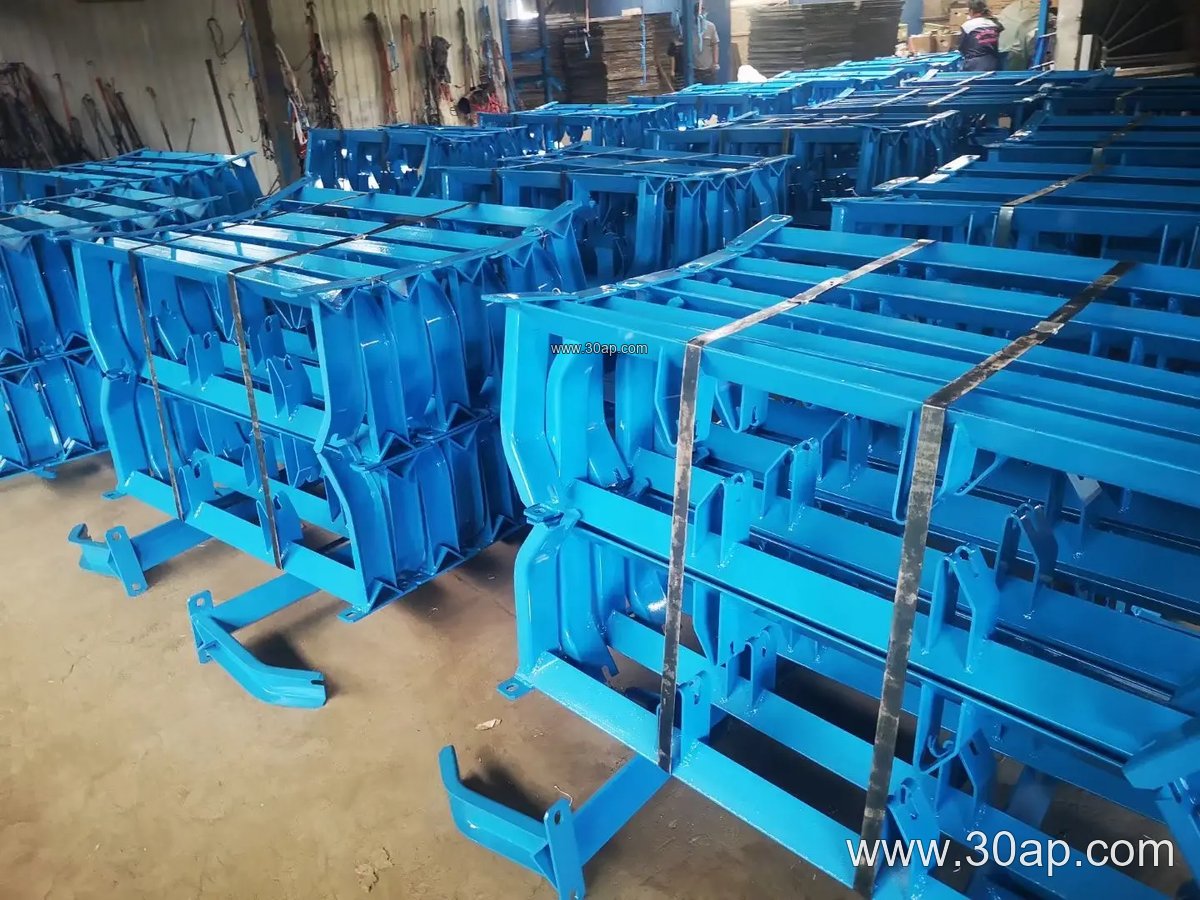
- A base plate with bolt holes for anchor bolts or welded connection to a steel structure
- A top plate or bracket that receives the cross beam or the conveyor bracket for the idler frame
- Stiffening ribs where the leg meets the beam, to resist bending
- Slotted or adjustable holes on some designs, so the frame height can be trimmed on site
Surface treatment is usually painted or hot-dip galvanized for outdoor duty. In a power plant coal yard or a port terminal, galvanizing is common because of moisture and dust.
Where Support Legs Are Used
These legs appear wherever a belt conveyor is elevated above ground. In a limestone mine, they carry the transfer sections between the crusher and the stockpile. In a sinter plant or steel plant, they support conveyor lines that run above walkways and equipment. In a sand and gravel line, shorter legs are common on modular frames, while long-span trestles use taller braced legs.
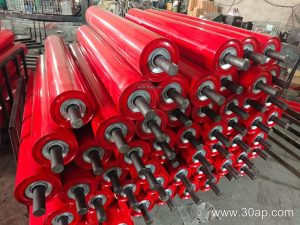
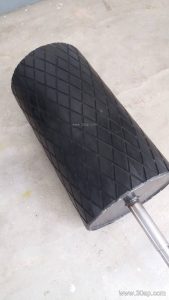
The leg works together with the idler roller, the conveyor pulley at the drive and tail ends, and the belt itself. A drive pulley, tail pulley, and bend pulley each have their own support structure; the leg is not a substitute for any of them. It simply carries the intermediate idler frames along the run.
Matching the Leg to Belt Width and Roller Size
Selection usually starts from belt width, trough angle, and roller diameter. These values set the cross beam length and the height of the leg top, and they also affect the load on each leg. Common belt widths range from B500 up to B2200, with B800, B1000, B1200, and B1400 being frequent in bulk handling. Trough angles of 20, 30, 35, and 45 degrees are typical, and adjustable frames can move between these angles. Roller diameters such as Ø89, Ø108, Ø133, Ø159, and Ø194 are matched to belt width and load, but there is no fixed one-to-one rule between a belt width and a single roller diameter. The table below shows reference combinations only; final values are set by design.
| Belt width | Trough angle | Roller diameter | Typical leg note |
|---|---|---|---|
| B650 | 30 degrees | Ø89 | Light frame, angle steel leg |
| B800 | 35 degrees | Ø108 | Standard aggregate line |
| B1000 | 35 degrees | Ø108 or Ø133 | Medium duty, braced leg |
| B1200 | 45 degrees | Ø133 | Heavy load, channel leg |
| B1400 | 35 degrees | Ø159 | Mining and port duty |
| B1800 | 45 degrees | Ø194 | Wide belt, folded plate leg |
Installation hole spacing and beam length change with belt width and trough angle, so these should be confirmed from the drawing rather than assumed.
Fixed, Adjustable, and Special Legs
A fixed leg is welded or bolted to a set height. An adjustable support leg uses slotted holes or a telescopic section so the frame height and sometimes the trough angle can be corrected after installation. Transition legs near the tail pulley often differ in height from the standard carrying legs, and impact legs under a loading point may be shorter and stiffer to resist shock from lump material.
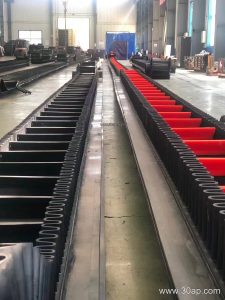
On a chevron conveyor belt or a corrugated sidewall conveyor belt line, the leg height must also clear the cleats and sidewalls, so the frame geometry is checked carefully. The same applies to a pipe conveyor belt, where the idler frame shape is different and the leg top plate is designed for that frame.
Buyer Checklist
- Confirm belt width, trough angle, and roller diameter before ordering legs
- State the mounting method: anchor bolts, welded base, or bolted to steel structure
- Ask for the load rating and the design height range
- Check surface treatment for the site: indoor, outdoor, wet, or dusty
- Request drawings showing hole spacing and beam connection
For a coal mining conveyor belt line or an iron ore conveyor, the leg is a low-cost item that protects far more expensive parts. A properly sized support leg keeps the idler roller square to the belt, reduces edge wear, and helps the conveyor pulley and belt run true. More selection notes for belt conveyor components are available at ppconveyor.com, and buyers comparing frames often review idler and bracket options alongside the leg design.