What a Conveyor Side Guide Roller Does
A conveyor side guide roller is a small but hardworking component mounted along the edges of a conveyor belt, usually just ahead of the loading point or on the approach to a transfer chute. Its job is to keep the belt centered, stop it from wandering onto the structure, and protect the belt edges from rubbing against brackets and frames. In a quarry or a cement plant, a belt that drifts even a little can quickly damage the edge, spill material, and force unplanned stoppages. The side guide roller acts as a gentle, rotating stop that absorbs that sideways movement instead of letting the belt grind against steel.
It is not a drive pulley, a tail pulley, or a bend pulley. Those components transmit power and change belt direction, while the side guide roller is a guidance device that rotates freely on its own shaft. It is also different from a standard carrying idler roller that supports the belt from below. The side guide roller sits at the belt edge, often vertically or at a slight angle, and its only task is lateral control.
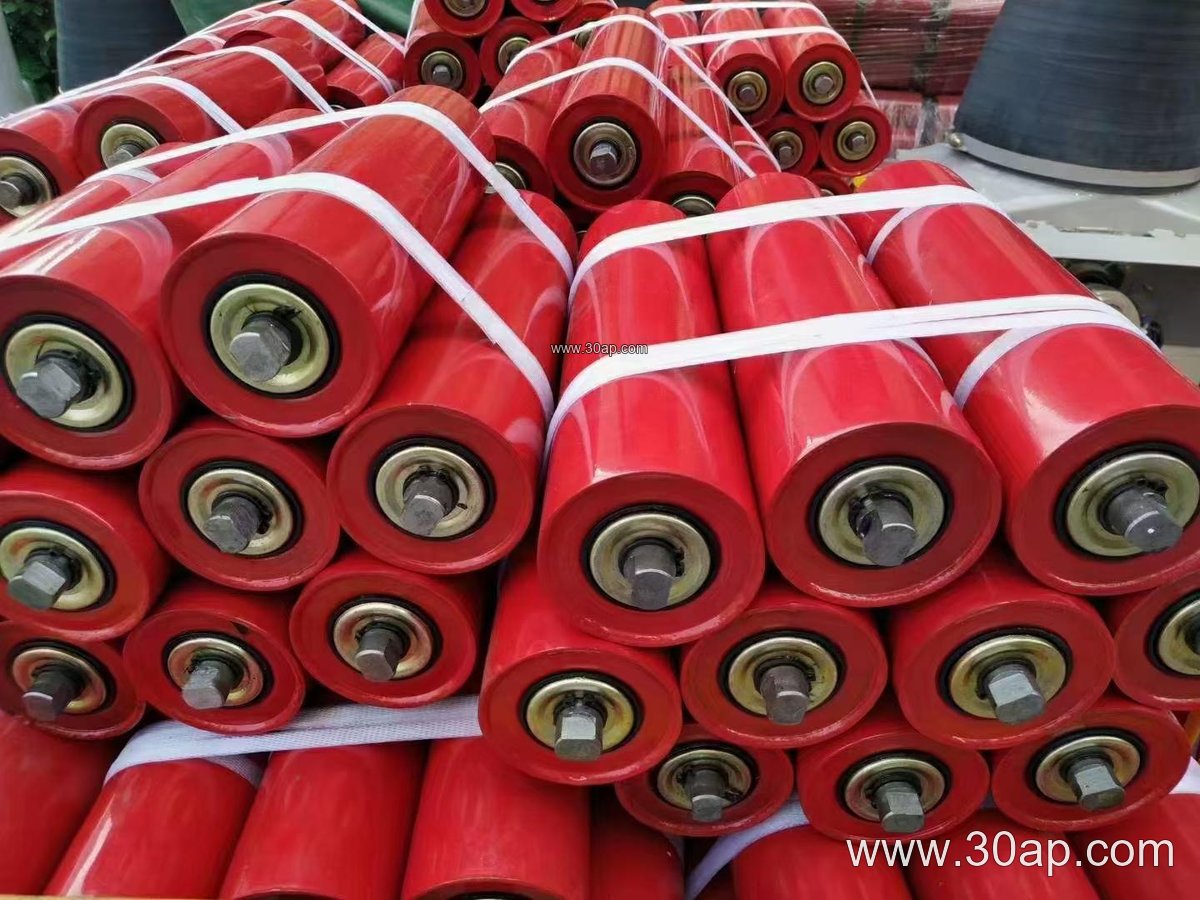
Construction and Typical Forms
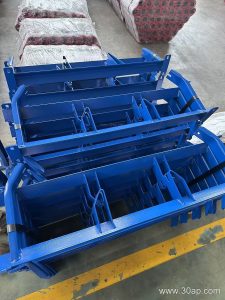
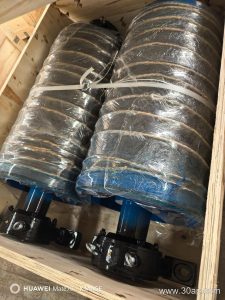
Most units are built around a steel tube shell fitted with sealed bearings, a fixed shaft, and a mounting bracket that bolts to the conveyor frame. The roller surface may be plain steel, nylon-coated, or covered with a rubber ring to reduce edge wear. Sealed bearing housings matter in dusty environments such as a coal handling system or a limestone crushing line, where fine particles would otherwise shorten service life.
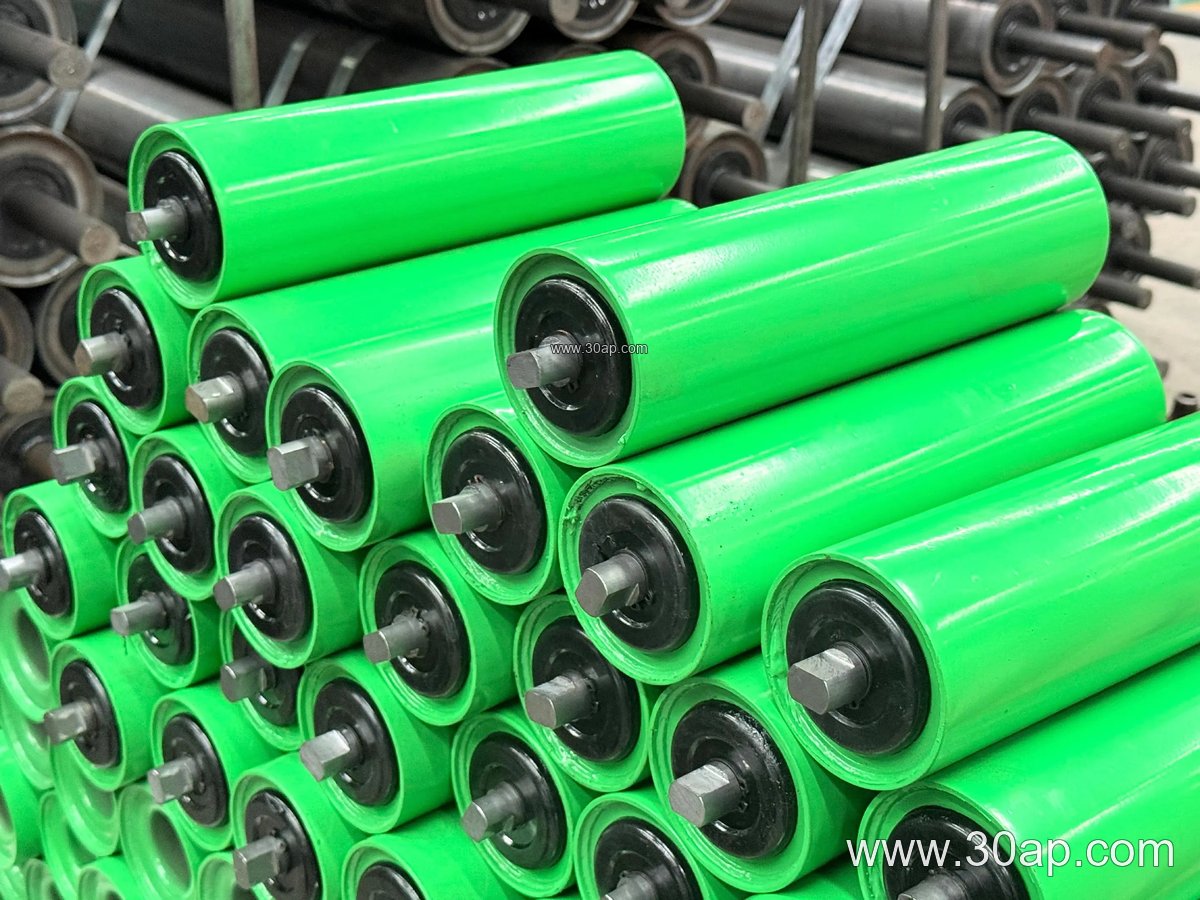
Common roller diameters for guide duty follow the general idler range, for example Ø63, Ø76, Ø89, Ø102, and Ø108 mm. Bearing selection is matched to load and speed rather than to one fixed roller size; 6204, 6205, and 6305 are frequently seen, with larger bearings used where the guide roller carries more side load. The table below gives reference values only, and final dimensions are confirmed by design.
| Reference item | Typical range (reference only) |
|---|---|
| Guide roller diameter | Ø63, Ø76, Ø89, Ø102, Ø108 mm |
| Roller surface | Steel tube, nylon, rubber ring |
| Bearing options | 6204, 6205, 6305, 6306 |
| Mounting | Bolted bracket, adjustable arm |
| Belt width served | B400 to B2400, selected by layout |
The length of the roller and the shaft diameter are determined by belt width, belt tension, and the bracket design, not by a single formula. A 650mm or 800mm belt may use a compact guide roller, while a 1400mm or 1800mm wide belt on a high-tonnage line generally needs a heavier bracket and a larger shaft. Buyers should always share the belt width, belt speed, and mounting space so the supplier can propose a suitable unit.
Where It Fits in the Plant
Side guide rollers appear in almost every bulk handling circuit. In a coal mining conveyor or a power plant coal yard, they keep the belt aligned as it enters the loading zone. In a sand and gravel line, they protect the belt edge near the crusher discharge. In a port ship loading system, they help a long inclined belt stay centered under wind load and uneven feed. They are equally useful on a Rubber Conveyor Belt carrying aggregate and on a heavy-duty Steel Cord Conveyor Belt moving iron ore at high tension.
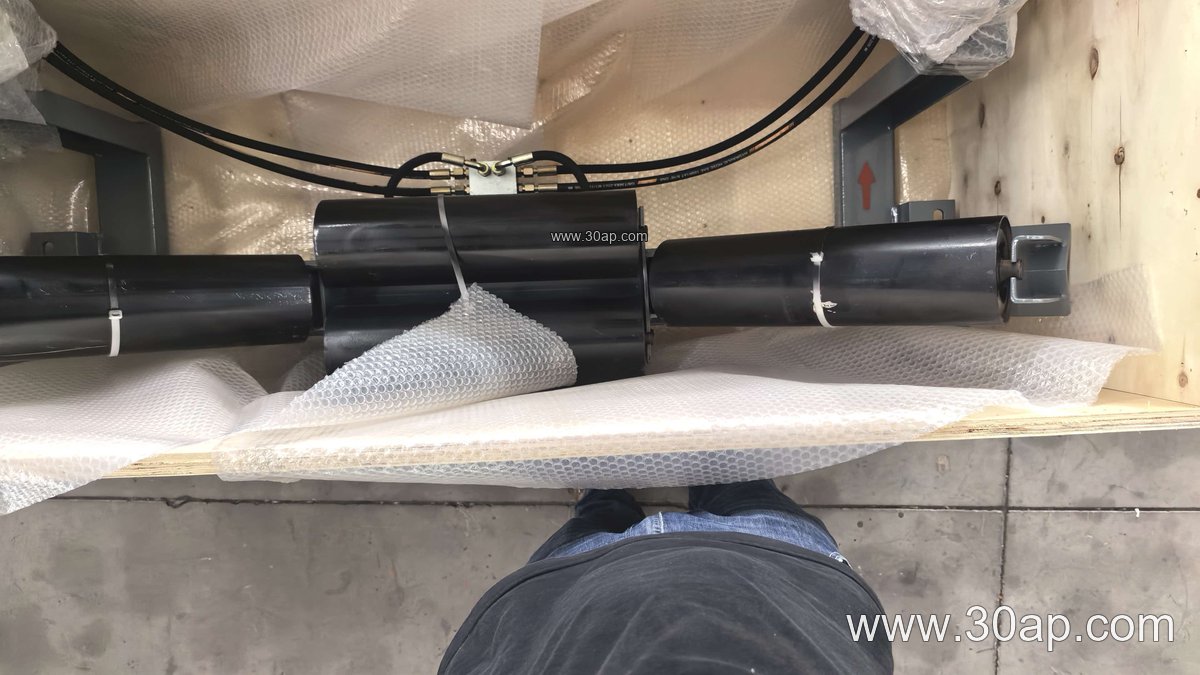
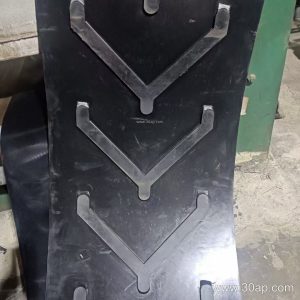
Because the guide roller contacts the belt edge, the belt construction matters. A EP Conveyor Belt with a tough edge will tolerate more contact than a thin fabric carcass. A Chevron Conveyor Belt on an incline may need extra clearance so the cleats do not strike the guide roller. On a Heat Resistant Conveyor Belt in a sinter plant, the guide roller should be positioned away from the hottest zone to avoid bearing grease breakdown.
Selection and Maintenance Notes
- Check the mounting position first: the guide roller should touch the belt edge lightly, not press hard against it.
- Match the roller diameter and bearing to the side load and belt speed expected at that point.
- Use a rubber-ring or nylon surface where belt edge wear is a concern.
- Inspect for flat spots, seized bearings, and loose brackets during routine walks.
- Keep the roller aligned with the belt path so it guides rather than pushes.
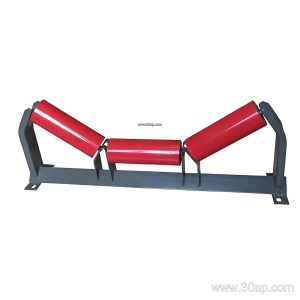
A well-chosen conveyor side guide roller is a low-cost way to extend belt life and reduce spillage. It works alongside the main idler roller set, the conveyor pulley, and the conveyor bracket that hold the system together. Operators in a copper mine, a fertilizer plant, or a tunnel spoil line all benefit from the same principle: control the belt edge early, and the whole conveyor runs cleaner.