What a Conveyor Trough Idler Is
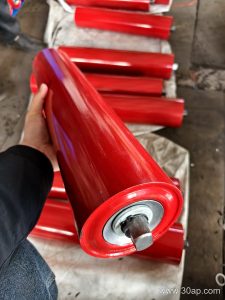
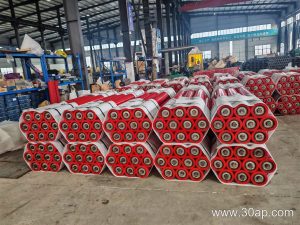
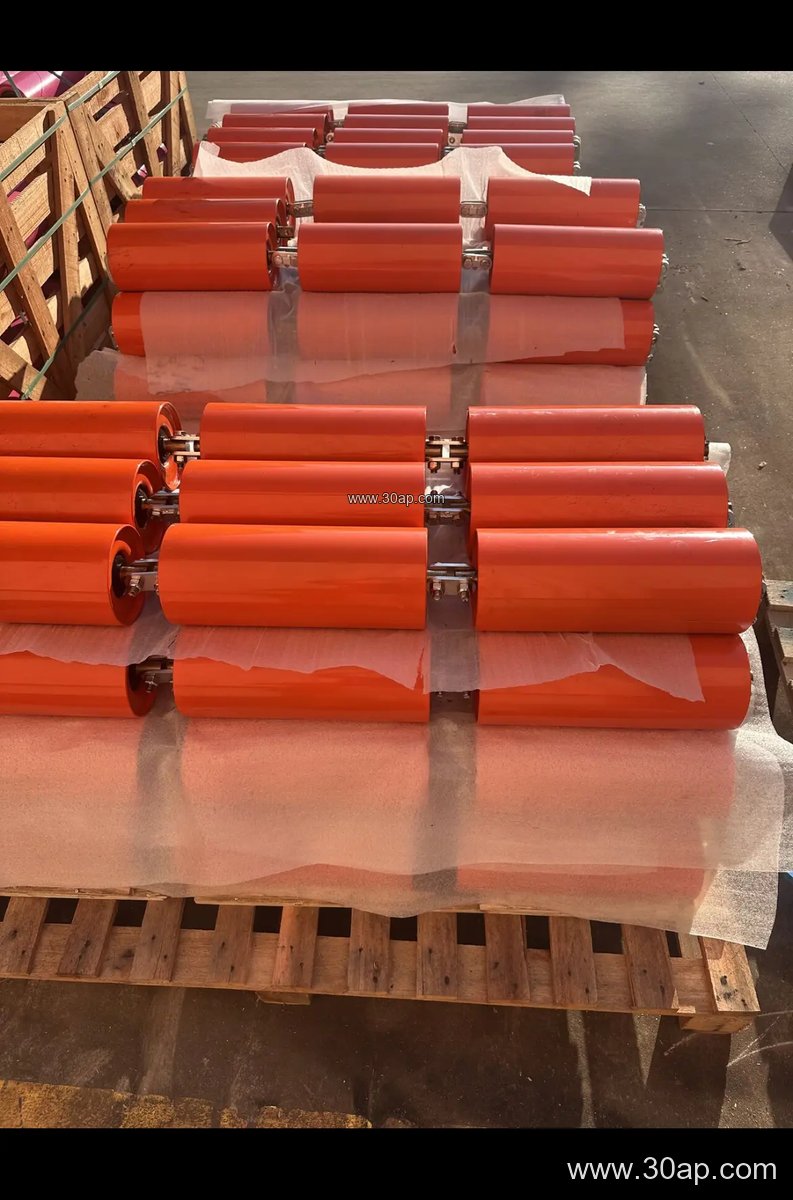
A conveyor trough idler is the carrying roller assembly that supports the loaded run of a conveyor belt and shapes it into a trough. In everyday plant language it is simply called a troughing idler or carrying idler. Three rolls mounted on a common frame form the usual arrangement, with the two side rolls angled upward so bulk material sits in a shallow channel instead of spilling off a flat belt. That channel is what keeps a conveyor belt centered and stable when it carries stone, clinker, ore, or grain at speed.
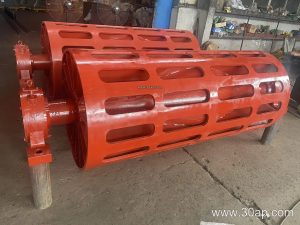
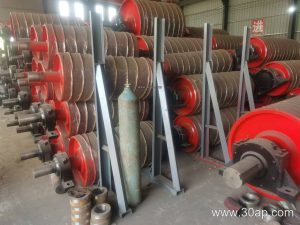
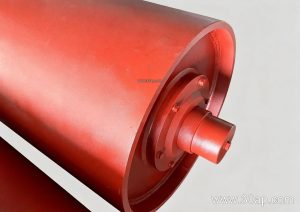
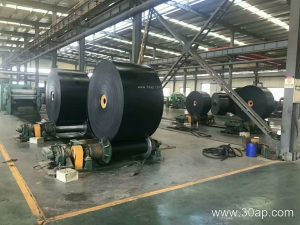
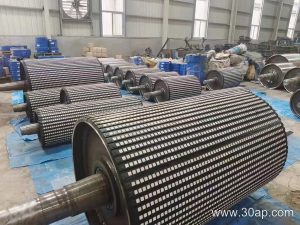
The troughing idler is only one member of the belt line family. A conveyor pulley at the head drives the belt, a bend pulley changes its direction, and return idlers support the empty strand underneath. None of these replaces the trough idler, and the trough idler does not replace them.
How the Assembly Is Built
A typical unit combines a steel tube shell, a shaft, bearing housings, and a sealing arrangement. Roll diameter, shell thickness, bearing size, and seal design all follow the duty. Common roll diameters include Ø89, Ø108, Ø127, Ø133, Ø159, and Ø178, while larger mines and ports may use Ø194 or Ø219. Bearings are usually selected from the 6204 to 6310 range depending on load and speed; a given bearing is not tied to a single roll diameter.
Roll surfaces vary with the job. Plain steel suits general bulk handling, nylon or ceramic covers reduce buildup on sticky material, and rubber rings absorb impact at transfer points. The frame is bolted to a conveyor bracket on the stringer, and the roll length follows belt width, trough angle, and the number of rolls in the set.
Common Reference Dimensions
The figures below are typical examples for three-roll troughing sets, not fixed matches. Side rolls and center rolls can differ.
- B500 belt: roll about 200 mm
- B650 belt: roll about 250 mm
- B800 belt: roll about 315 mm
- B1000 belt: roll about 380 mm
- B1200 belt: roll about 465 mm
- B1400 belt: roll about 530 mm
- B1600 belt: roll about 600 mm
- B1800 belt: roll about 670 mm
- B2000 belt: roll about 750 mm
Trough angles of 20, 30, 35, and 45 degrees are common. A steeper angle deepens the channel and holds more material, but it also raises the load on the side rolls.
Where Troughing Idlers Work
Quarries and aggregate lines rely on them under crusher discharge and along long transfer conveyors, where an abrasion resistant conveyor belt rides on three-roll sets. Coal handling at power plants uses flame retardant conveyor belt grades over trough idlers spaced to control sag. Cement plants handle hot clinker with heat resistant belt on the same style of frame, and ports load ships with wide belts on heavy troughing sets. In each case the idler does the quiet work of holding the belt profile.
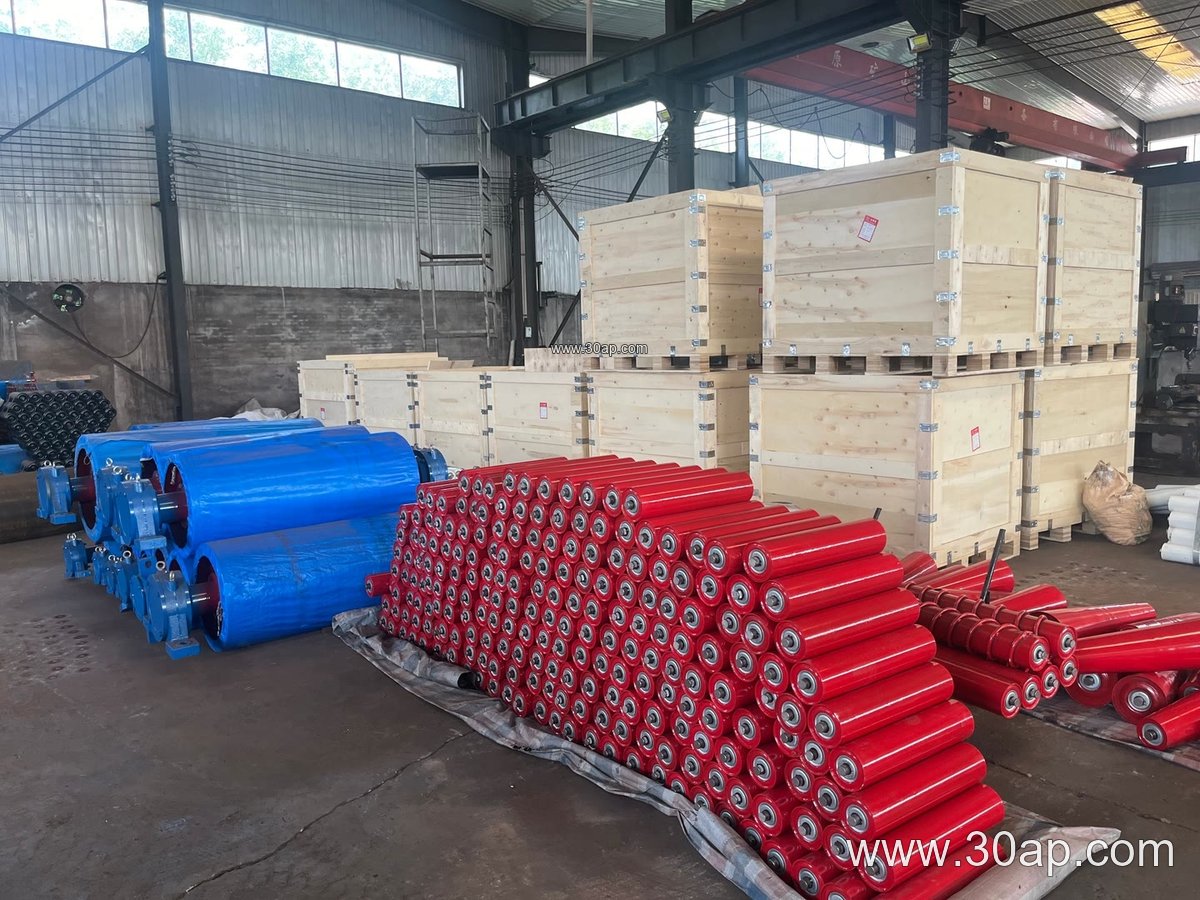
Selection should match the belt. A steel cord conveyor belt on a long overland run needs smooth rolls and correct spacing; a fabric core conveyor belt on a short yard conveyor is more forgiving. Where material is wet and sticky, a self-cleaning or spiral roll can be considered, and at loading points a rubber-disc impact idler protects both belt and frame.
What Buyers Should Check
Start with belt width, trough angle, and the belt type, whether EP conveyor belt, NN conveyor belt, or a steel cord grade. Confirm the roll diameter and shaft size against the actual load, not against habit. Ask about seal quality, since dust and water ingress shorten bearing life faster than load does. Check that the mounting dimensions suit the existing conveyor bracket so the set drops in without modification.
Spacing matters too. Too few idlers cause belt sag between sets; too many waste power. Alignment after installation keeps the belt from wandering, and a quick check of rotation at each set catches a seized roll before it damages the cover. For more on matching rollers, belts, and pulleys, see conveyor idler guidance and conveyor belt references.
Maintenance Notes
Inspect troughing idlers during routine walkthroughs. Listen for squealing, look for material buildup on the shell, and check that the rolls turn freely. Replace a damaged set rather than a single roll where the frame is distorted. Keep the belt tracking straight, because a misaligned belt loads one side roll harder and wears it out early. In dusty plants, a planned cleaning interval extends bearing life more than any single upgrade.