What a Four-Roll Idler Bracket Does
A four-roll idler bracket is the support frame that carries four idler rollers under one section of conveyor belt, forming a deeper and more controlled trough than a conventional three-roll arrangement. In a quarry, a limestone mine, or a crushing and screening line, the bracket keeps the belt centered while the load settles into the trough, and it spreads the weight of coarse rock across more roller contact points. The same bracket style also appears in cement plants and power plant coal handling systems where belt widths and lump sizes push the idler frame harder.
This four-roller idler support frame, sometimes simply called a four-roll bracket, is not a pulley. Drive pulleys, tail pulleys, and bend pulleys all transmit or redirect belt tension, while this bracket only positions and supports the idler rollers. That distinction matters when specifying spares, because a conveyor pulley and a conveyor bracket are ordered from different drawings and cannot be swapped.
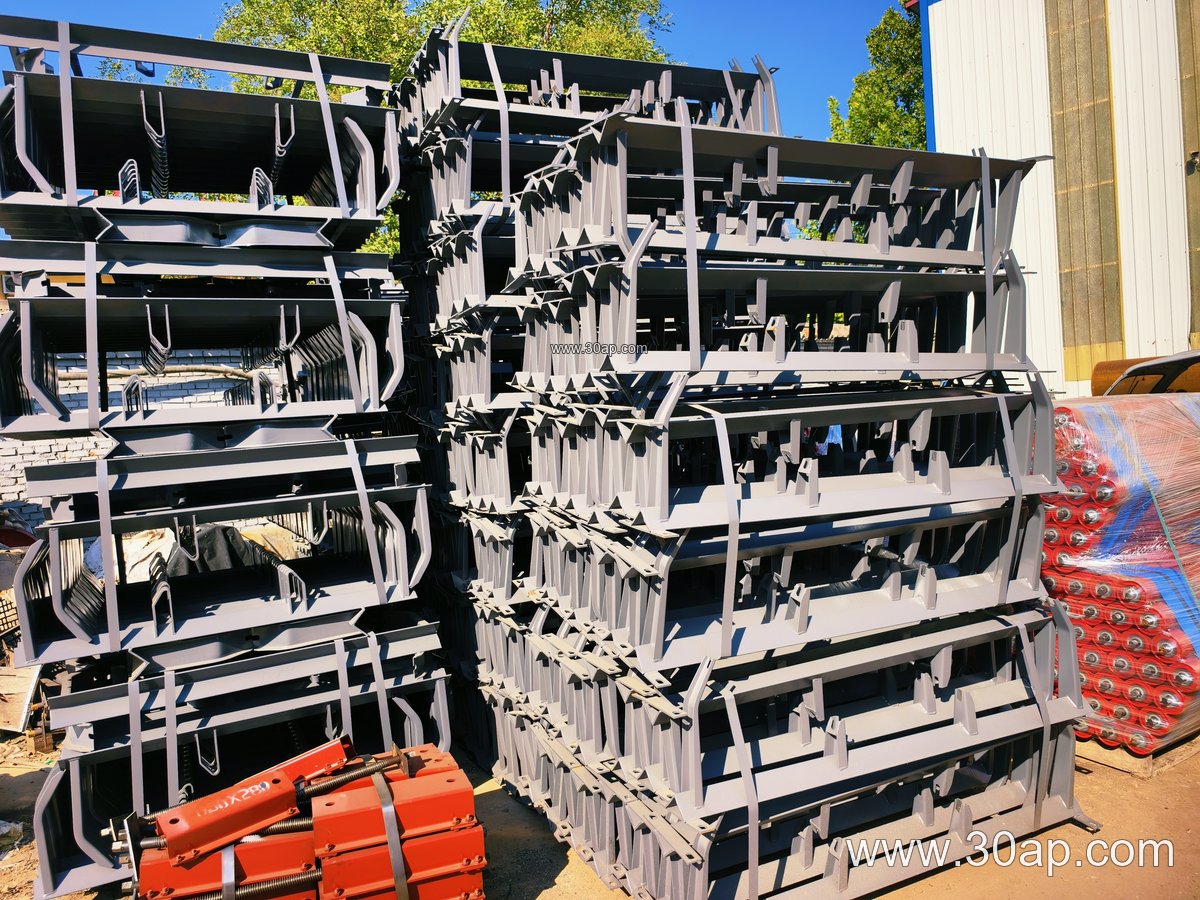
Construction and Mounting
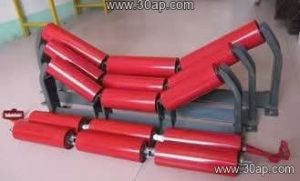
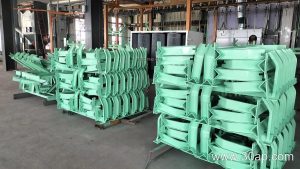
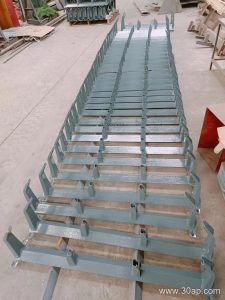
The bracket is usually fabricated from angle steel, channel steel, or folded steel plate, with welded gussets and drilled mounting holes. Two outer rolls sit at the main trough angle, and two inner rolls form a shallower central section, so the belt profile is more like a flattened U than a simple V. The frame bolts to the conveyor stringer or cross beam; hole spacing and cross beam length change with belt width and trough angle, so they are set by design rather than treated as fixed values.
- Outer and inner roll seats machined or punched to suit the chosen idler roller shaft.
- Reinforced gussets at the joint between the angled wings and the base.
- Optional adjustable versions that allow the trough angle to be changed on site.
Adjustable brackets are useful during commissioning, when the operator wants to fine-tune belt contact. Fixed brackets are simpler and stiffer, and are common where the trough angle is already settled. A slight forward tilt of about 1.5 to 2 degrees is sometimes built into the outer roll seats to help belt tracking, though this should follow the conveyor designer’s instruction.
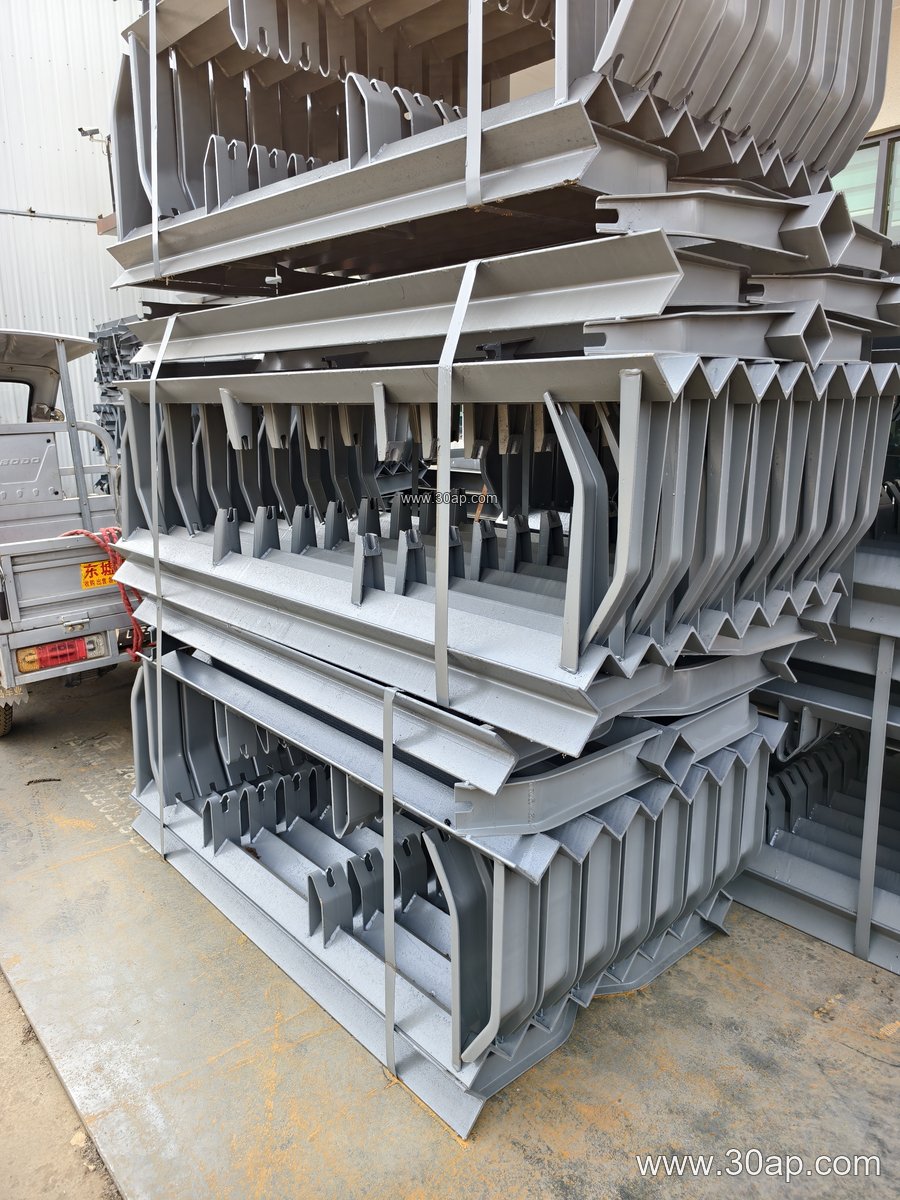
Where It Fits in a Conveyor
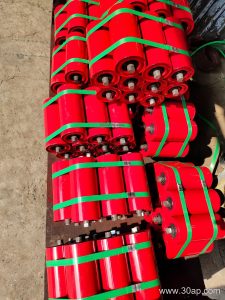
The four-roll bracket is normally a carrying-side component, placed in the loading and transport zones. It works together with the conveyor belt, the idler roller set, and the conveyor pulley that drives the system. On a heavy-duty mining conveyor belt carrying ore or overburden, the extra roll reduces the unsupported span between contact points and can lower the point load on each roller. On a wide belt, such as a 1200mm or 1400mm width, the four-roll layout also helps keep the belt edges from lifting in wind or during start-up.
Buyers should confirm belt width, trough angle, and roller diameter together rather than in isolation. Typical reference combinations include B800 with 35 degrees and Ø108 rollers, or B1200 with 45 degrees and Ø133 rollers, but these are examples only. A 650mm belt may use 30 degrees and Ø89 rollers, and a 2000mm belt may need a much heavier frame. No single belt width locks the bracket to one trough angle or one roller diameter.
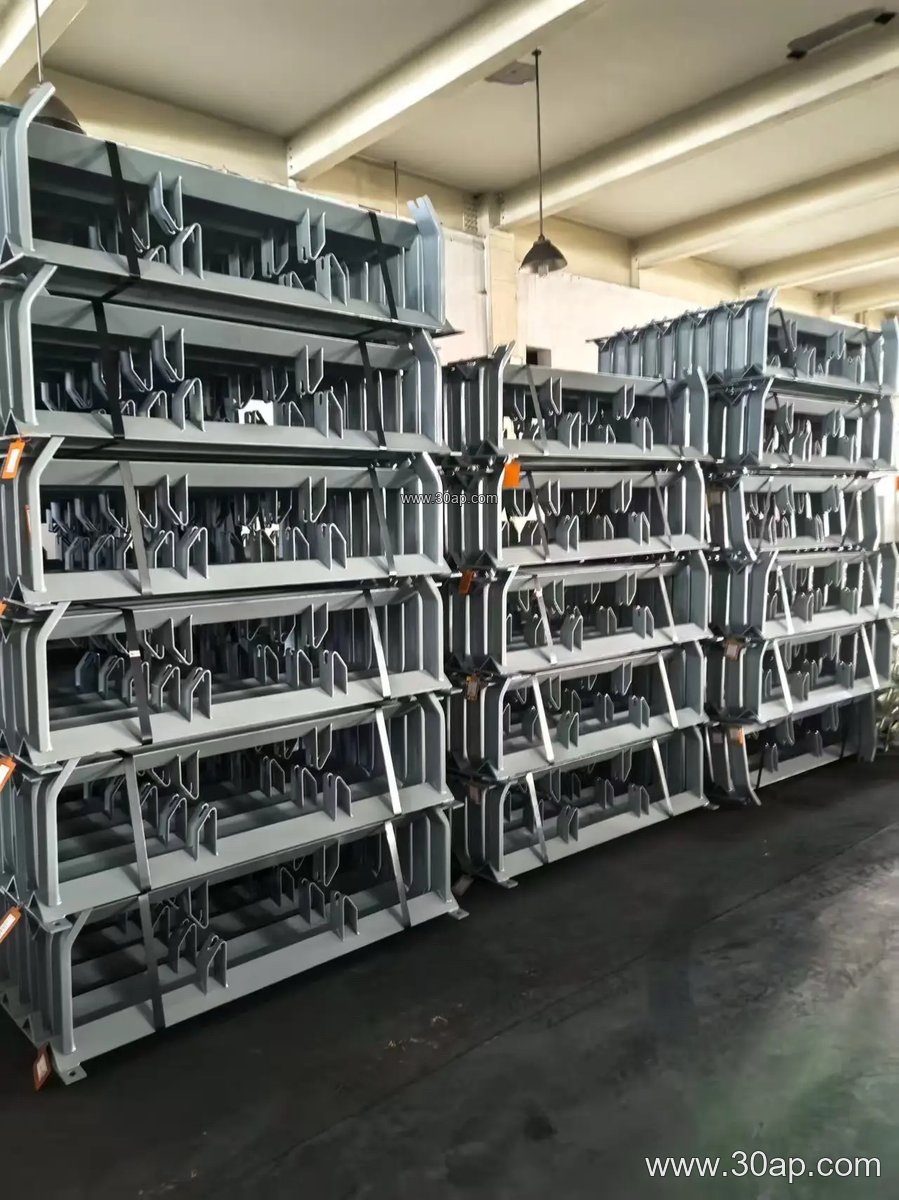
Selection Points for Buyers
Start with the belt and the material. An abrasion resistant conveyor belt handling sharp aggregate loads the rollers and frame differently from a smooth EP conveyor belt in a cement plant. In a coal mining conveyor belt system, flame retardant conveyor belt and anti-static conveyor belt properties are belt-side requirements, but the bracket still needs correct roll spacing and a sturdy base. For hot clinker or sinter, a heat resistant conveyor belt may be used, and the bracket should keep sufficient clearance from hot material spillage.
Check the following before ordering:
- Belt width and design trough angle, and whether adjustment is needed.
- Roller diameter and shaft end type, so the seats match the idler roller.
- Mounting hole pattern and cross beam length for the existing stringer.
- Material thickness and coating for dusty, wet, or corrosive service.
- Whether the position is a transition zone, where a transition bracket may suit better.
Maintenance is mostly inspection. Look for worn roll seats, loose bolts, bent wings after impact, and material build-up that changes the belt line. Replacing a damaged four-roll idler bracket early protects the conveyor belt and the idler roller set from misalignment. For drawings and belt-friendly support details, see the conveyor bracket pages at china-conveyorbelt.com, and match the frame to the actual belt and roller data rather than to a catalogue assumption.