What a Conveyor Bracket Really Does
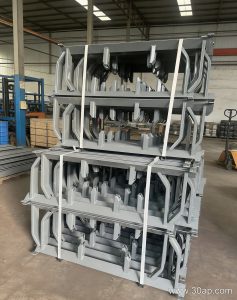
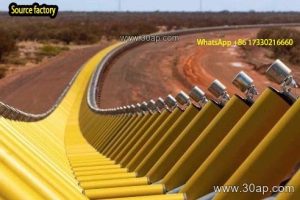
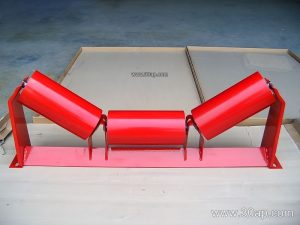
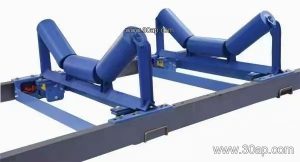
In a belt conveyor system, the conveyor bracket is the structural interface between the idler roller and the conveyor frame. It holds the rollers at the correct angle and spacing so the conveyor belt runs smoothly under load. Procurement of this component is not just about ordering steel; it is about matching the bracket design to the belt width, trough angle, roller diameter, and the operating environment. Whether you are specifying for a quarry conveyor belt line or a power plant coal conveyor, the bracket must support the belt without causing edge damage or excessive vibration.
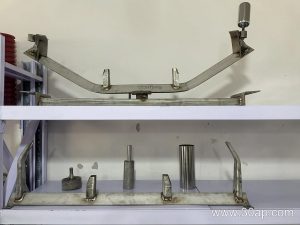
A common equivalent name for this product is the idler support bracket or roller support bracket. These terms refer to the same family of components, but the specific subtype matters. For example, a troughing bracket for carrying idlers is not the same as a return bracket for bottom rollers. This article focuses on conveyor bracket procurement for troughing and return applications, with notes on adjustable and fixed designs.
Construction and Materials
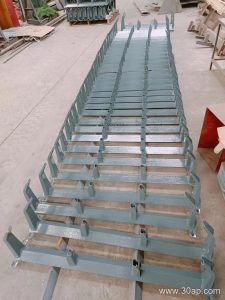
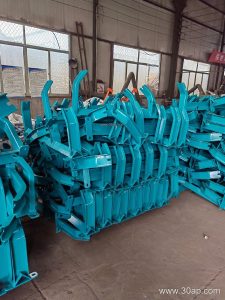
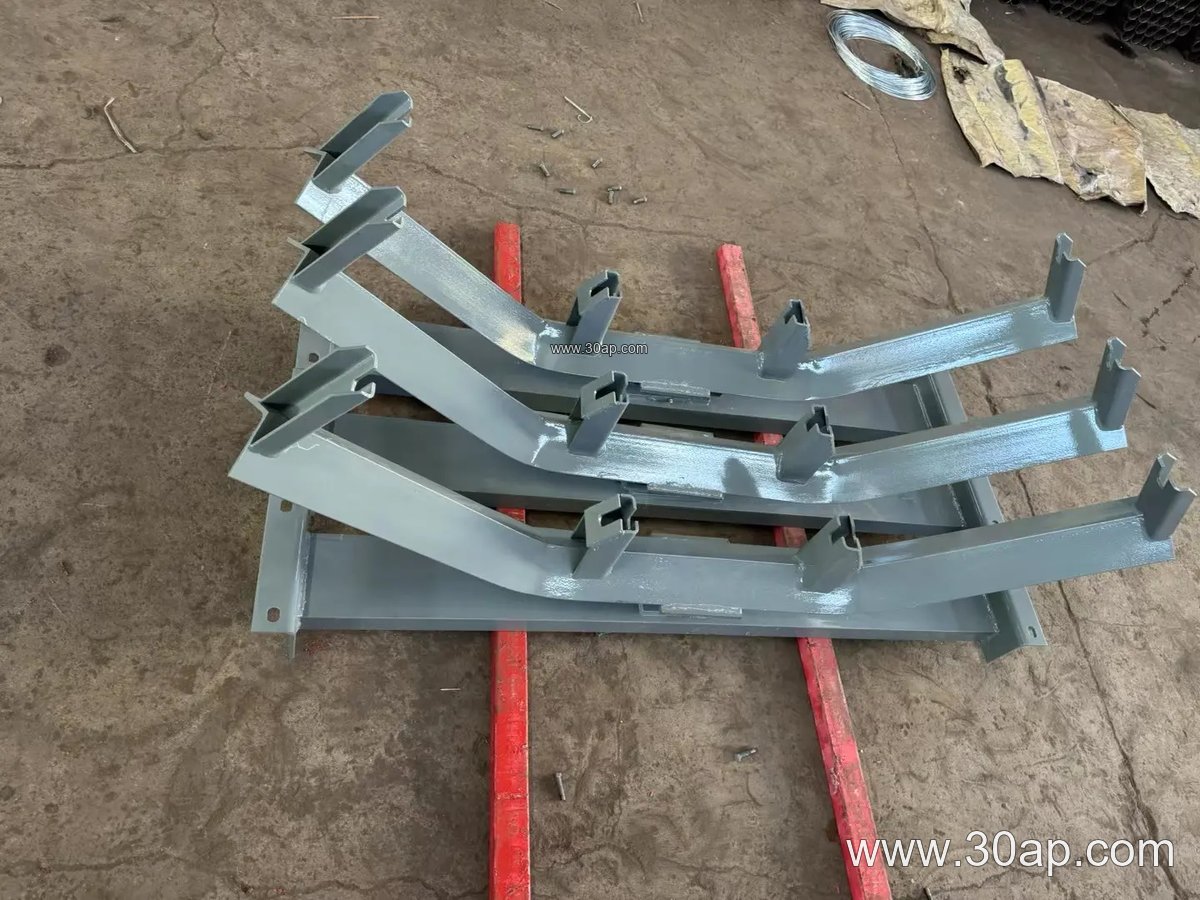
Most conveyor brackets are fabricated from angle steel, channel steel, or folded steel plate. The choice depends on load requirements and corrosion exposure. In a limestone mine or cement plant, dust and moisture may call for galvanized or painted finishes, while underground coal mining conveyor systems often require flame retardant and anti-static properties in nearby components, though the bracket itself is typically steel. The bracket’s geometry—such as the trough angle and mounting hole pattern—is determined by the conveyor design, not by a universal standard.
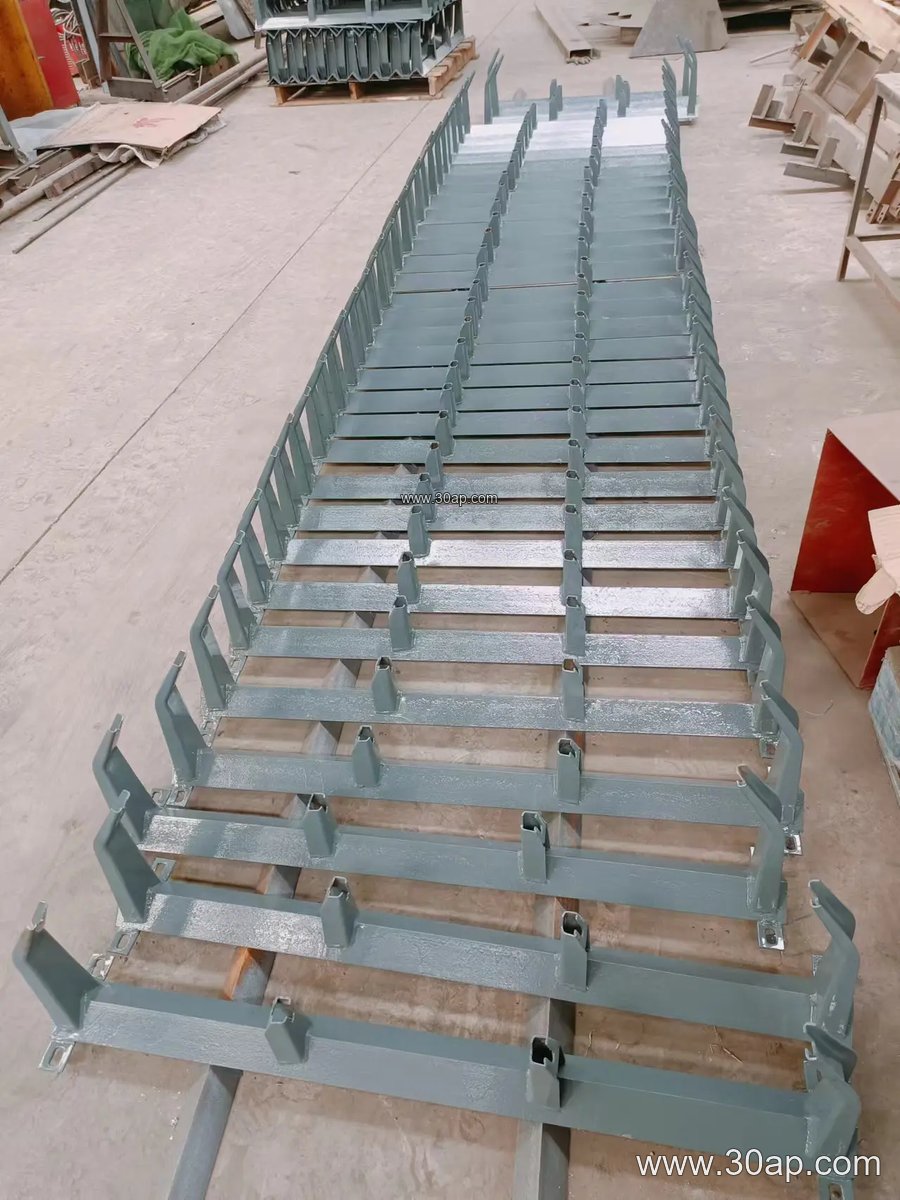
Typical trough angles include 20, 30, 35, and 45 degrees. Adjustable brackets allow the angle to be set within this range, which is useful when a conveyor handles multiple material types or when future modifications are expected. Fixed brackets are simpler and often more economical for dedicated lines. Roller diameters commonly range from Ø89 to Ø194, and the bracket must accommodate the chosen roller shaft and bearing housing.
Key Selection Factors
Buyers should consider the following when procuring conveyor brackets:
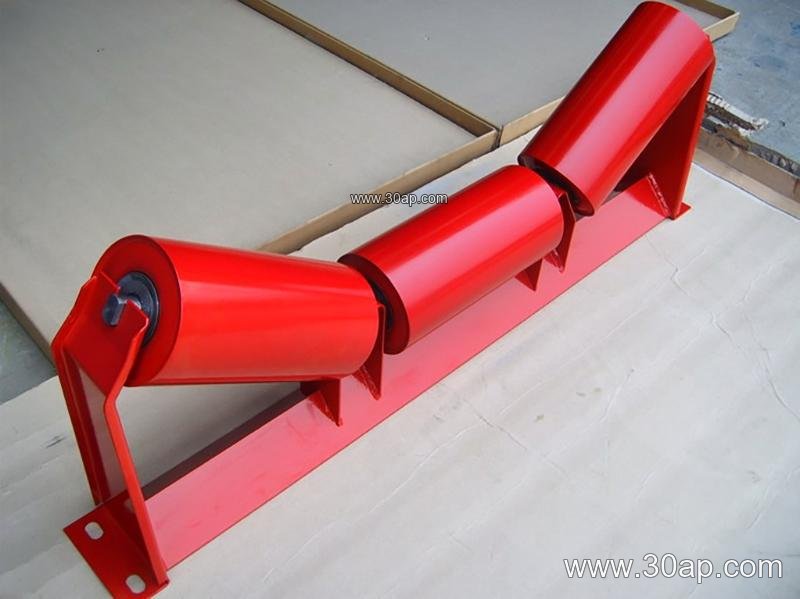
- Belt width and trough angle: These determine the bracket’s overall dimensions and the spacing between roller mounts. For instance, a B800 belt with a 35-degree trough angle may use a different bracket than a B1200 belt with a 45-degree angle. There is no fixed rule that one belt width matches only one angle or roller diameter.
- Roller diameter: The bracket’s mounting slots or holes must match the roller shaft size. Common roller diameters are Ø89, Ø108, Ø133, Ø159, and Ø194. The bracket design should allow for easy roller replacement without modifying the frame.
- Load and impact: In primary crushing or high-drop transfer points, impact-resistant brackets and buffer roller brackets may be needed to absorb shock. For heavy-duty mining conveyor belts, reinforced brackets with thicker steel are often specified.
- Adjustability: Adjustable brackets are beneficial for transition zones or where belt tracking issues are anticipated. They can be set to the required trough angle during installation and fine-tuned later.
- Environmental conditions: In coal mining or grain silos, brackets should be designed to minimize material buildup. In coastal ports or fertilizer plants, corrosion-resistant coatings are advisable.
When comparing bracket types, note that a return bracket for a flat return idler is not interchangeable with a V-return bracket, which is used to train the belt. Similarly, a troughing bracket for carrying idlers differs from a transition bracket used near pulleys. These are distinct subtypes, and procurement should specify the exact function.
Installation and Maintenance Notes
Proper installation ensures the bracket performs as intended. The mounting surface must be level and aligned with the conveyor centerline. For adjustable brackets, set the trough angle according to the belt manufacturer’s recommendation, typically between 20 and 45 degrees. Check that the bracket does not interfere with the conveyor pulley or other components. During maintenance, inspect for loose bolts, bent steel, or corrosion. Replacing a worn bracket promptly prevents misalignment that could damage the conveyor belt or idler roller.
In sand and gravel plants, brackets are often exposed to abrasive dust; periodic cleaning and inspection of welds are recommended. In power plant coal handling, brackets near transfer points may experience higher impact loads, so checking for fatigue cracks is prudent.
Procurement Checklist
Before placing an order, gather the following information:
- Conveyor belt width (e.g., B500, B650, B800, B1000, B1200, B1400, B1600, B1800, B2000, B2200).
- Required trough angle (20, 30, 35, or 45 degrees) and whether adjustability is needed.
- Roller diameter (Ø89, Ø108, Ø133, Ø159, Ø194) and shaft details.
- Bracket subtype: troughing, return, transition, impact, or self-aligning.
- Material and finish requirements based on the site environment.
- Quantity and spare parts policy.
For example, a procurement request might specify: “Troughing bracket for B1000 belt, 35-degree trough angle, suitable for Ø108 rollers, adjustable type, painted finish.” This level of detail helps suppliers provide the correct item. Remember that mounting hole spacing and beam length vary with belt width and trough angle, so these should be confirmed with the conveyor frame drawings.
In summary, conveyor bracket procurement requires attention to the specific application, the matching of bracket subtype to its function, and clear communication of dimensional and material requirements. By focusing on these factors, buyers can ensure reliable belt support and extend the service life of the conveyor system.