What a Skirted Conveyor Belt Is
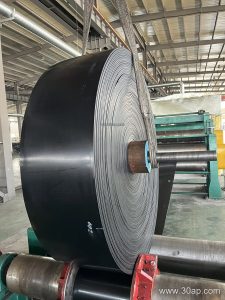
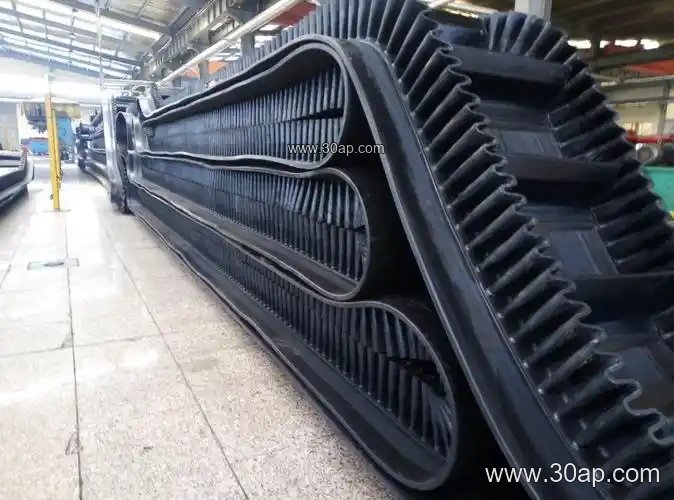
A skirted conveyor belt is a rubber conveyor belt fitted with raised flexible sidewalls, or skirts, along both edges. The skirts sit above the belt surface and form a shallow trough that keeps material from spilling over the edges during transport. This makes the belt a practical choice wherever loose bulk material has to stay contained on the carrying run, especially on inclined sections and at transfer points where standard flat belts tend to shed their load.
The product is also described as a sidewall belt or a belt with rubber skirts. In many plants it is simply ordered as a Skirted Conveyor Belt, and the same item may appear on drawings as a corrugated sidewall conveyor belt when the skirt profile is corrugated rather than plain. The two terms refer to the same family of belting, and the skirt height and profile are chosen to suit the material and the conveyor layout.
How the Belt Is Built
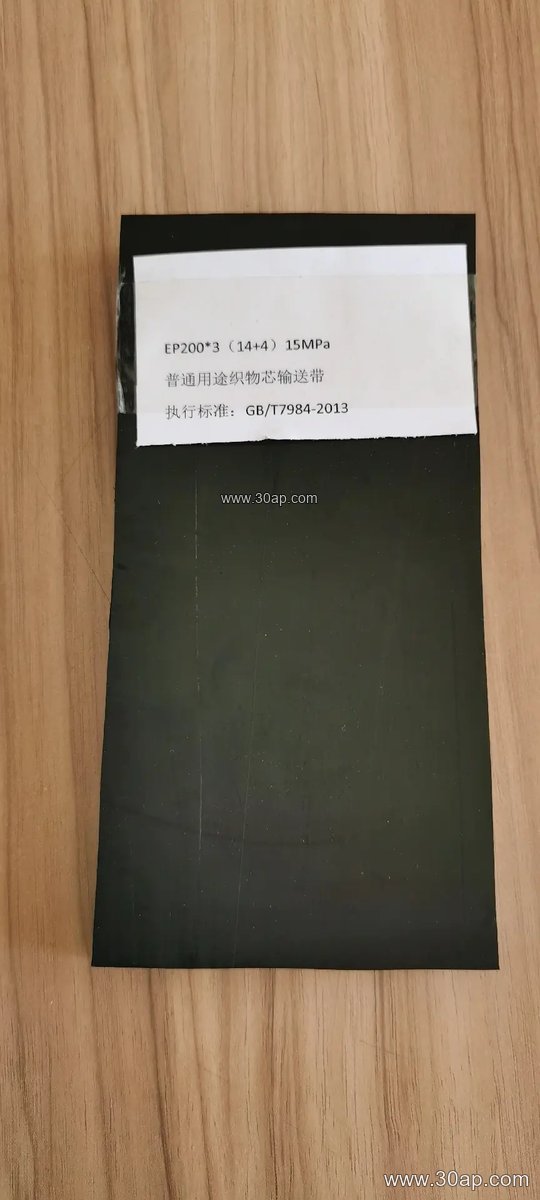
The base is a fabric core conveyor belt, usually an EP conveyor belt or an NN conveyor belt, with multiple plies of fabric embedded in rubber. A typical construction may use two to six plies, and the cover rubber is specified as a compound that suits the duty. The skirt is bonded to the belt edges and is often reinforced with a fabric insert so that it flexes without cracking at the base.
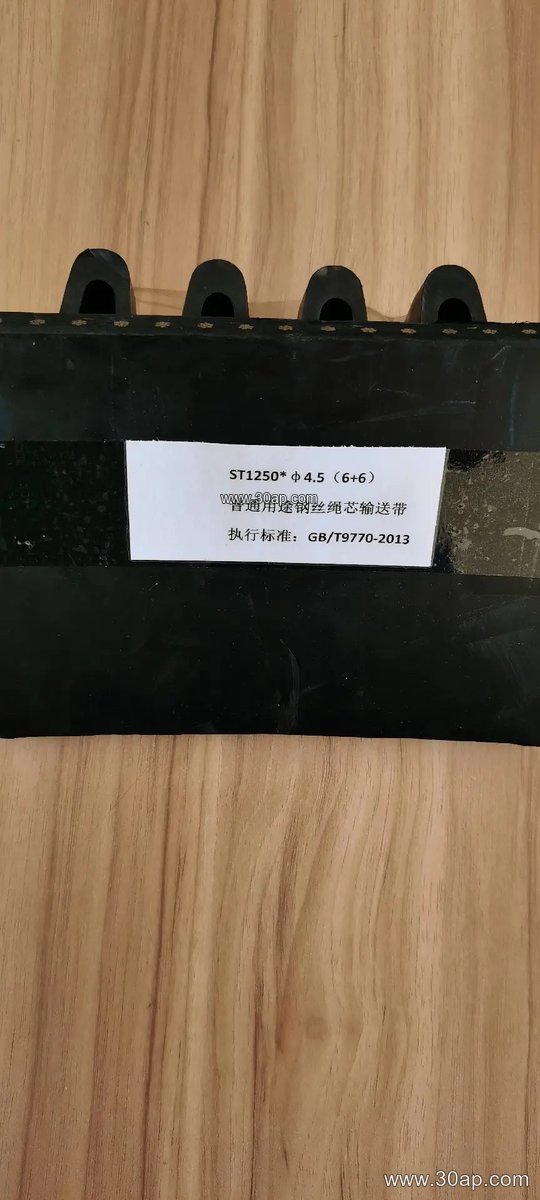
- Base belt: EP or NN fabric core, or steel cord for very high tension duties
- Skirt: rubber sidewall, plain or corrugated, bonded to both edges
- Cover: abrasion resistant, heat resistant, oil resistant, flame retardant, or anti-static grades
- Optional cleats or crossbars between the skirts for steep inclines
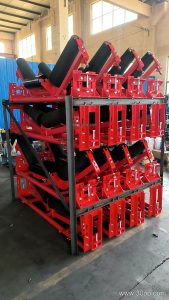
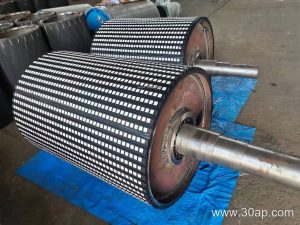
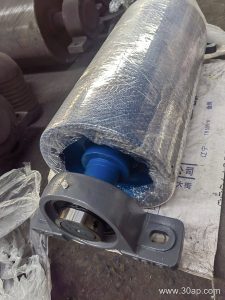
Because the skirt runs along the edge, the belt needs a support arrangement that keeps the skirt upright. Small idler rollers or a flat slider bed under the carrying side are common, and the conveyor pulley at each end must be sized to clear the skirt height. Drive, tail, and bend pulleys each have a different role, and none of them should be treated as a substitute for another when the belt path is being laid out.
Where It Fits in the Plant
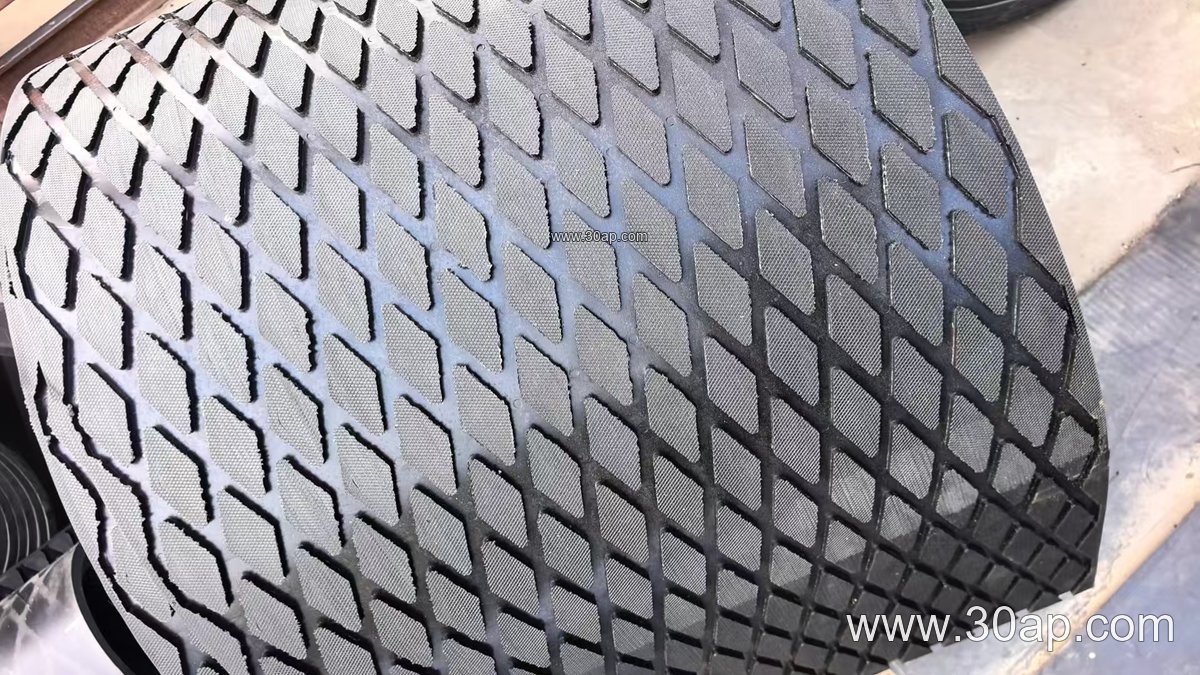
Containment is the main reason to choose this belt. In a quarry conveyor belt or aggregate conveyor belt line, skirts stop crushed stone from scattering at the loading point. In a cement plant, a skirted belt handles clinker and raw meal on inclined runs. Coal mining conveyor belt systems use flame retardant and anti-static versions where the underground environment demands it, and a coal mining conveyor belt with skirts can reduce spillage on steep gradients.
Power plants, steel plants, and port conveyor belt installations also use skirted belting for ship loading and stockyard transfer. A crusher conveyor belt benefits from skirts because the discharge from the crusher arrives fast and off-center. The same logic applies to a sand making plant conveyor belt or a stone crushing conveyor belt, where fine material is easily lost over the edges. For very dusty or fine products, a pipe conveyor belt offers full enclosure, but it is a different design and does not replace the skirted belt where a conventional trough is preferred.
Sizes and Specifications to Discuss
Widths follow the conveyor design, and common values include 500 mm, 650 mm, 800 mm, 1000 mm, 1200 mm, 1400 mm, and 1600 mm. Wider belts such as 1800 mm and 2000 mm are used on large bulk material conveyor belt systems. Strength grades for the fabric core are usually quoted as EP200, EP315, EP400, EP500, EP630, EP800, EP1000, EP1250, and higher. Cover thickness is often stated as 3+1.5, 4+2, 5+2, 6+2, or 8+3 mm, where the first figure is the top cover and the second the bottom cover.
| Parameter | Common Options |
|---|---|
| Belt width | 500, 650, 800, 1000, 1200, 1400, 1600, 1800, 2000 mm |
| Fabric core grade | EP200 to EP2000, NN100 to NN400 |
| Number of plies | 2 to 6 |
| Cover thickness | 3+1.5, 4+2, 5+2, 6+2, 8+3 mm |
| Skirt height | Selected by design, typically matched to material depth |
These are reference ranges, not fixed combinations. A 1000 mm belt does not dictate a particular pulley diameter, and the shaft size is set by the conveyor design rather than by belt width alone. The skirt height, cleat spacing, and rubber grade should be confirmed against the actual material, incline angle, and throughput.
Buyer Checklist
- Confirm the material type, lump size, and moisture level before choosing the cover compound.
- State the incline angle; steep runs may need cleats between the skirts.
- Check that the conveyor pulley and idler roller arrangement clears the skirt height.
- Ask for the skirt bonding method and the fabric reinforcement in the sidewall.
- Match the rubber grade to the site: abrasion resistant for ore and rock, heat resistant near clinker, flame retardant for underground coal, oil resistant near lubricated equipment.
- Review the conveyor bracket and frame dimensions together with the belt drawing.
A skirted belt is only as good as its edge bond, so the splice and skirt joint deserve attention during installation. With the right grade and a properly supported path, it keeps bulk material on the belt and out of the walkways.