What a Bend Rubber Lagged Pulley Does
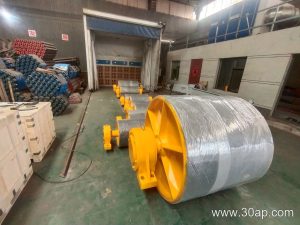
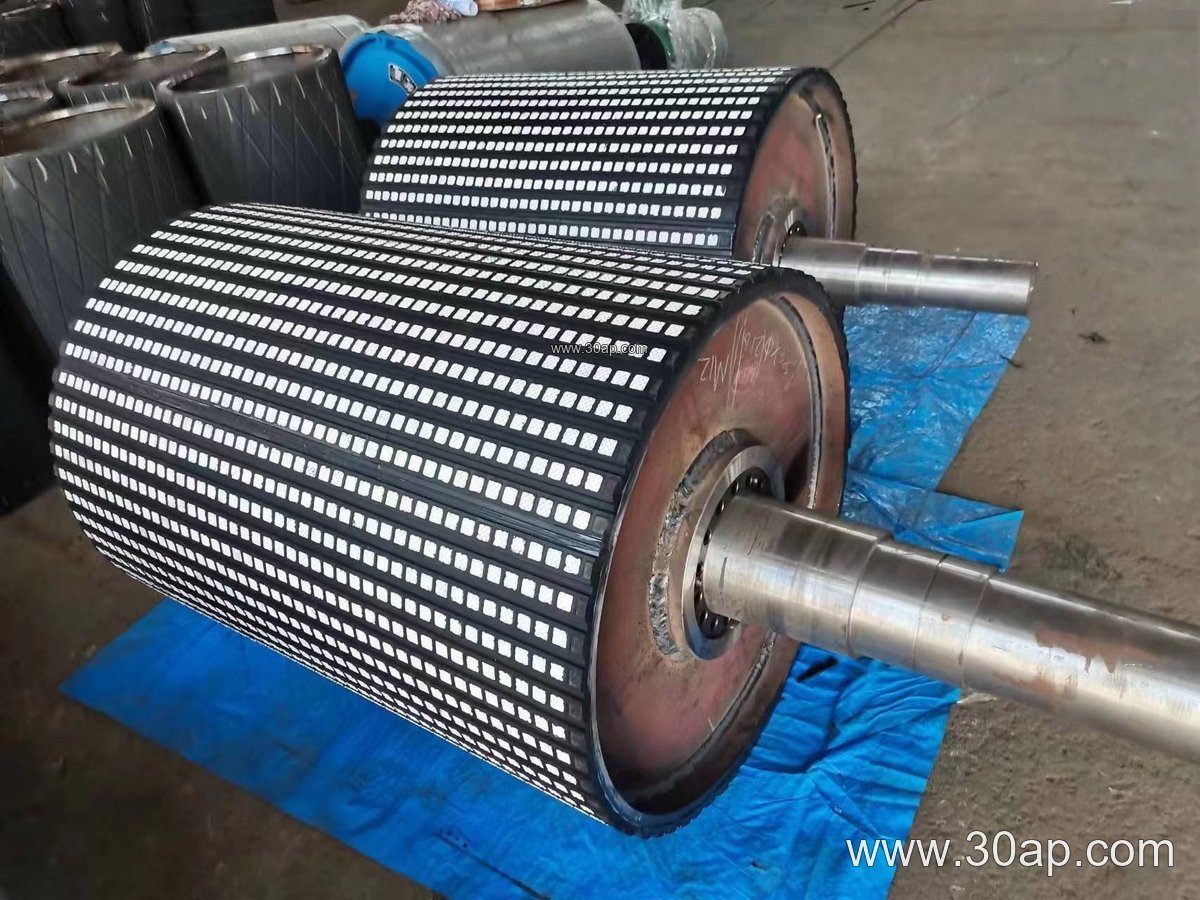
A bend rubber lagged pulley is a conveyor pulley placed where the belt needs to change direction without driving the system. It is a type of bend pulley, sometimes called a redirect pulley or angle pulley, and its job is to guide the conveyor belt around a curve, usually toward a take-up device or back into the return run. The rubber lagging is what separates it from a plain bend pulley: the rubber layer protects the belt surface, improves friction where traction matters, and helps shed fine material that would otherwise build up on a bare steel shell.
Because a bend pulley does not transmit drive torque, it is not a drive pulley, head pulley, or tail pulley, and those parts cannot simply be swapped for it. Each position in a conveyor has its own load case, and a bend rubber lagged pulley is selected for the direction-change duty it performs.
Construction and Lagging Options
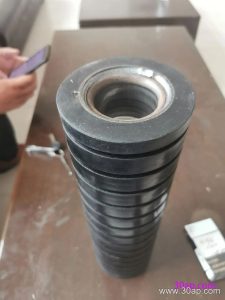
The pulley body is typically a welded steel shell with end discs and a shaft, machined so the shell runs true. Lagging is applied on the shell surface in several common forms, and the choice depends on the belt and the environment:
- Plain or flat rubber lagging for general guidance duty
- Diamond pattern lagging for better water and fines release
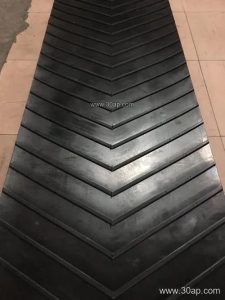
- Herringbone lagging where reverse running is possible
- Cold-bonded or hot-vulcanized rubber for different workshop capabilities
Common lagging thicknesses are 8, 10, 12, 15, and 20 mm. Thicker rubber suits abrasive service in a quarry or iron ore plant, while a moderate thickness is often enough in a cement plant clinker line. The shell face width is normally a little wider than the belt, for example about 500 mm for B400, about 950 mm for B800, and about 1400 mm for B1200. These are reference values, not fixed pairings, and the final geometry follows the conveyor design.
Matching the Pulley to Belt Width and Load
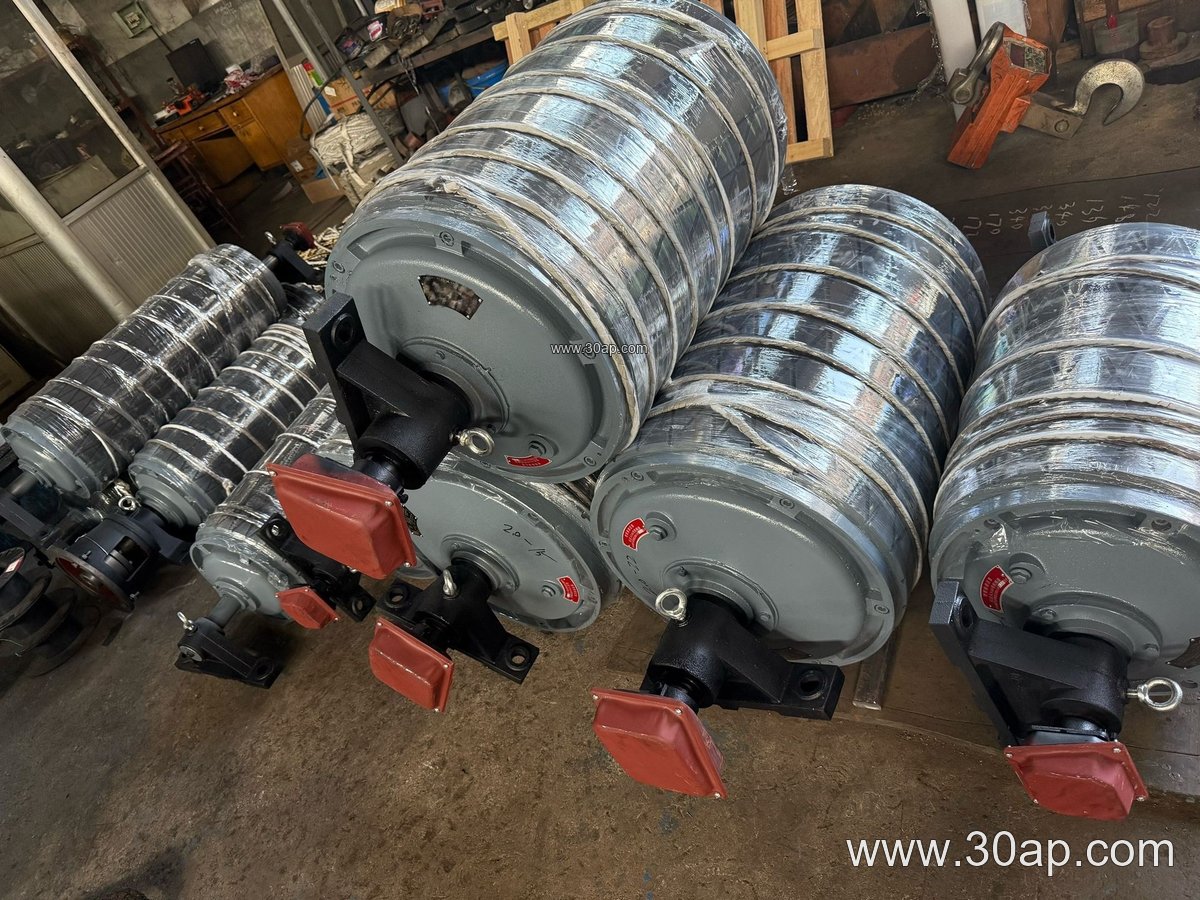
Buyers often ask which diameter fits which belt width. There is no single answer. A bend rubber lagged pulley can be built as B800 × Ø500, B1200 × Ø1000, or B1400 × Ø800 depending on the wrap angle, belt tension, and space available. Shaft diameter is determined by torque and bearing load, not by belt width alone, so a Ø100 shaft on one conveyor and a Ø160 shaft on another may both be correct for the same belt width.
The table below gives typical reference ranges only, to help early-stage planning:
| Belt width | Typical shell face width | Common diameter range | Common shaft range |
|---|---|---|---|
| B500 | about 600 mm | Ø250 to Ø500 | Ø60 to Ø100 |
| B650 | about 750 mm | Ø315 to Ø630 | Ø70 to Ø120 |
| B800 | about 950 mm | Ø400 to Ø800 | Ø80 to Ø140 |
| B1000 | about 1150 mm | Ø500 to Ø1000 | Ø90 to Ø160 |
| B1200 | about 1400 mm | Ø630 to Ø1250 | Ø100 to Ø180 |
| B1400 | about 1600 mm | Ø800 to Ø1400 | Ø120 to Ø200 |
These ranges are indicative. A heavy-duty mining conveyor belt carrying ore may need a larger shaft than the table suggests, while a short aggregate conveyor belt line may use the smaller end.
Where It Fits in the Conveyor Layout
In a coal mining conveyor or a power plant coal handling system, bend pulleys are commonly found near the take-up, guiding the belt between the tail area and the tensioning carriage. In a limestone quarry or a sand and gravel plant, they redirect the return strand around structural obstacles. In a port bulk terminal, they help route long belts through transfer towers.
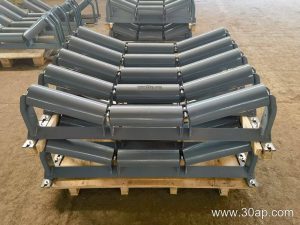
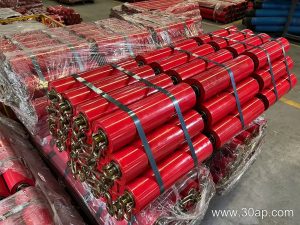
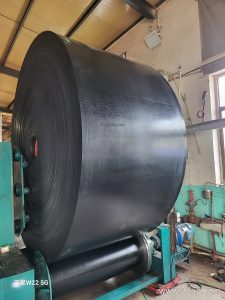
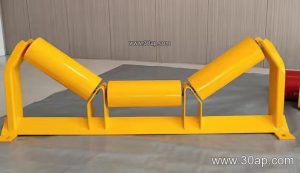
The pulley works together with the conveyor belt, the idler roller sets, and the conveyor bracket that carries the pulley bearings. A well-aligned bend pulley keeps the belt tracking centrally; a misaligned one causes edge wear and spillage. That is why the lagging surface and the pulley alignment matter as much as the shell diameter.
Buyer Checklist
- Confirm the position and wrap angle, since a bend pulley is not a substitute for a drive or tail pulley.
- State the belt type and service, such as an abrasion resistant conveyor belt in a crusher line or a flame retardant conveyor belt in an underground coal mine.
- Provide belt width, expected tension, and available space so the diameter and shaft can be sized properly.
- Choose lagging pattern and thickness for the material handled, and decide between cold-bonded and hot-vulcanized rubber.
- Check bearing selection, sealing, and lubrication access, especially in dusty cement or quarry environments.
- Plan periodic inspection of lagging wear and pulley alignment to protect the belt and extend service life.
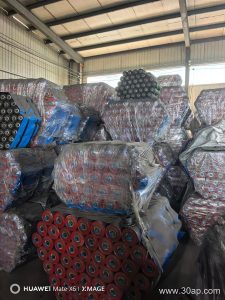
For more conveyor components, including pulleys, idlers, and brackets, visit the conveyor pulley section at www.beltconveyorparts.com and the roller range at www.beltconveyorparts.com/idler-roller. A correctly specified bend rubber lagged pulley is a small part of the conveyor, but it keeps the belt running true through every curve in the system.