What an Upper Self-Aligning Idler Does
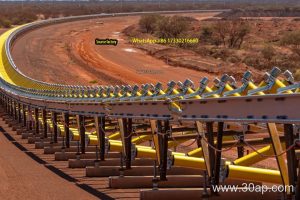
An upper self-aligning idler, also called a self-training carrying idler, is a troughing idler set mounted on the carrying side of a conveyor that pivots slightly to correct belt misalignment. Unlike a fixed carrying idler, this idler reacts to the belt wandering off center. When the belt drifts toward one side, it contacts the idler at an angle, creating a small steering force that nudges the belt back toward the centerline. This makes it a practical choice for long haul conveyors where belt tracking is critical, such as in a quarry, a coal mining operation, or a cement plant.
Construction and Key Components
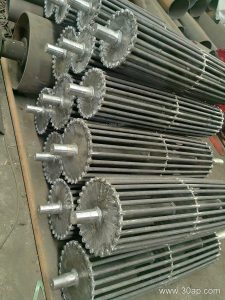
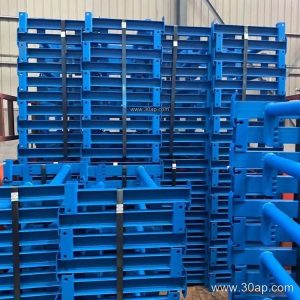
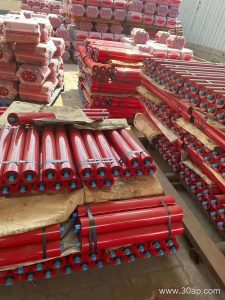
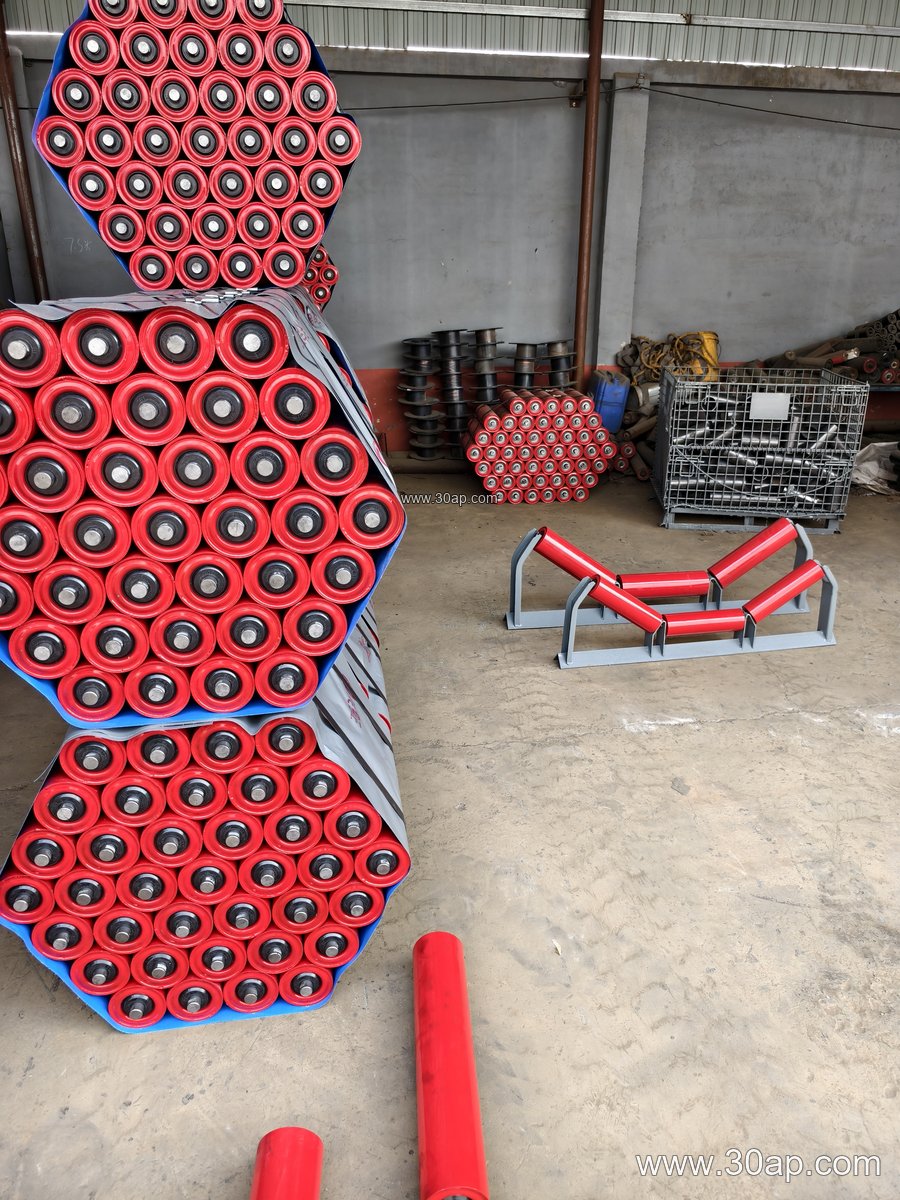
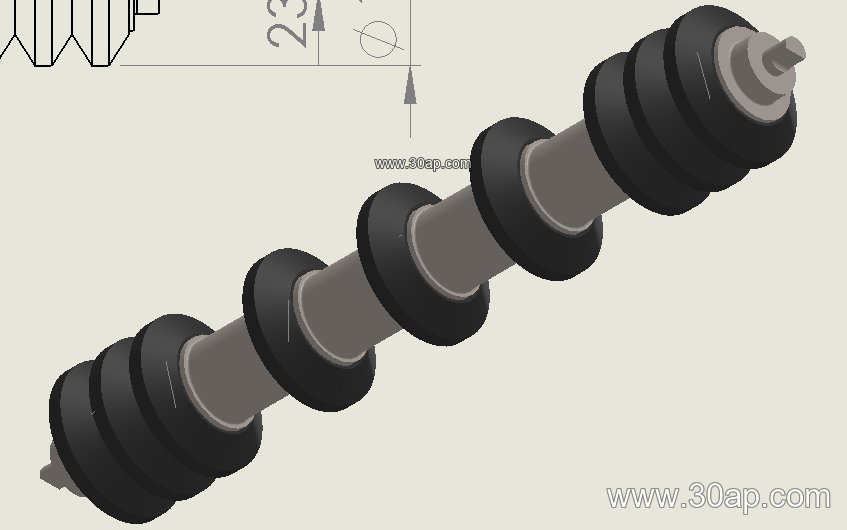
The assembly typically includes a three-roll troughing set — one center roll and two side rolls — mounted on a pivoting frame. Common roller diameters for this type include Ø89, Ø108, Ø127, and Ø133 mm, though the exact size depends on belt width and load. The rolls are usually steel tube, sometimes with a nylon or rubber surface for better grip. Bearings such as 6205 or 6305 are common, but the bearing must be selected by load and speed, not by roller diameter alone. The pivot mechanism often uses a vertical shaft or a bracket with a small clearance, allowing the whole set to rotate a few degrees. A slight forward tilt of about 1.5 to 2 degrees is sometimes built in to help self-centering.
Where It Fits on the Conveyor
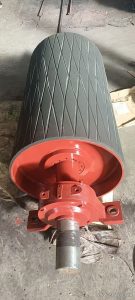
This idler is installed in the carrying run, usually after the feed point and at intervals along the line. It is not a replacement for a drive pulley, tail pulley, or bend pulley — those are different components. On a typical belt conveyor, you might see upper self-aligning idlers spaced every 20 to 50 meters on long sections, especially where the belt is prone to wander due to uneven loading or side winds. In a power plant coal yard or a port ship loader, they help keep the belt centered under the material stream. For coarse bulk material like iron ore or limestone, a heavy-duty version with thicker tube and reinforced frame may be chosen.
Common Sizes and Configuration Examples
The table below shows typical examples of roller length for three-roll troughing sets at different belt widths. These are common references, not fixed rules. Side roll and center roll lengths can differ, and the actual selection depends on belt width, trough angle, and idler type.
| Belt Width | Approx. Roller Length (mm) | Common Roller Diameter (mm) |
|---|---|---|
| B500 | 200 | Ø63, Ø76, Ø89 |
| B650 | 250 | Ø76, Ø89, Ø102 |
| B800 | 315 | Ø89, Ø108, Ø127 |
| B1000 | 380 | Ø102, Ø108, Ø133 |
| B1200 | 465 | Ø108, Ø127, Ø133 |
| B1400 | 530 | Ø127, Ø133, Ø159 |
| B1600 | 600 | Ø133, Ø159, Ø178 |
| B1800 | 670 | Ø159, Ø178, Ø194 |
For wider belts such as B2000 or B2200, longer rolls and larger diameters like Ø194 or Ø219 are used. The trough angle is often 30 or 35 degrees, with 45 degrees for some high-capacity lines. These are reference values; a conveyor designer will confirm the exact size for each application.
Selection and Maintenance Notes
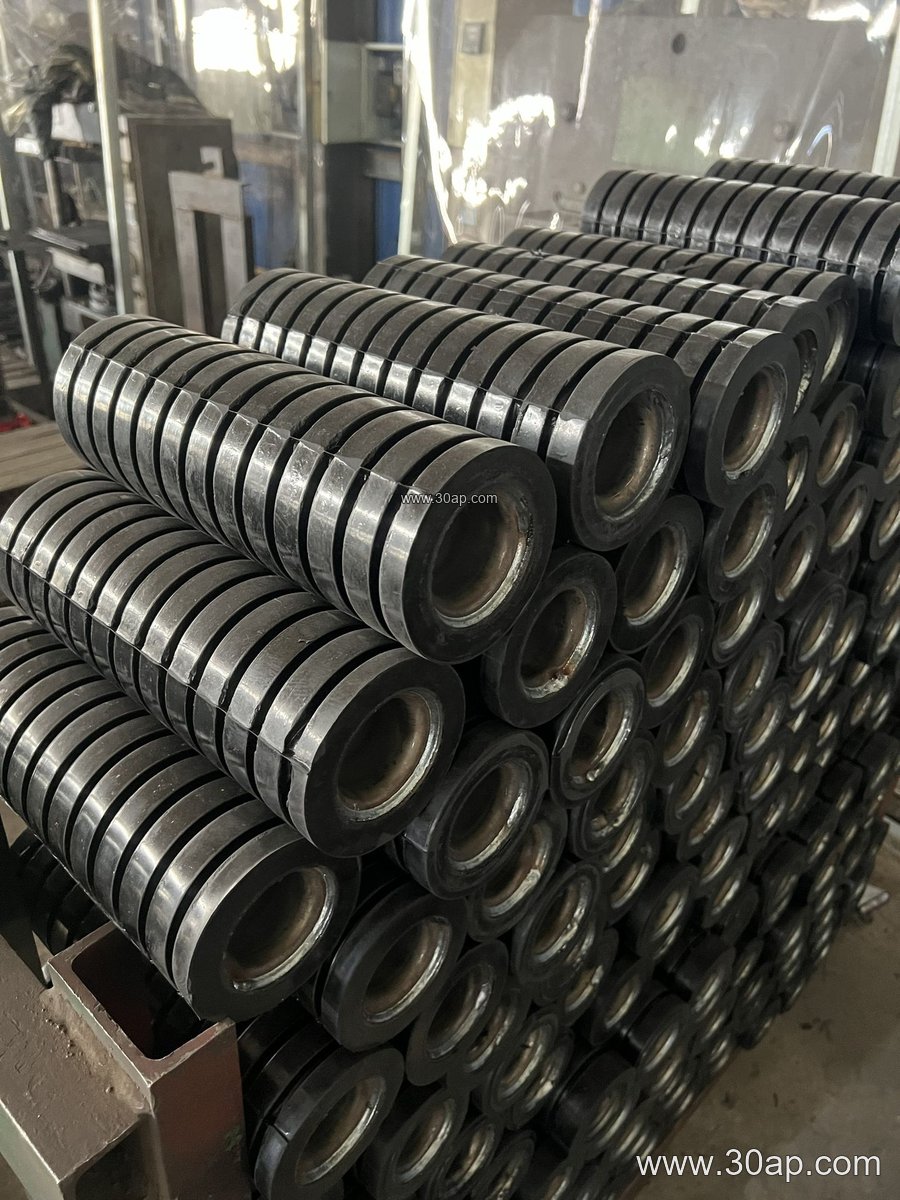
When choosing an upper self-aligning idler, consider the belt width, the material being carried, and the environment. Abrasive material like crushed rock calls for a wear-resistant roller surface, while a coal mining conveyor may need flame retardant components elsewhere in the system. The idler itself should be matched to the conveyor belt speed and load. Check that the pivot moves freely and that the frame is not bent. Regular inspection of bearing seals and roller rotation helps prevent belt damage. If the belt still wanders after installing a self-aligning idler, look at the whole conveyor — loading point, pulley alignment, and belt condition — because a single idler cannot fix every tracking problem.
Related Equipment and Industry Use
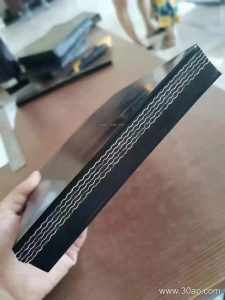
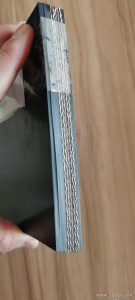
Upper self-aligning idlers work alongside other conveyor components such as the conveyor pulley, conveyor bracket, and various idler roller types. In a sand and gravel plant, they are often paired with a heavy-duty conveyor belt and a crusher conveyor belt to keep the line running straight. In cement plants and power plant coal handling, they help maintain belt alignment on long inclined conveyors. Whether the belt is a multi-ply fabric core, steel cord, or chevron type, the self-aligning idler plays a simple but important role: keeping the belt where it belongs.