What a Heavy-Duty Conveyor Bracket Does
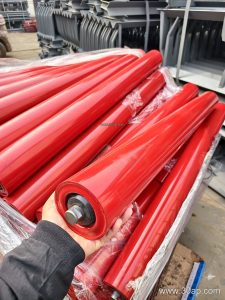
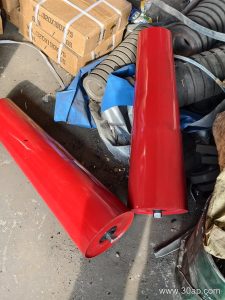
A heavy-duty conveyor bracket is the structural support that holds idler rollers in the correct position along a conveyor line. It carries the weight of the belt and the material, keeps the trough shape stable, and maintains alignment under constant vibration and impact. In a quarry, coal preparation plant, or cement kiln feed line, this component is often the difference between smooth operation and frequent downtime. The bracket works together with the conveyor belt, conveyor pulley, and idler roller to form a complete load-bearing system.
Unlike a standard bracket, a heavy-duty conveyor bracket is built with thicker steel and reinforced joints. It is designed for high-tonnage conveying, abrasive materials, and continuous operation. Whether you are moving iron ore, crushed stone, or clinker, the bracket must resist bending, twisting, and fatigue. This article explains how these brackets are constructed, where they are used, and what to check before ordering.
Construction and Key Features
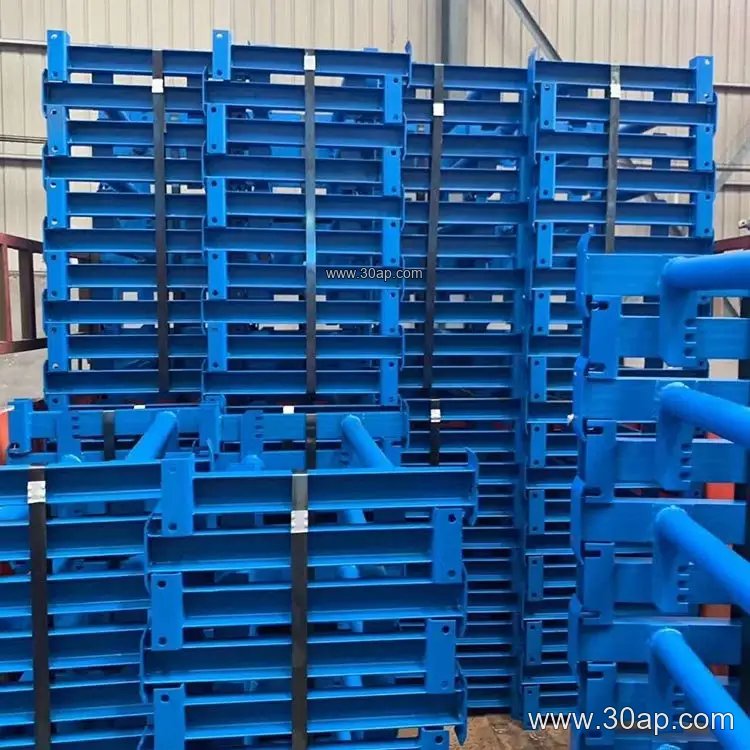
Most heavy-duty brackets are fabricated from angle steel, channel steel, or folded steel plate. The material thickness is usually greater than that of light-duty brackets, and gussets or stiffeners are added at stress points. Common surface treatments include shot blasting and painting, or hot-dip galvanizing for corrosive environments. The bracket must be strong enough to support the idler roller without deflection, yet precise enough to keep the roller axis perpendicular to the belt path.
Installation hole spacing and beam length vary with belt width and trough angle. There is no universal fixed dimension. For example, a B800 bracket with a 35-degree trough angle and Ø108 idler rollers will have different hole spacing than a B1200 bracket with 45-degree trough and Ø133 rollers. Adjustable brackets allow the operator to change the trough angle between 20, 30, 35, and 45 degrees, which helps optimize material containment and belt life. Forward-leaning brackets, typically around 1.5 to 2 degrees, are used to improve belt tracking and reduce spillage.
Where Heavy-Duty Brackets Are Used
These brackets are common in primary crushing circuits, stockyard conveyors, and transfer points where impact loads are high. In a limestone mine, they support the conveyor belt that carries run-of-mine material to the crusher. In a coal-fired power plant, they hold the idler rollers on the coal handling conveyor, often alongside flame retardant conveyor belt and abrasion resistant conveyor belt. The bracket must handle constant dust, moisture, and occasional overloads.
A heavy-duty conveyor bracket is also used in sand and gravel plants, where the belt moves aggregates at high speed. Here, the bracket may be paired with a V-return bracket or a training bracket to keep the belt centered. In cement plants, heat resistant conveyor belt may be used on clinker lines, and the bracket must tolerate thermal expansion without losing alignment. The same bracket type can be found in port ship loaders, steel plant sinter lines, and underground mining conveyors, where space is tight and reliability is critical.
Selection and Compatibility Notes
Choosing the right bracket starts with the belt width, trough angle, and roller diameter. These three factors determine the bracket geometry. A B650 conveyor with 30-degree trough and Ø89 rollers needs a lighter bracket than a B1600 conveyor with 45-degree trough and Ø159 rollers. Do not assume that one belt width matches only one pulley diameter or trough angle. The bracket must also match the conveyor pulley diameter and shaft size at the drive and tail ends, but those are separate components.
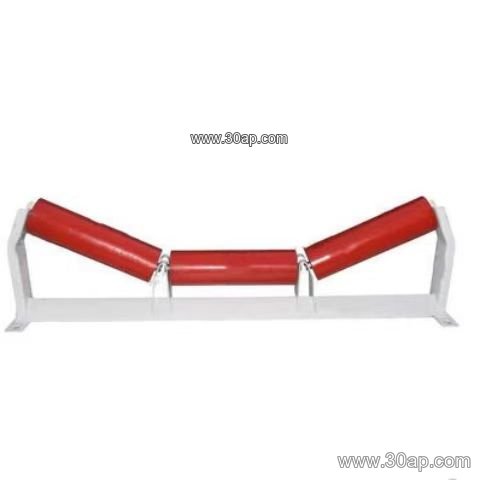
For high-impact areas, buffer brackets with rubber or spring mounts are used under the loading point. For long overland conveyors, self-aligning brackets help correct belt drift. When specifying a heavy-duty conveyor bracket, provide the belt width, trough angle, roller diameter, mounting hole pattern, and material of construction. If the conveyor uses a steel cord conveyor belt or a multi-ply fabric core conveyor belt, the bracket load rating should be checked against the belt tension and material weight. Always confirm dimensions with the conveyor designer rather than relying on a single reference value.
Maintenance and Buyer Checklist
Inspect brackets for corrosion, loose bolts, and bent beams during routine shutdowns. A distorted bracket can cause the idler roller to sit at an incorrect angle, leading to belt misalignment and edge damage. Replace any bracket that shows cracks at welded joints or significant deformation. Keep spare brackets for critical conveyors, especially in remote mining or quarry sites.
Before ordering, confirm the following:
- Belt width and trough angle (for example, B1000, 35 degrees)
- Idler roller diameter and mounting hole spacing
- Material and surface treatment (painted, galvanized, or special coating)
- Fixed or adjustable design, and whether forward-leaning is needed
- Compatibility with the existing conveyor pulley and frame
A well-matched heavy-duty conveyor bracket extends the service life of the entire conveyor system. Whether the application is a coal mining conveyor belt, a quarry conveyor belt, or a cement plant conveyor belt, the bracket should be treated as a structural component, not an accessory. For more information on related components such as conveyor idler rollers and conveyor pulleys, consult your conveyor system supplier.