What Pulley Custom Machining Covers
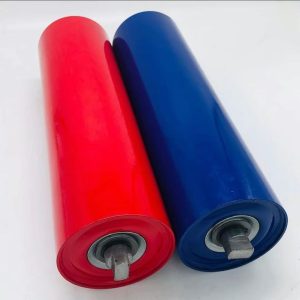
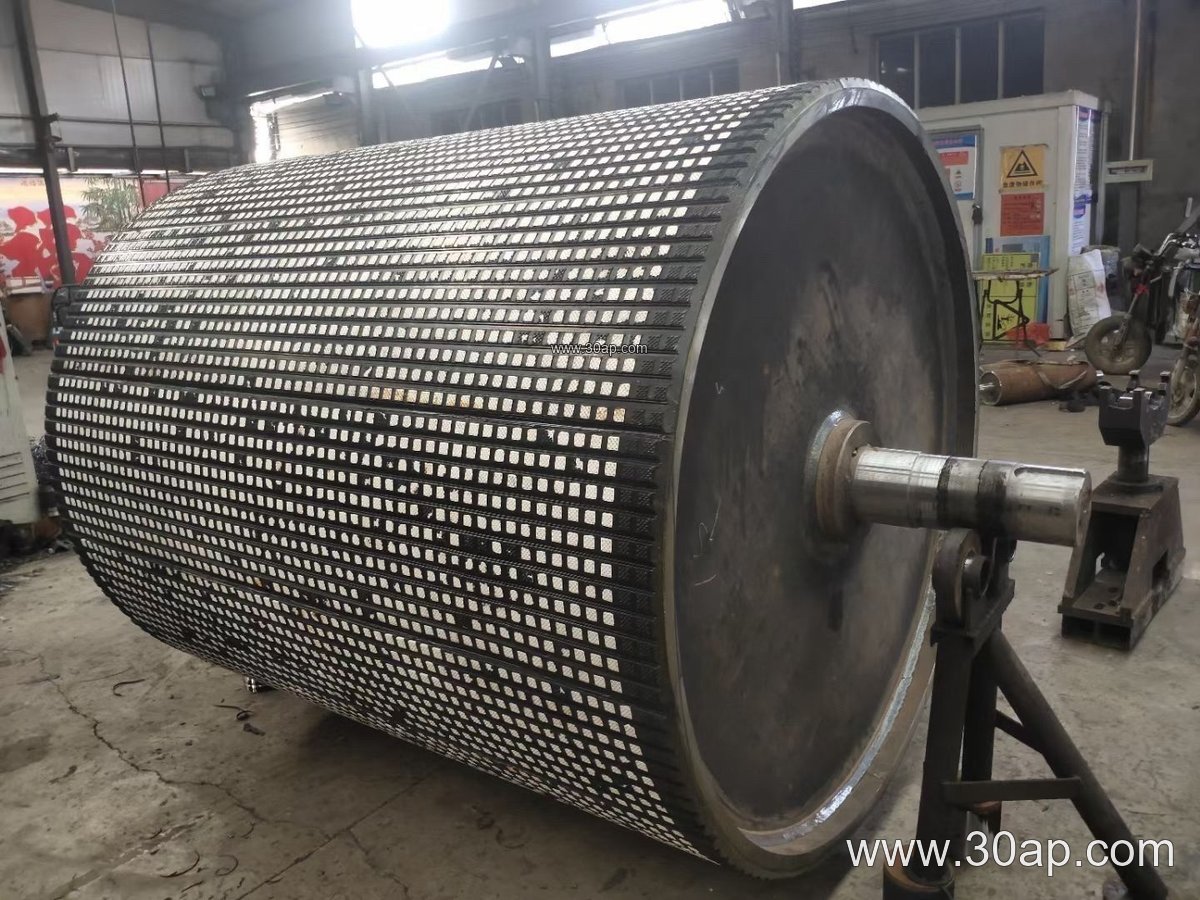
Pulley custom machining is the engineering and fabrication of conveyor pulleys to a specific duty rather than to a catalogue default. A conveyor pulley is not a single off-the-shelf item: it is a welded drum assembly with a shell, end discs, a shaft, bearing housings, and usually a lagging surface. Custom machining means the shell diameter, face width, shaft size, keyway, bearing fit, and surface finish are all produced to match one conveyor’s layout, belt tension, and material load.
In practice, a workshop receives the belt width, the calculated torque, the take-up arrangement, and the space available at the head or tail station, then machines the pulley around those constraints. The result is a component that mounts without site modification and runs true at operating speed.
How a Custom Pulley Is Built
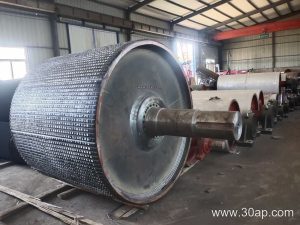
The shell is usually rolled from steel plate and welded to end discs, then machined so the rim runs concentric with the shaft. The shaft is turned to the required journal diameters, keyways are cut, and bearing seats are finished to the housing tolerance. Balancing follows, which matters most on wide face pulleys and on high-speed drives.
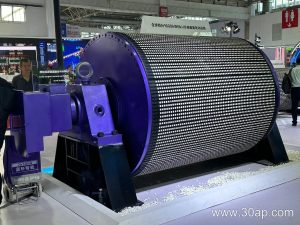
Lagging is applied after machining. Common surface options include plain finish, hot vulcanized rubber, cold bonded rubber, diamond grooving, chevron grooving, and ceramic tiles. Rubber lagging thickness is commonly 8, 10, 12, 15, or 20 mm, selected for grip, wear life, and whether the pulley is driving or merely redirecting the belt.
Typical reference dimensions used in design discussions look like this:
- Belt width B800 with a Ø500 shell and roughly 950 mm face width
- Belt width B1200 with a Ø1000 shell and roughly 1400 mm face width
- Belt width B1400 with a Ø800 shell and roughly 1600 mm face width
These are examples of proportion, not fixed rules. A given belt width can be paired with more than one diameter depending on wrap angle, belt tension, and available space. Shaft diameter follows torque and bearing load, so values such as Ø80, Ø100, or Ø140 are determined by calculation, never picked from belt width alone.
Where Machined Pulleys Are Used
Custom pulleys appear wherever a conveyor must be matched to a structure that already exists. In a limestone quarry, a head pulley may need a specific lagging pattern to stop slip on a wet incline. In a coal washing plant, a tail pulley is often machined with a self-cleaning profile to shed fines. In a cement plant clinker line, heat and abrasion push the specification toward thicker lagging and heavier shells.
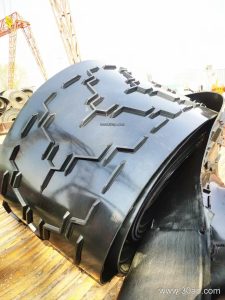
Port bulk terminals, crushing and screening plants, and power station coal handling all rely on the same principle: the pulley is made to the conveyor, not the conveyor to the pulley. A drum that drives an EP Conveyor Belt on a long overland run needs different grip and balance than a bend pulley guiding a Fabric Core Conveyor Belt through a short transfer.
Matching the Pulley to the Belt
The pulley and the belt work as a pair. A drive pulley with insufficient lagging will slip against a heavy Steel Cord Conveyor Belt under load, while an over-aggressive diamond pattern can wear a thin belt cover prematurely. Where the belt carries hot sinter or cement clinker, a Heat Resistant Conveyor Belt calls for lagging that tolerates the same temperature. Where oil mist is present, an Oil Resistant Conveyor Belt and a compatible rubber surface avoid swelling and delamination.
Face width is normally slightly greater than belt width, so a B650 belt sits on a pulley with roughly 750 mm of machined face. Wider belts such as a 1800mm Wide Conveyor Belt require proportionally larger shells and more careful balancing. Belt training also depends on pulley alignment, so end disc runout and shaft squareness are checked before dispatch.
What Buyers Should Confirm Before Ordering
A clear enquiry shortens machining time. Useful details include belt width, pulley function, shell diameter, face width, shaft diameter and keyway, bearing type, lagging type and thickness, and the duty environment. Stating whether the pulley is at the head, tail, take-up, or bend position helps the machinist choose the right shell thickness and surface.
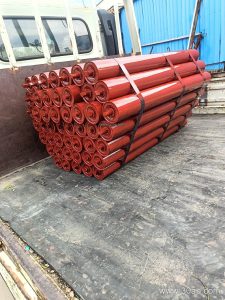
Buyers should also confirm the interface with the conveyor bracket and the idler roller frame, since a few millimetres of mismatch at the bearing housing can stall installation. For abrasive duties such as iron ore or quarry rock, an Abrasion Resistant Conveyor Belt paired with ceramic lagging often extends service life. For underground coal work, a Flame Retardant Conveyor Belt and non-sparking, well-grounded components are usually specified together.
Finally, ask for dimensional inspection records and a balancing report. Pulley custom machining is only as good as its verification, and a documented check of diameter, face width, runout, and keyway position is what turns a machined drum into a reliable part of the conveyor.