What a Conveyor Drive Pulley Does
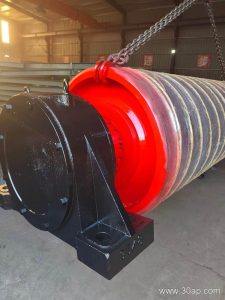
A conveyor drive pulley, often called the head pulley, is the powered drum that transmits motion to the conveyor belt. It is the component that converts motor torque into belt tension and forward travel. In a typical bulk handling circuit, the drive pulley sits at the discharge end, while a tail pulley or bend pulley handles redirection and tension. These roles are not interchangeable: a drive pulley must grip the belt under load, whereas a tail or bend pulley mainly guides and supports it. The drive pulley therefore directly influences starting, stopping, and steady-state performance of the whole conveyor.
This article explains how a drive pulley is built, where it is used across industries, and what buyers should review before specifying one. Related equipment such as the conveyor belt, idler roller, and conveyor bracket also affect performance, but the focus here stays on the drive pulley itself.
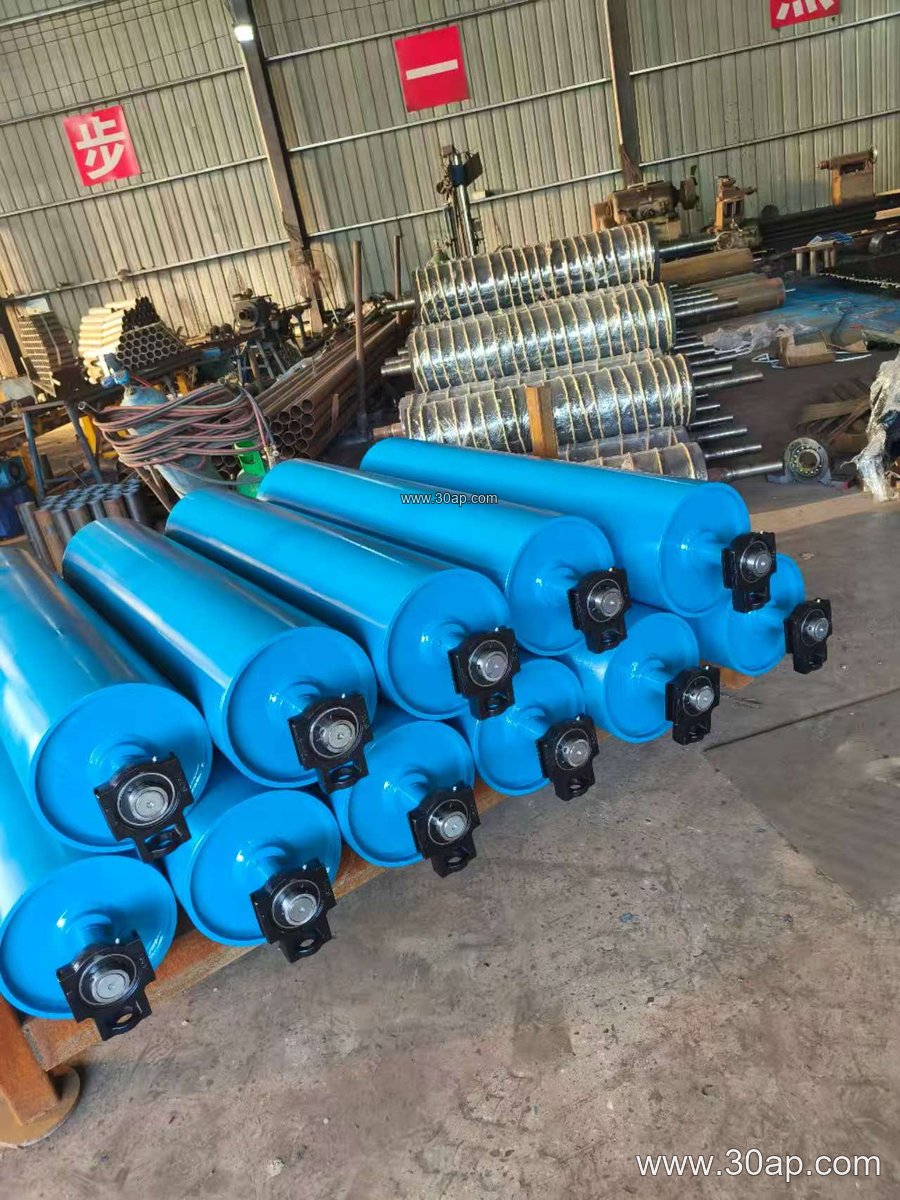
Construction and Surface Options
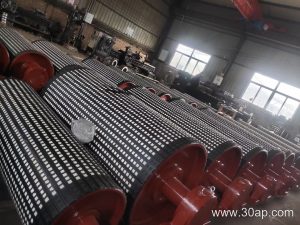
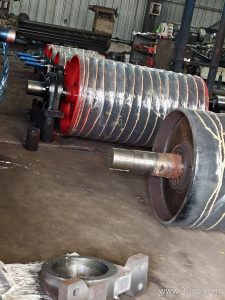
A drive pulley usually consists of a cylindrical shell, end discs, a shaft, and bearing housings. The shell can be smooth or covered with rubber, ceramic, or other lagging to increase friction between the drum and the belt. Common surface forms include plain, cold-bonded rubber, hot-vulcanized rubber, diamond lagging, herringbone lagging, and ceramic lagging. Lagging thickness is often 8, 10, 12, 15, or 20 mm depending on the duty. The shaft diameter is determined by torque and load, not by belt width alone; typical shaft sizes range from Ø50 to Ø200 mm, but final selection follows the actual drive calculation.
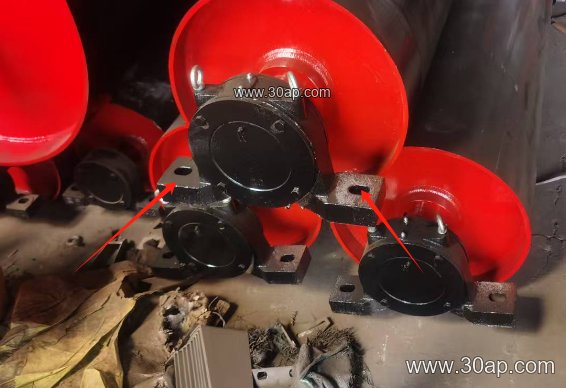
Shell width is normally slightly wider than the belt. For example, a B800 belt may use a pulley face around 950 mm, while a B1200 system may call for roughly 1400 mm. Diameter choices commonly include Ø200, Ø250, Ø315, Ø400, Ø500, Ø630, Ø800, Ø1000, Ø1250, Ø1400, Ø1600, and Ø1800. These are reference ranges, not fixed matches. A B1200 × Ø1000 drive pulley and a B800 × Ø500 unit can both exist in different designs, because diameter depends on belt speed, wrap angle, tension, and space.
Where Drive Pulleys Are Used
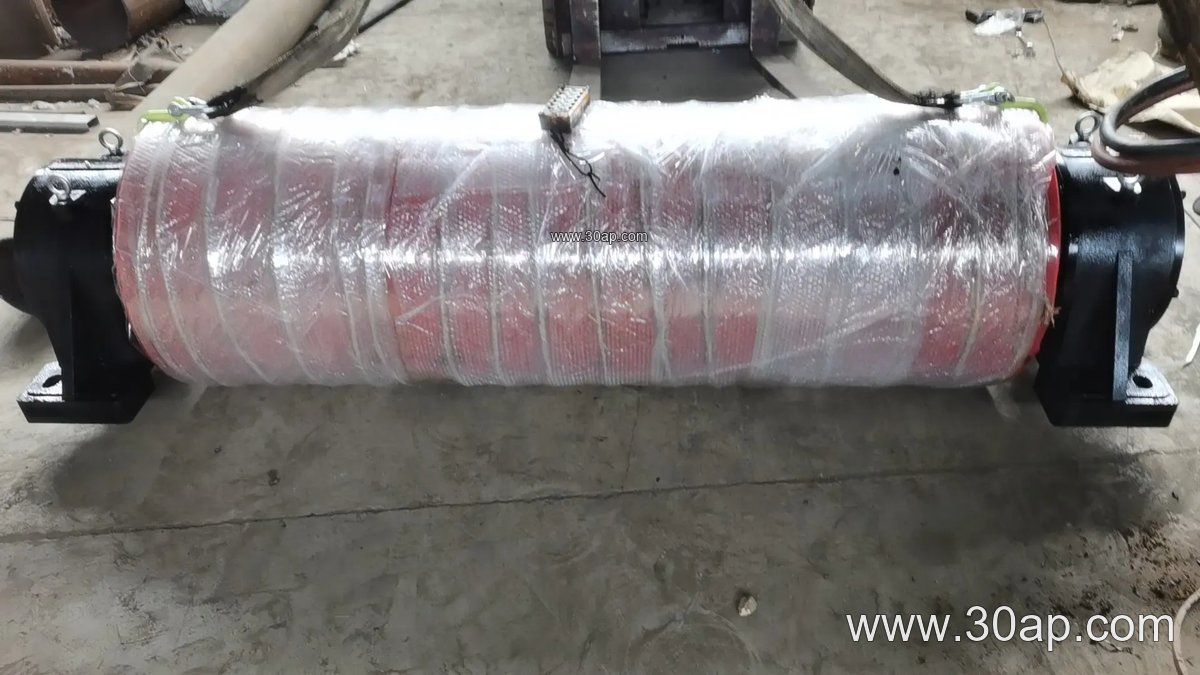
Drive pulleys appear in quarry and aggregate lines, cement plants, coal handling systems, power plant coal yards, iron ore and copper ore operations, and port bulk terminals. In a quarry, a drive pulley at the head of a crusher conveyor works with a heavy-duty mining conveyor belt to move blasted rock. In a cement plant, the same type of drum may handle clinker on a heat resistant conveyor belt. Underground coal mining conveyors often use flame retardant conveyor belts and require drive pulleys with robust lagging to maintain grip in wet or dusty conditions.
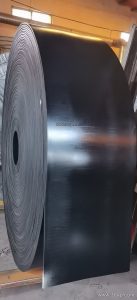
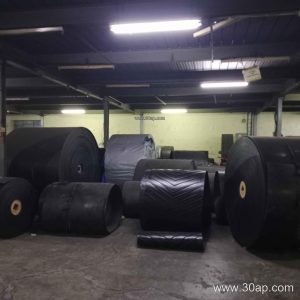
The pulley interacts closely with the belt type. A steel cord conveyor belt may demand a larger diameter to limit bending stress, while a fabric core conveyor belt or multi-ply fabric core conveyor belt can run on smaller drums within its own design limits. Abrasion resistant conveyor belts are common in sand and gravel plants, and the drive pulley lagging should match that abrasive environment. In food or chemical applications, oil resistant or acid resistant belts may be paired with suitable lagging, though the drive pulley remains the main power transfer component.
Buyer Checklist for Drive Pulley Specification
Before ordering, confirm the belt width, belt type, and expected tension. Then review the following:
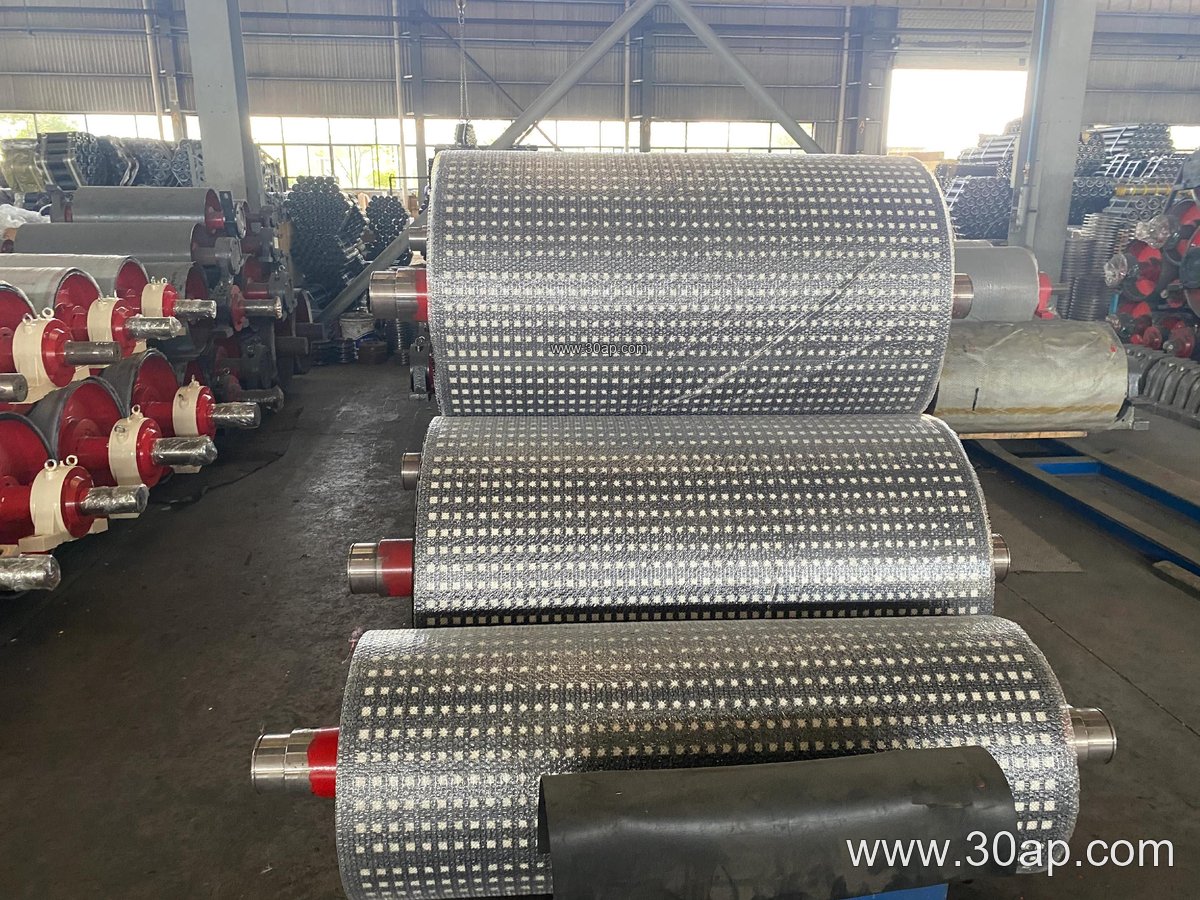
- Belt width and pulley face width: for B650, B1000, B1400, or B1800 belts, the face width usually exceeds the belt width by a margin.
- Diameter range: choose from common sizes such as Ø315, Ø500, Ø800, or Ø1250 according to torque, speed, and belt bending limits.
- Lagging type and thickness: plain, diamond, herringbone, or ceramic; 8 to 20 mm thickness depending on grip and wear.
- Shaft diameter: determined by torque and bearing load, not by a simple belt-width rule.
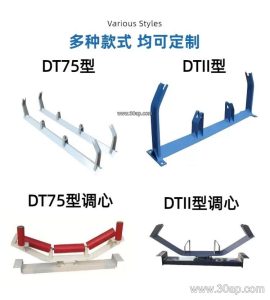
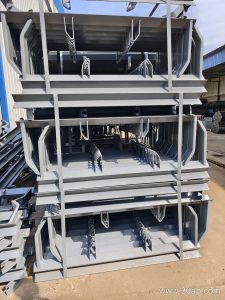
- Bearing and bracket compatibility: check that the conveyor bracket and bearing housing match the shaft and frame.
- Environmental factors: dust, water, heat, oil, or flame risk may call for specific belt and lagging combinations.
For example, a B1000 conveyor moving abrasive aggregate might use a Ø630 drive pulley with 12 mm diamond rubber lagging, while a B1600 port conveyor could use a Ø1000 drum with ceramic lagging. These are illustrative combinations, not universal prescriptions. The same logic applies to idler roller selection, which must support the belt without conflicting with the drive pulley diameter.
Maintenance and Operational Notes
Regular inspection of lagging wear, shaft alignment, and bearing condition helps prevent belt slip and tracking problems. Worn lagging reduces friction and can cause the drive pulley to lose grip, especially on inclines. Keep the pulley surface clean and check that the conveyor belt tension remains within design range. When replacing a drive pulley, verify that the new drum matches the existing conveyor bracket and shaft dimensions, and confirm that the belt type, such as EP conveyor belt or steel cord conveyor belt, is compatible with the selected diameter. A well-matched drive pulley supports stable throughput in mining, cement, power, and port operations without overloading the belt or the structure.