What a Conveyor Leg Does on a Belt System
A conveyor leg is the structural support that carries the load of a conveyor belt, idler rollers, and conveyed material down to the floor or foundation. In many installations the leg is part of a larger frame assembly, often tied together with a conveyor bracket, a cross beam, and stringer rails. While the belt and pulleys do the moving, the leg quietly determines whether the whole line stays level, aligned, and safe under vibration and loading.
In a coal washing plant or a limestone quarry, a poorly supported frame shows up quickly as belt misalignment, premature idler roller wear, and spillage. The conveyor leg is therefore a small component with a large influence on reliability.
Construction and Common Materials
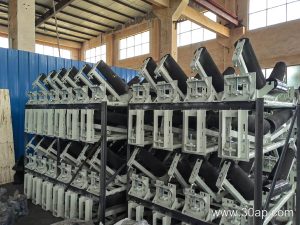
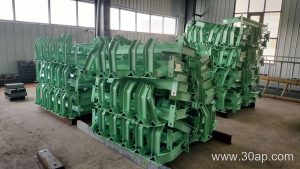
Most conveyor legs are fabricated from structural steel. Angle steel and channel steel are common choices, and some designs use folded steel plate for a cleaner profile and better stiffness-to-weight ratio. The leg usually ends in a base plate with bolt holes for anchoring, and the top connects to the stringer or bracket through bolted or welded joints.
Height, hole spacing, and cross-section are normally determined by the belt width, the trough angle, and the load carried. Installation hole spacing and beam length vary with belt width and trough angle, so they should be confirmed against the frame drawing rather than assumed.
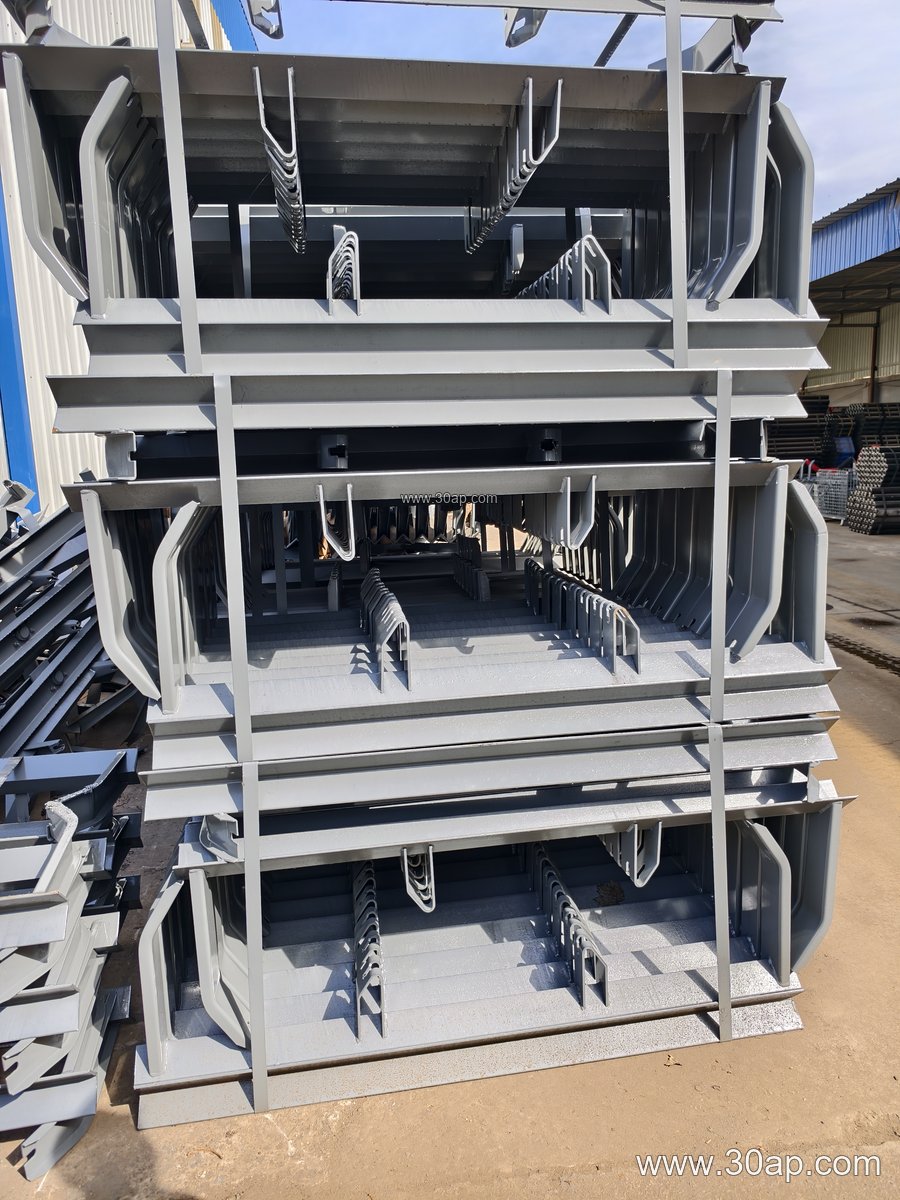
- Angle steel legs: economical, common on light and medium duty frames
- Channel steel legs: higher bending resistance for wider belts
- Folded plate legs: tidy appearance and good stiffness
- Adjustable legs: allow fine height correction during installation
How the Leg Works With Brackets and Rollers
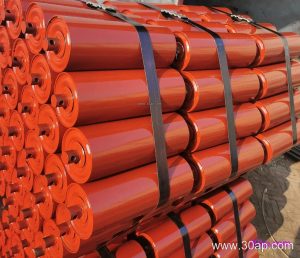
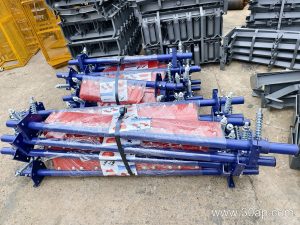
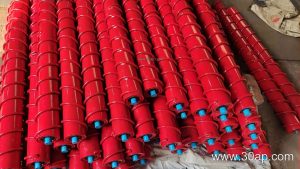
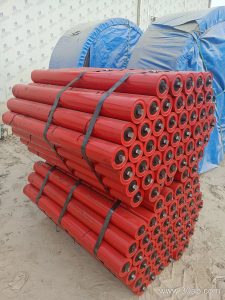
The leg rarely works alone. It supports the conveyor bracket that holds the idler roller set, and the bracket defines the trough angle that shapes the conveyor belt. A trough angle of 20, 30, 35, or 45 degrees changes the load profile and the side force on the leg, so the frame should be matched to the intended trough. Adjustable brackets allow the same frame to be set at different trough angles within a range.
On the return side, a V-shaped return bracket or a flat return bracket may be mounted on the same leg structure, provided the design accounts for the additional load. Drive, tail, and bend pulleys are separate components with their own support requirements and are not interchangeable with legs or brackets.
Typical Applications
Conveyor legs appear wherever a belt conveyor runs above ground level. In a cement plant they support clinker and raw material lines; in a power plant coal handling system they carry the belt frame above the transfer points; in a sand and gravel line or a crushing and screening plant they hold the frame steady through constant impact loading. They are equally common in fertilizer plants, grain silos, and tunnel muck removal systems.
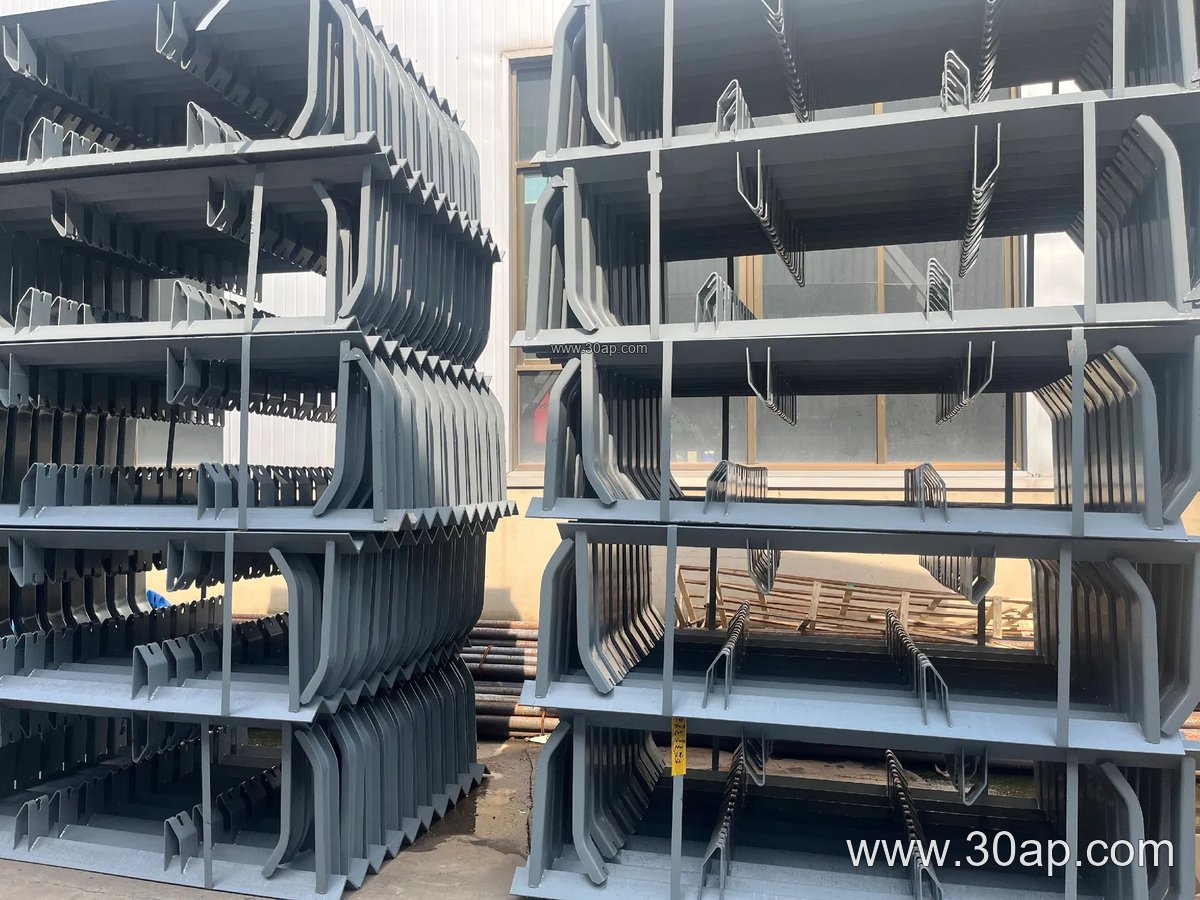
For high-impact loading zones, a buffer idler bracket may be used together with a reinforced leg to absorb shock from large lumps.
Reference Dimensions and Selection Notes
The table below lists typical reference values. These are examples for orientation, not fixed combinations or supply promises. A given belt width can be paired with more than one trough angle or roller diameter depending on the design.
| Item | Common Reference Values |
|---|---|
| Belt width | B500, B650, B800, B1000, B1200, B1400, B1600, B1800, B2000, B2200 |
| Trough angle | 20°, 30°, 35°, 45° (adjustable brackets cover a range) |
| Roller diameter | Ø89, Ø108, Ø133, Ø159, Ø194 |
| Material | Angle steel, channel steel, folded steel plate |
| Bracket types | Trough bracket, transition bracket, return bracket, flat return bracket, V-return bracket, buffer bracket, self-aligning bracket, forward-leaning bracket, spiral roller bracket, suspended bracket, adjustable bracket |
Example reference sets such as B800 with 35° and Ø108, or B1200 with 45° and Ø133, are common in practice but should be verified against the actual frame design and load calculation.
What Buyers Should Check
- Confirm the belt width, trough angle, and roller diameter the frame is designed for.
- Check the anchoring detail and floor conditions; height adjustment range matters on uneven ground.
- Verify material thickness and coating or paint for the site environment, especially in wet washing plants or dusty cement lines.
- Ask how the leg connects to the conveyor bracket and whether the joint allows later alignment correction.
- Review whether the frame is fixed or adjustable if future changes in trough angle are expected.
A well-matched conveyor leg keeps the belt running true, extends idler roller life, and reduces maintenance downtime across mining, coal, cement, power, and aggregate operations.