What a Rubber-Lined Pulley Does
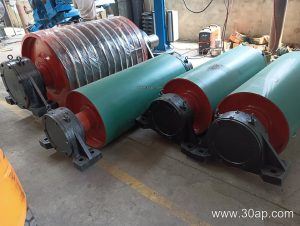
A rubber-lined pulley is a conveyor pulley whose shell is covered with a bonded rubber layer to raise friction between the drum face and the conveyor belt. The lining is the working surface, so the quality of the bond and the profile of the rubber matter as much as the shell itself. In a coal mining conveyor or a quarry conveyor, this added grip helps keep the belt tracking under load and reduces the slip that shortens belt life.
The same component is also called a rubber lagged pulley or a rubber-coated pulley. These are accurate equivalent names for one product, not different equipment. Drive, tail, and bend pulleys remain distinct roles, and a rubber-lined pulley is normally chosen for the drive position because that is where torque transfer is highest.
Construction and Surface Options
The body is usually a steel shell welded to end discs and a shaft. Rubber can be applied by hot vulcanization, cold bonding, or cast-on methods, and the finish may be smooth, diamond grooved, herringbone, or ceramic studded. Plain rubber suits general grip; diamond and herringbone patterns help shed water and fines. Thickness commonly ranges from 8 mm to 20 mm, with 10 mm and 12 mm frequent in medium-duty service.
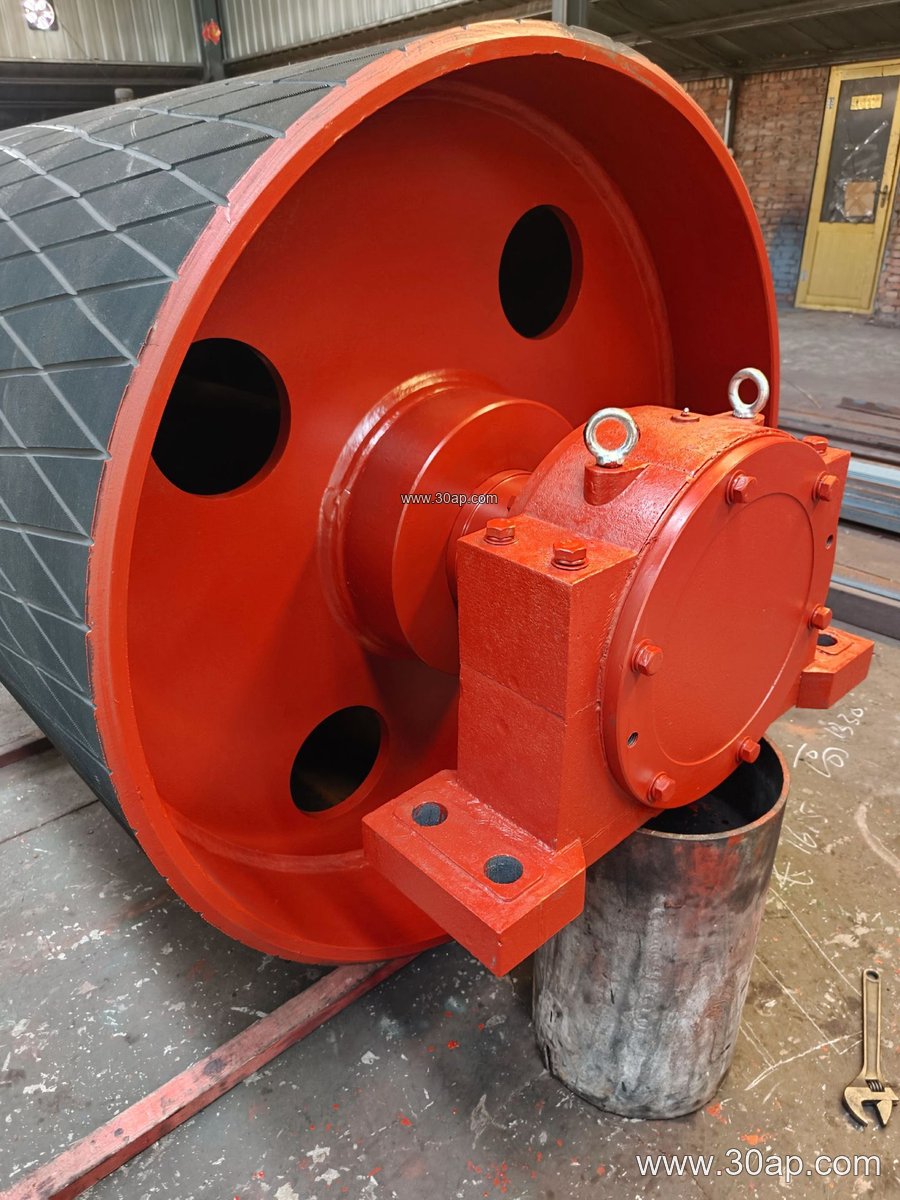
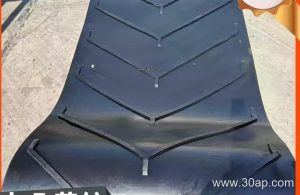
Rubber quality should match the duty. An abrasion resistant conveyor belt in a stone crushing line pairs better with a tough, resilient lining than a soft compound. In a cement plant or power plant, heat and oil exposure may call for a compound chosen for those conditions rather than a standard grade.
Where It Fits in the Conveyor
Rubber lining is most often specified on the drive or head pulley, where the belt must be pulled without slipping. It also appears on tail pulleys in wet or muddy conditions and on bend pulleys where extra traction or protection is useful. A snub or take-up pulley may be lined to prevent belt damage when wrap angles are high.
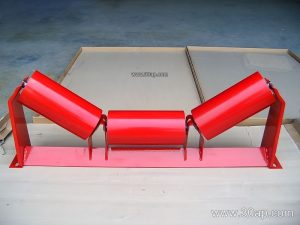
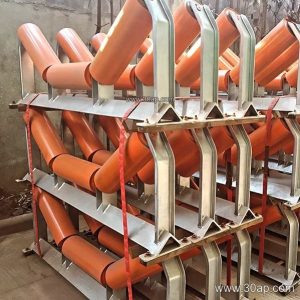
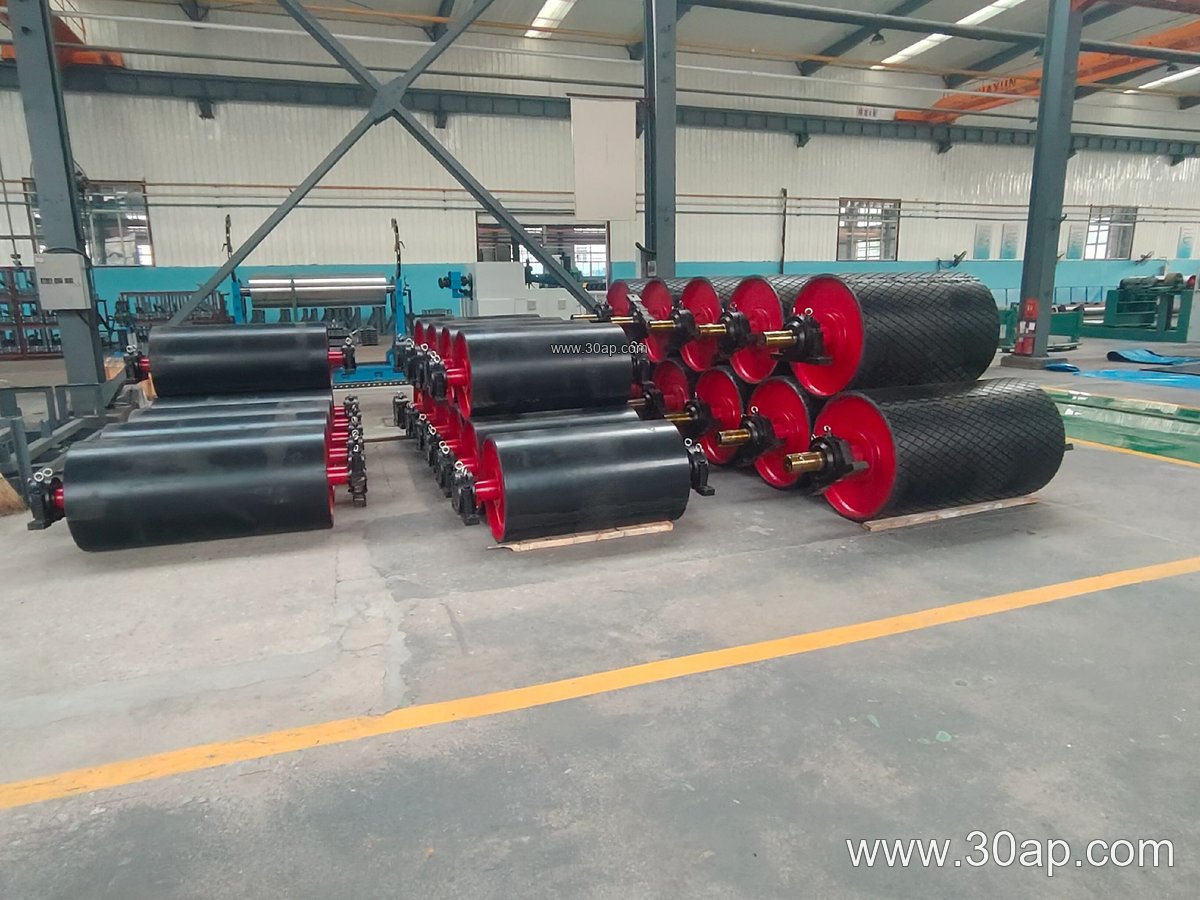
Applications span coal mining conveyors, iron ore and copper ore handling, limestone quarries, aggregate lines, ship loading at ports, and tunnel spoil removal. In each case the pulley works with the conveyor belt, idler rollers, and conveyor brackets, so alignment across the whole frame affects lining wear.
Common Reference Sizes
Dimensions are matched to the belt width and the torque demand, not fixed by one number. The table below gives typical reference combinations; final values are set by design.
| Belt Width | Typical Pulley Face | Example Diameter | Lining Thickness |
|---|---|---|---|
| B500 | about 600 mm | Ø315 mm | 8-10 mm |
| B650 | about 750 mm | Ø400 mm | 10 mm |
| B800 | about 950 mm | Ø500 mm | 10-12 mm |
| B1000 | about 1150 mm | Ø630 mm | 12 mm |
| B1200 | about 1400 mm | Ø800-Ø1000 mm | 12-15 mm |
| B1400 | about 1600 mm | Ø800-Ø1000 mm | 15 mm |
| B1600 | about 1800 mm | Ø1000-Ø1250 mm | 15-20 mm |
| B1800 | about 2000 mm | Ø1250-Ø1400 mm | 15-20 mm |
Shaft diameters such as Ø80, Ø100, Ø120, Ø160, or Ø200 are determined by torque and bearing load, never by belt width alone. A B1200 × Ø1000 unit and a B800 × Ø500 unit can both be correct for their own conveyors.
Buyer Checklist
- Confirm the pulley role: drive, tail, bend, take-up, or snub.
- State belt width, pulley diameter, face width, and shaft size from the conveyor drawing.
- Choose lining compound and pattern for the material, moisture, and temperature.
- Check that the belt matches the duty, whether EP conveyor belt, steel cord conveyor belt, or flame retardant conveyor belt for underground work.
- Ask about bonding method, groove depth, and balance before delivery.
Maintenance Notes
Inspect the lining for cuts, glazing, and separation at the edges. Worn grooves reduce grip and can cause belt slip, especially on a heavy-duty mining conveyor. Keep the belt cleaner and the pulley face free of sticky fines, and verify that idler rollers turn freely so drag does not overload the drive. Re-lining is often cheaper than replacing the whole drum when the shell and shaft remain sound.