What a Five-Roll Idler Bracket Does on a Conveyor
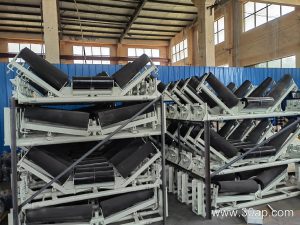
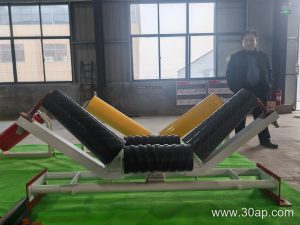
A five-roll idler bracket is the support frame that holds five idler rollers in a troughing arrangement under the carrying side of a conveyor belt. Instead of the familiar three-roll set, this bracket positions five rollers so the belt forms a deeper, more gradual cradle. That shape matters when the conveyed material is bulky, abrasive, or easily spilled, because the belt edges are supported more closely and the load sits more evenly across the width. In quarry lines, crushing and screening plants, and cement works, the extra roll contact helps reduce edge sag and keeps material centered.
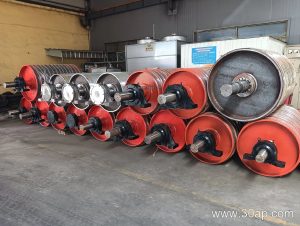
Readers sometimes confuse the bracket with the roller itself. This component is the mounting structure, not the idler roller. It is also different from a conveyor pulley: drive, tail and bend pulleys transmit motion and change belt direction, while a five-roll idler bracket simply supports the belt between those pulleys. The bracket is a structural part, and the rollers, shafts and fasteners are separate items.
How the Bracket Is Built
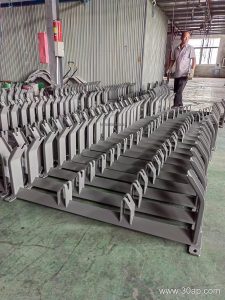
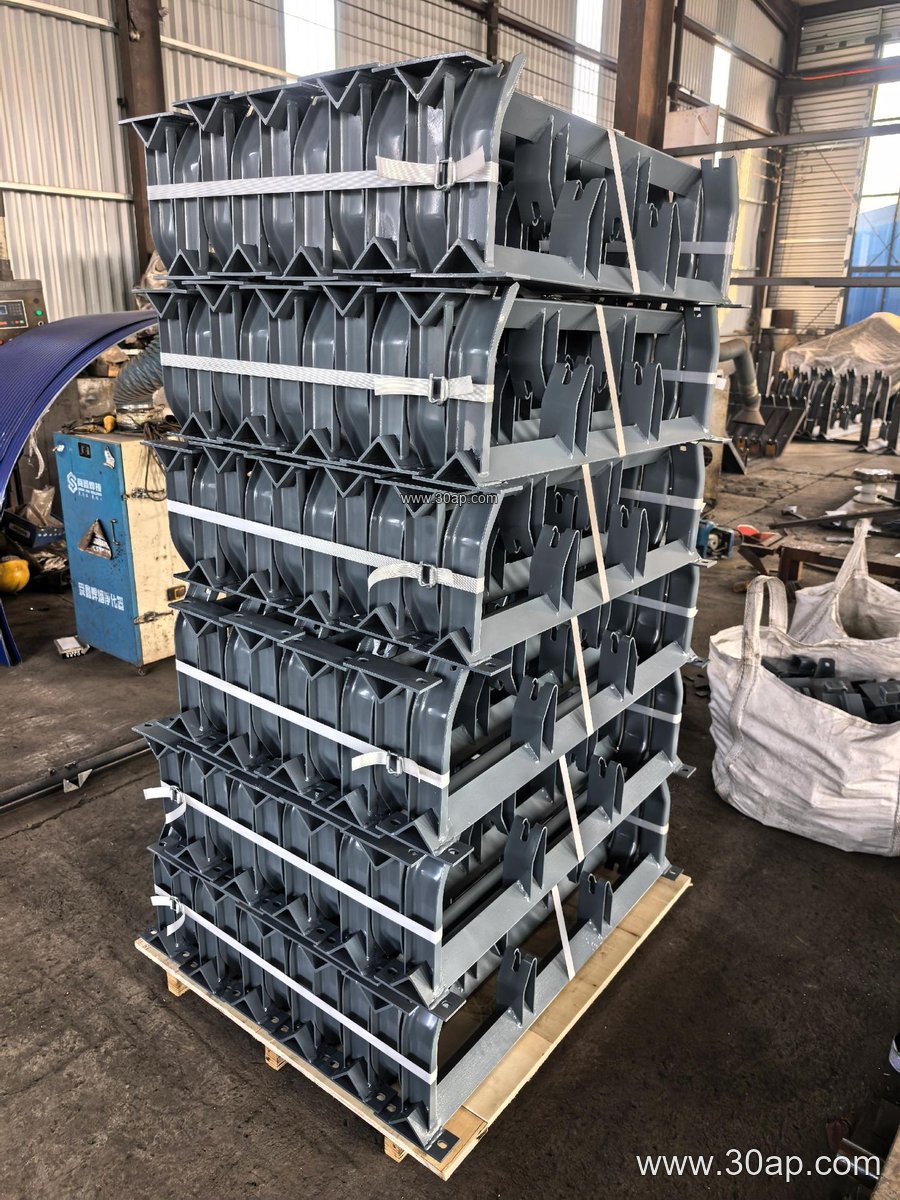
Most five-roll idler brackets are fabricated from angle steel, channel steel, or folded steel plate. The frame may be a single welded assembly or a bolted design with separate roll stations. Typical features include:
- Five mounting positions arranged in a shallow arc or stepped profile
- Slotted or drilled holes so roller shafts sit at the intended trough angle
- Cross beams whose length follows belt width and trough angle
- Optional height adjustment for fine belt alignment
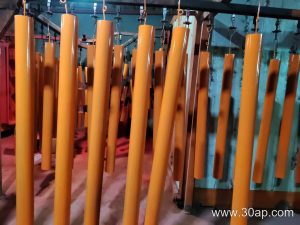
- Painted, galvanized, or powder-coated surfaces for dusty and damp sites
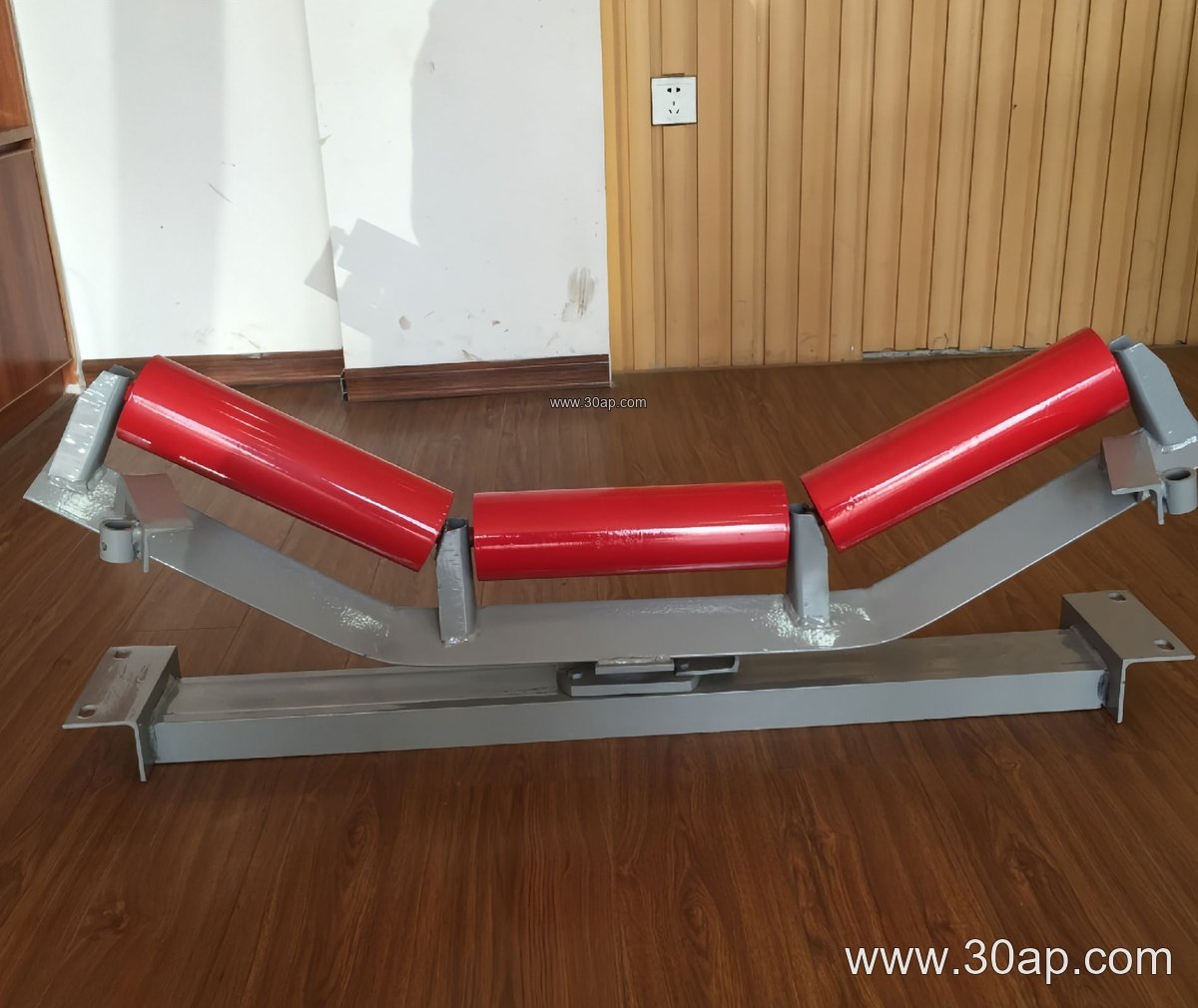
The bracket is often classed as a troughing bracket, an upper troughing frame, or an adjustable idler bracket, depending on how the roll stations are positioned. A fixed version keeps the trough angle constant; an adjustable version lets maintenance staff change the angle within a range. Both are five-roll designs, and neither should be mistaken for a return bracket, a V-return bracket, or a self-aligning bracket with a different roll layout.
Where It Fits in the Conveyor Line
The bracket is installed on the carrying side, usually bolted to the conveyor stringers or to a cross beam at regular spacing. It works together with the conveyor belt, the troughing rollers, and the conveyor bracket system along the frame. In a limestone mine or an iron ore transfer point, a five-roll layout can be useful where the belt is wide and the material is lumpy. In a coal washing plant or a power plant coal yard, the same design may appear where spillage control and belt training are priorities.
Common belt widths for these brackets include B800, B1000, B1200, B1400, and B1600, with wider frames available for B1800 and B2000 belts. Trough angles are usually 20, 30, 35, or 45 degrees, and roller diameters often fall in the Ø89 to Ø159 range. A typical reference combination might be B1200, 35 degrees, Ø133, but the final match depends on belt width, material lump size, and the conveyor design. No single belt width is tied to one angle or one roller diameter, so the bracket should be selected from the conveyor drawing rather than from a rule of thumb.
Selection Points for Buyers
When specifying a five-roll idler bracket, confirm the belt width, the required trough angle, the roller diameter, and the shaft spacing. Ask for the mounting hole pattern and the overall cross beam length, since these change with belt width and angle. Check whether the frame is fixed or adjustable, and whether the site needs a hot-dip galvanized finish for wet or coastal conditions. For dusty operations such as a sand and gravel line or a fertilizer plant, smooth surfaces and drainage gaps help prevent buildup.
The bracket also needs to suit the belt it carries. A heavy-duty mining conveyor belt, an abrasion resistant conveyor belt, or a flame retardant conveyor belt used in underground coal mining may demand a stronger frame and closer roll spacing than a light aggregate belt. Belt stiffness affects how well it conforms to a five-roll profile, so the roller arrangement should be reviewed together with the belt specification. In a tunnel or underground mine, flame retardant and anti-static properties are usually specified for the belt, while the bracket itself is selected for load and corrosion resistance.
Installation and Maintenance Notes
Align the bracket square to the conveyor centerline and check that all five rollers sit at the same height relative to the belt. A misaligned frame can cause belt drift and uneven wear. Inspect the mounting bolts and welds during scheduled shutdowns, and clear accumulated material from the frame so the rollers turn freely. If the belt begins to sag between brackets, check spacing and roller condition before changing the bracket type. Replacing a five-roll bracket with a three-roll set changes the belt profile and should only be done after an engineering review.
For related conveyor components, matching the bracket with the correct idler roller, conveyor pulley, and conveyor belt specification keeps the whole line consistent. Buyers can compare bracket drawings with the belt and roller data, then confirm dimensions against the actual conveyor frame before ordering.