What an Adjustable Conveyor Bracket Does
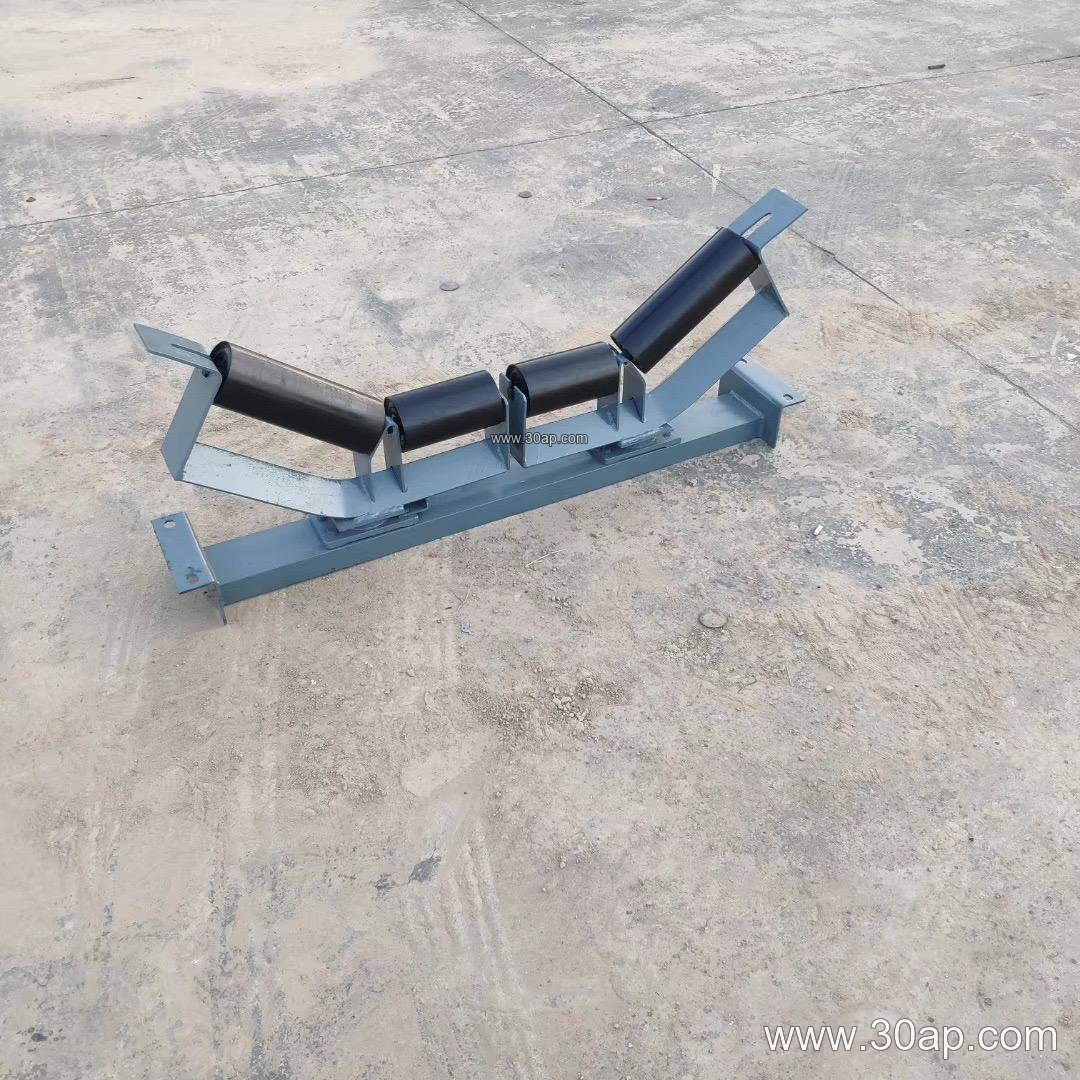
An adjustable conveyor bracket is the steel support that holds the carrying idlers at a chosen trough angle and keeps the belt profile steady along the load zone. Unlike a welded fixed bracket, this adjustable idler bracket lets maintenance teams change the trough angle on site, so one frame can serve different materials and belt conditions. In a coal preparation plant or a limestone quarry, that flexibility often matters more than a few millimetres of steel thickness.
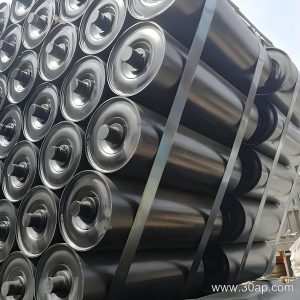
The bracket works together with the conveyor belt, the idler roller and the conveyor pulley. A poorly set bracket shows up quickly as belt wander, spillage or edge wear, so the setting is part of the whole conveying system rather than a separate detail.
How the Bracket Is Built
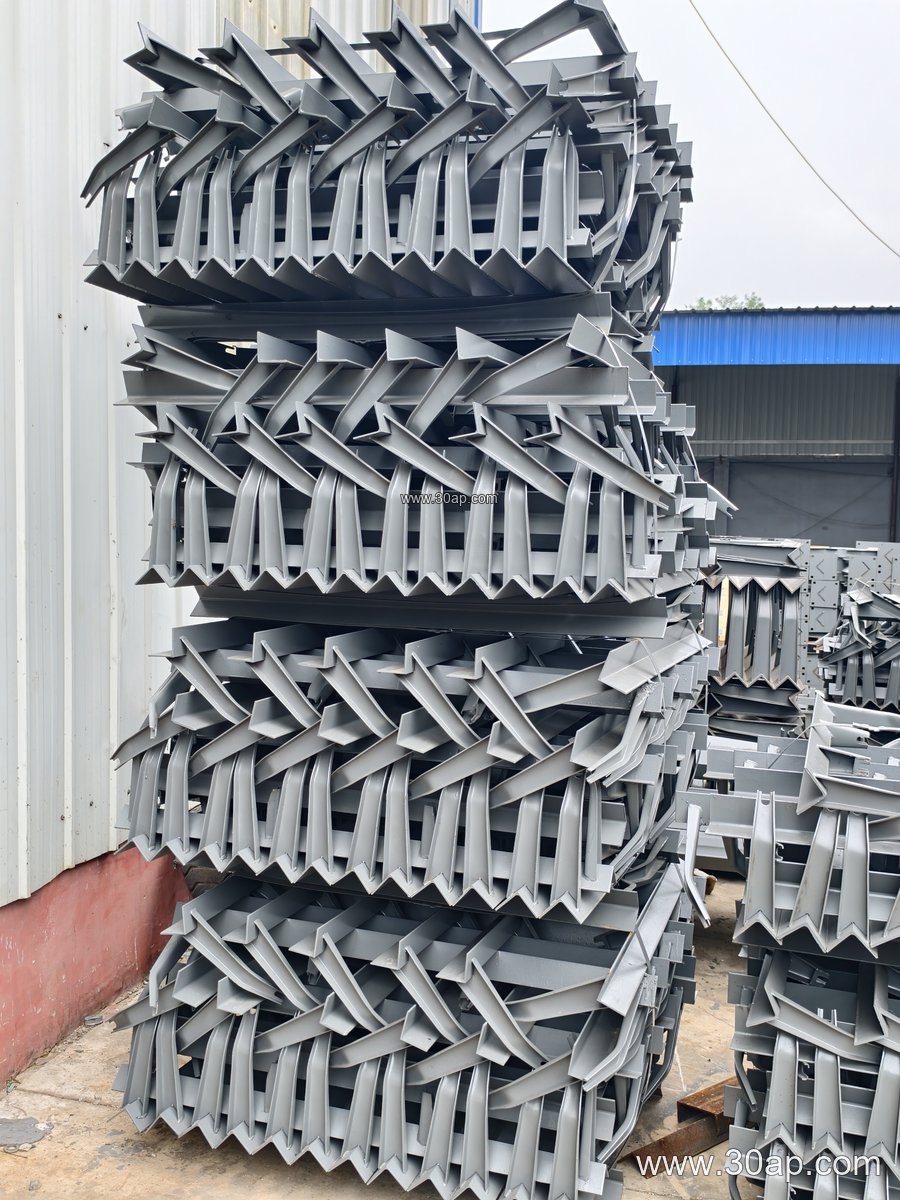
Most units are fabricated from angle steel, channel steel or folded steel plate, then drilled for the idler shaft and for the frame cross beam. The adjustable feature usually comes from slotted holes, a pivoting arm or a set of indexed positions that lock the side rollers at the required angle.
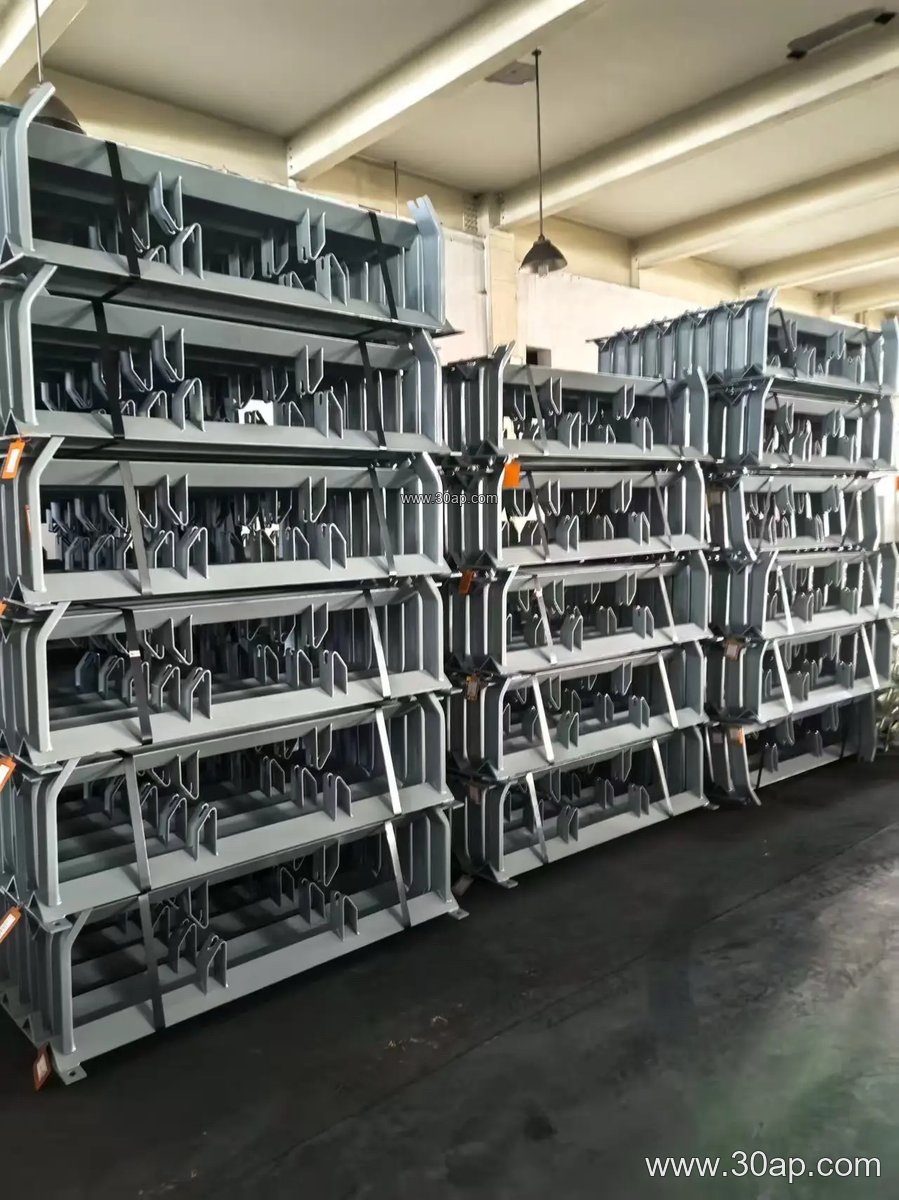
- Frame material: angle steel, channel steel or bent plate
- Adjustment: slotted holes, pivot arms or bolted index plates
- Finish: painted or galvanised, depending on the plant environment
- Mounting: bolted to the conveyor stringer, not welded, so it can be replaced
Because the cross beam length and hole spacing change with belt width and trough angle, a bracket should always be ordered against the actual frame drawing rather than a nominal size alone.
Trough Angle and Roller Diameter Selection
The adjustable range usually covers common trough angles of 20, 30, 35 and 45 degrees. A 30 degree setting is a frequent choice for general bulk material, while 35 or 45 degrees suits higher capacity and wider belts. Forward tilt of about 1.5 to 2 degrees is sometimes built into the bracket to help belt tracking.
Roller diameter is matched to belt width and load, not fixed by it. Typical combinations include B800 with 35 degrees and Ø108 rollers, B1200 with 45 degrees and Ø133 rollers, or B650 with 30 degrees and Ø89 rollers. These are reference examples only; final values are determined by design.
| Belt width | Common trough angle | Typical roller diameter |
|---|---|---|
| B500 / B650 | 20–30 degrees | Ø89 |
| B800 / B1000 | 30–35 degrees | Ø108 |
| B1200 / B1400 | 35–45 degrees | Ø133 |
| B1600 / B1800 | 35–45 degrees | Ø159 |
| B2000 and above | 35–45 degrees | Ø194 |
Do not assume that one belt width can only match one pulley diameter or one trough angle. The bracket, roller and belt width are selected together.
Where It Fits on the Conveyor
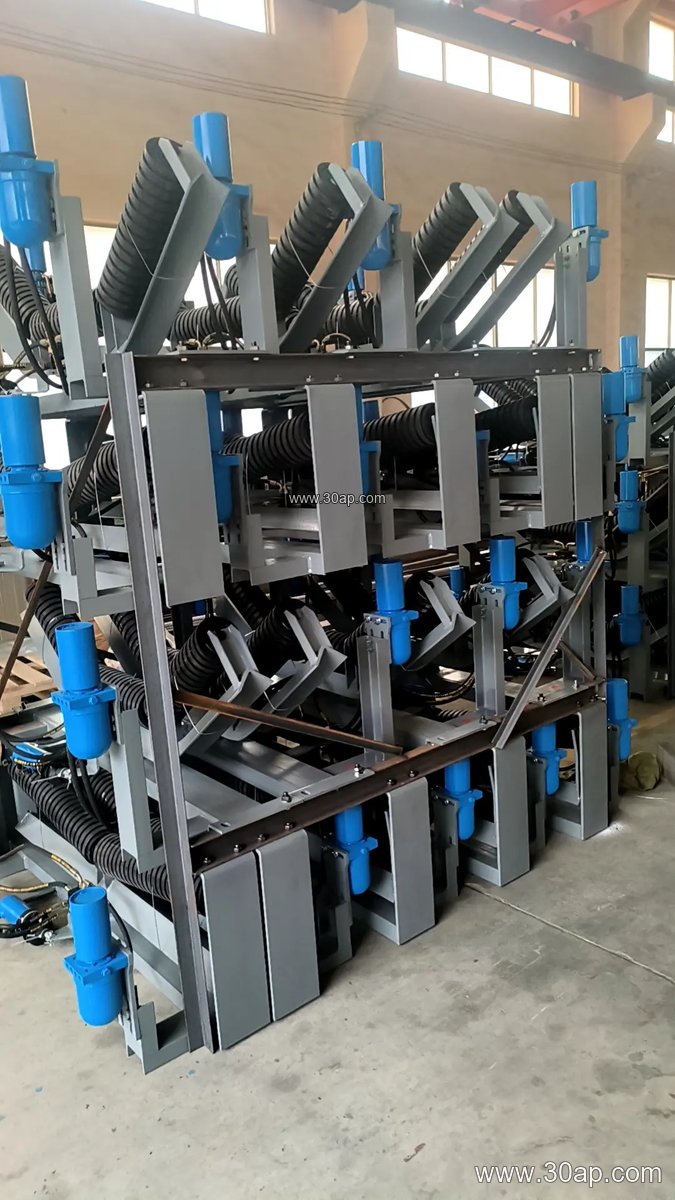
Adjustable brackets appear in several positions. Carrying-side trough brackets hold three rollers in a trough. Transition brackets near the head or tail ease the belt from flat to troughed. Return brackets and V-return brackets support the empty strand. Impact brackets sit under the loading point, and self-aligning brackets help correct misalignment.
In a cement plant, an adjustable trough bracket on the clinker line may be reset when throughput changes. In a power plant coal yard, the same bracket type helps keep a flame retardant conveyor belt centred on long inclined runs. A wash plant handling abrasive slurry often uses a heavy-duty bracket paired with an abrasion resistant conveyor belt.
Installation and Maintenance Notes
Set the bracket square to the belt centreline, tighten bolts to the frame maker’s torque, and check that all three rollers sit at the same angle. After the first few days of running, recheck alignment and bolt tension. Keep the adjustment slots clean so the angle can be changed later without cutting or re-drilling.
Inspect for bent arms, worn pivot pins and corrosion, especially in fertiliser or salt environments. A bracket that no longer holds its angle will let the belt sag and rub, which shortens both belt and idler life.
What Buyers Should Confirm
Before ordering, confirm the belt width, required trough angle range, roller diameter and shaft end type. Ask for the mounting hole pattern and cross beam length, since these follow the frame design. State the site conditions, such as dust, moisture, heat or corrosive material, so the finish and steel grade suit the job. For a coal mining conveyor belt or an underground installation, flame retardant and anti-static properties of the belt are separate decisions from the bracket, but both must be compatible with the frame.
Request a dimensional drawing and check it against the existing conveyor bracket before replacement. Matching the drawing avoids downtime on a quarry conveyor belt line or a bulk material handling circuit where every hour of stoppage counts.