What a Heavy-Duty Trough Idler Set Does
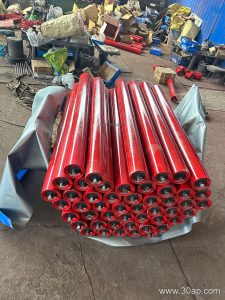
A heavy-duty trough idler set is the assembly of rollers that supports the loaded run of a conveyor belt and shapes it into a trough. In a typical three-roller arrangement, the center roller sits flat while the two side rollers angle upward, creating the trough profile that keeps bulk material centered on the belt. This set is built for continuous duty in abrasive, dusty, and high-load environments such as an iron ore mine, a limestone quarry, or a cement plant’s raw-material handling line.
The set is more than a few rollers bolted together. It includes the idler rollers, shafts, bearing housings, seals, and the frame that holds the rollers at the correct angle. When specified correctly, the set protects the conveyor belt from edge damage, reduces spillage, and keeps the belt tracking steadily along the structure.
Construction Details That Matter
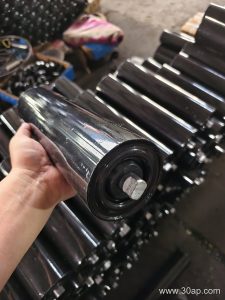
Heavy-duty trough idler sets differ from standard sets in wall thickness, bearing selection, and seal design. Roller shells are commonly made from steel tube with a machined finish, and the shaft ends are fitted with bearing housings that are greased for long service. Seals are a critical detail: in a coal mining conveyor or a dusty aggregate line, a multi-stage labyrinth seal helps keep fine particles away from the bearings.
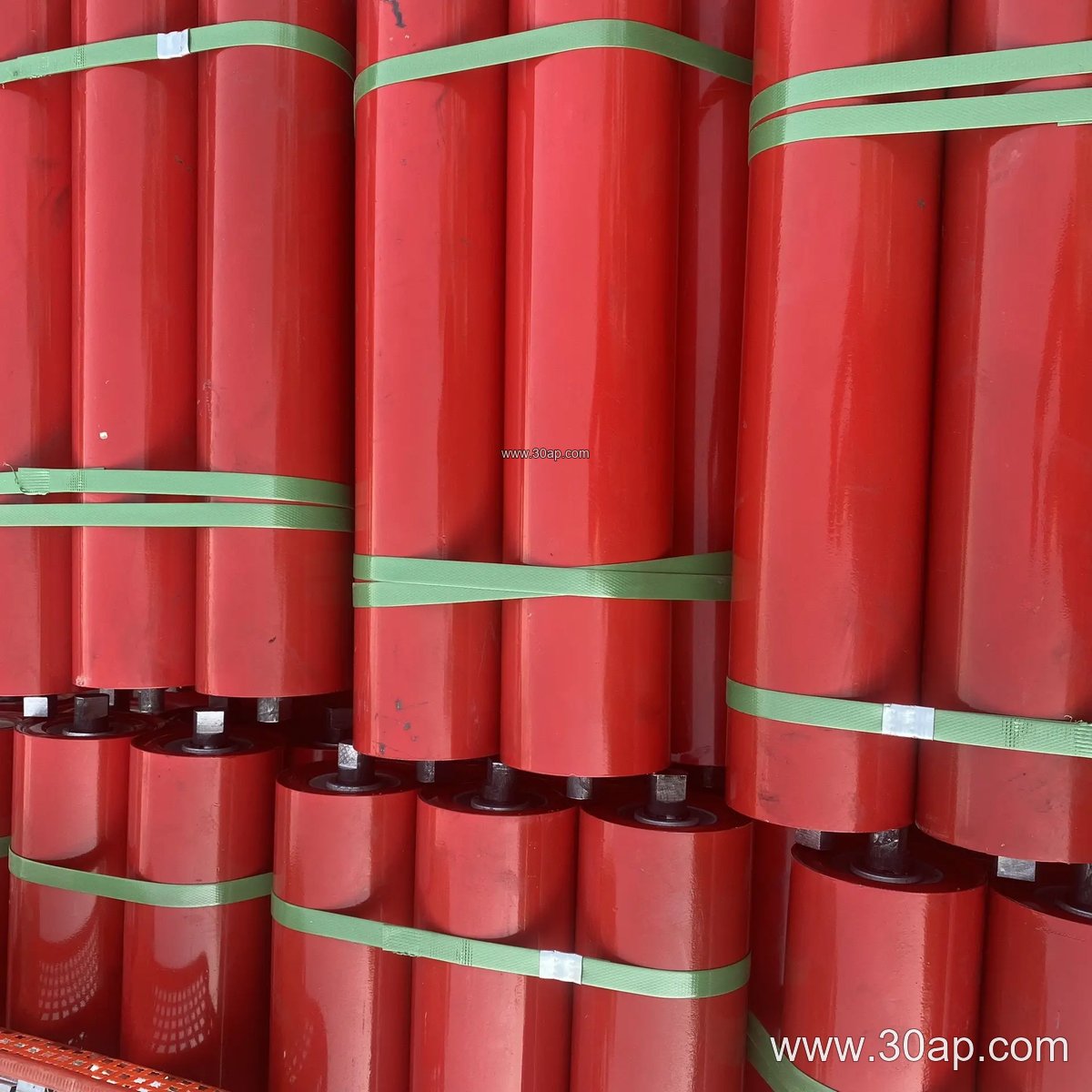
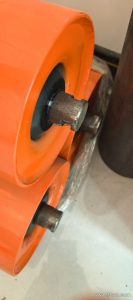
Roller surface options include plain steel, nylon, ceramic, and rubber rings. Rubber-ring rollers are often chosen at transfer points where impact is heavy, while ceramic or nylon surfaces may be used where material buildup or wear is a concern. Bearing sizes such as 6205, 6305, 6306, 6308, and 6310 appear across different roller diameters, and the correct match depends on load and speed rather than on belt width alone.
Where the Set Fits on a Conveyor
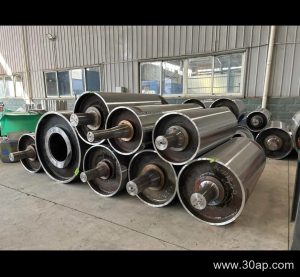
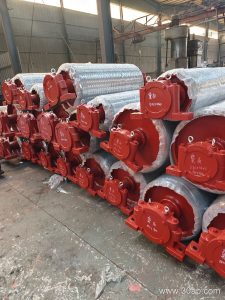
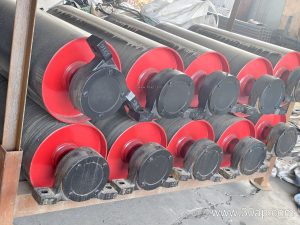
Trough idler sets are installed along the carrying side of the conveyor, between the tail pulley and the head pulley. They are not the same as the drive pulley that powers the belt, nor the bend pulley that changes belt direction, nor the tail pulley at the loading end. Each of those pulleys serves a different function, and they should not be confused with the idler set.
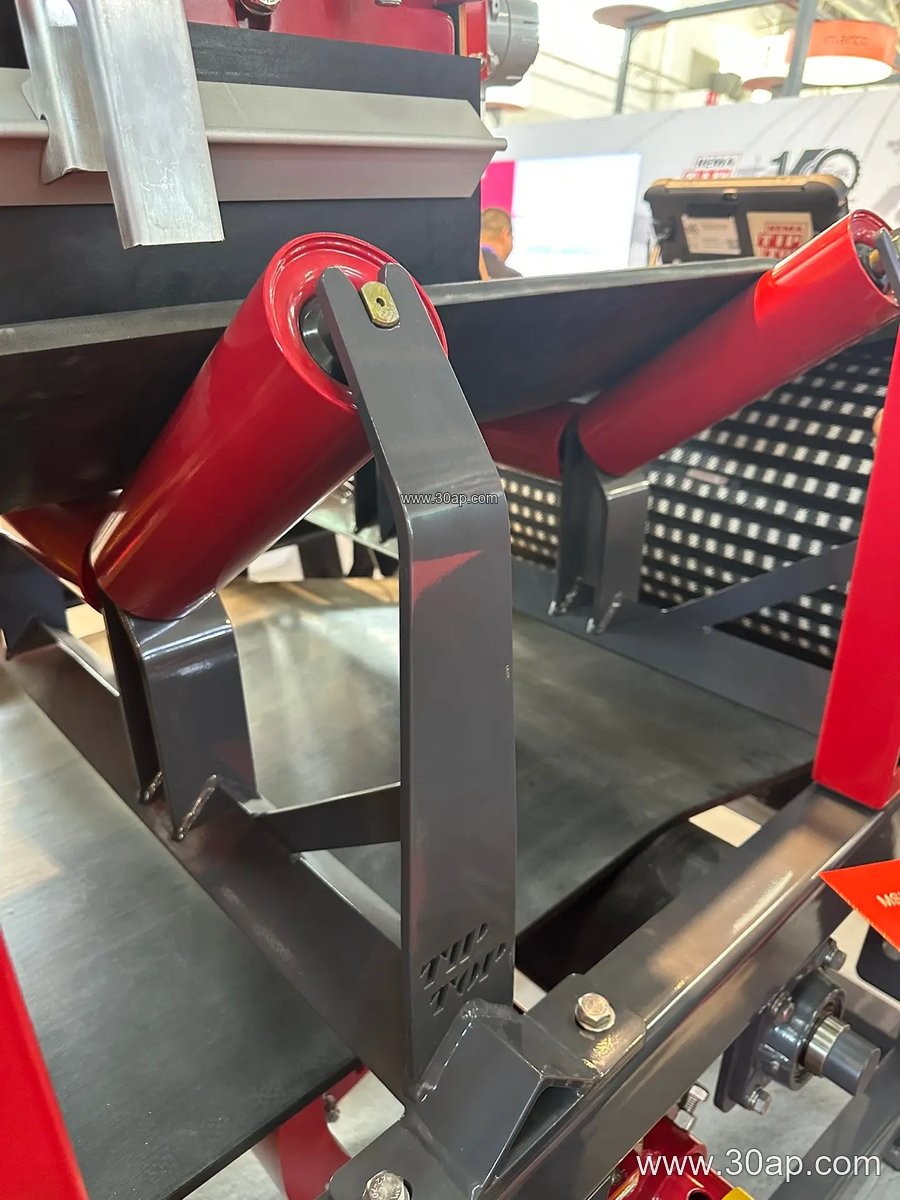
The set works together with a conveyor belt that may be a rubber conveyor belt, an EP conveyor belt, or a steel cord conveyor belt depending on the duty. In a coal mining conveyor or a power plant coal handling system, flame retardant conveyor belt grades are often specified, while a quarry conveyor belt may use an abrasion resistant conveyor belt to handle sharp rock. The idler set must match the belt’s troughability and the material’s loading pattern.
Common Sizes and Configuration Reference
The table below shows common reference values. These are examples, not fixed combinations, and the final selection should follow the conveyor design.
| Parameter | Common Reference Values |
|---|---|
| Roller diameter | Ø89, Ø102, Ø108, Ø127, Ø133, Ø159, Ø178 mm |
| Belt width | B500, B650, B800, B1000, B1200, B1400, B1600, B1800, B2000 |
| Trough angle | 20°, 30°, 35°, 45° |
| Roller length (three-roller set, example) | B500 about 200 mm; B800 about 315 mm; B1000 about 380 mm; B1200 about 465 mm; B1400 about 530 mm; B1600 about 600 mm |
| Bearing | 6204, 6205, 6305, 6306, 6308, 6310 |
| Roller surface | Steel tube, nylon, ceramic, rubber ring |
Side rollers and center rollers can have different lengths within the same set, and the trough angle affects the belt’s capacity and material stability. A 35° trough is common in many bulk handling lines, while a 45° angle may be used where material needs deeper containment.
Selection and Maintenance Notes for Buyers
When specifying a heavy-duty trough idler set, consider the belt width, the material’s bulk density and lump size, the conveyor’s speed, and the ambient conditions. In a copper ore concentrator or a sinter plant, heat and abrasion may call for heat resistant conveyor belt or high abrasion resistant conveyor belt grades, and the idler set should be chosen with matching bearing protection. In a port ship loading conveyor or a tunnel muck removal line, dust and moisture are common, so seal quality deserves attention.
Inspection should focus on roller rotation, seal condition, and frame alignment. A seized roller can wear through a conveyor belt quickly, and a misaligned set can cause belt mistracking. Spare rollers and brackets should be kept to reduce downtime, and lubrication intervals should follow the manufacturer’s guidance. For more information on compatible conveyor components, visit wybelt.com and review the idler roller and conveyor bracket options alongside the belt specification.
Finally, remember that the trough idler set is one part of a system that includes the conveyor pulley, the conveyor bracket, and the belt itself. Matching these components correctly is the key to reliable operation in mining, cement, power, and aggregate industries.