What a Ceramic Rubber-Lined Pulley Is
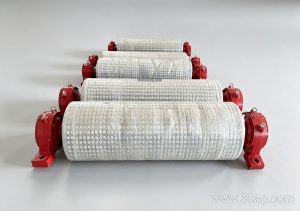
A ceramic rubber-lined pulley is a conveyor pulley whose shell is covered with a rubber layer embedded with ceramic tiles. It is also called a ceramic lagged pulley or ceramic-covered pulley drum. The ceramic blocks sit proud of the rubber surface, so the belt contacts hard, wear-resistant islands while the rubber absorbs shock and flexes under load. This combination gives the pulley a grip that lasts far longer than plain rubber in abrasive service. It is a surface form of the conveyor pulley, not a separate machine, and it can be applied to a drive pulley, tail pulley, bend pulley or tension pulley according to duty.
How the Lining Is Built
The shell is usually a welded steel drum machined true before covering. The lagging is applied in one of two common ways. In the hot-vulcanised route, unvulcanised rubber sheet with ceramic tiles laid in a pattern is wrapped on the shell and cured in an autoclave or with a heated press, bonding rubber and ceramic into one skin. In the cold-bonded route, a prepared rubber pad with pre-set ceramic studs is glued to a grit-blasted shell. Common lining thicknesses are 8, 10, 12, 15 and 20 mm, with tile height and spacing chosen for the material being carried.
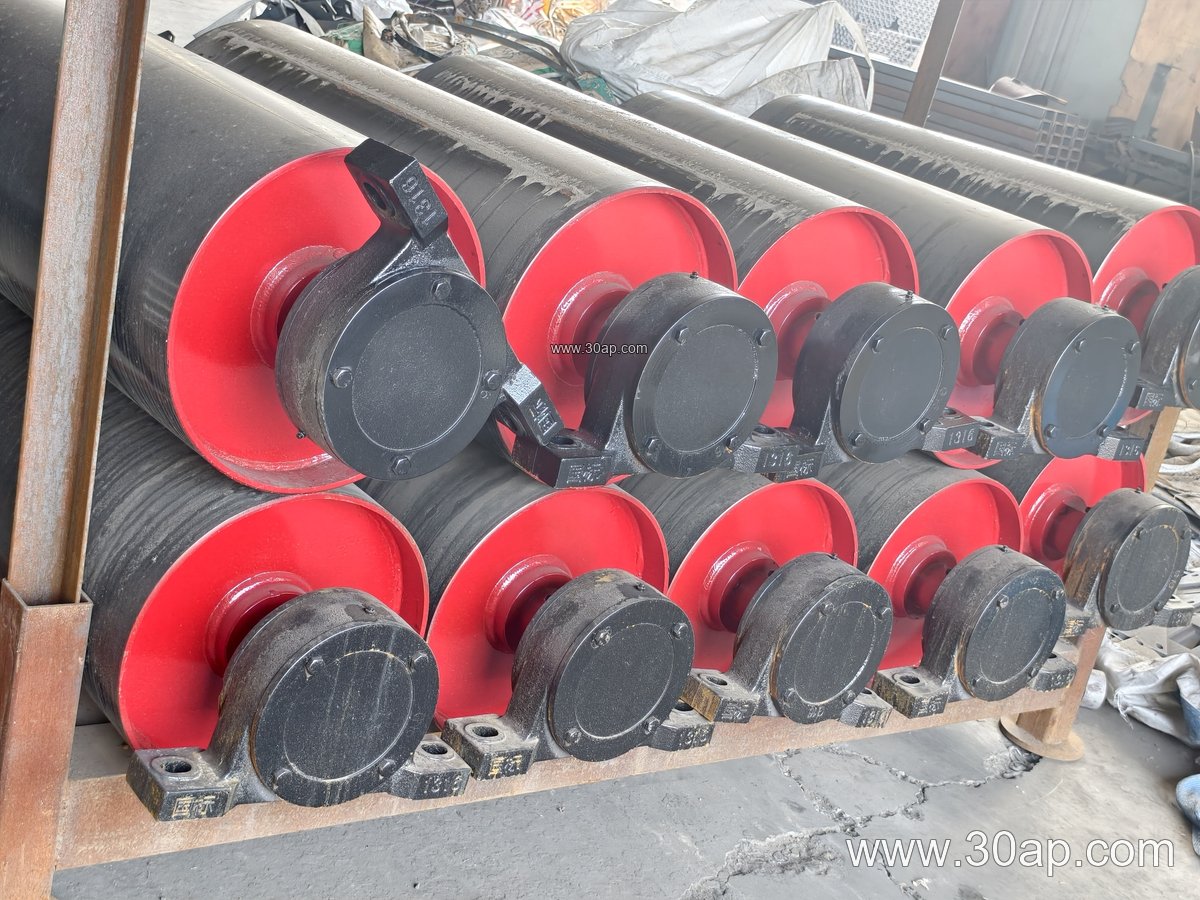
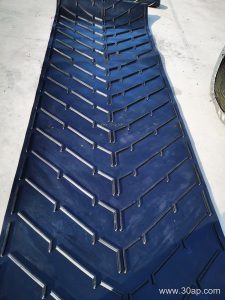
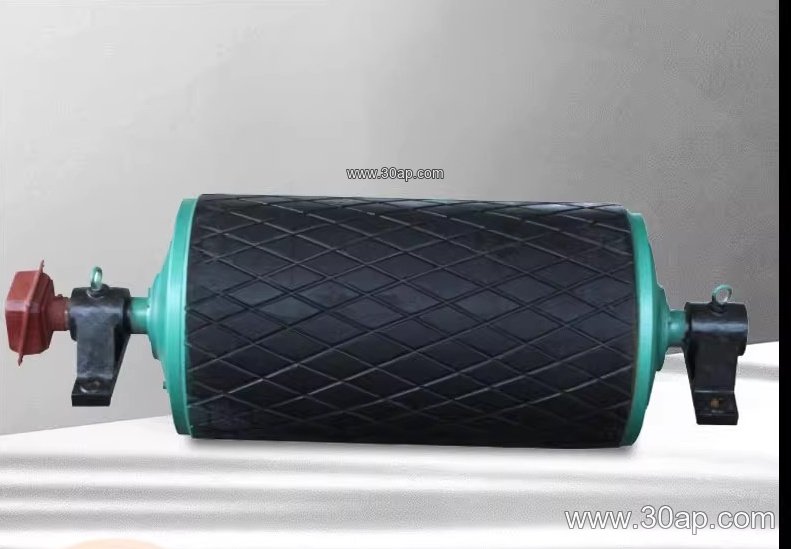
Tile patterns matter. A diamond or square grid gives all-round grip; a chevron or herringbone arrangement helps shed water and fine dust; a plain ceramic-in-rubber sheet suits gentler contact. Whichever pattern is used, the ceramic should be flush and evenly spaced so the belt is not steered sideways.
Where It Earns Its Place
- Drive and head pulleys in a quarry or stone crushing line, where grit and sharp aggregate shorten plain rubber life.
- Tail pulleys on a coal mining conveyor or power plant coal handling system, where fines pack around the drum.
- Bend and tension pulleys on long overland runs in a copper or iron ore operation, where slip and wrap angle are critical.
- Transfer points in a cement plant clinker line or a sand and aggregate plant, where dust and heat combine.
It is used less where the belt is delicate, such as a food grade conveyor belt line, because the ceramic studs can mark a soft cover. In those cases a plain rubber or smooth lagging is a better match.
Sizing and Matching the Belt
There is no fixed rule tying one belt width to one drum diameter. A B800 pulley may run at Ø500 in a short transfer but at Ø800 on a long, heavily loaded drive. The table below shows typical reference combinations; the final choice depends on torque, belt tension and wrap angle.
| Reference | Belt width | Typical drum diameter | Common lining thickness |
|---|---|---|---|
| Small transfer | B650 | Ø400 to Ø500 | 8 to 10 mm |
| Medium drive | B1000 | Ø630 to Ø800 | 10 to 12 mm |
| Heavy drive | B1200 | Ø800 to Ø1000 | 12 to 15 mm |
| Large head | B1400 | Ø1000 to Ø1250 | 15 to 20 mm |
| Wide tail | B1600 | Ø1250 to Ø1400 | 15 to 20 mm |
Shell face width normally exceeds belt width, for example B800 around 950 mm and B1200 around 1400 mm. Shaft diameter is set by torque and bearing load, not by belt width alone; common shaft sizes run from Ø80 to Ø200 on larger units. A B1200 × Ø1000 assembly is a realistic combination, but so is B1200 × Ø800 for a lighter duty.
Buyer Checklist
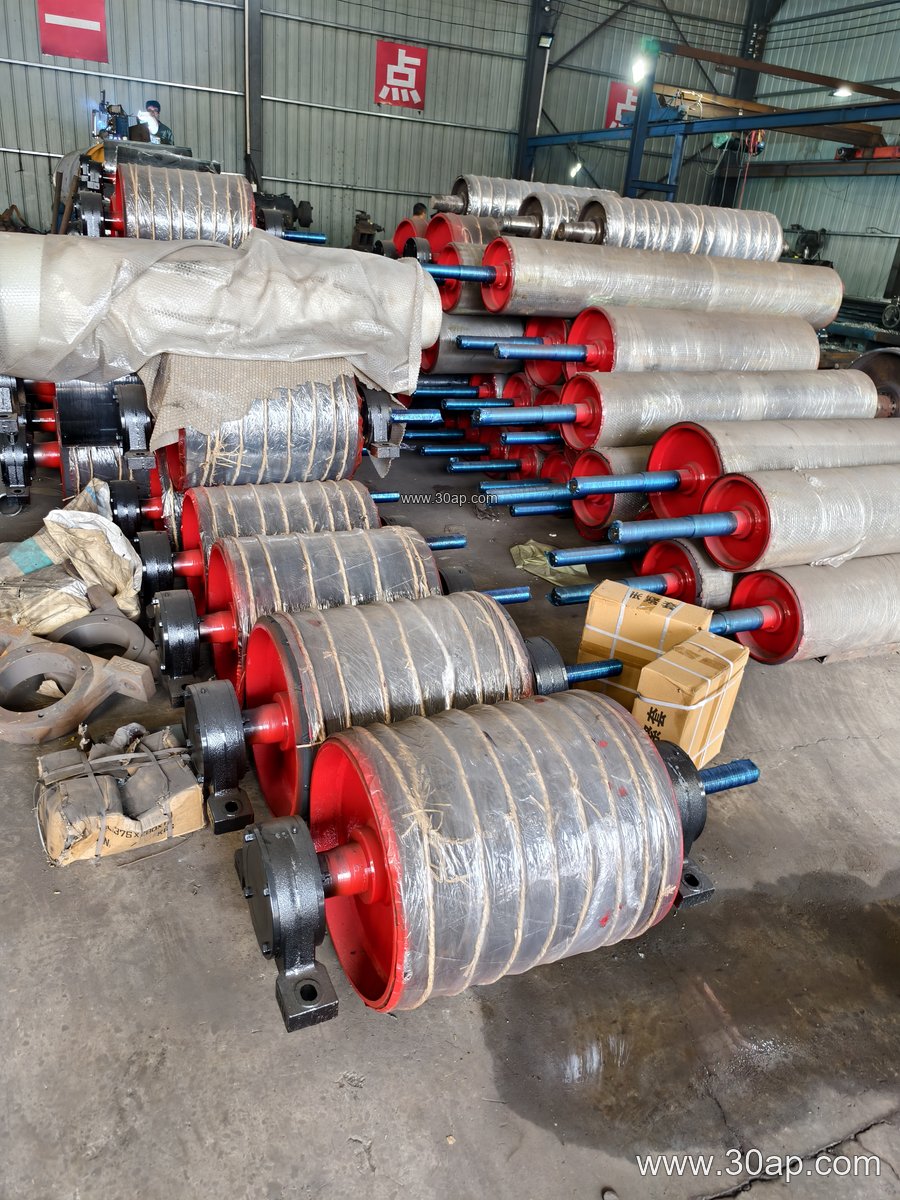
Ask for the drum drawing with shell diameter, face width, shaft size and bearing centres. Confirm the ceramic pattern and lining thickness, and whether the bond is hot-vulcanised or cold-bonded. Check that the pulley mates with the conveyor bracket and the conveyor belt tracking on site. State the material, lump size and moisture so the supplier can judge whether a ceramic rubber-lined pulley is right, or whether an abrasion resistant conveyor belt with a plain lagged drum would serve better. For very long centres, a steel cord conveyor belt may demand a larger drum to limit bending stress; for lighter fabric constructions such as EP conveyor belt or NN conveyor belt, a smaller diameter often works. Keep a spare ceramic lagging kit, since re-lining is easier than replacing the whole drum.
Finally, inspect the lining at each shutdown. Chipped tiles, lifted edges or polished rubber are signs that grip is falling. A worn ceramic rubber-lined pulley can slip quietly and wear the belt cover, so early repair protects both the drum and the belt.