What an NN Conveyor Belt Is
An NN Conveyor Belt is a fabric core conveyor belt built on nylon (polyamide) warp and weft cords. In the trade it is often called a nylon conveyor belt, and it belongs to the wider family of fabric core conveyor belts. The carcass is the load-bearing skeleton, while the rubber covers protect it from abrasion, moisture and impact. Because nylon fibers combine high tensile strength with good elasticity, this belt suits long runs, heavy starts and layouts where the belt must absorb shock without taking permanent stretch.
Buyers comparing belt constructions often weigh NN against EP. An EP Conveyor Belt uses polyester warp and nylon weft, giving very low elongation, while the NN Conveyor Belt offers superior impact resistance and flex fatigue life. Neither is universally better; the choice depends on the conveyor profile, the material being carried and how the belt is tensioned.
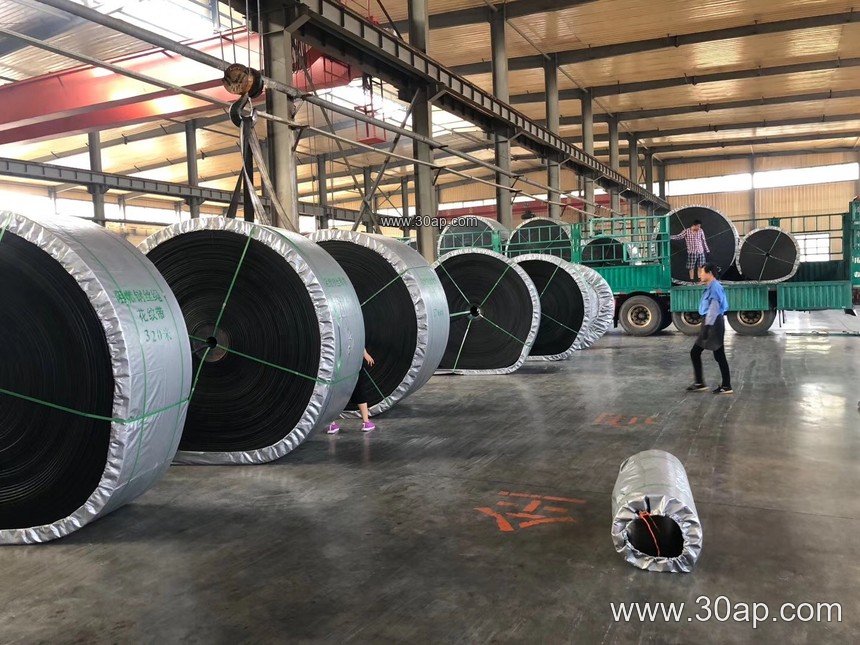
How the Belt Is Built
The carcass usually consists of two to six plies of nylon fabric bonded with rubber skim. Cover rubber is applied to both faces, with the top cover thicker for carrying duty and the bottom cover sized for pulley contact. Common cover combinations include 3+1.5, 4+2, 5+2, 6+2 and 8+3 mm, though final figures are confirmed against the design duty. A Multi-Ply Fabric Core Conveyor Belt of this kind can be supplied with breaker fabric, transverse reinforcement or edge protection when the duty calls for it.
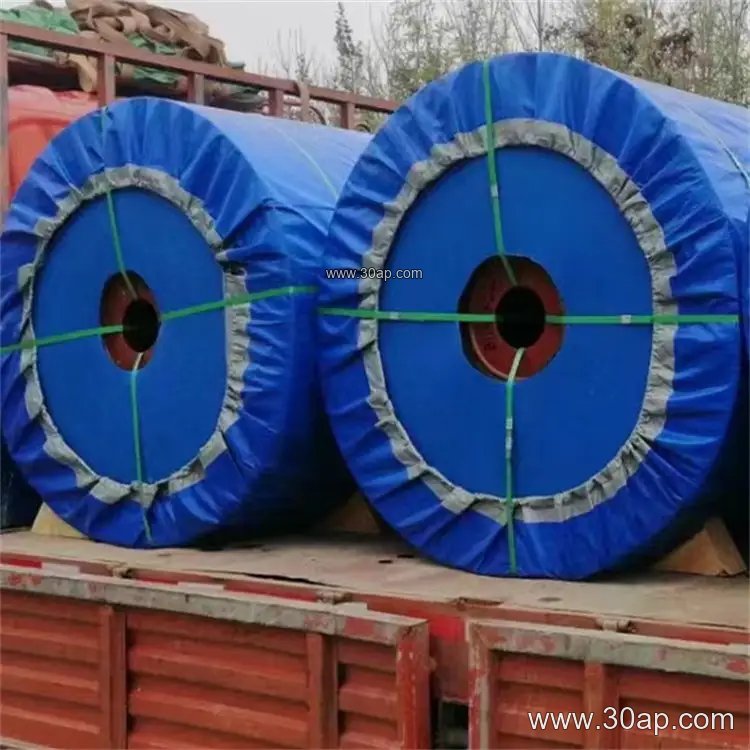
Strength grades such as NN100, NN200, NN300 and NN400 describe the nominal breaking strength of the carcass in newtons per millimeter of width. These are reference grades, not a promise that every manufacturer stocks every combination. Belt width is a separate decision: B500, B650, B800, B1000, B1200, B1400 and B1600 are common, and wider or narrower builds are produced by arrangement.
| Parameter | Common Reference Range |
|---|---|
| Strength grade | NN100, NN200, NN300, NN400 |
| Number of plies | 2 to 6 |
| Belt width | B500 to B2000 |
| Top/bottom cover | 3+1.5, 4+2, 5+2, 6+2, 8+3 mm |
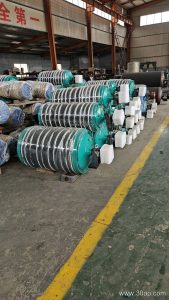
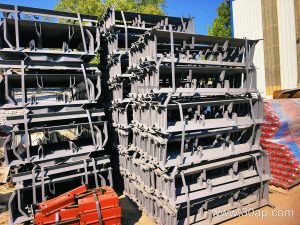
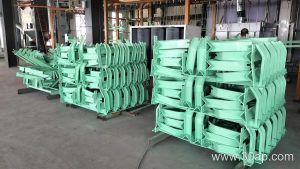
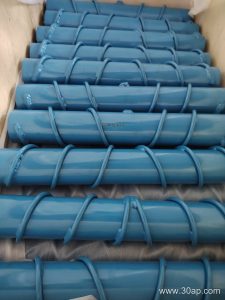
The belt runs over a conveyor pulley at the head and tail, supported between them by idler rollers mounted on conveyor brackets. Those components matter to belt life: a misaligned pulley or a seized idler can damage even a well-made carcass.
Where It Fits in the Field
Nylon carcass belts appear across mining, cement, power generation, quarrying and bulk handling. A Mining Conveyor Belt in an underground coal mine may need flame retardant and anti-static properties, while a Cement Conveyor Belt moving clinker needs heat and abrasion resistance. In a power plant, a coal conveyor belt handles relatively fine material at high speed, and in a sand and gravel plant an Aggregate Conveyor Belt often faces sharp, abrasive stone.
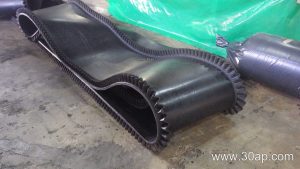
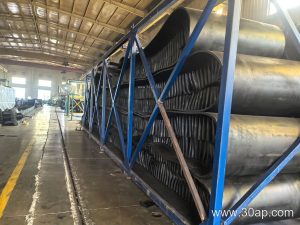
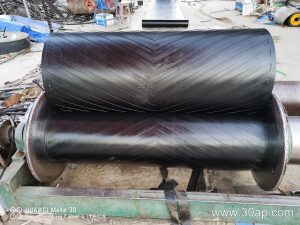
Cover compounds are matched to the environment. Heat Resistant Conveyor Belt grades protect against hot sinter or clinker, and an Abrasion Resistant Conveyor Belt is standard for crushed rock and ore. Oil Resistant Conveyor Belt covers are used where lubricants or oily feedstock are present, and a Cold Resistant Conveyor Belt keeps flexibility in freezing conditions. For steep inclines, a Chevron Conveyor Belt or a Corrugated Sidewall Conveyor Belt may be a better profile than a flat belt, but these are separate product types rather than variants of the nylon carcass itself.
Selection and Maintenance Notes
- Match the strength grade to the calculated tension with a sensible safety margin; do not size by belt width alone.
- Check pulley diameters against the carcass flexibility recommended by the belt maker, since a small pulley can over-flex a thick multi-ply belt.
- Confirm cover thickness against impact and abrasion, not just against purchase price.
- Keep idler rollers turning freely and check conveyor brackets for alignment during routine inspections.
- Store belts away from sunlight, oil and sharp edges, and track the belt after installation to avoid edge damage.
For replacement planning, record the existing belt’s grade, ply count, cover thickness and width, then compare with the conveyor’s original design data. A belt that has stretched beyond the take-up range usually signals that the tension rating was too low for the duty. If a project needs very high tension over long distances, a Steel Cord Conveyor Belt may be the more suitable construction, but for many medium-duty and shock-loaded lines the nylon carcass remains a practical, repairable choice.
Finally, ask suppliers for the actual test data behind each grade, and confirm the cover compound and edge construction in writing. That simple step prevents most surprises at commissioning.