What a Take-Up Pulley Does on a Conveyor
A take-up pulley is the drum that moves inside a tensioning station to keep a conveyor belt tight enough to transmit power and stay on track. It is also called a tension pulley or take-up drum, and it should not be confused with a drive pulley, a tail pulley, or a bend pulley. Those drums have their own jobs: the drive pulley transmits torque, the tail pulley forms the return end, and a bend pulley changes belt direction. The take-up pulley is the one that travels, usually on slides or a carriage, to absorb belt stretch and to maintain the pre-tension the system needs.
The working principle is simple. As the belt stretches or contracts with load and temperature, the take-up pulley follows it. In a screw take-up the drum is moved by threaded rods. In a gravity take-up it hangs on a weighted carriage, so tension stays roughly constant. In an automatic take-up, a winch or hydraulic cylinder adjusts position. Each arrangement has a different effect on shock loads, and the choice belongs to the conveyor designer rather than to the pulley supplier alone.
Construction and Surface Options
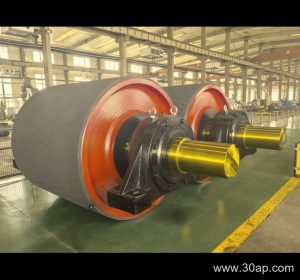
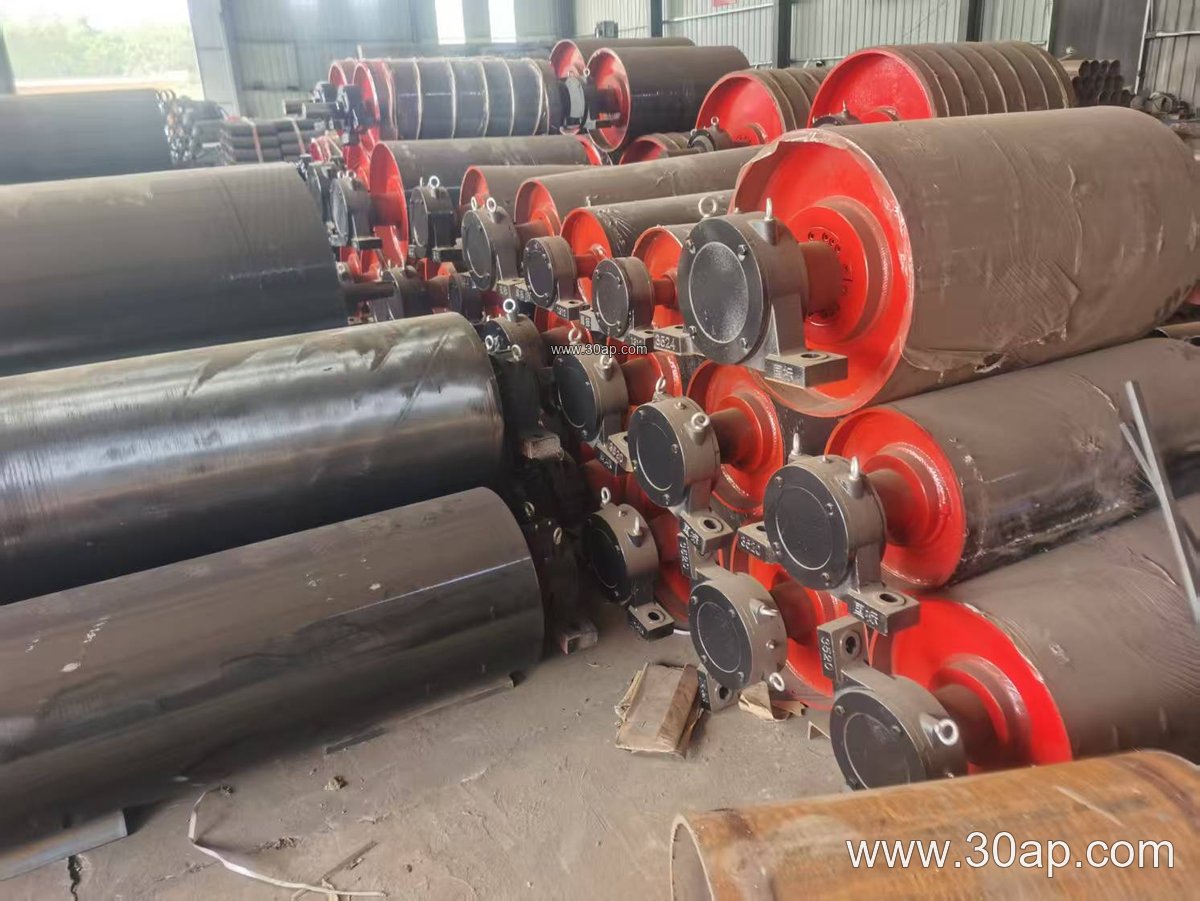
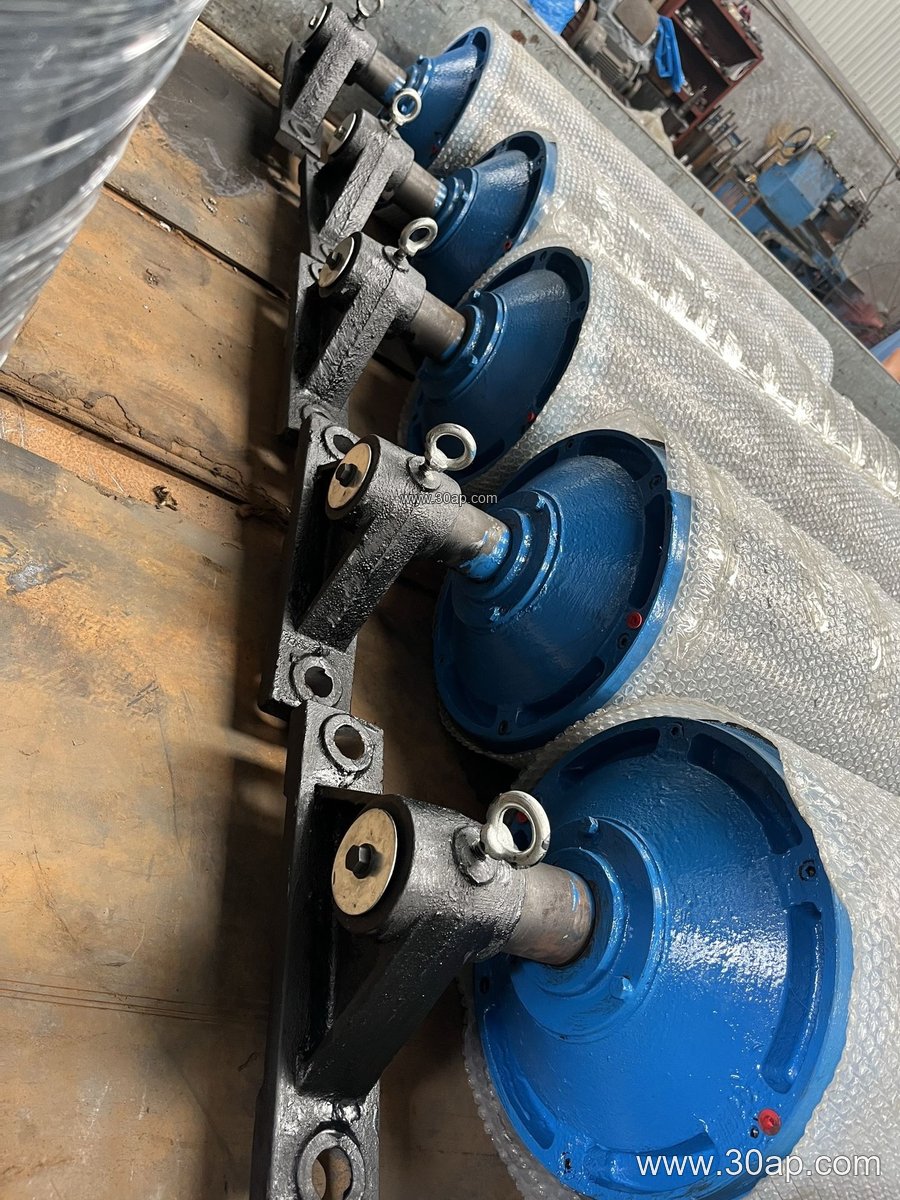
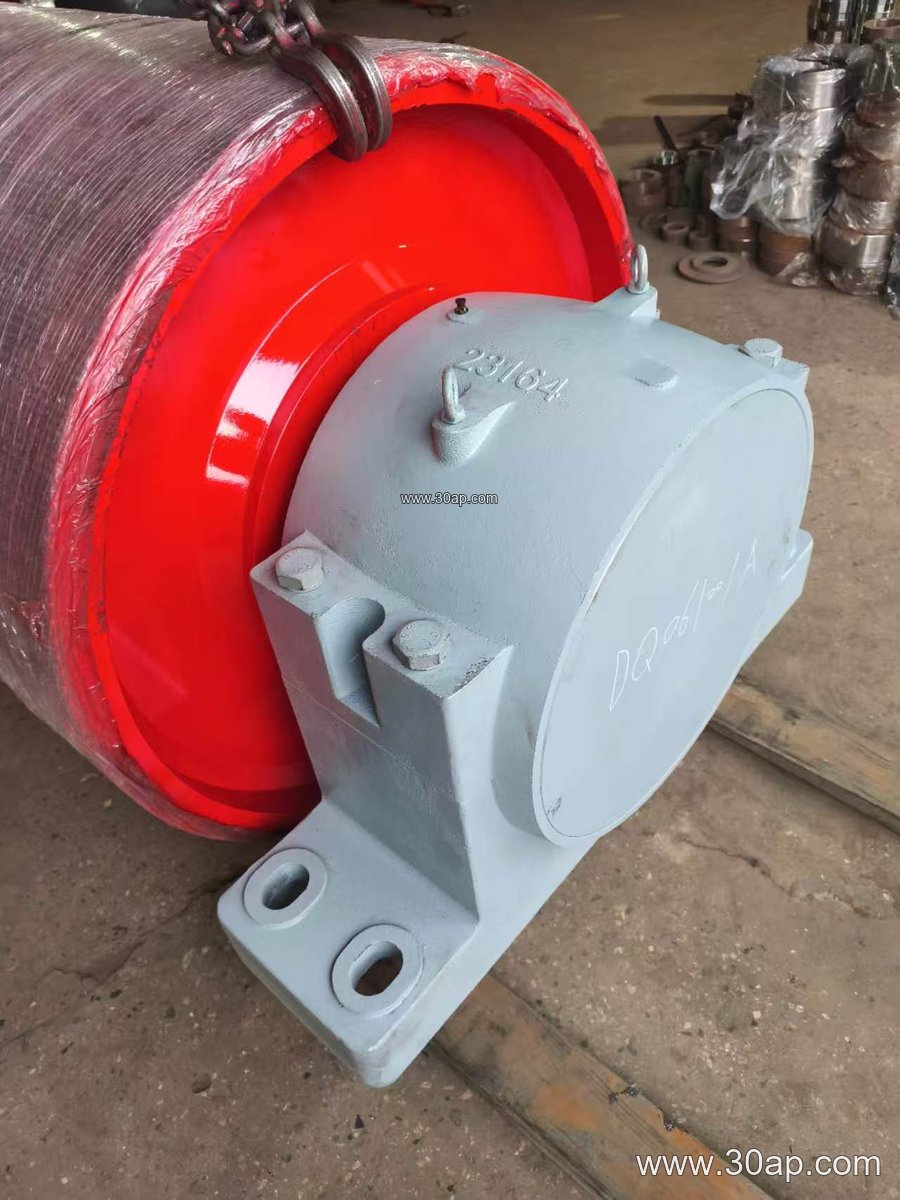
A take-up pulley is normally built as a welded steel drum with a shaft, hubs, and dished or flat end plates. Common diameters include Ø315, Ø400, Ø500, Ø630, and Ø800, with larger sizes such as Ø1000 or Ø1250 used on long, high-tension conveyors. The face width usually exceeds the belt width so the belt is fully supported. Reference combinations such as B800 × Ø500, B1200 × Ø1000, and B1400 × Ø800 show how the two dimensions are matched in practice, but no single belt width locks the pulley to one diameter. Shaft diameter is set by torque and bearing load, with common values from Ø80 to Ø160 and beyond on heavy duties.
Surface finish matters because the take-up pulley still contacts the belt. Plain face is acceptable where slip is not a concern. Rubber lagging, applied by hot vulcanizing or cold bonding, improves grip and protects the drum shell. Diamond grooved lagging helps shed water and fines, and ceramic lagging is used where the belt carries abrasive material. Lagging thickness is commonly 8, 10, 12, 15, or 20 mm. On a tension pulley, heavy lagging also increases the effective diameter, which the designer should account for.
Where It Fits in the Plant
Take-up pulleys appear in many bulk handling circuits. In a limestone quarry or a sand and aggregate line, a gravity take-up tower keeps tension steady on a long inclined conveyor. In a coal preparation plant or a power station coal yard, the take-up pulley works alongside a flame retardant conveyor belt and a heavy-duty conveyor pulley at the head. In a cement plant, clinker conveyors often use a screw take-up where space is tight. Port bulk terminals and iron ore yards fit take-up drums on shuttle or fixed tension stations, and tunnel spoil lines use compact units that can be adjusted as the face advances.
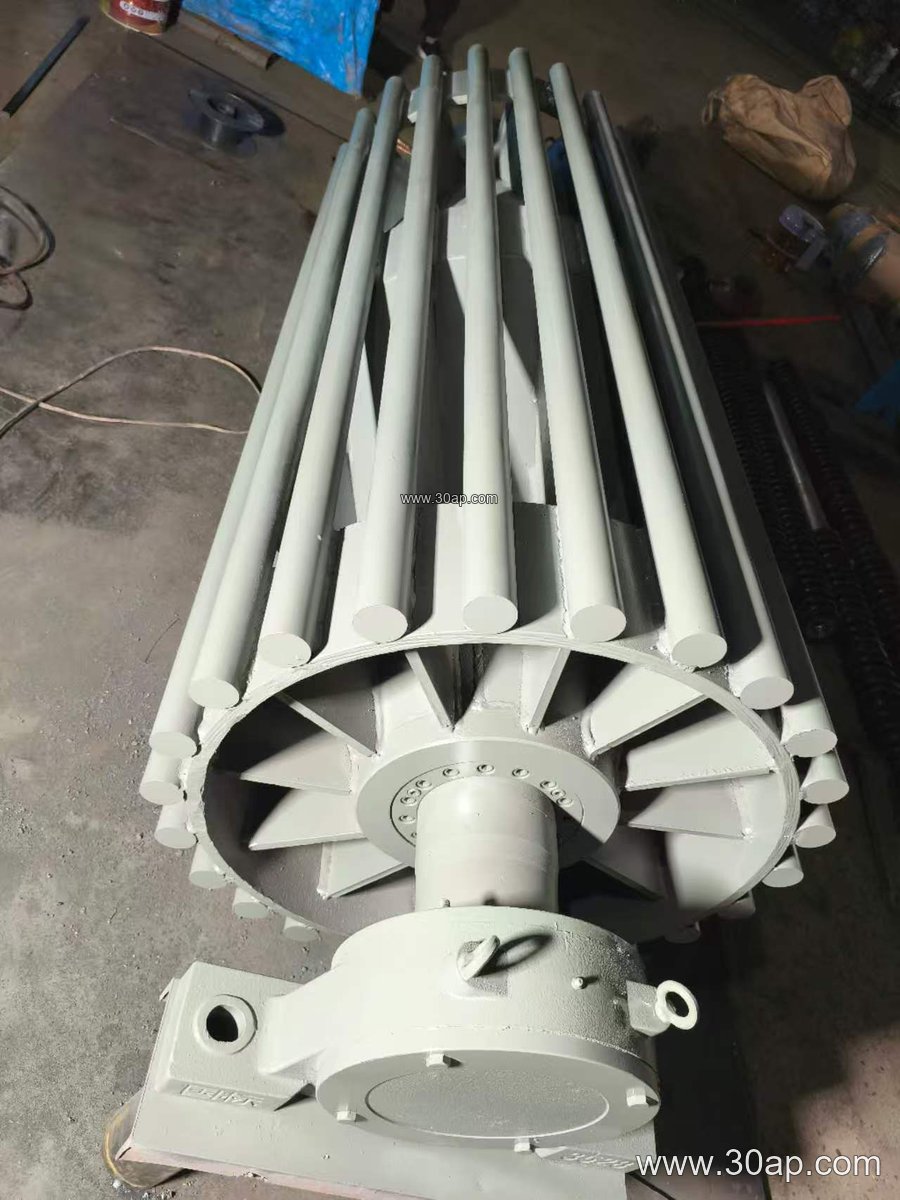
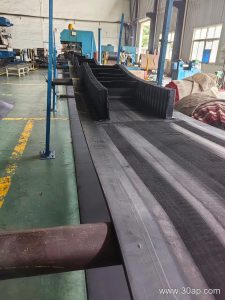
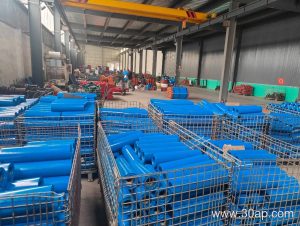
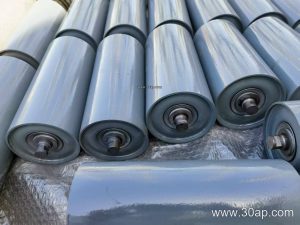
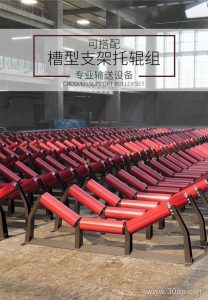
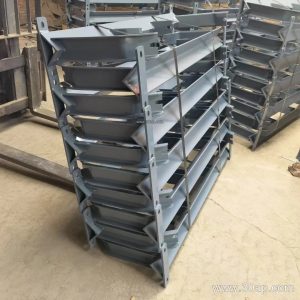
The pulley is one part of a chain that includes the conveyor belt, idler rollers, the conveyor bracket, and the structural frame. Poor alignment at the take-up station can cause belt mistracking even when the rest of the line is correct, so the carriage guides and the pulley axis must be square to the conveyor centerline.
Buyer Checklist
- Confirm the function: tension pulley only, or combined with a bend angle that adds wrap.
- State belt width, belt type, and belt tension range. A steel cord conveyor belt and a multi-ply fabric core belt impose different demands on the drum and shaft.
- Provide the take-up travel required, including allowance for belt elongation and splice take-up.
- Specify lagging type and thickness where grip or wear protection is needed.
- Give the shaft diameter from the drive calculation or gearbox coupling, not from belt width alone.
- Describe the environment: dust, moisture, temperature, and whether the area is classified for fire risk, which may call for a flame retardant belt and matching component protection.
- Ask for the balance grade, bearing type, and sealing arrangement for the expected service life.
Maintenance Notes
Inspect the take-up pulley for lagging wear, shell cracks near the hubs, and looseness on the shaft. Check that the carriage moves freely and that the tension stays within the design range. A pulley that is hard to move may be overloaded, misaligned, or contaminated. Keep the guide rails clean and confirm that the belt runs centered on the drum. Re-lagging is often cheaper than replacing the whole drum, but the shell thickness should be checked before any repair is approved. Records of diameter, face width, lagging thickness, and shaft size help when a replacement is ordered, and those figures should come from the original drawing rather than from memory.
For more on conveyor drums and related components, see the pulley and roller pages at conveyoridler.com and beltpulley.com, where sizes and configurations can be reviewed against the actual conveyor layout.