What a Guide Roller Does on a Conveyor
A guide roller is a small-diameter idler mounted at strategic points along a conveyor to keep the belt tracking true. Unlike a carrying idler that supports the loaded belt or a return roller that holds up the empty strand, this roller works mainly sideways. It can sit near the head or tail, ahead of a transfer point, or on the edges of a long run where misalignment tends to start. In a quarry, a cement plant, or a coal handling line, a well-placed guide roller often prevents the belt from rubbing the structure and extending downtime.
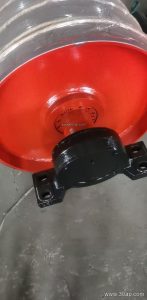
The same component is also called a belt guide roller or a training roller in some workshops. These names describe the same product. Drive pulleys, tail pulleys, and bend pulleys are different parts of the conveyor and are not interchangeable with this roller.
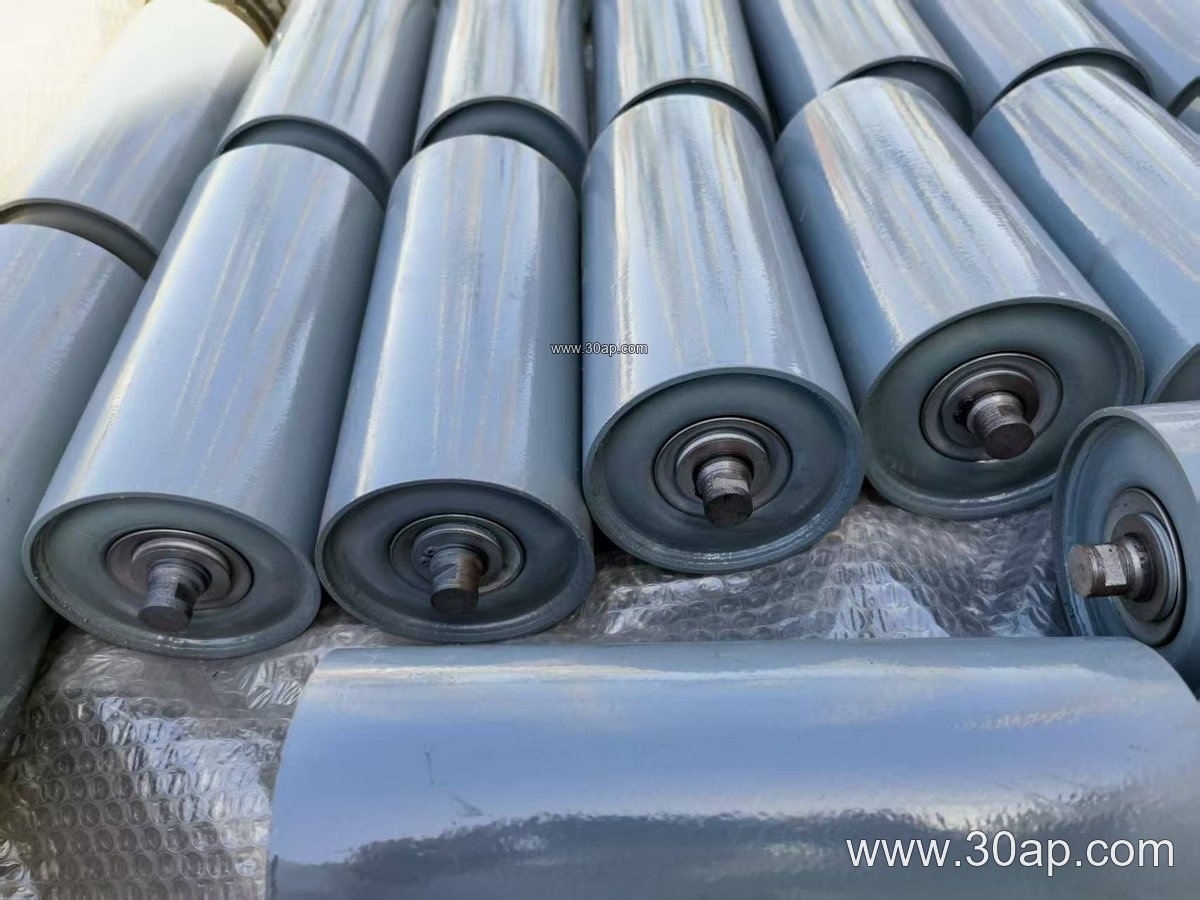
Construction and Common Forms
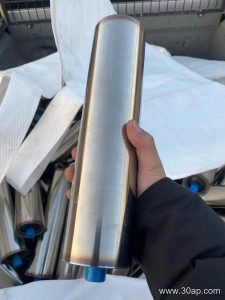
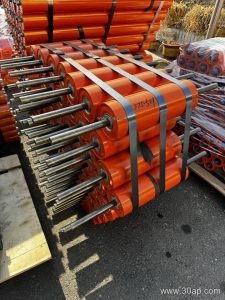
Most guide rollers use a steel tube shell with pressed bearing housings at each end. The shaft is usually fixed, and the shell rotates on bearings that are sealed against dust and moisture. Common bearing sizes include 6204, 6205, 6305, and 6308; the right match depends on the roller diameter and load, not on belt width alone. Roller diameters for this family often fall in the range of Ø63 mm to Ø133 mm, though larger sizes may appear in heavy-duty applications.
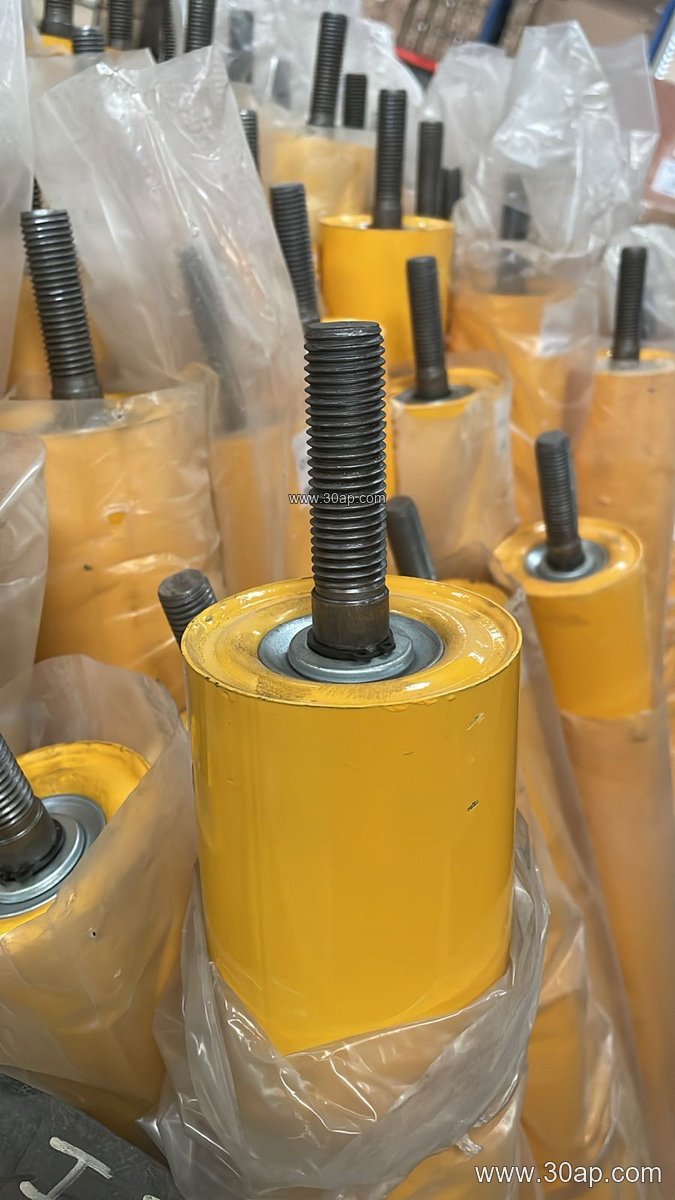
Surface options vary with the job. A plain steel shell is common in dry, abrasive service. Rubber-covered or ceramic-faced rollers can add grip or wear resistance where the belt edge tends to slip. For dusty coal mining or aggregate lines, sealed-for-life bearings and a tight labyrinth are more important than a fancy surface.
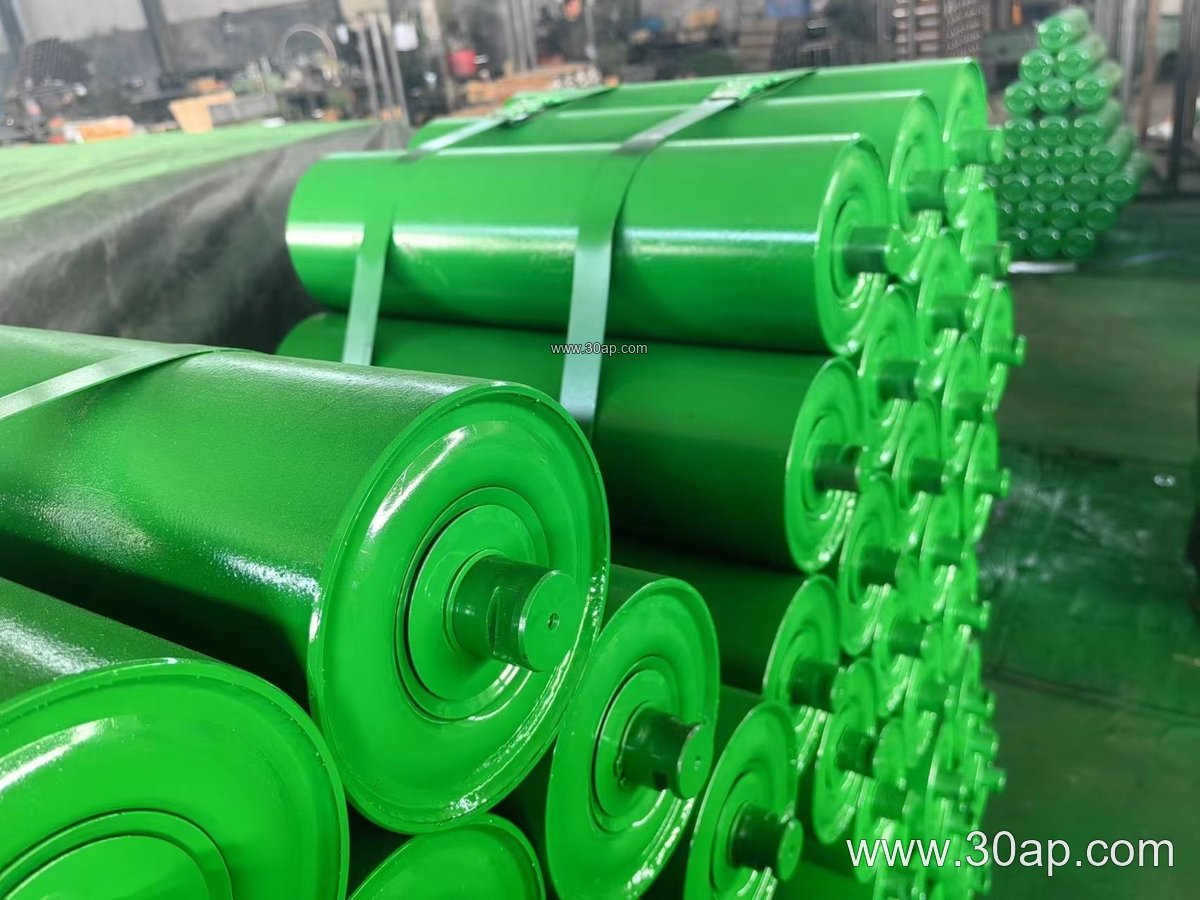
Where It Fits in the Conveyor Layout
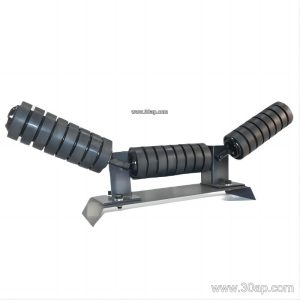
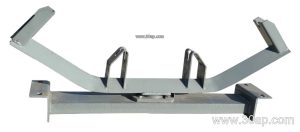
On a three-roll troughing set, the guide roller is not usually part of the main carrying group. It is more often a separate vertical or angled roller fixed to a conveyor bracket near the belt edge. In a power plant coal yard or a limestone quarry, these rollers are placed just after the loading point and before the first curve to correct small tracking errors early. In a tunnel boring or underground mining conveyor, space is tight, so compact guide rollers with short shafts are preferred.
They also appear on the return strand in some designs, especially where the belt has a tendency to wander after leaving the tail pulley. Here they work alongside V-return rollers and plain return idlers, but they are not a substitute for either.
Size and Selection Notes
Guide roller dimensions follow the belt width and the available mounting space. A few common reference points are shown below; these are examples, not fixed rules. Side rollers and center rollers can differ in length, and the final choice should be confirmed by the conveyor designer.
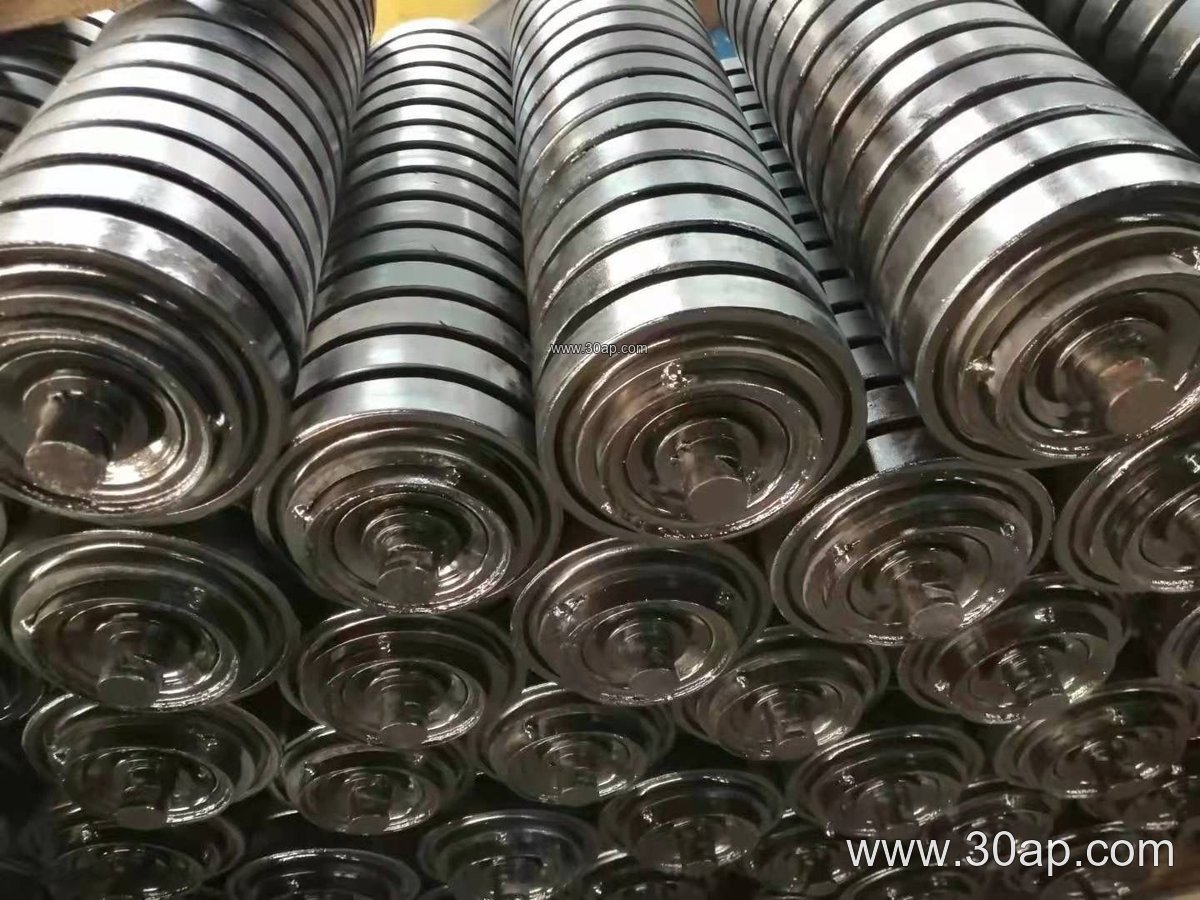
| Belt width | Typical roller length (three-roll troughing, reference) | Common roller diameter range |
|---|---|---|
| B500 | 200 mm | Ø63–Ø89 mm |
| B650 | 250 mm | Ø76–Ø108 mm |
| B800 | 315 mm | Ø89–Ø133 mm |
| B1000 | 380 mm | Ø102–Ø133 mm |
| B1200 | 465 mm | Ø108–Ø159 mm |
| B1400 | 530 mm | Ø127–Ø159 mm |
| B1600 | 600 mm | Ø133–Ø178 mm |
| B1800 | 670 mm | Ø159–Ø194 mm |
| B2000 | 750 mm | Ø178–Ø219 mm |
Troughing angle also affects how the belt sits. A 20-degree or 30-degree trough is common for easy material, while 35 degrees and 45 degrees are used where higher capacity is needed. The guide roller should be mounted so it contacts the belt edge without forcing the belt into the structure. A slight forward tilt of about 1.5 to 2 degrees is sometimes used on training rollers to encourage self-correction.
Buyer Checklist
- Confirm the belt width and the actual mounting gap before ordering. Do not assume a roller length from belt width alone.
- Match the bearing seal to the environment. Dust, water, and fine ore demand better sealing than a clean indoor line.
- Check the shaft fixing method and bracket type. A conveyor bracket that does not align with the roller shaft will cause tracking problems rather than solve them.
- For abrasive service such as iron ore or copper ore, consider a wear-resistant shell or a rubber-covered version.
- On a flame retardant conveyor belt system, use rollers with compatible materials and avoid any component that could create sparks or excessive heat.
In short, a guide roller is a small but important tracking aid. It works best when selected with the same care as the carrying idlers and the conveyor pulley, and when its position is planned rather than guessed.