What a Conveyor Support Leg Does
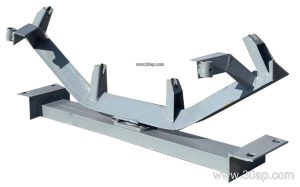
A conveyor support leg is the vertical member that carries the weight of a belt conveyor frame down to the floor, foundation, or steel structure. It is not a glamorous part, but on a quarry conveyor or a power plant coal handling line, the legs quietly hold up the idler roller frames, the return run, and everything the belt carries. In many assemblies the leg works together with a conveyor bracket and a cross beam to form a complete support station, so the leg is best understood as one element of a small structural system rather than a standalone item.
The same component is often called a conveyor frame support leg or simply a belt conveyor support leg. These are different names for the same product, and buyers will see both in drawings and quotations.
How the Leg Is Built
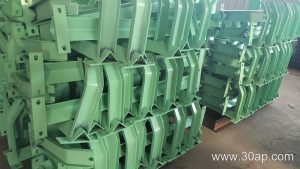
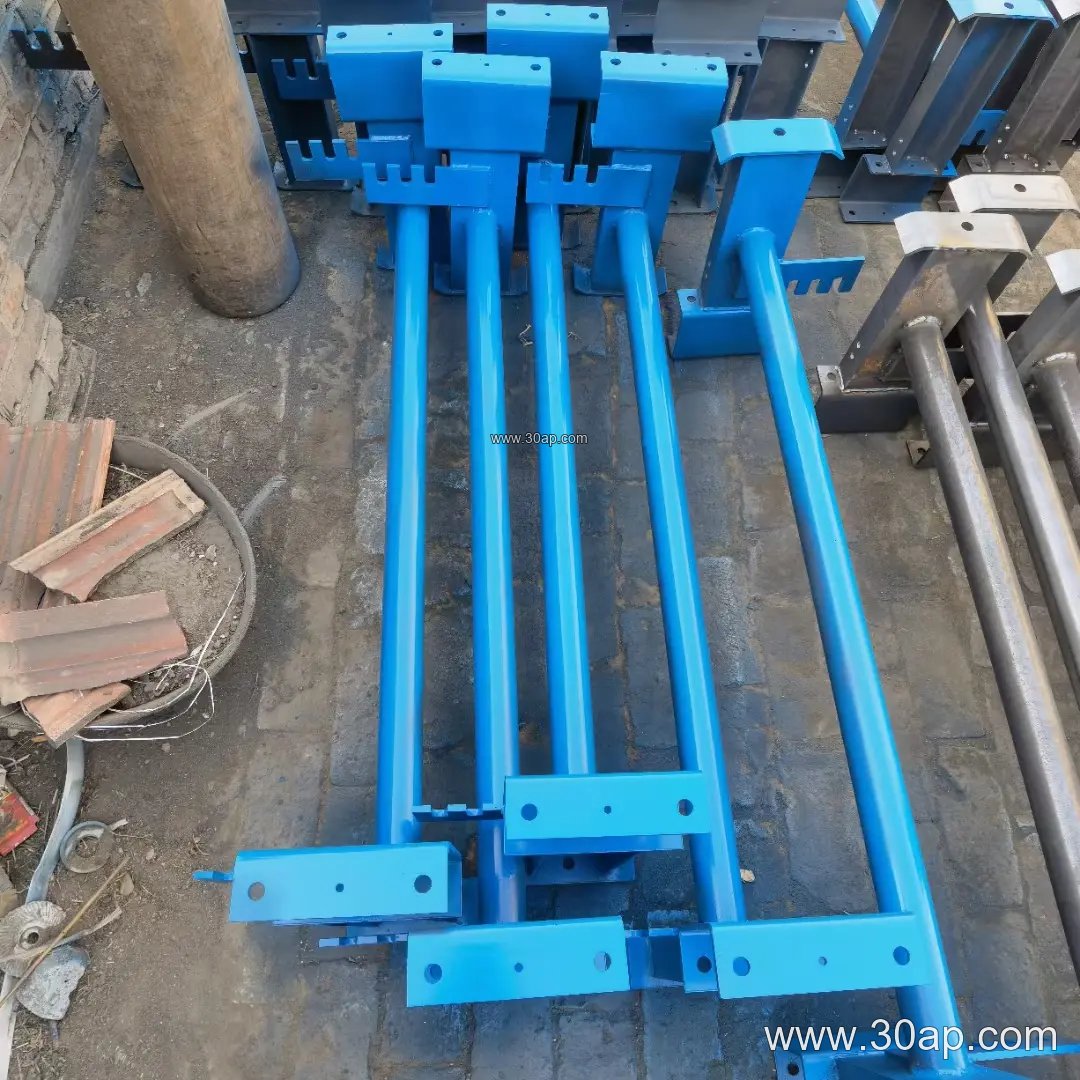
Most support legs are fabricated from angle steel, channel steel, or folded steel plate. The choice depends on load, height, and whether the leg is fixed or adjustable. A typical leg has a base plate with bolt holes, a vertical section, and a top connection that meets the frame or a conveyor bracket. On adjustable versions, slotted holes or telescoping sections allow the frame height to be trimmed on site, which is useful when a foundation is not perfectly level.
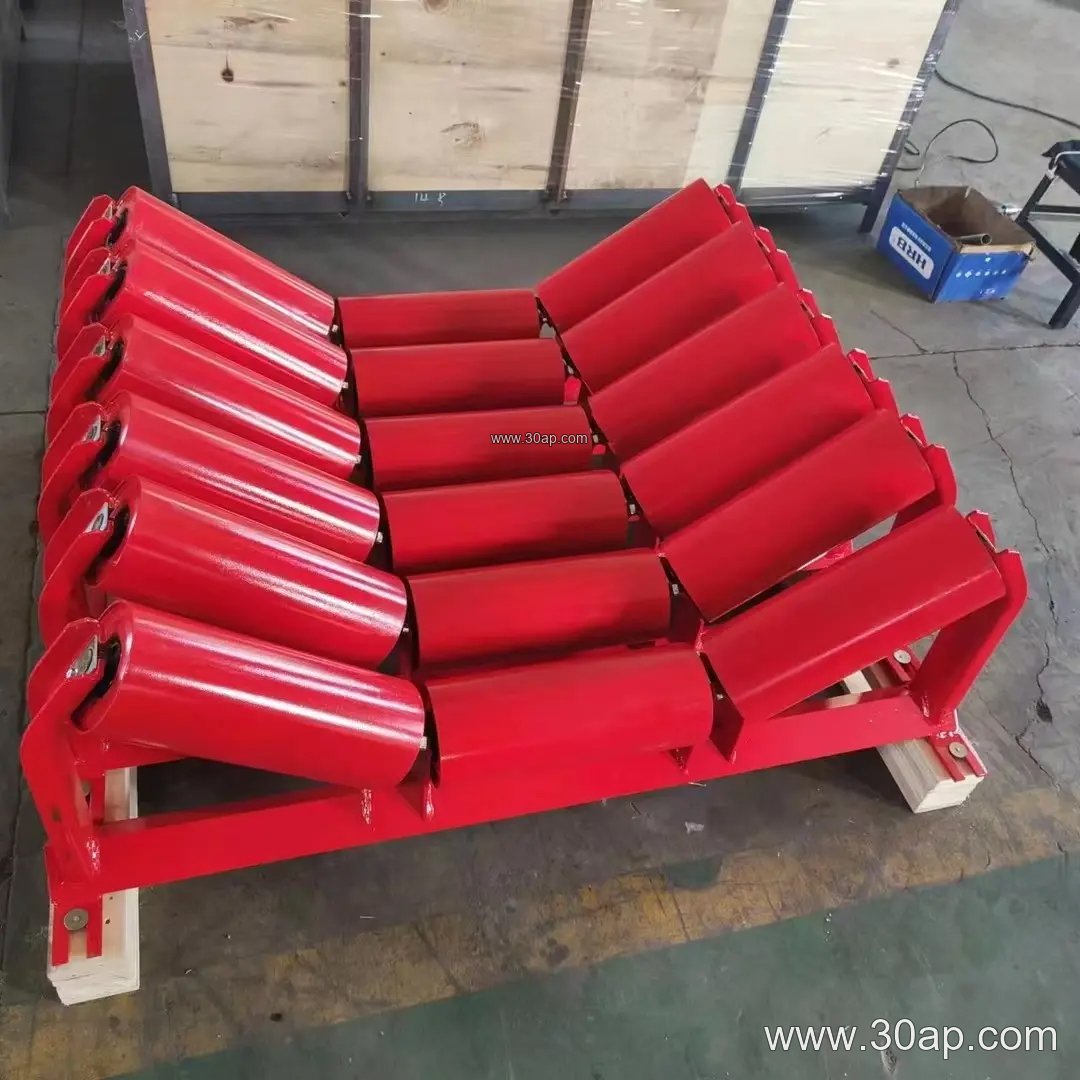
Because the leg carries the belt, material, and idler roller loads, the weld quality and the base plate thickness matter more than the paint finish. On a heavy-duty mining conveyor belt line, legs are usually heavier than on a small aggregate conveyor, and the spacing between legs is set by the structural design rather than by a single universal rule.
Where Support Legs Are Used
Support legs appear wherever a conveyor needs to be raised above ground. In a limestone quarry or a stone crushing plant, they hold the inclined sections that climb from the crusher to the screening deck. In a coal washing plant or a power plant coal yard, they carry frames that support a flame retardant conveyor belt and the troughing idlers above it. In a cement plant, legs under the clinker and raw material conveyors must tolerate dust and vibration, so the base connection deserves attention.
They are equally common in a steel plant, a port ship loading line, and a batching plant. In each case the leg is part of the same job: keep the frame stable, keep the idlers aligned, and keep the belt tracking predictably.
Matching the Leg to the Frame and Belt
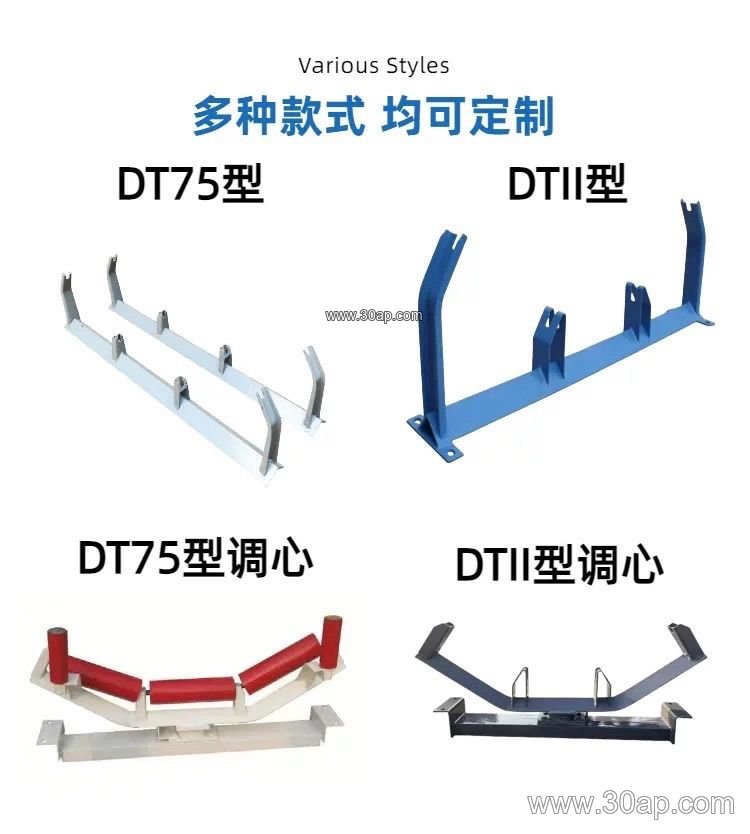
Leg height, top connection, and hole spacing follow the belt width and the trough angle. A frame for B800 at 35 degrees with Ø108 idlers has a different top width from a frame for B1200 at 45 degrees with Ø133 idlers, so the leg’s top plate and bolt pattern change with the design. Common belt widths in support leg work include B500, B650, B800, B1000, B1200, B1400, and B1600, with wider frames such as B1800 and B2000 using heavier sections. Trough angles of 20, 30, 35, and 45 degrees are all used, and adjustable frames can move between these angles.
| Reference Item | Common Range | Note |
|---|---|---|
| Belt width | B500 to B2000 | Wider frames usually need heavier legs |
| Trough angle | 20, 30, 35, 45 degrees | Adjustable frames cover several angles |
| Idler diameter | Ø89, Ø108, Ø133, Ø159, Ø194 | Selected with load and belt speed |
| Material | Angle steel, channel steel, folded plate | Per structural design |
None of these values should be read as a fixed pairing. A B1000 frame may be built at 30 or 35 degrees, and the idler diameter is chosen from the load calculation, not from the belt width alone. Installation hole spacing and cross beam length vary with belt width and trough angle, so they are always confirmed on the drawing.
Fixed or Adjustable
Fixed legs are simple, rigid, and economical, and they suit conveyors on a solid foundation. Adjustable legs cost a little more but save time during installation and allow small corrections after the frame is set. On a tunnel spoil line or a temporary stockpile conveyor, adjustable legs are often worth the extra cost. A related choice is the transition support near the pulley, where the frame changes from troughed to flat; that position is handled by a transition bracket rather than by the standard leg alone.
Buyer Checklist
- Confirm the belt width, trough angle, and idler diameter so the top connection matches the frame.
- State the required leg height and whether adjustment is needed.
- Provide the base plate hole pattern or the anchor bolt layout.
- Describe the environment: dust, moisture, coal dust, or heat all affect the coating and steel choice.
- Check that the legs, conveyor bracket, and cross beams are ordered as a matched set.
On a well-built conveyor, the support leg is easy to overlook, yet a loose base plate or a mismatched top plate can affect belt tracking and idler life. Ordering the leg together with the frame and the idler roller layout keeps the whole support station consistent from the start.