What a Hot-Dip Galvanized Idler Is
A hot-dip galvanized idler is a conveyor idler roller whose steel components receive a zinc coating by immersion in molten zinc after fabrication. This metallurgical bond gives the idler a durable, uniform layer that resists rust in damp, dusty, and mildly corrosive environments. In a conveyor system, the idler supports the conveyor belt and influences its tracking, energy consumption, and service life.
Unlike painted or electroplated rollers, the hot-dip process coats internal and external surfaces, including welds and edges. This makes the idler suitable for washdown areas, coastal installations, and material handling circuits where condensation or fine dust is a daily concern.
Construction and Surface Options
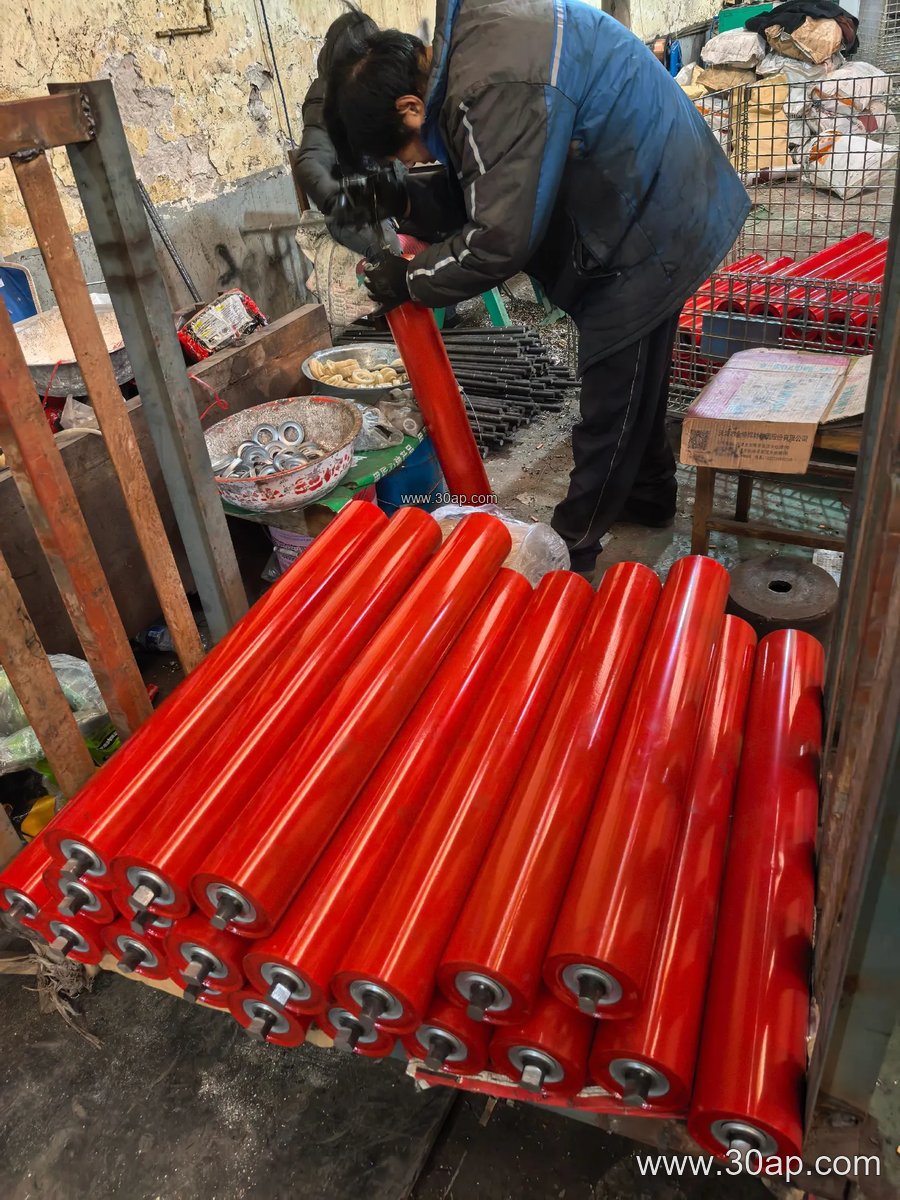
The idler body is typically a steel tube fitted with bearing housings, a shaft, and a sealing arrangement. The pipe surface may remain plain, or it may carry rubber rings, nylon, or ceramic for specific duties. Common bearing numbers include 6204, 6205, 6305, 6306, 6308, and 6310, matched to load and speed requirements rather than a single fixed pairing.
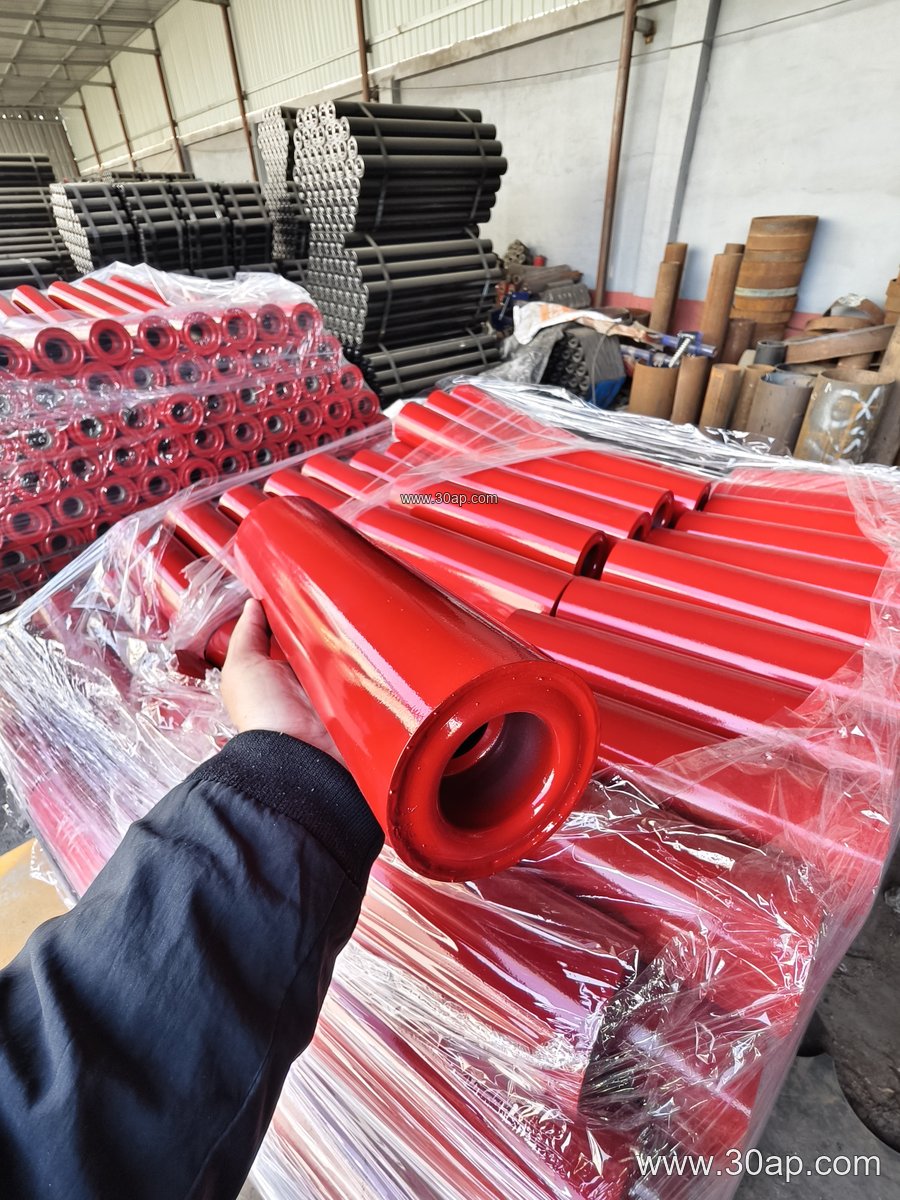
Common roller diameters span Ø63, Ø76, Ø89, Ø102, Ø108, Ø127, Ø133, Ø159, Ø178, Ø194, and Ø219 mm. The roller length usually follows belt width, trough angle, and idler arrangement. For instance, a three-roll troughing set may use approximately 200 mm rolls for B500, 250 mm for B650, 315 mm for B800, 380 mm for B1000, 465 mm for B1200, 530 mm for B1400, 600 mm for B1600, 670 mm for B1800, and 750 mm for B2000. These are common examples, not fixed rules; side rolls and center rolls can differ.
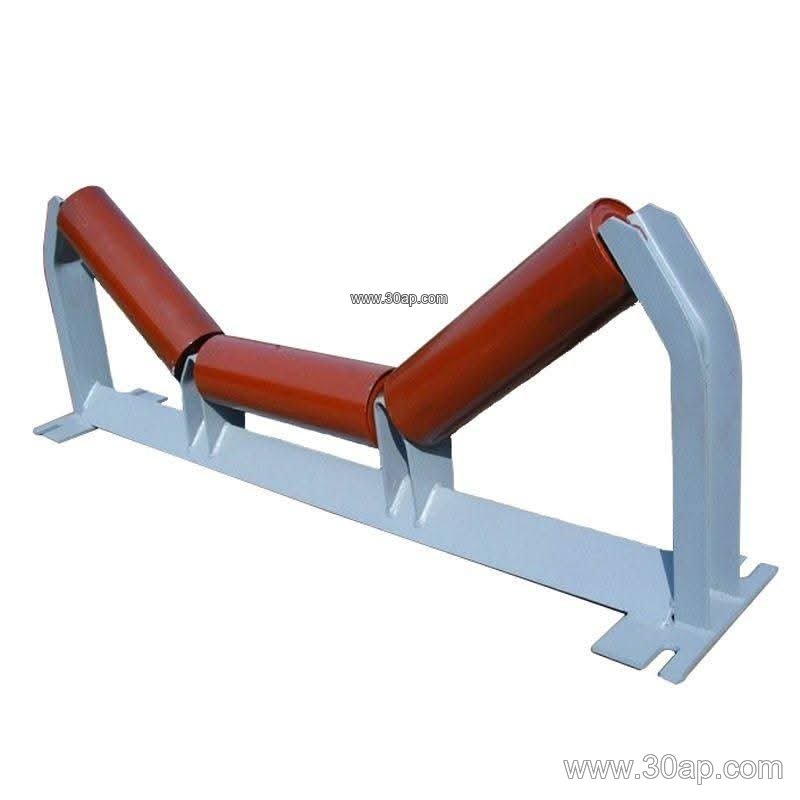
Common idler arrangements
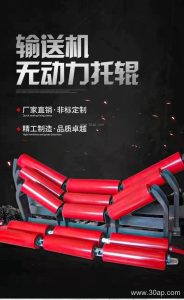
- Troughing idlers (single-roll, two-roll, or three-roll)
- Transition idlers near pulleys
- Return idlers (flat or V-shaped)
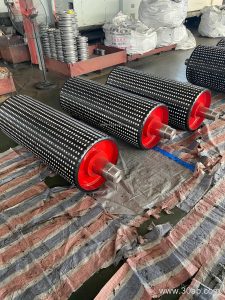
- Impact idlers with rubber rings
- Self-aligning idlers (friction or conical type)
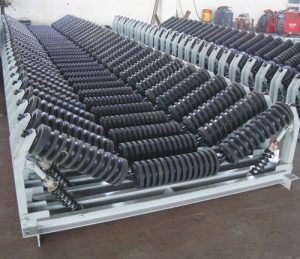
- Spiral and comb idlers for sticky material
Trough angles are often 20, 30, 35, or 45 degrees. A small forward tilt of about 1.5 to 2 degrees may be used on certain self-aligning or training idlers to help center the belt. The choice of surface form and bearing should match the conveyed material and operating hours.
Where It Fits in the Conveyor Line
Hot-dip galvanized idlers are often specified in aggregate plants, cement works, power station coal handling, port bulk terminals, and fertilizer or grain facilities where moisture and dust accelerate corrosion. They also serve in sand and gravel lines, crushing and screening circuits, and tunnel muck removal. In these settings, a conveyor belt carries abrasive or wet material, and the idler must keep rotating freely without seizing.
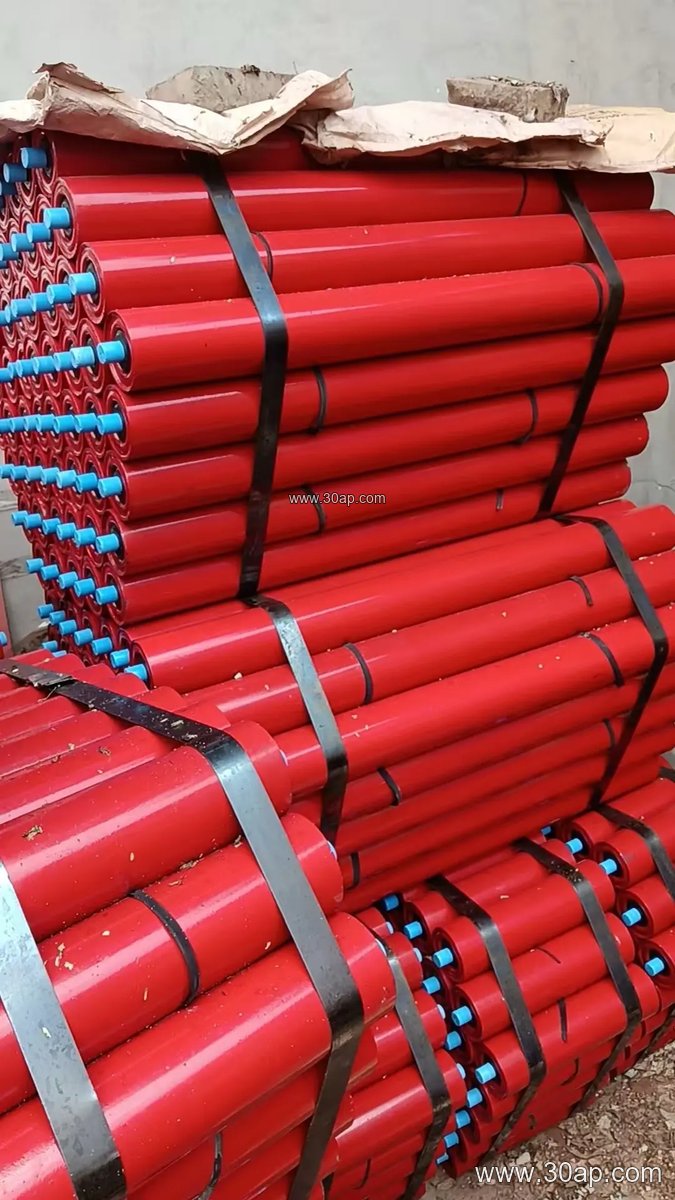
Because the zinc coating protects the entire idler, the benefit is most apparent on return idlers and lower strands that see condensation, spillage, and fine dust. The same coating approach can be applied to conveyor brackets and frame parts for a consistent corrosion-resistant assembly. However, drive pulleys, tail pulleys, and bend pulleys are separate components and are not interchangeable with idlers; each pulley type has its own design role. A conveyor pulley is selected for torque and belt wrap, while idlers are selected for load support and rollability.
Selection Notes for Buyers
When specifying a hot-dip galvanized idler, confirm the belt width, trough angle, and idler arrangement first. Then check the roll diameter against the belt speed and load. A wider belt such as 1200 mm, 1400 mm, or 1600 mm does not automatically dictate one shaft diameter; the shaft and bearing are determined by the actual load calculation. Buyers should also state the environment: a quarry or cement plant may need enhanced sealing, while a coal mining conveyor may call for flame retardant and anti-static properties in the belt itself.
Surface options matter. Rubber rings can cushion impact at transfer points, nylon rolls reduce weight, and ceramic covers resist abrasive wear. For sticky materials, spiral or comb idlers may be considered. The table below lists common reference values for orientation; final dimensions should follow the conveyor design.
| Parameter | Common reference values |
|---|---|
| Roller diameter | Ø63, Ø76, Ø89, Ø102, Ø108, Ø127, Ø133, Ø159, Ø178, Ø194, Ø219 mm |
| Belt width | B400, B500, B650, B800, B1000, B1200, B1400, B1600, B1800, B2000, B2200, B2400 |
| Bearing | 6204, 6205, 6305, 6306, 6308, 6310 (selected by load and speed) |
| Trough angle | 20°, 30°, 35°, 45° |
Finally, consider the conveyor belt type. A heavy-duty mining conveyor belt, an abrasion resistant conveyor belt, or a heat resistant conveyor belt may impose different loads and temperatures on the idler. Matching the idler coating and seal to the belt duty helps avoid premature failure. For example, a steel cord conveyor belt used in a long overland system may require low rolling resistance, while a fabric core conveyor belt in a cement plant may tolerate a standard idler if sealing is adequate.
Maintenance and Longevity
Hot-dip galvanized idlers require little routine attention beyond checking for free rotation, abnormal noise, and material buildup. Seized rollers should be replaced promptly to prevent belt damage and increased power draw. In corrosive areas, periodic inspection of the zinc coating at welds and edges helps confirm the protective layer is intact. Storing idlers under cover and avoiding dragging them across the ground preserves the coating before installation.
Because the zinc coating is sacrificial, minor scratches generally do not lead to rapid rust spread. This makes the hot-dip galvanized idler a practical choice for plants that value low maintenance and extended service intervals in humid or dusty conditions.