What a Carbon Steel Conveyor Bracket Does
A carbon steel conveyor bracket is the structural interface between the conveyor frame and the rotating components that carry the belt. It holds idler rollers, return rollers, and sometimes pulley assemblies in the correct position so the conveyor belt tracks smoothly under load. In quarry and aggregate lines, the bracket often takes the brunt of impact and misalignment, making material choice and design details matter as much as the roller itself.
Unlike a simple welded tab, a properly engineered bracket controls trough angle, spacing, and elevation. That control directly affects how a Fabric Core Conveyor Belt or Steel Cord Conveyor Belt performs over years of service.
How It Is Built
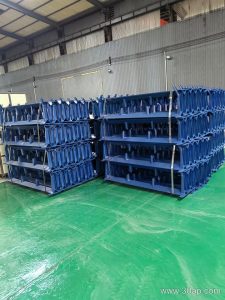
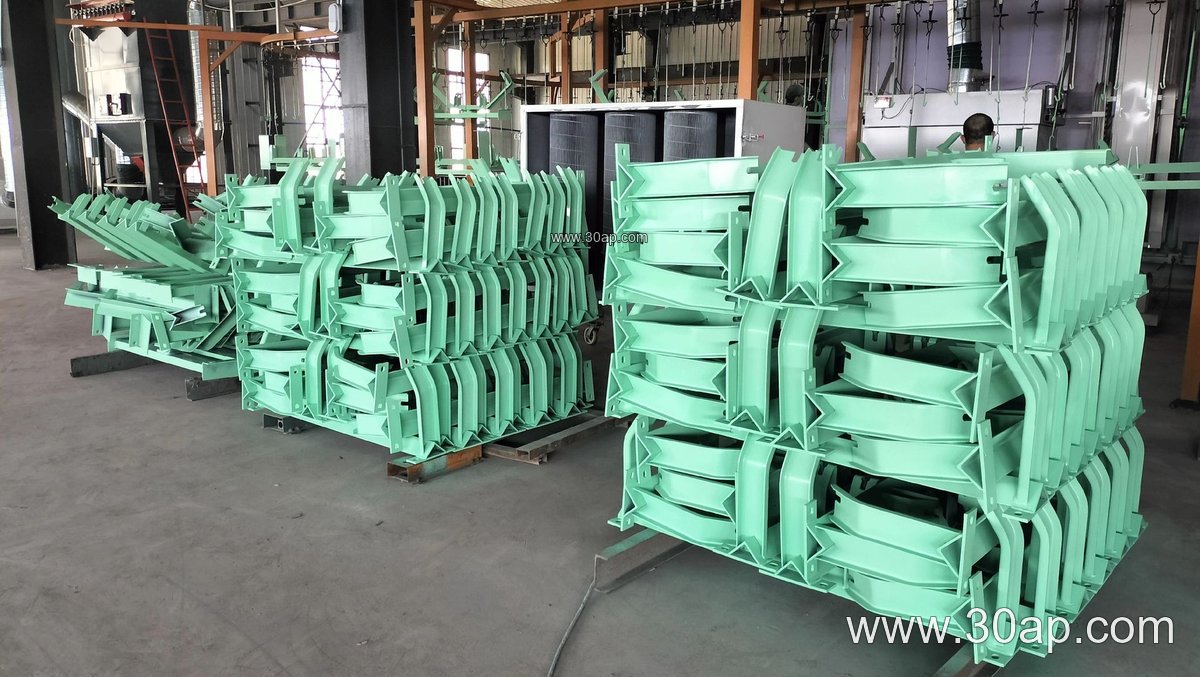
Most carbon steel conveyor brackets are fabricated from angle steel, channel steel, or folded steel plate. The grade is typically a weldable structural carbon steel, selected for stiffness rather than corrosion resistance. Fabrication steps usually include cutting, punching or drilling mounting holes, bending, welding, and a surface treatment such as primer or powder coating.
Key construction details include:
- Mounting slot patterns that match the conveyor frame hole spacing
- Reinforced gussets at load-bearing corners
- Trough angle set by the bracket geometry or by an adjustable pivot
- Clearance for idler roller shafts and fasteners
Because hole spacing and crossbeam length change with belt width and trough angle, these dimensions are determined by design rather than fixed by a single standard.
Common Configurations and Where They Fit
The same carbon steel conveyor bracket family covers several positions along the conveyor:
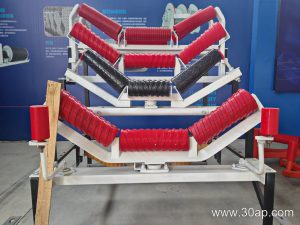
- Troughing brackets support the carrying side and set the trough angle, commonly 20, 30, 35, or 45 degrees.
- Transition brackets ease the belt from flat to troughed profile near pulleys.
- Return brackets and V-return brackets support the empty side.
- Impact brackets sit under loading points and carry impact idlers.
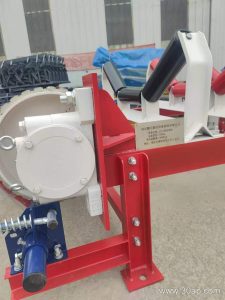
- Self-aligning brackets allow slight pivot movement to correct belt drift.
- Adjustable brackets let maintenance crews change trough angle within a range.
These are positions and functions, not interchangeable names. A return bracket does not replace a troughing bracket, and a bend pulley is a different component from a drive or tail pulley.
Typical Sizes and Reference Data
Brackets are usually ordered against belt width, trough angle, and roller diameter. The table below shows common reference combinations; actual mounting dimensions are confirmed by the conveyor designer.
| Belt Width | Trough Angle | Roller Diameter | Typical Position |
|---|---|---|---|
| B500 | 20° | Ø89 | Troughing, return |
| B650 | 30° | Ø89 | Troughing, transition |
| B800 | 35° | Ø108 | Troughing, impact |
| B1000 | 35° | Ø108 | Troughing, self-aligning |
| B1200 | 45° | Ø133 | Troughing, V-return |
| B1400 | 45° | Ø133 | Troughing, transition |
| B1600 | 35° | Ø159 | Troughing, impact |
| B1800 | 45° | Ø159 | Troughing, return |
| B2000 | 45° | Ø194 | Troughing, heavy duty |
Forward-leaning brackets often use a tilt of about 1.5 to 2 degrees to help center the belt. These values are common references, not universal specifications.
Where Carbon Steel Brackets Are Used
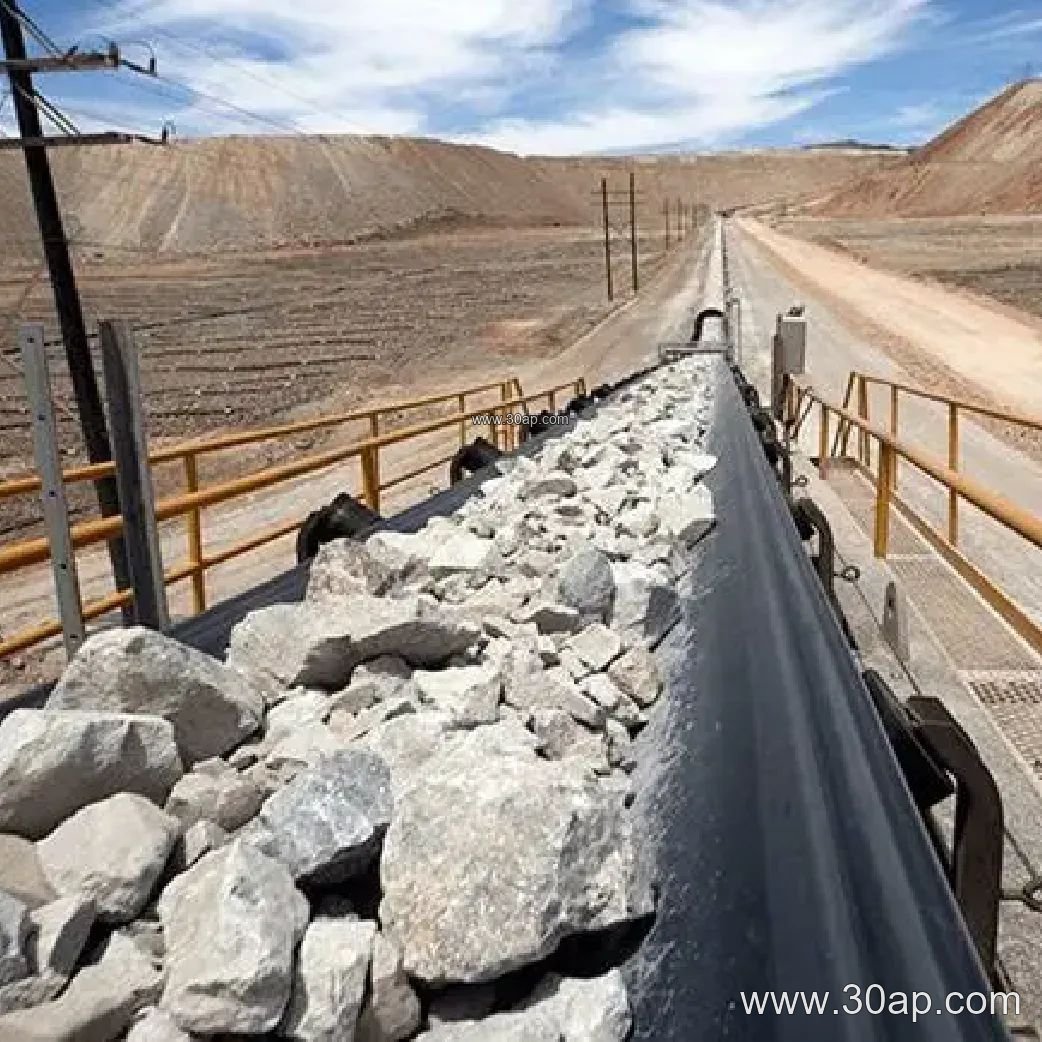
In a limestone quarry, troughing brackets carry a high abrasion resistant conveyor belt over long distances. In a coal preparation plant, flame retardant conveyor belt runs on brackets designed for dusty, potentially explosive atmospheres. The same bracket family appears in cement plants, power plant coal handling, iron ore terminals, and aggregate crushing circuits.
Selection should match the duty: a heavy-duty mining conveyor belt needs stiffer brackets and larger roller diameters than a short transfer line. For more on matching components, see conveyor bracket and conveyor pulley guidance.
Buyer Checklist
- Confirm belt width, trough angle, and roller diameter as a set, not in isolation.
- Ask for mounting hole spacing and crossbeam length drawings.
- Specify surface treatment for the environment, such as primer for humid tunnels.
- Check that adjustable brackets lock firmly after angle changes.
- Verify that self-aligning brackets suit the belt type, especially with chevron or corrugated sidewall belts.
For related components such as idler roller and conveyor belt, keep the bracket drawing and roller shaft dimensions together during procurement. A carbon steel conveyor bracket is a small part, but it determines whether the belt runs true or wears early.