What a Conveyor Pulley Does on a Belt System
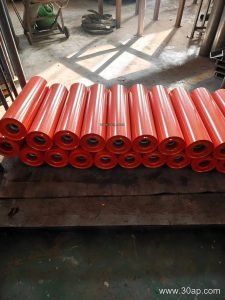
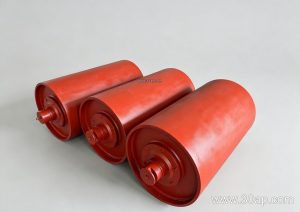
A conveyor pulley is the rotating drum that transmits motion to the conveyor belt and supports it at key points along the conveyor line. While the belt and idler roller assemblies carry the load, the pulley provides the driving force, controls belt tension, and guides the belt around curves or changes in direction. In a quarry, cement plant, or coal handling facility, a properly matched drum keeps the whole line moving without excessive belt slip or damage.
The same component is also called a conveyor drum in many workshops. Both terms describe the same product. Within the system, however, each position serves a distinct function. Drive pulleys, tail pulleys, and bend pulleys are not interchangeable names; they describe different locations and duties.
Main Types and Where They Sit
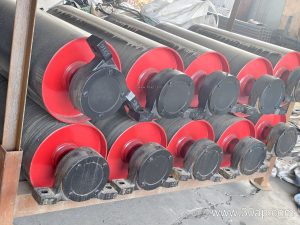
The drive pulley, sometimes called the head pulley, is usually the largest and most heavily loaded drum. It grips the belt and transfers torque from the gearbox. The tail pulley sits at the loading end and helps maintain belt alignment. A bend pulley changes belt direction without driving, while a tension pulley maintains belt slack control. Only these specific subtypes should be described by their own names, since their loads and surface treatments differ.
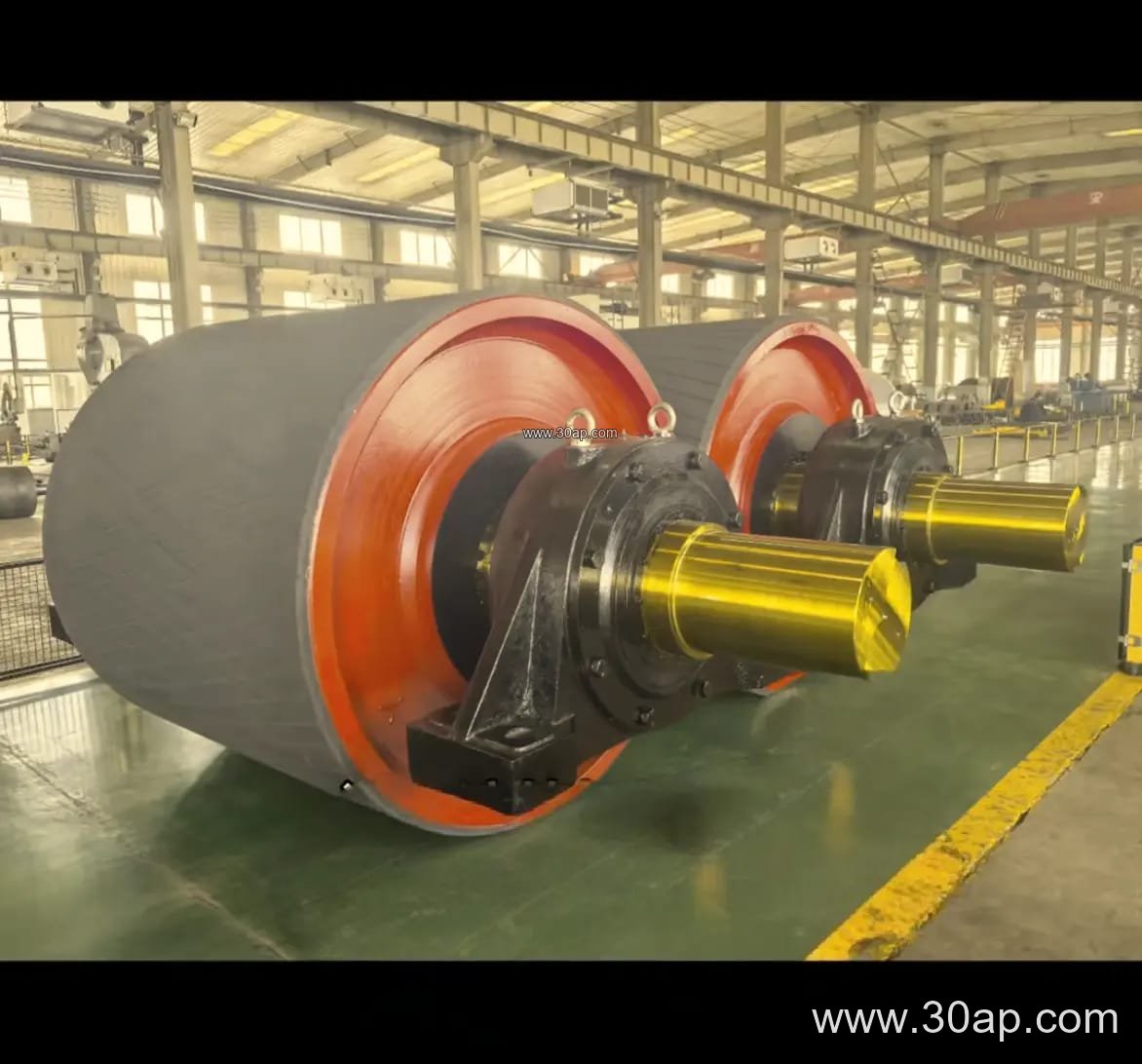
- Drive or head pulley: high torque, often lagged for grip
- Tail pulley: return-side support at the loading zone
- Bend pulley: direction change with light to moderate load
- Tension pulley: keeps belt tension within the design range
Electric drum motors combine the drive and pulley into one unit and suit compact layouts where space is limited. Wing pulleys are another option for sticky materials, as their open profile sheds fines more easily than a smooth drum surface.
Construction and Surface Options
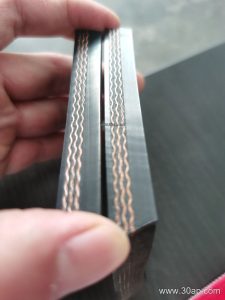
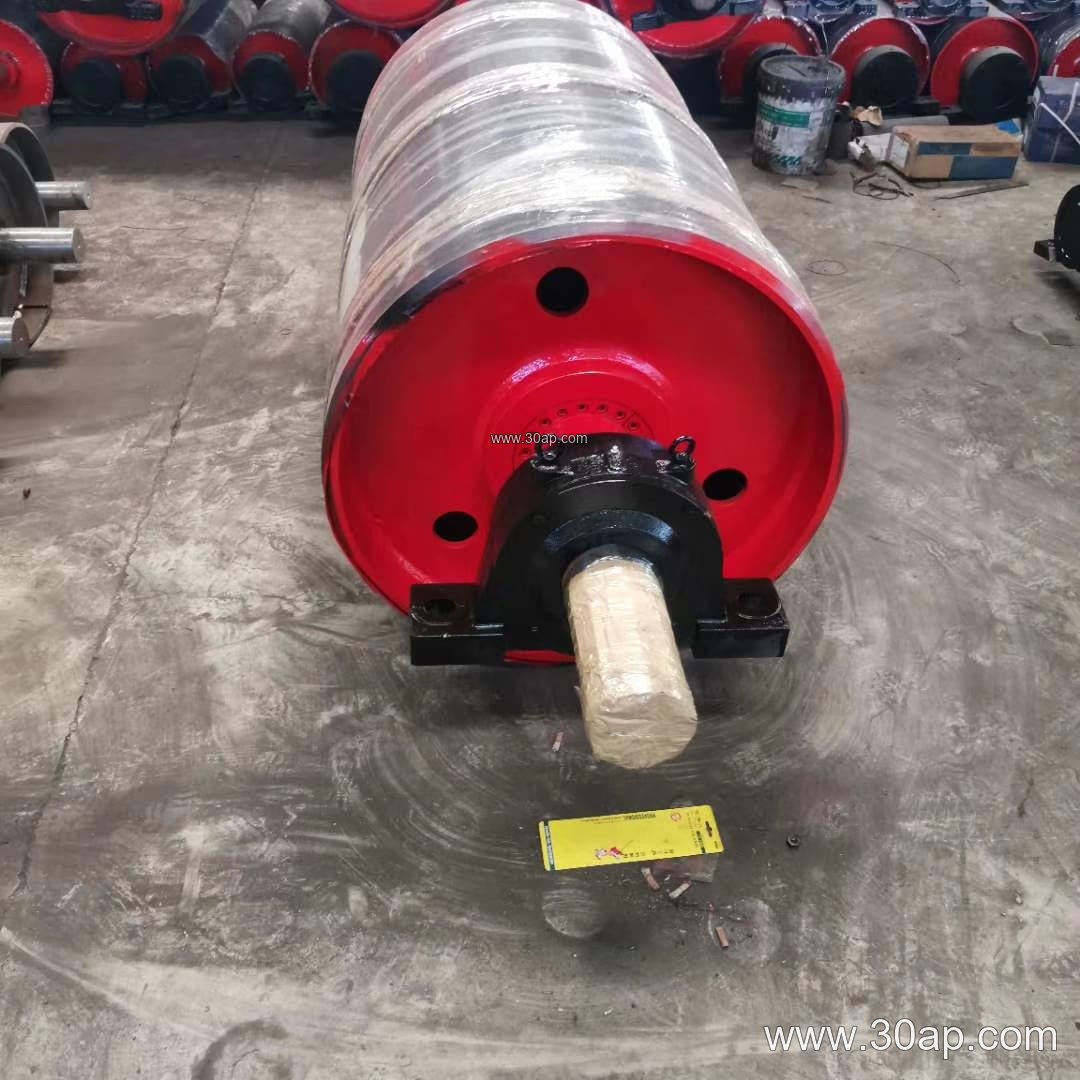
Most industrial conveyor pulleys use a welded steel shell with end discs and a shaft that is sized by torque and radial load. An abrasion resistant conveyor belt running over a lagged drum benefits from a surface that matches the duty. Common surface forms include plain finish, cast rubber, cold-bonded rubber, hot-vulcanized rubber, diamond lagging, herringbone lagging, and ceramic lagging. Lagging thickness of 8, 10, 12, 15, or 20 mm is typical, but the final choice depends on belt speed, material, and slip risk.
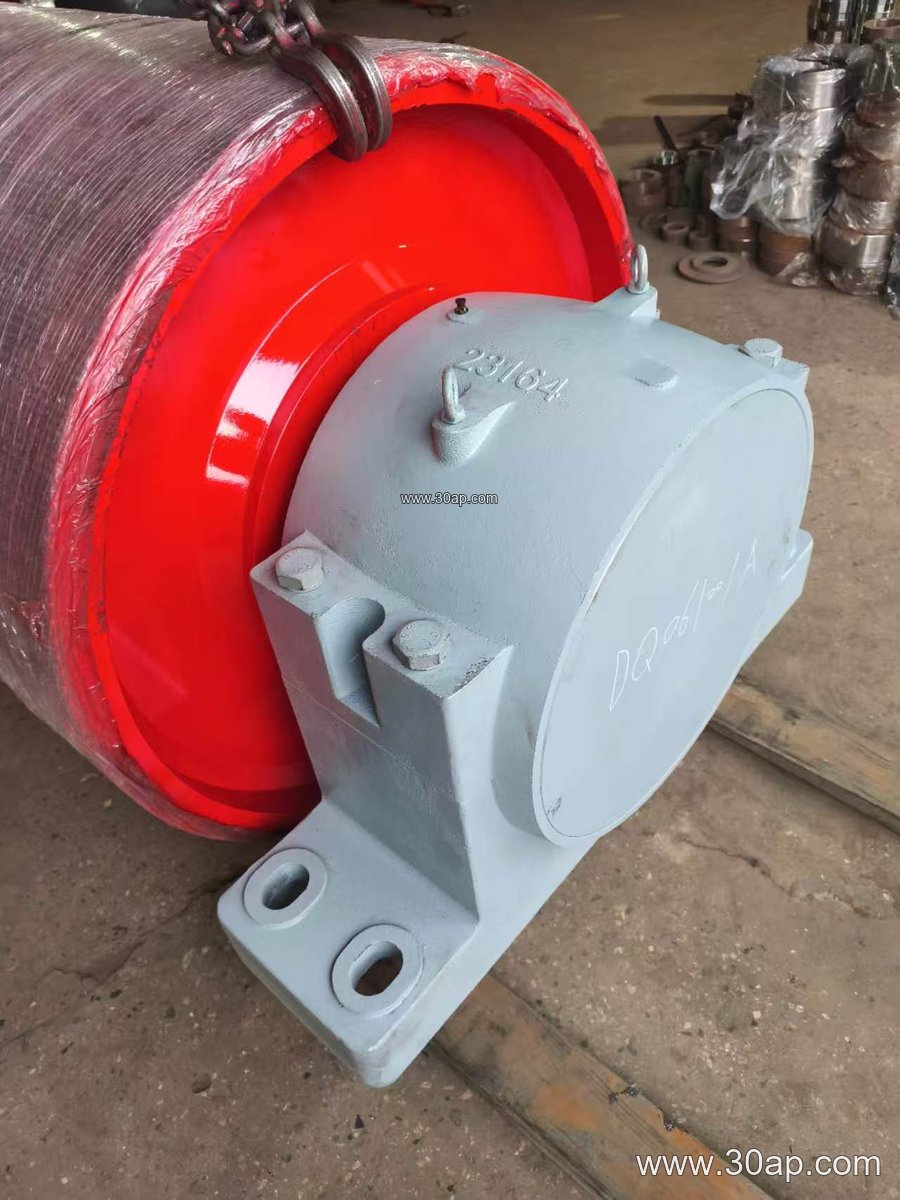
Shell width is normally slightly wider than the belt. For example, a B800 conveyor belt often runs on a drum about 950 mm wide, and a B1200 belt typically matches a shell near 1400 mm. These are reference relationships, not fixed rules. A 1200mm wide conveyor belt can work with different drum diameters depending on the layout.
Common Size Combinations and Reference Data
Buyers often ask for a B1200 x Ø1000 conveyor pulley or a B800 x Ø500 unit, and both combinations exist in practice. The table below lists common reference values only; actual selection follows the conveyor design.
| Reference Item | Typical Values |
|---|---|
| Belt width range | B400, B500, B650, B800, B1000, B1200, B1400, B1600, B1800, B2000, B2200, B2400 |
| Pulley diameter options | Ø200, Ø250, Ø315, Ø320, Ø400, Ø500, Ø630, Ø800, Ø1000, Ø1250, Ø1400, Ø1600, Ø1800 |
| Shaft diameter options | Ø50, Ø60, Ø70, Ø80, Ø90, Ø100, Ø120, Ø140, Ø160, Ø180, Ø200 |
| Lagging thickness | 8 mm, 10 mm, 12 mm, 15 mm, 20 mm |
Shaft diameter should be determined by torque and load analysis, not by belt width alone. Never assume that one belt width can only match one drum diameter, or that a specific shaft size follows directly from the belt specification. The conveyor bracket and frame design also affect how the drum is mounted and aligned.
Applications Across Industries
In a coal preparation plant, a flame retardant conveyor belt runs over drive and tail pulleys that must resist dust and occasional moisture. In a cement plant, heat resistant conveyor belts carrying clinker place extra demands on drum bearings and lagging. An iron ore or copper ore operation usually favors heavy-duty lagging and robust shafts because of high tonnage and abrasive fines.
Aggregate lines in a sand and gravel yard often use smaller drums with plain or diamond lagging, while port bulk terminals handling ship loading rely on large-diameter pulleys for high belt speeds. The same drum design principles apply whether the material is ore, clinker, or grain, but the surface and bearing protection must suit the environment.
What Buyers Should Check Before Ordering
- Confirm the drum position: drive, tail, bend, or tension. Each plays a different role.
- Match shell width to belt width with a small margin, and verify the conveyor bracket dimensions.
- Select lagging based on slip risk and material build-up, not appearance.
- Provide belt speed, tonnage, and starting torque so the shaft and bearings can be sized correctly.
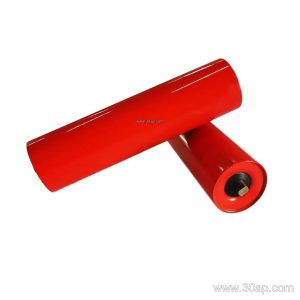
- Check that the idler roller spacing and belt path align with the drum diameter.
For a dependable bulk material conveyor belt system, the conveyor pulley should be treated as an engineered component rather than a generic drum. Accurate data on load, belt type, and operating environment will lead to a longer service life and fewer unplanned stops.