What a Conveyor Take-Up Pulley Does
A conveyor take-up pulley is the drum that maintains working tension in a conveyor belt circuit. It is mounted on a movable carriage or a guided frame, so the pulley can travel a short distance as the belt stretches or contracts. By taking up slack, it keeps the belt seated on the drive pulley and prevents slippage, mistracking and excessive sag between idlers. In a long overland line at a quarry or a coal-fired power plant’s coal yard, this component is often the difference between steady output and frequent stoppages.
The take-up pulley is a distinct position type. It is not a drive pulley, which transmits torque to the belt, not a tail pulley at the loading end, and not a bend pulley that redirects the belt path. The take-up function is defined by its mounting and travel, not by its name alone.
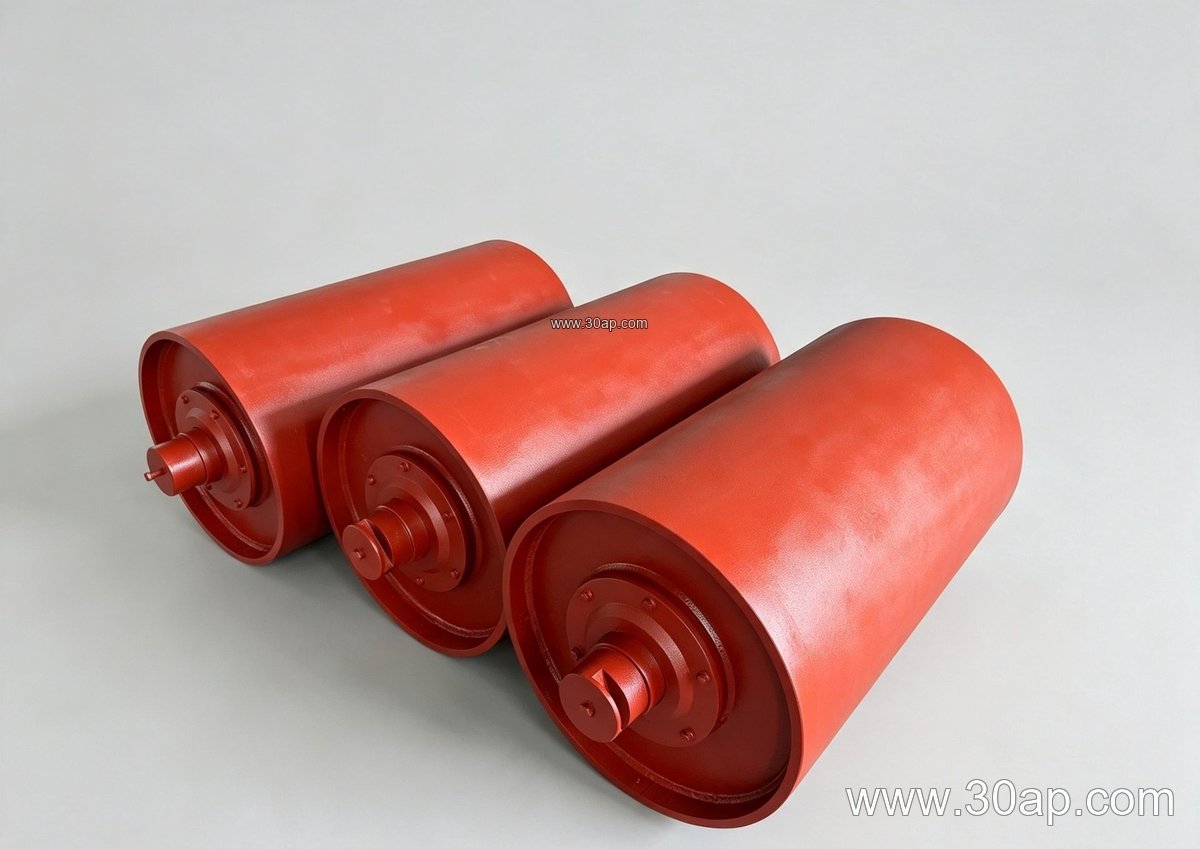
Construction and Surface Options
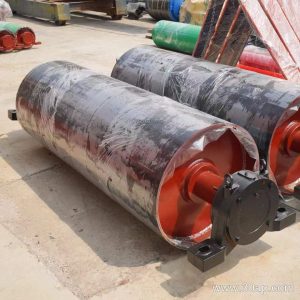
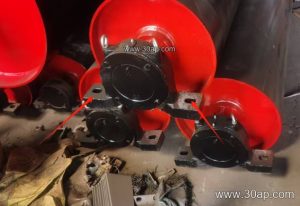
A typical take-up drum is built from a rolled steel shell, welded end discs and a through shaft supported by pillow block bearings. The shell face is usually wider than the belt: for example, a B800 belt often runs on a drum with roughly 950 mm face width, while B1200 may use about 1400 mm. Diameter is chosen from belt stiffness and wrap requirements, and combinations such as B800 × Ø500 or B1400 × Ø800 appear in real layouts. These are reference examples, not fixed pairings.
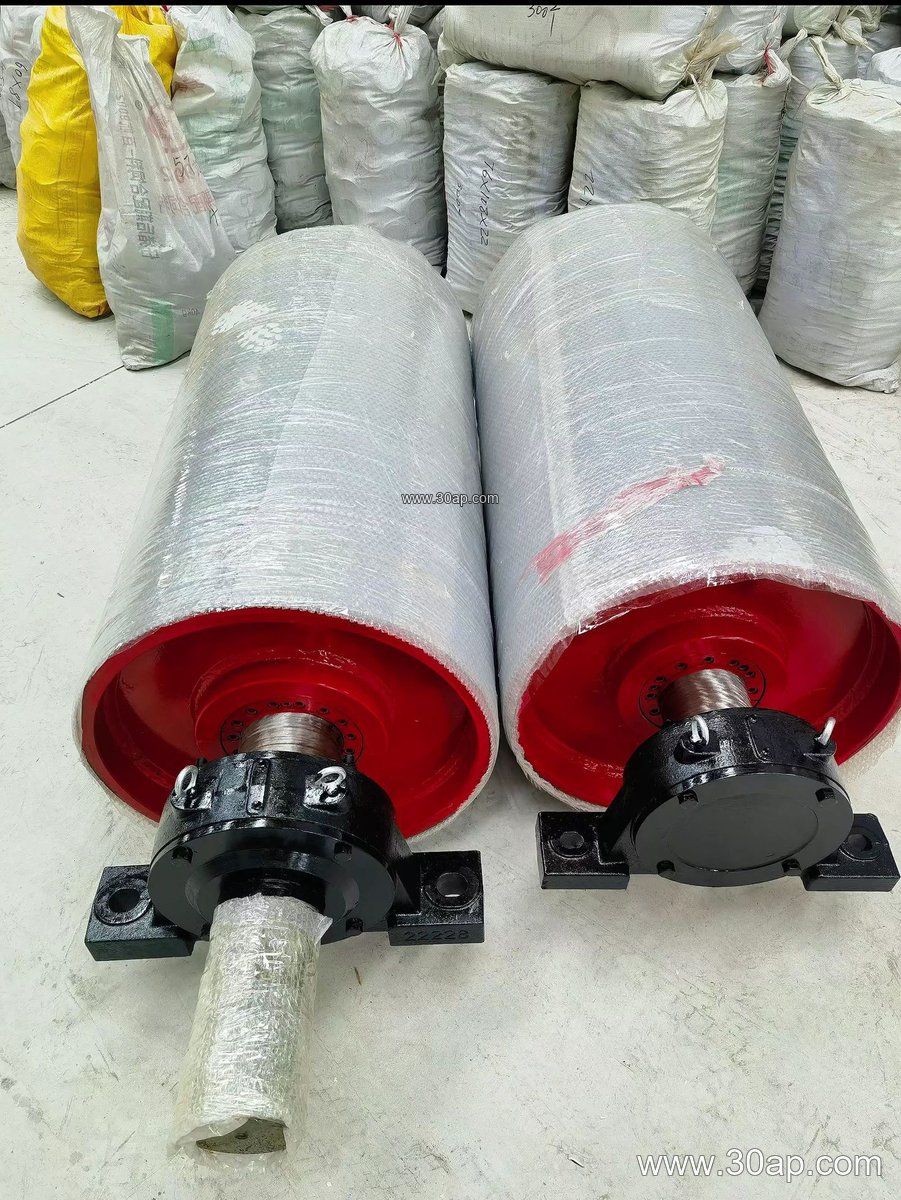
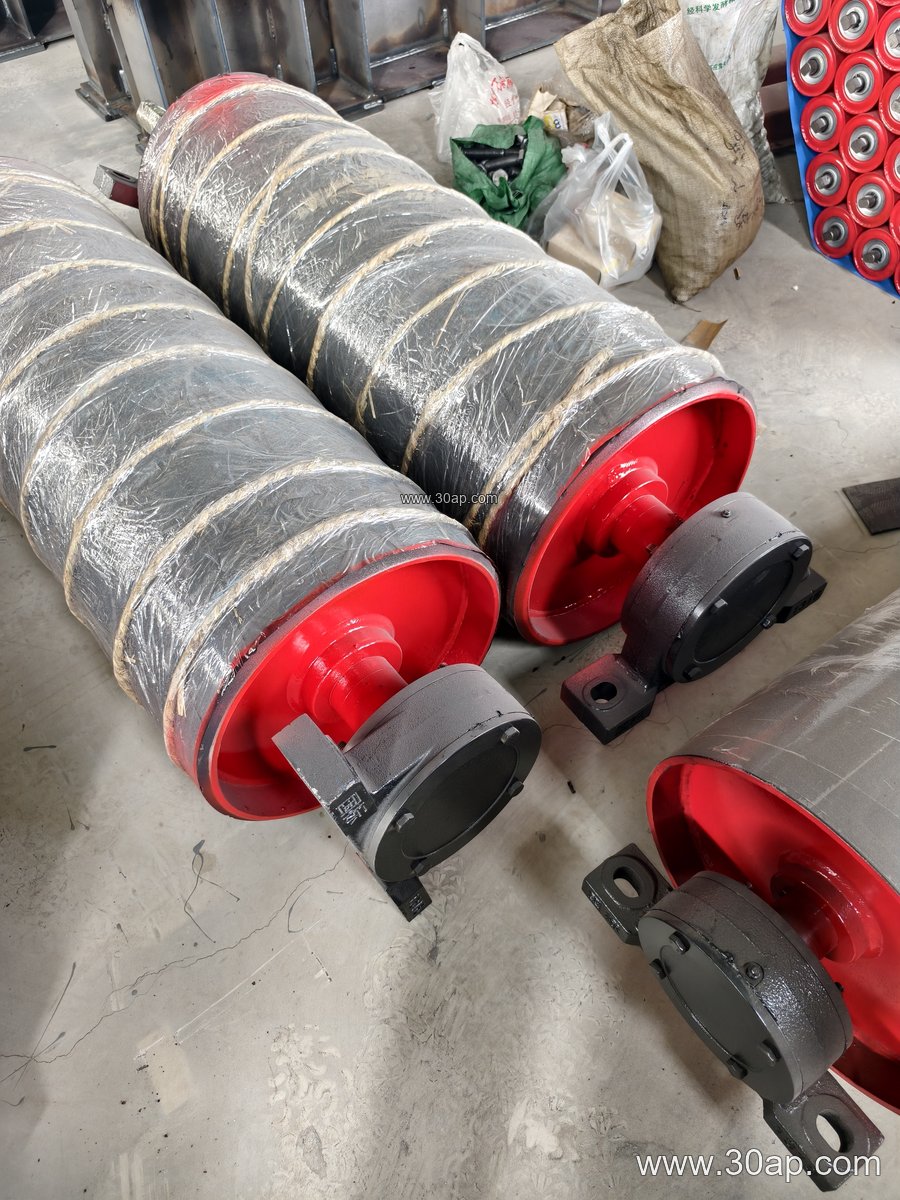
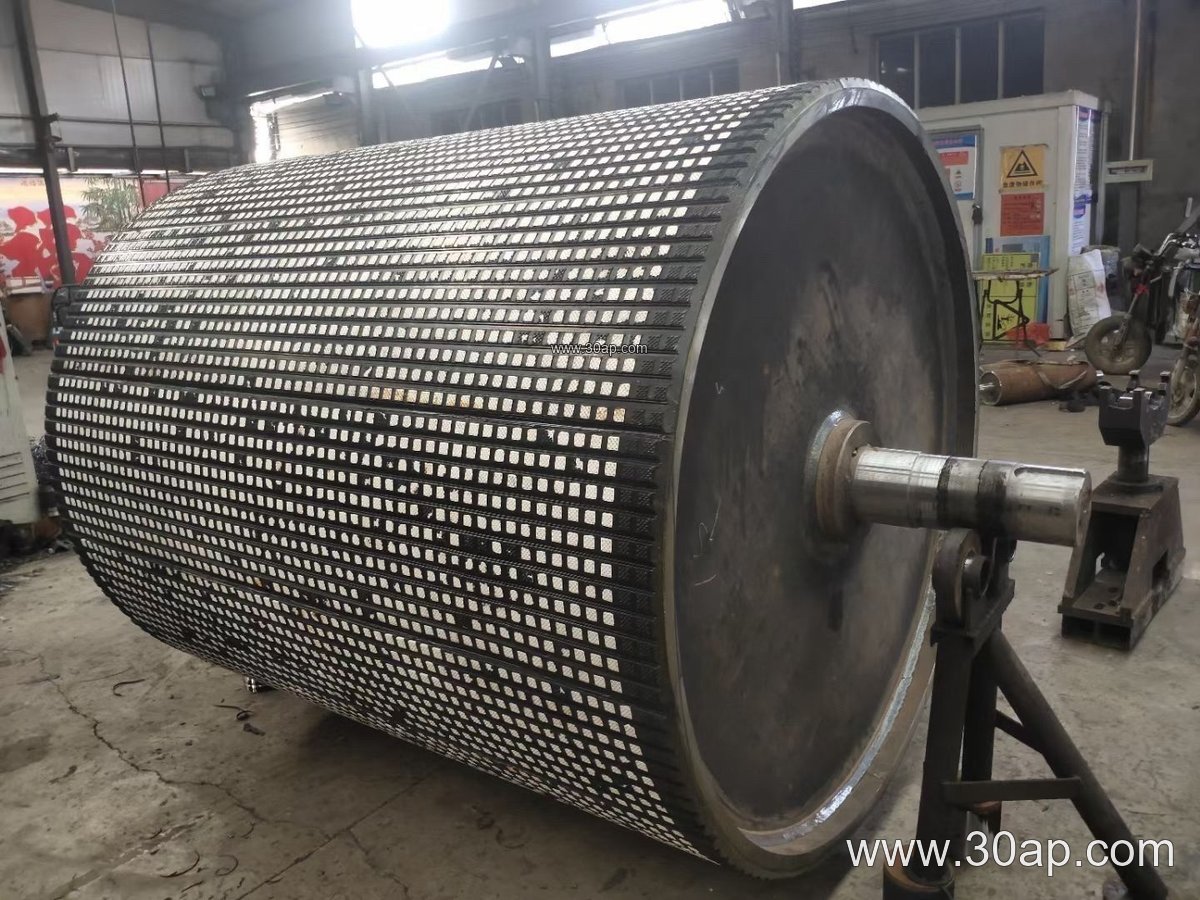
Surface treatment affects grip and belt life. Plain faces are common, while lagging choices include cold-bonded rubber, hot-vulcanized rubber, diamond grooving and ceramic tiles. Lagging thickness is often 8, 10, 12, 15 or 20 mm. A rubber lagging improves friction in wet conditions, and a ceramic surface suits abrasive service. Shaft diameter is set by torque and bearing load, commonly in the Ø50 to Ø200 range, and should never be derived from belt width alone.
Where It Is Installed
Take-up pulleys are found in stone crushing and screening lines, cement plants handling clinker, iron ore and copper ore concentrators, port bulk terminals and tunnel spoil removal conveyors. In a coal washing plant, a heavy-duty Mining Conveyor Belt may need a longer take-up stroke because of thermal movement and load variation. At a sand and aggregate site, a Fabric Core Conveyor Belt on a shorter conveyor may need only a modest travel range.
The take-up station is usually placed near the tail or after the drive, depending on the conveyor profile. A screw take-up works well on short units, while a gravity take-up with a counterweight suits long, heavily loaded lines. A hydraulic or winch-driven carriage is used where automatic tension control is required.
Matching the Pulley to the Belt
The take-up pulley must suit the belt’s construction and duty. A Steel Cord Conveyor Belt has high tension and limited elongation, so the take-up stroke and pulley diameter differ from those of a Multi-Ply Fabric Core Conveyor Belt. Abrasive loads such as ore and rock favor a Abrasion Resistant Conveyor Belt with a wear-tolerant lagging, while a Heat Resistant Conveyor Belt in a cement kiln area calls for attention to bearing placement and heat shielding. Flame Retardant Conveyor Belt grades are common in underground coal mining, where the take-up frame must also meet fire-safety requirements.
Belt tracking depends on pulley alignment. A take-up pulley that is skewed by even a small angle can push the belt to one side, so the carriage guide rails and bearing seats must be square to the conveyor centerline. Crowned faces are sometimes used to assist tracking, but the choice depends on belt type and manufacturer guidance.
Buyer Checklist
- Confirm the mounting style: fixed screw, gravity, hydraulic or winch carriage.
- State belt width, belt type and maximum tension so the drum face and shaft can be sized correctly.
- Specify lagging: plain, rubber, diamond or ceramic, with thickness if required.
- Check travel distance and available space for the take-up frame and counterweight.
- Ask about bearing type, sealing and lubrication access for dusty sites.
- Verify that the pulley matches the conveyor bracket and frame dimensions.
Good take-up design also considers maintenance. A pulley that can be inspected without dismantling the whole tension station reduces downtime. Spare lagging sheets, bearing housings and shaft keys should be available for critical lines in mines, power plants and ports.
For more on related components such as the conveyor pulley, idler roller and conveyor bracket, match each part to the same duty class as the belt. A correctly specified Conveyor Take-Up Pulley keeps tension stable, protects the belt and helps the whole conveyor system run smoothly.