What a Conveyor Trough Idler Does on the Line
A conveyor trough idler is the carrying roller assembly that supports the loaded side of a conveyor belt and shapes it into a trough. Three rolls, usually arranged at a common trough angle, lift the belt edges so bulk material sits in a shallow channel instead of spilling off a flat surface. This shape keeps the load centered, reduces spillage at transfer points, and helps the belt track straighter between the head and tail of the conveyor. In a quarry, a coal handling system, or a cement plant, the troughing idlers are the parts that bear most of the material weight along the entire run.
The same assembly is also called a troughing roller set or carrying idler group. It should not be confused with a return idler beneath the belt, a transition idler near a pulley, or a self-aligning idler used for tracking correction. Each has its own place on the conveyor, and the trough idler is specifically the loaded-side support.
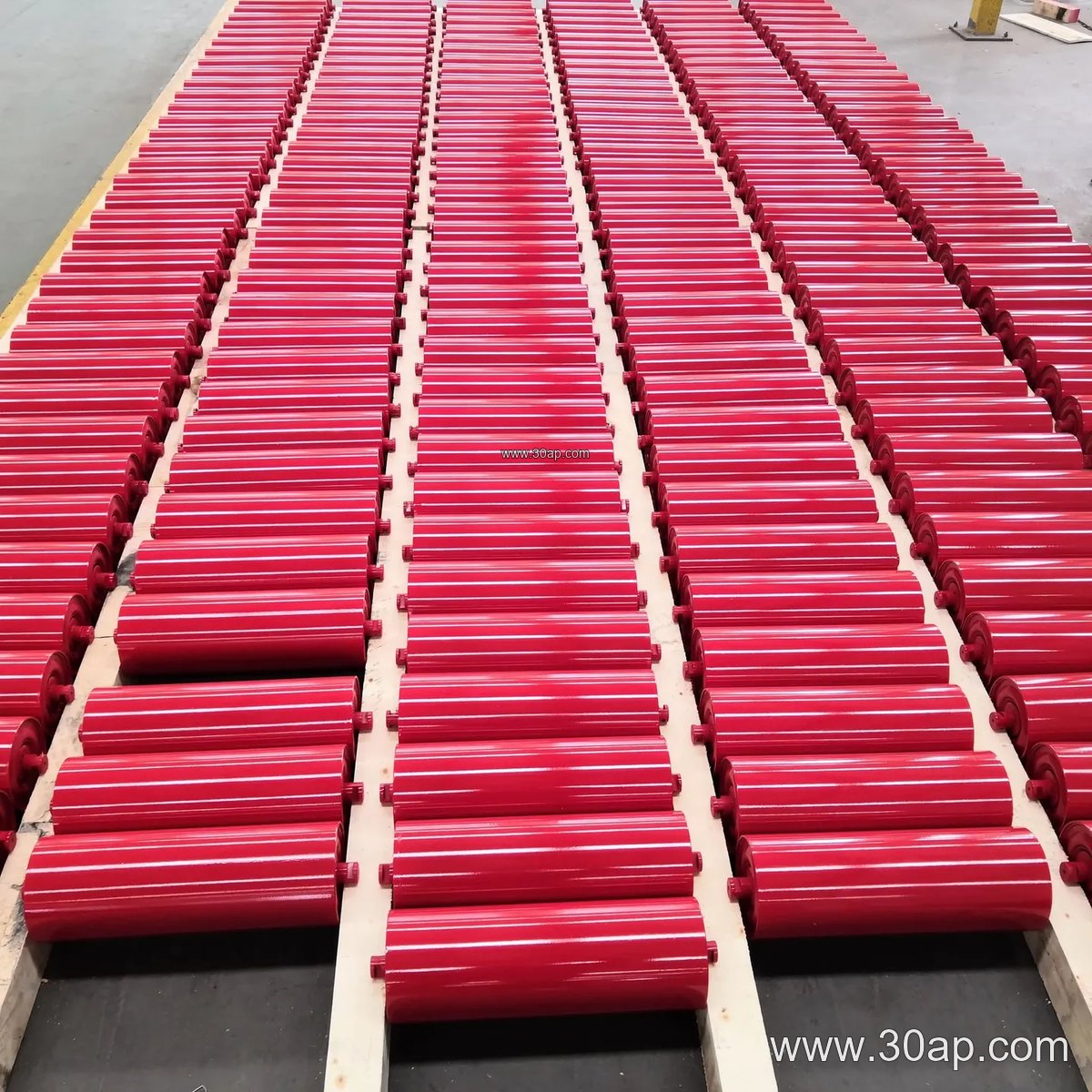
Build and Main Components
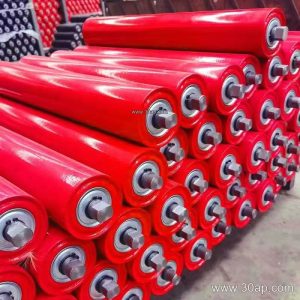
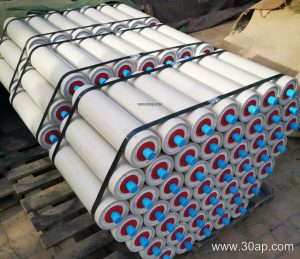
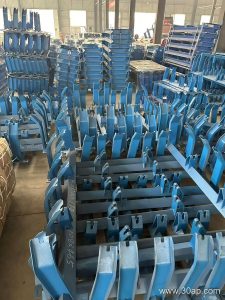
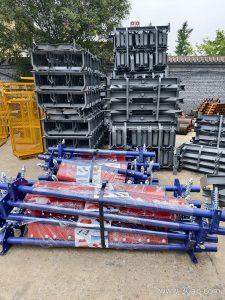
A typical troughing idler set combines three roller shells, a shaft through each roll, sealed bearings, and a frame that holds the side rolls at the chosen angle. The frame is often bolted to the conveyor bracket on the stringer. Roller shells are commonly steel tube, with nylon, rubber ring, or ceramic surfaces used where wear or material build-up is a concern. Bearings such as 6204, 6205, 6305, 6306, 6308, or 6310 appear across the range, matched to load and speed by the designer rather than to a single roll diameter.
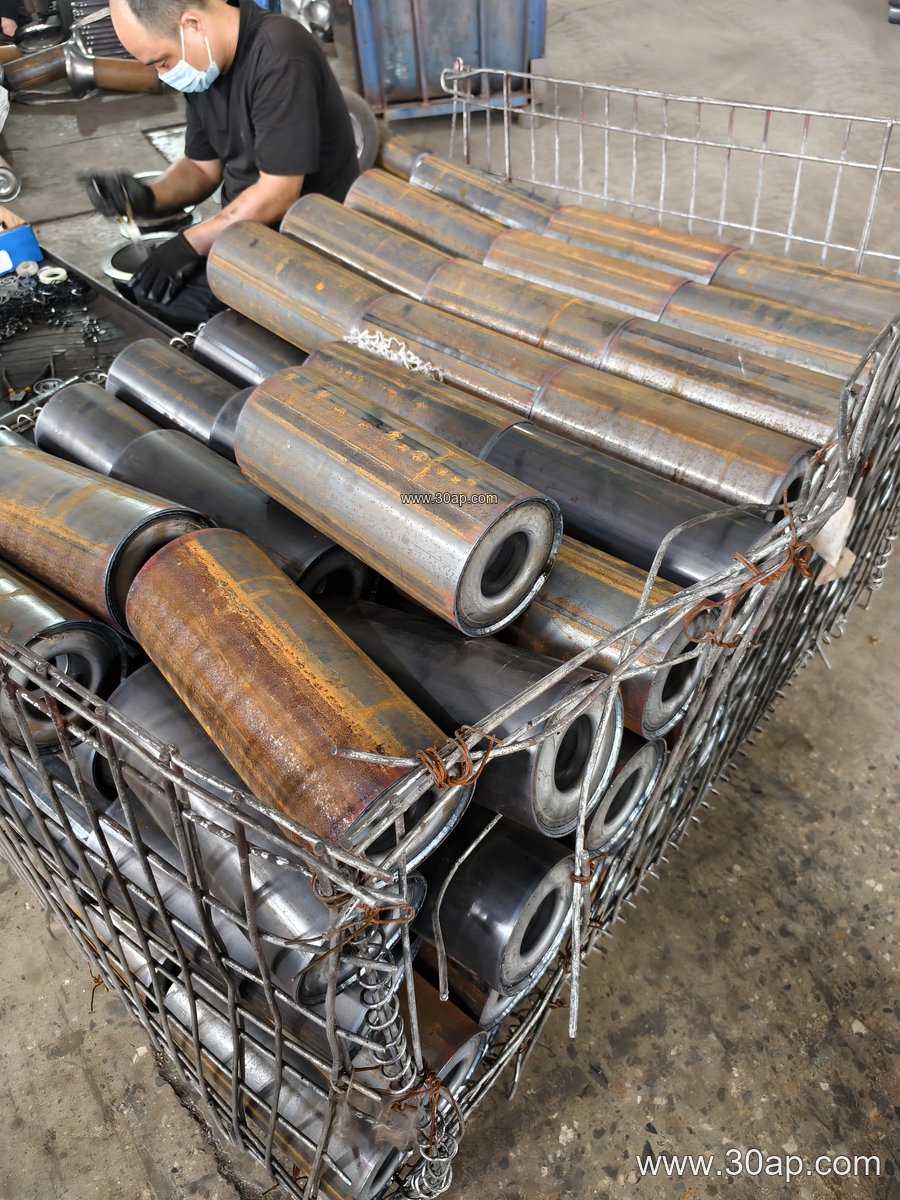
Common roll diameters include Ø63, Ø76, Ø89, Ø102, Ø108, Ø127, Ø133, Ø159, Ø178, Ø194, and Ø219 mm. Trough angles are usually 20, 30, 35, or 45 degrees, with 35 degrees a frequent choice for general bulk handling. A forward tilt of about 1.5 to 2 degrees is sometimes used to help training. Roll length follows belt width, trough angle, and the number of rolls in the set.
| Belt width | Typical roll length for three-roll trough set | Common trough angle |
|---|---|---|
| B500 | about 200 mm | 20-35 degrees |
| B650 | about 250 mm | 20-35 degrees |
| B800 | about 315 mm | 30-35 degrees |
| B1000 | about 380 mm | 30-35 degrees |
| B1200 | about 465 mm | 30-35 degrees |
| B1400 | about 530 mm | 30-45 degrees |
| B1600 | about 600 mm | 35-45 degrees |
| B1800 | about 670 mm | 35-45 degrees |
These figures are common examples, not fixed pairings. Side rolls and the center roll can differ, and the final length is set by the conveyor design.
Where Troughing Idlers Are Used
The carrying side of almost any bulk conveyor relies on this roller group. In an iron ore or copper ore operation, heavy, abrasive rock demands robust shells and good sealing. In a coal preparation plant or power station coal yard, flame retardant and anti-static belt constructions are often paired with well-sealed idlers to handle dust and fine material. Aggregate lines, crushing and screening circuits, and concrete batching plants use troughing sets to keep sand and stone centered through long inclines.
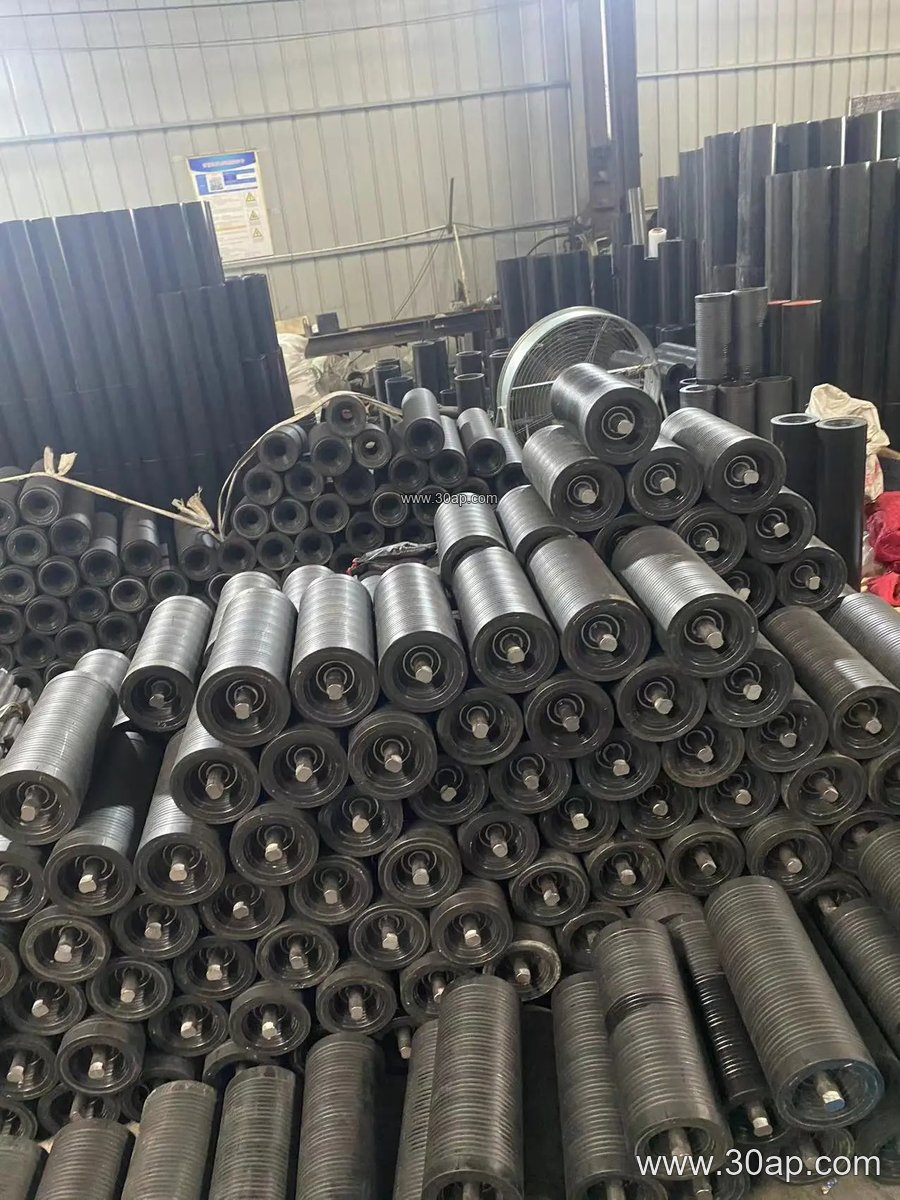
At transfer points and loading zones, impact-resistant or rubber-ring cushion idlers may replace standard trough rolls to absorb falling material energy. That is a functional comparison, not a substitute for the standard trough idler along the normal carrying run. On the return side, flat or V-return rollers take over, and near the head pulley a transition idler gradually changes belt shape before it wraps the conveyor pulley.
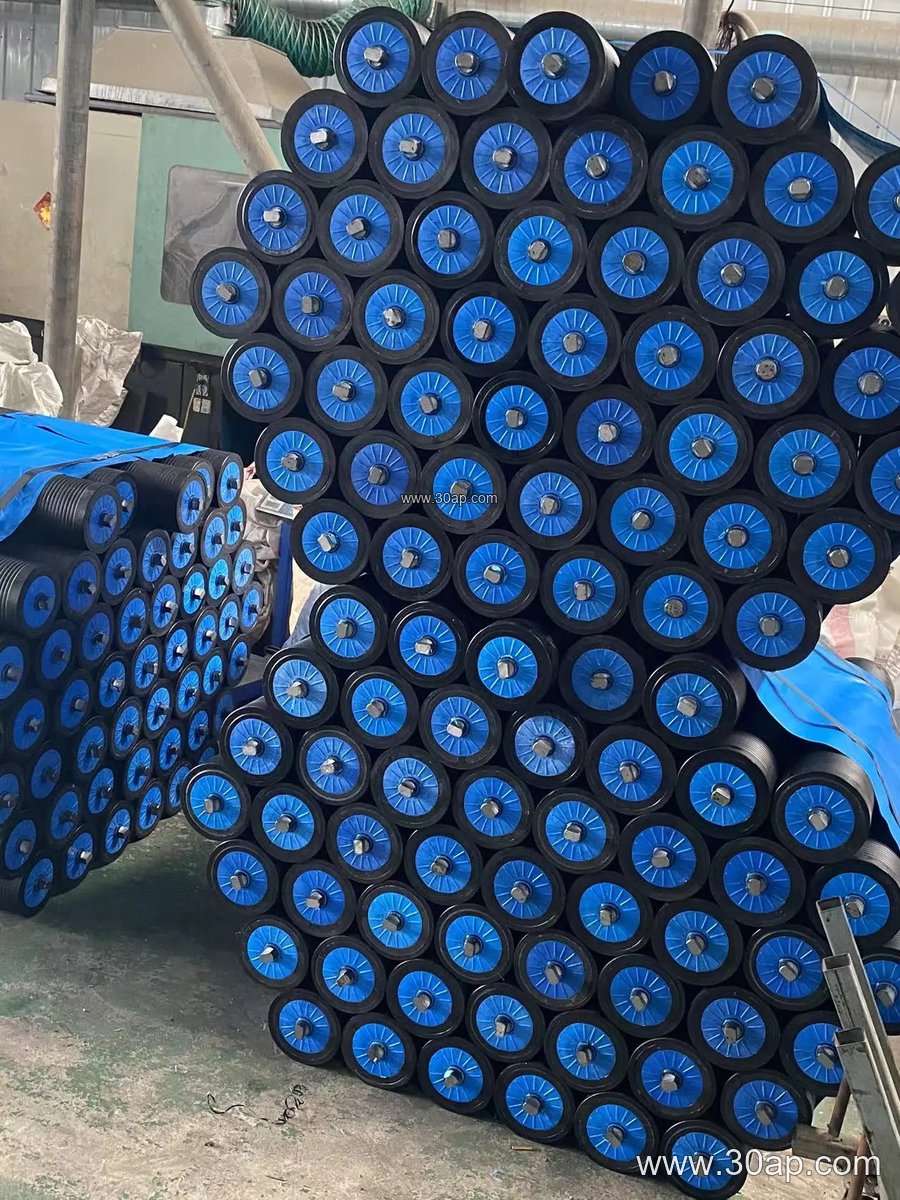
Selection Points for Buyers
- Confirm belt width, trough angle, and whether a two-roll or three-roll set is required.
- Match roll diameter and bearing class to the load, belt speed, and duty cycle rather than assuming one size fits all.
- Choose the shell surface for the material: steel for general service, rubber rings for impact, ceramic or nylon where abrasion and sticking are problems.
- Check sealing and bearing protection in dusty or wet conditions, especially in underground mining and wash plants.
- Verify shaft ends, frame dimensions, and mounting holes against the existing conveyor bracket before ordering.
Spare parts planning matters too. Keeping a small stock of complete troughing sets and individual rollers reduces downtime when a bearing fails or a shell wears through. Records of roll diameter, trough angle, and frame type make reordering straightforward.
Installation and Maintenance Notes
Align the idler frame square to the belt centerline and check that all three rolls sit at the intended angle. A misaligned set can cause edge wear and belt drift. Inspect for seized bearings, worn shells, and material buildup, and clean the frame area during scheduled shutdowns. Lubrication intervals depend on the bearing seal type and operating environment, so follow the supplier instructions rather than a single universal rule.
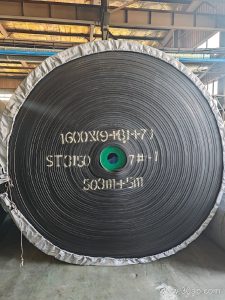
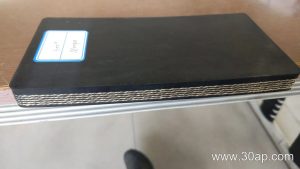
For a complete carrying system, the trough idler works alongside the conveyor belt, conveyor pulley, and conveyor bracket. A matching belt construction, such as an abrasion resistant conveyor belt for hard rock or a heat resistant conveyor belt near hot material, extends roller and belt life together.