What a Heavy-Load Pulley Does
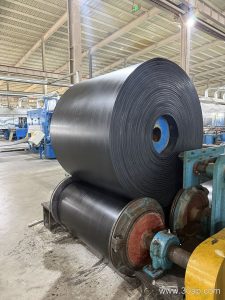
A heavy-load pulley is the robust drum that transmits motion, supports the belt, or changes its direction on a conveyor handling dense or abrasive bulk material. In a crushing and screening circuit, the same component may be called a heavy-duty conveyor pulley, and the two names describe one product: a drum built for high tension and continuous shock. It is not a drive, tail, or bend pulley by default; those are positions in the conveyor layout, and each position places different demands on the same drum body.
Where a heavy-load pulley sits matters. At the head, it may be the drive drum that grips the belt and pulls the load. At the tail, it redirects the returning belt. At a bend or take-up point, it guides the belt without driving it. A buyer should state the position clearly, because a drum specified for a bend station is not a substitute for a drive pulley.
Construction Details That Carry the Load
The drum body is usually a rolled steel shell welded to end discs and a shaft hub. For heavy loads, the shell is thicker, the weld pattern is engineered, and the shaft is sized by torque and radial load rather than by belt width alone. Common shaft diameters include Ø80, Ø100, Ø120, Ø140, Ø160, and Ø180, but the final value comes from the drive calculation.
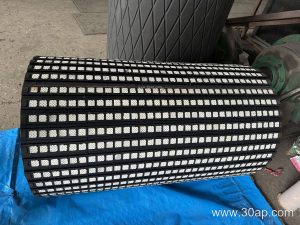
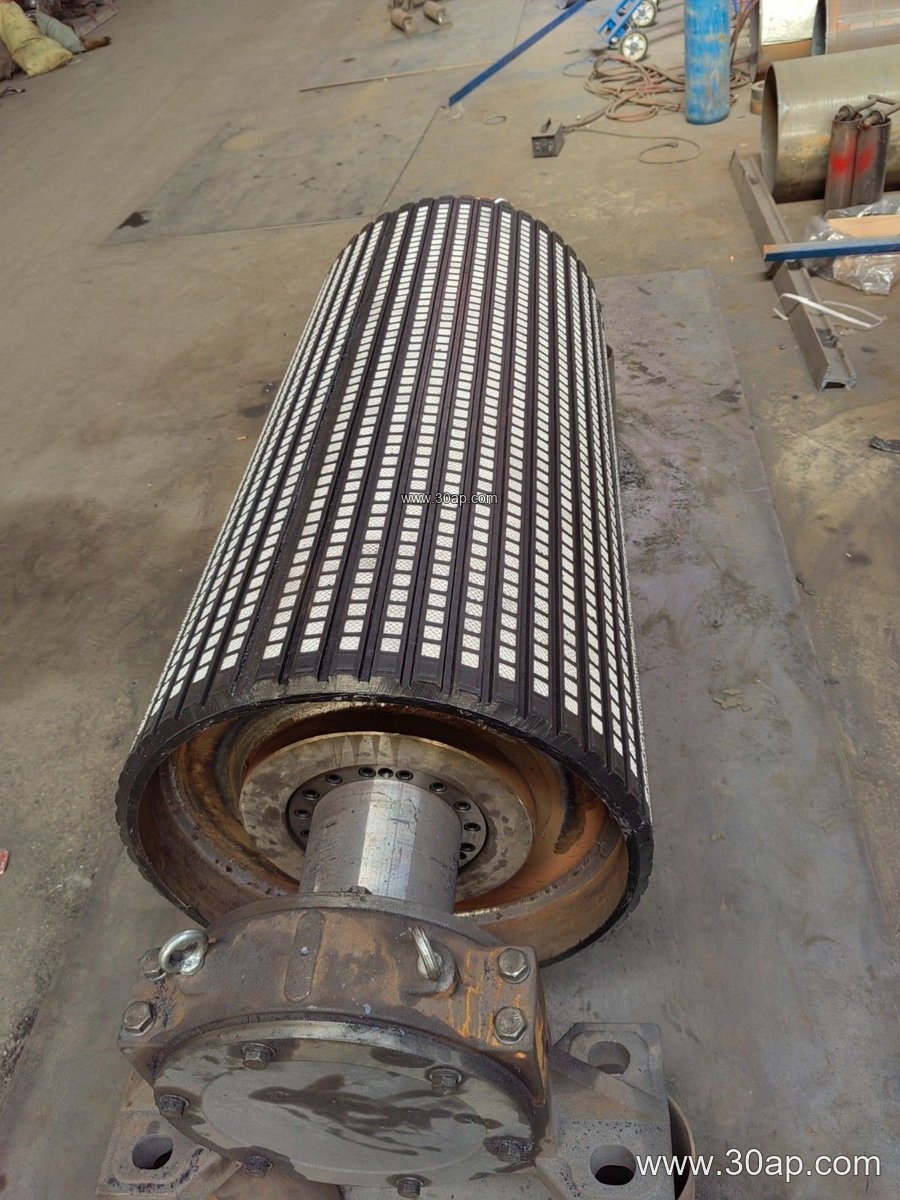
Surface treatment is a major decision. Plain finish suits some non-drive positions. Rubber lagging, applied by cold bonding or hot vulcanizing, improves grip and cushions impact. Diamond or herringbone grooving helps shed water and fines. Ceramic lagging is chosen where abrasive slip is severe. Lagging thickness commonly runs 8, 10, 12, 15, or 20 mm.
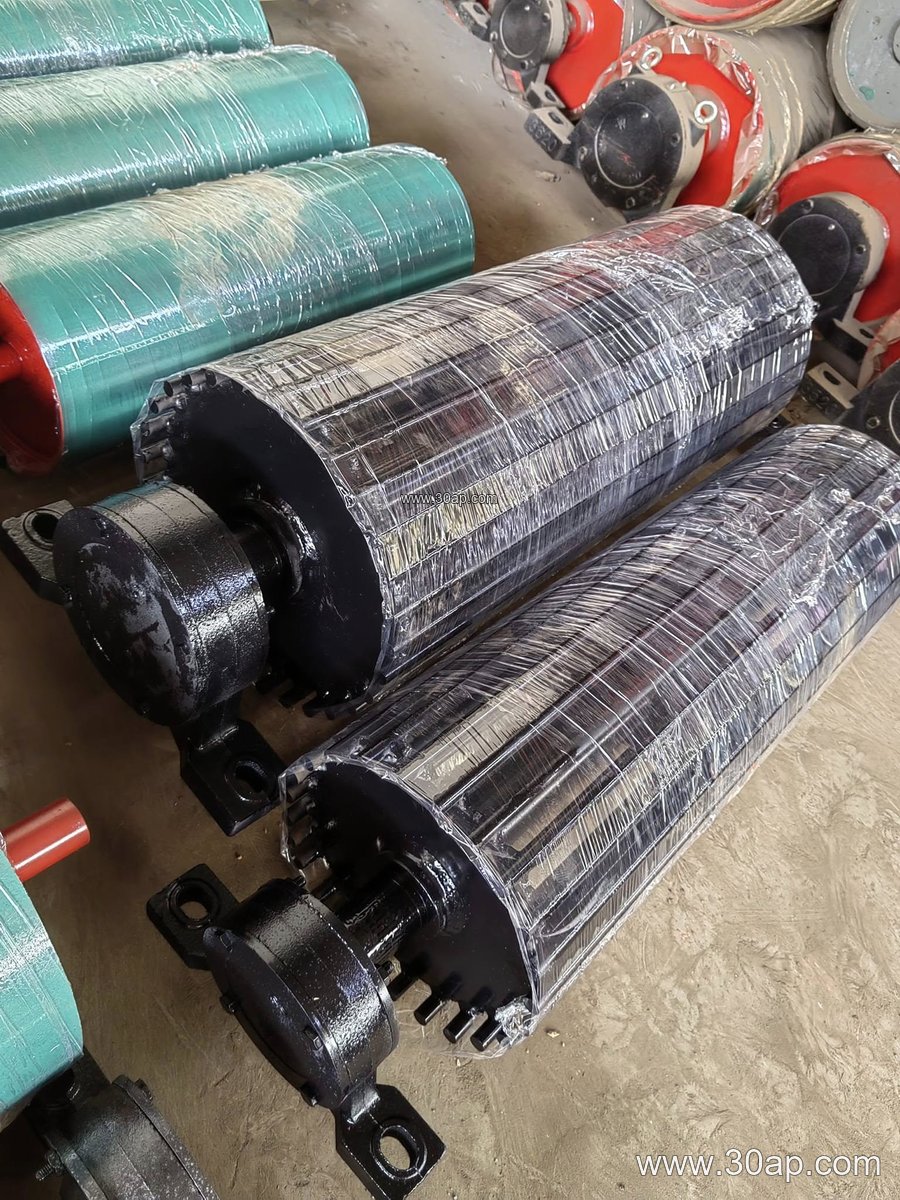
Shell width normally exceeds belt width so the belt is fully supported. Typical pairings include B800 with a shell around 950 mm, B1200 with about 1400 mm, and B1600 with roughly 1800 mm. Combinations such as B1200 × Ø1000 or B1400 × Ø800 appear in heavy-duty layouts, yet no single diameter is fixed for a given belt width.
Where Heavy-Load Pulleys Are Applied
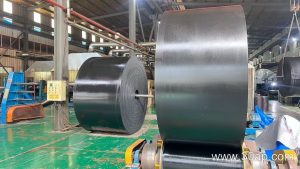
These drums appear in limestone quarries, iron ore and copper ore handling, coal preparation plants, cement clinker lines, power plant coal yards, and port bulk terminals. In a crusher discharge line, the pulley must tolerate lumpy feed and vibration; in a sinter or pellet plant, heat and dust add to the duty. The belt itself is often a heavy-duty mining conveyor belt, a steel cord conveyor belt, or a multi-ply fabric core conveyor belt, and the drum must match that belt’s tension and tracking behavior.
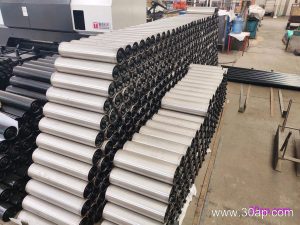
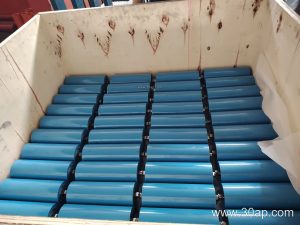
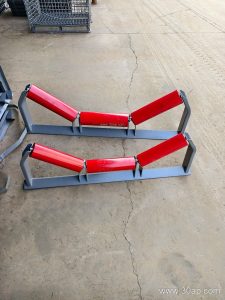
Accessories work alongside the drum. A conveyor bracket holds bearing housings in alignment, and idler rollers support the belt between pulleys. Poor alignment at the bracket or worn rollers can shorten drum bearing life, so the whole conveyor pulley assembly should be reviewed together.
Specification Reference
The table below shows common reference values. Treat them as design guidance, not as fixed supply commitments.
- Belt width range: B400, B500, B650, B800, B1000, B1200, B1400, B1600, B1800, B2000
- Drum diameter range: Ø200, Ø250, Ø315, Ø400, Ø500, Ø630, Ø800, Ø1000, Ø1250, Ø1400
- Surface forms: plain, cast rubber, cold-bonded rubber, hot-vulcanized rubber, diamond lagging, herringbone lagging, ceramic lagging
- Lagging thickness: 8, 10, 12, 15, 20 mm
- Shaft diameter examples: Ø50 to Ø200, selected by torque and load
Typical Width and Diameter Pairings
- B500 with shell about 600 mm and drum Ø250 to Ø400
- B800 with shell about 950 mm and drum Ø400 to Ø630
- B1000 with shell about 1150 mm and drum Ø500 to Ø800
- B1200 with shell about 1400 mm and drum Ø630 to Ø1000
- B1400 with shell about 1600 mm and drum Ø800 to Ø1250
These ranges are starting points. A long overland conveyor with a steel cord conveyor belt may need a larger diameter at the same width than a short plant conveyor using an EP conveyor belt.
What Buyers Should Confirm
Before ordering, confirm the belt width, the drum position, the belt type and tension, the lagging preference, and the shaft load. Ask how the drum will be balanced and how the lagging is bonded. For dusty or wet sites, specify grooving and check that the conveyor bracket and idler roller spacing keep the belt centered. A heavy-load pulley is only as good as the conveyor around it, so share the full layout rather than a single dimension.