What a Heavy-Duty Ceramic Lagged Pulley Does
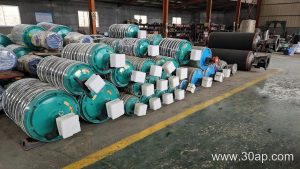
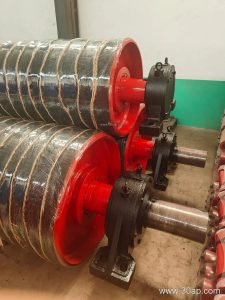
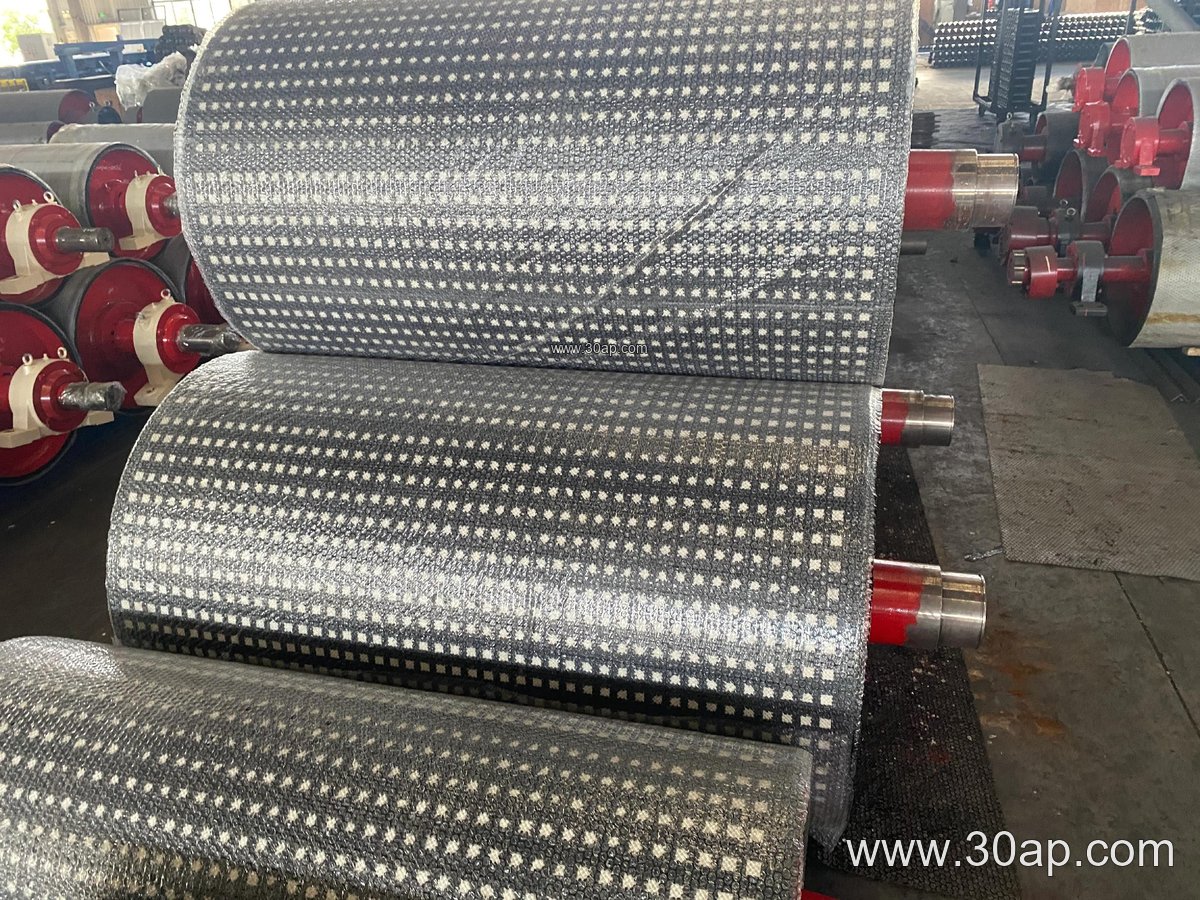
A heavy-duty ceramic lagged pulley is a conveyor pulley whose shell is covered with vulcanized rubber that has ceramic tiles embedded in it. The ceramic lagging is engineered to grip the conveyor belt under high tension and in abrasive, wet, or dusty conditions. This type of pulley is often the drive pulley at the head of a conveyor, but it can also serve as a tail or bend pulley when extra traction and wear resistance are needed. In a quarry or a cement plant, a heavy-duty ceramic lagged pulley helps maintain torque transmission where standard rubber lagging would wear too quickly.
Construction and Materials
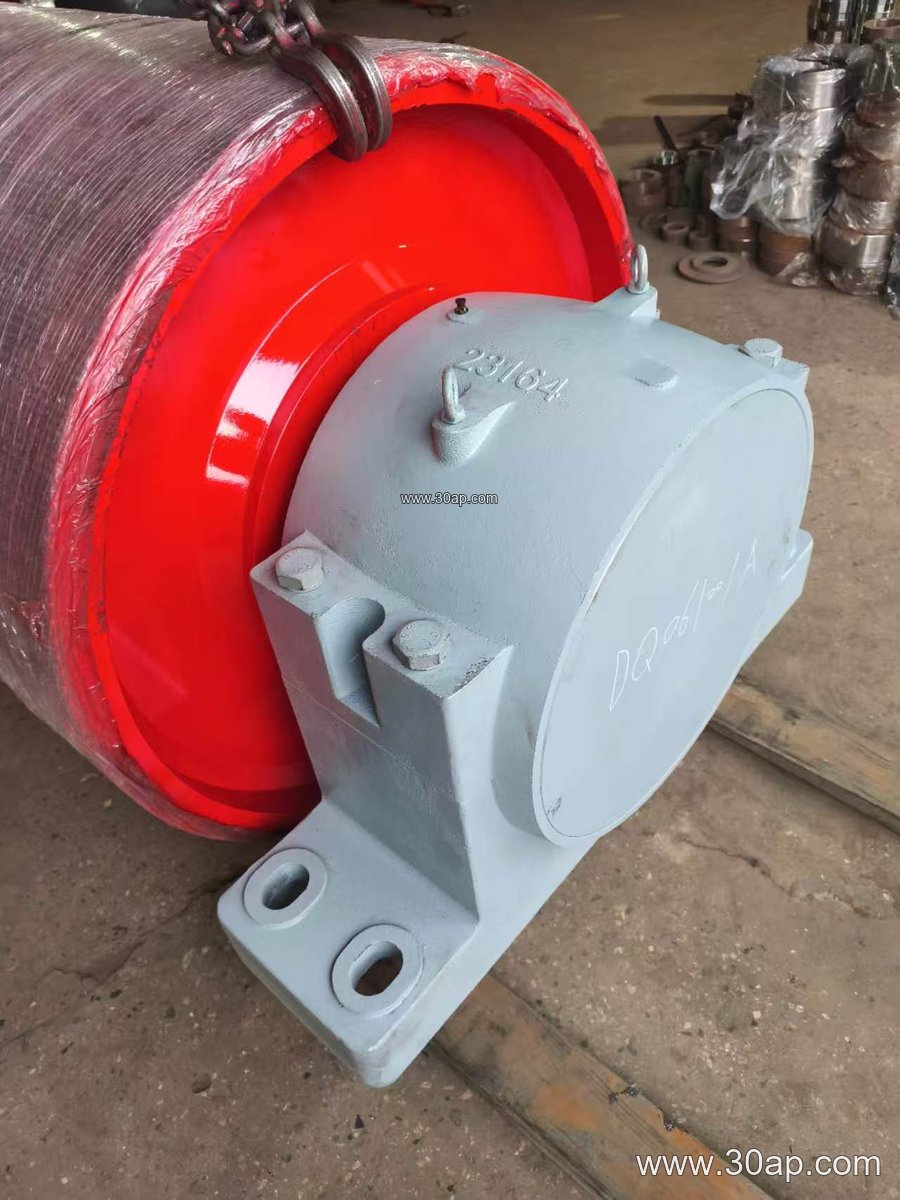
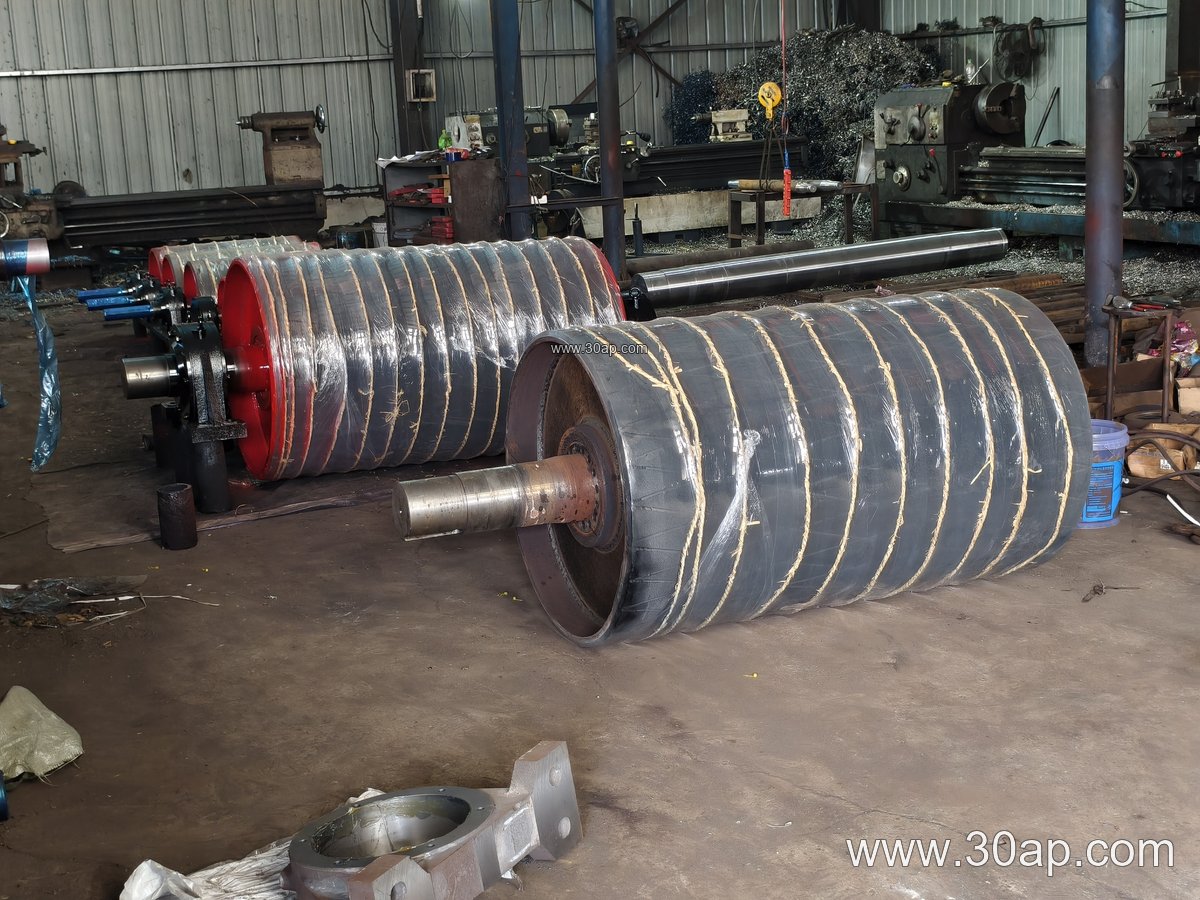
The pulley body is typically fabricated from steel tube with welded end discs and a shaft sized to the torque and load. The lagging is applied in two stages: first a rubber layer, then ceramic tiles are pressed into the rubber and vulcanized. Common lagging thicknesses are 8, 10, 12, 15, and 20 mm. The ceramic tiles come in various shapes and patterns, including dimpled or grooved surfaces, to improve grip and shed water. The pulley face width is usually wider than the belt width to prevent belt edge damage. For example, a B800 belt often runs on a pulley with a face width around 950 mm. Diameters range from Ø200 up to Ø1800 depending on the application and belt speed.
Where It Fits in the Conveyor
Drive pulleys with ceramic lagging are common in mining and aggregate operations where the conveyor moves heavy, abrasive material. The ceramic surface resists polishing and glazing that can occur with plain rubber lagging, helping to maintain friction between pulley and belt. In a coal mining conveyor, a heavy-duty ceramic lagged pulley may be used at the head drive to handle high starting torque and occasional wet conditions. Similarly, in a copper ore or iron ore conveyor, the pulley must withstand continuous abrasion from fine particles that cling to the belt. Ceramic lagging is also useful on bend pulleys in long overland conveyors where belt tension is high and slip risk is present.
Key Selection Factors
When specifying a heavy-duty ceramic lagged pulley, consider the belt width and the required face width. Face widths typically exceed belt width by 100 to 200 mm; for instance, B1000 may use a 1150 mm face, and B1200 may use a 1400 mm face. Diameter selection depends on belt speed, torque, and the allowable shaft load. Common diameters include Ø500, Ø630, Ø800, and Ø1000, but these are not universal. Shaft diameter is determined by torque and bending loads, not by belt width alone. Standard shaft sizes range from Ø50 to Ø200. Lagging thickness should match the wear environment; 15 mm or 20 mm ceramic lagging may be chosen for high-wear points. The pulley should be balanced and the lagging bonded securely to avoid tile loss.
Compatibility with Conveyor Belts
Ceramic lagged pulleys work well with a range of conveyor belts, including heavy-duty mining conveyor belts, abrasion resistant conveyor belts, and flame retardant conveyor belts used in underground coal mining. The ceramic surface provides reliable friction without excessive belt cover wear. For high-tension applications, steel cord conveyor belts such as ST1600 or ST2000 may be used, and the pulley lagging must be selected to match the belt’s modulus and the drive requirements. In some cases, a ceramic lagged pulley can be paired with an EP conveyor belt like EP400 or EP630 in aggregate operations. Always confirm that the lagging pattern and hardness are suitable for the belt cover grade. Rubber conveyor belts with smooth covers generally run well on ceramic lagging, while chevron or corrugated sidewall belts may require special considerations.
Maintenance and Inspection
Regular inspection of the ceramic lagging helps prevent unexpected downtime. Check for loose or missing tiles, cracked rubber, and wear patterns. Clean the pulley surface to remove material buildup that can cause belt misalignment. Ensure the conveyor bracket and bearing housings are secure and aligned. When replacing lagging, verify that the new ceramic tiles meet the original specification for hardness and bonding. Keep the pulley dry and free of oil or grease, which can reduce friction. In dusty environments such as a sand making plant or a power plant coal handling system, more frequent cleaning may be needed.
Typical Applications
Heavy-duty ceramic lagged pulleys are found in quarry conveyor belts, crusher conveyor belts, and bulk material conveyor belts handling limestone, gravel, and ore. They are also used in cement plant conveyor belts, steel plant conveyor belts, and port conveyor belts for ship loading. In underground mining conveyor belts, flame retardant and anti-static properties of the belt are critical, and the pulley lagging must not compromise those safety features. For high-temperature environments, such as clinker handling, a heat resistant conveyor belt may be used, and the pulley lagging should be chosen to withstand radiant heat. Ceramic lagging is not a substitute for proper belt tracking and tensioning, but it adds a durable traction layer in the most demanding conveyor systems.