What a Q235 Conveyor Bracket Does on the Line
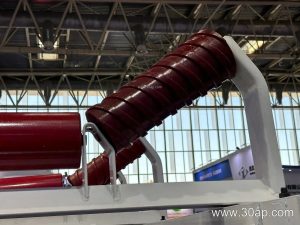
A Q235 conveyor bracket is the steel frame that holds idler rollers in position along a conveyor. It sets the trough angle, keeps roller spacing even, and carries the load transferred from the belt and the material. Because Q235 is a common low-carbon structural steel, this bracket is widely used in bulk handling where strength, weldability, and reasonable cost matter together. In a coal preparation plant or a limestone quarry, a well-built bracket often decides whether the belt runs centered or wanders.
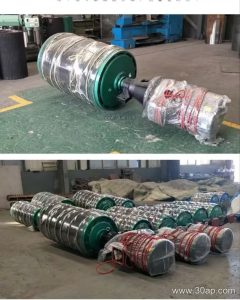
The bracket itself is a passive component, but it works closely with the conveyor belt, idler roller, and conveyor pulley. A misaligned bracket can wear a belt edge quickly, while a square, well-anchored frame protects the whole conveyor structure.
Construction and Common Forms
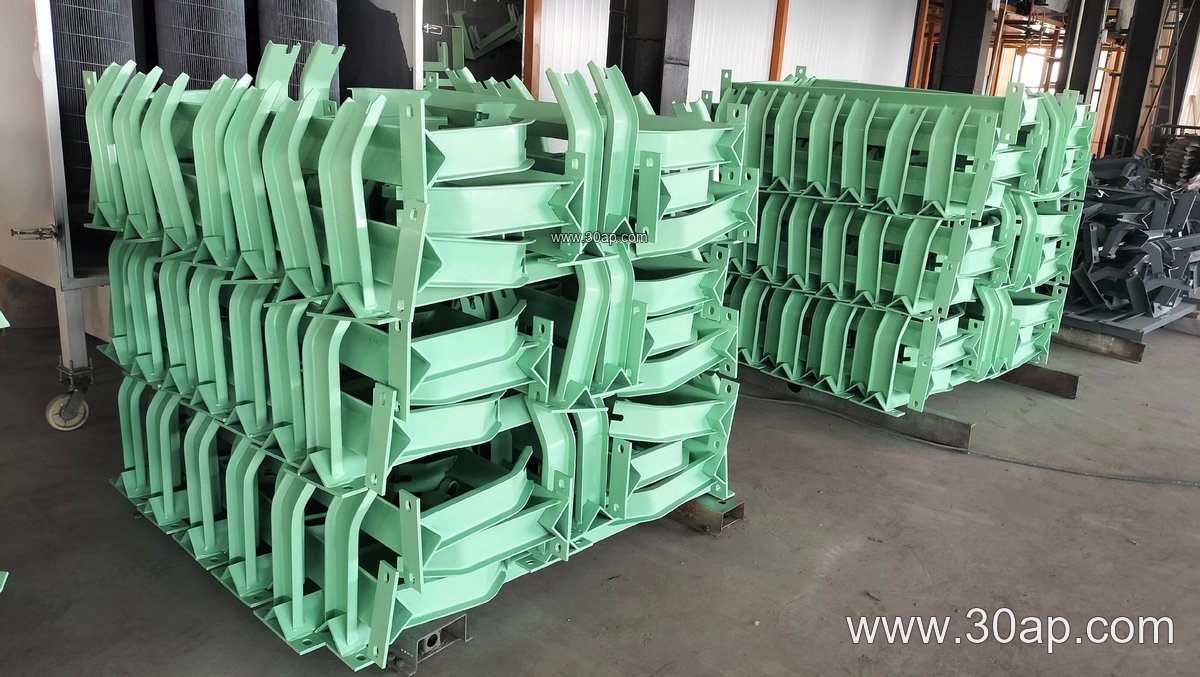
Fabrication usually starts with angle steel, channel steel, or folded steel plate. Slots and holes are positioned for the chosen roller diameter and belt width, and the frame is welded or bolted into the conveyor stringer. Surface treatment may be painted or galvanized depending on the environment. In dusty or wet conditions, drainage and coating quality matter as much as steel thickness.
Common types include trough brackets, transition brackets, return brackets, V-return brackets, impact brackets, self-aligning brackets, and adjustable brackets. Each has a different job:
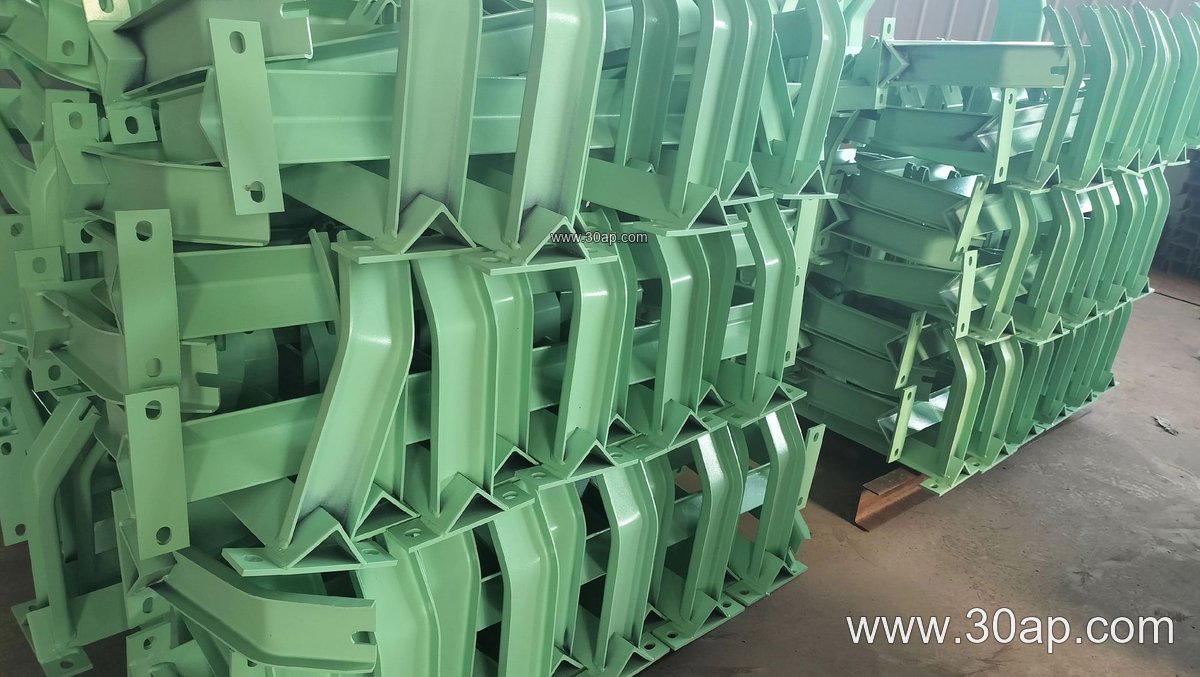
- Trough bracket: supports three or more rollers to form the carrying trough.
- Transition bracket: eases the belt from flat to troughed shape near a pulley.
- Return bracket: holds the lower rollers that support the empty belt.
- V-return bracket: uses angled rollers to help center the return strand.
- Adjustable bracket: allows the trough angle to be changed within a range.
A fixed bracket holds one angle, while an adjustable version can be set between commonly 20, 30, 35, and 45 degrees. Forward-leaning brackets, often around 1.5 to 2 degrees, are used mainly for alignment rather than for changing the trough.
Matching Belt Width, Angle, and Roller Diameter
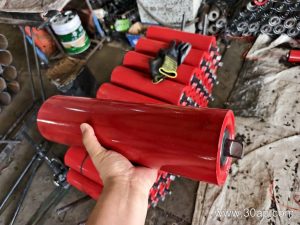
Bracket dimensions follow the conveyor design, not a single universal rule. A B800 frame with a 35 degree trough and Ø108 rollers is a familiar combination, and B1200 with 45 degrees and Ø133 also appears in heavy-duty work. These are examples, not fixed pairings. A B650 line may use 30 degrees and Ø89, while larger B1600 or B1800 conveyors often call for heavier frames and larger rollers such as Ø159 or Ø194. Hole spacing and beam length change with width and angle, so they should be confirmed against the drawing.
| Reference Item | Typical Range or Example |
|---|---|
| Belt width | B500, B650, B800, B1000, B1200, B1400, B1600, B1800 |
| Trough angle | 20°, 30°, 35°, 45° |
| Roller diameter | Ø89, Ø108, Ø133, Ø159, Ø194 |
| Material | Q235 angle, channel, or folded plate |
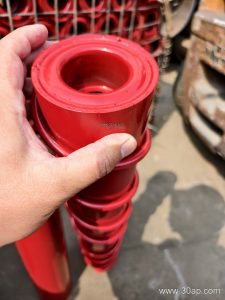
On a crusher discharge or a transfer point, impact brackets with rubber rings are often used to absorb shock. On a long overland run, self-aligning brackets help control drift. The Q235 conveyor bracket should be selected together with the roller and belt, not in isolation.
Where These Brackets Are Used
You will find them in a washing plant feeding a coal conveyor, in a cement plant moving clinker, in a power plant coal yard, and in aggregate crushing lines. A quarry conveyor bracket may face abrasive dust, while a fertilizer or grain silo installation may need better corrosion protection. In each case, the frame must suit the local load, belt speed, and maintenance access.
Heavy-duty mining conveyor belts and abrasion resistant conveyor belts place higher loads on the roller frame, so the bracket steel and bolt grade should match. A steel cord conveyor belt or an EP conveyor belt does not change the bracket type by itself, but it does affect tension, tracking behavior, and the attention paid to alignment near the tail pulley.
Buyer Checklist
- Confirm belt width, trough angle, and roller diameter before ordering.
- Ask for a drawing showing hole spacing and overall beam length.
- Check whether the frame is fixed or adjustable and how the angle is locked.
- Match coating to the site: dusty, wet, or mildly corrosive.
- Review weld quality and bolt access for easy roller replacement.
A practical purchase decision is rarely about the bracket alone. It is about how the frame, the idler roller, and the conveyor belt work as one system. For more conveyor structure and belt guidance, visit conveyorbeltpro.com, and remember that a properly chosen Q235 conveyor bracket is one of the cheapest ways to extend belt and roller life.