What a Belt Conveyor Bracket Does on the Line
A belt conveyor bracket is the steel support that positions idler rollers at the right height, spacing and angle so the belt can carry material without wandering or sagging. In a coal handling system feeding a power plant boiler, or on a quarry conveyor moving crushed stone, the bracket is the part that turns a row of loose rollers into a working trough. Buyers often focus on the belt itself, but the frame that holds the rollers decides how evenly the load sits and how long the belt and idlers last.
How the Bracket Is Built
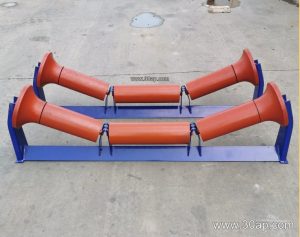
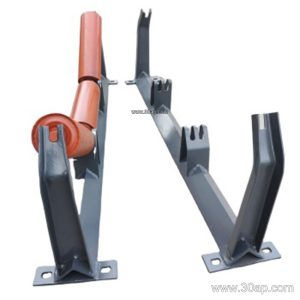
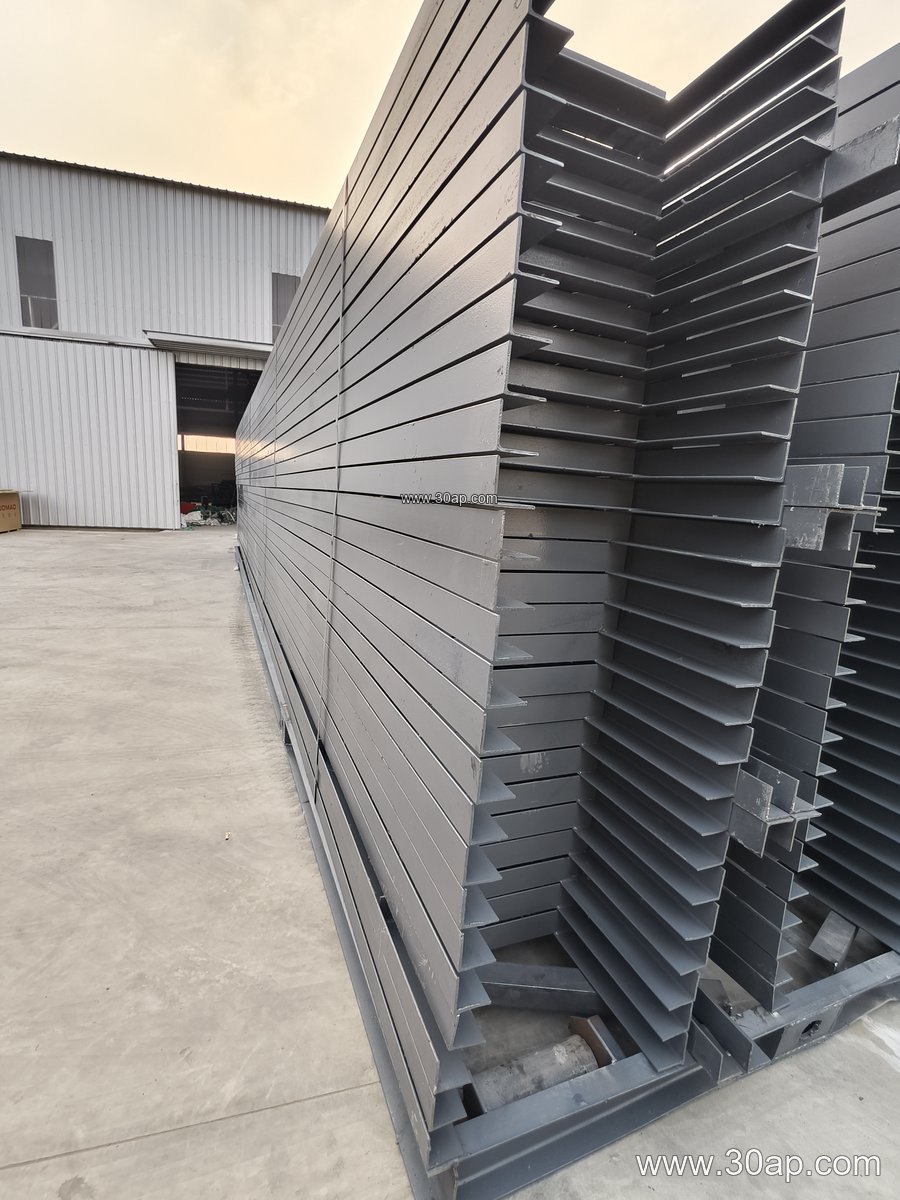
Most brackets are formed from angle steel, channel steel or folded steel plate. A carrying-side bracket typically has a center section and two adjustable wings that set the trough angle. Return-side brackets are simpler and hold flat or V-shaped roller sets. Holes drilled for mounting the idlers and for bolting to the conveyor stringer must line up with the roller frame, so the hole pattern is matched to the belt width and trough angle rather than treated as universal.
Typical materials and reference data are shown below. These are common reference values, not a fixed supply promise.
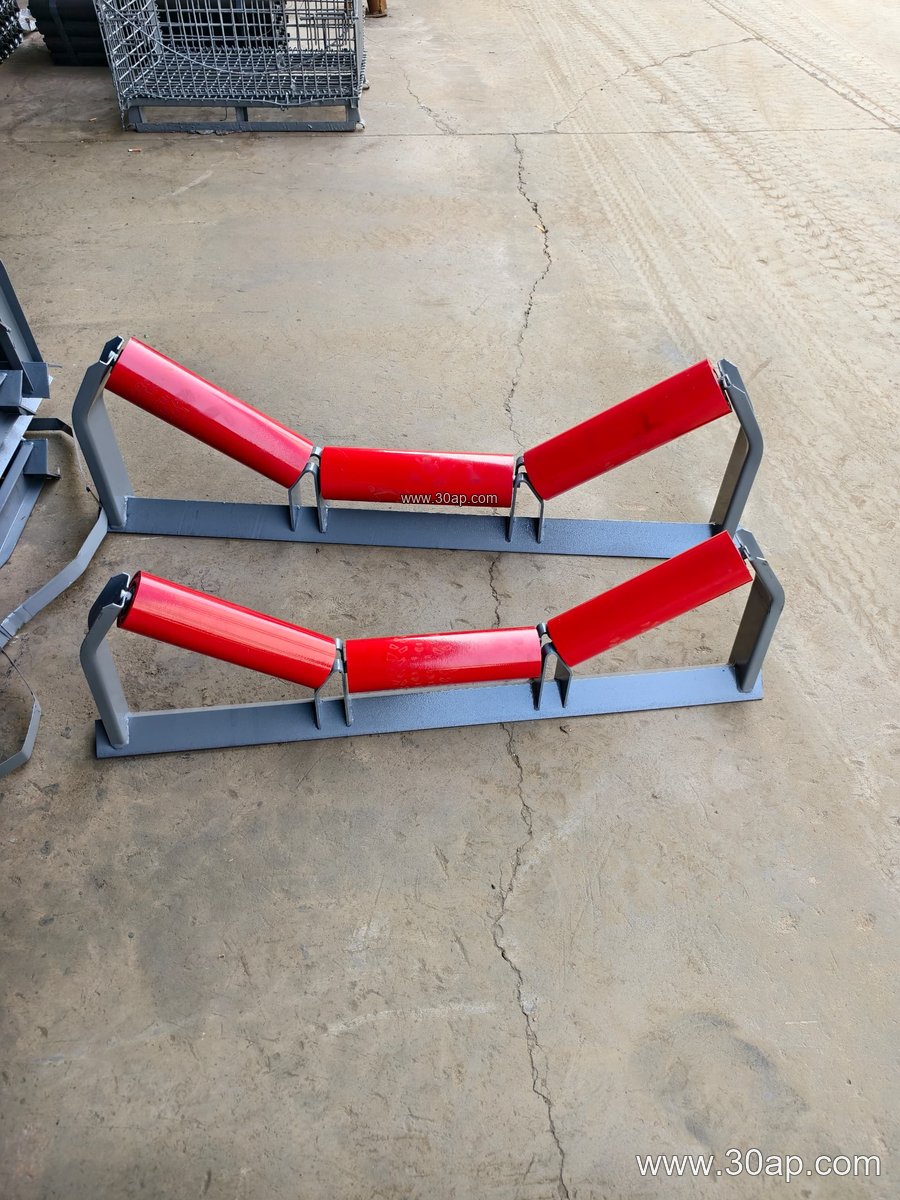
- Material options: angle steel, channel steel, folded steel plate
- Belt width range: B500 to B2200, including B650, B800, B1000, B1200, B1400, B1600, B1800
- Trough angles: 20, 30, 35 and 45 degrees; adjustable brackets can be set between these
- Roller diameters: Ø89, Ø108, Ø133, Ø159, Ø194
| Reference combination | Typical use |
|---|---|
| B650, 30 degrees, Ø89 | Small aggregate or sand line |
| B800, 35 degrees, Ø108 | General bulk handling |
| B1200, 45 degrees, Ø133 | High-capacity ore or coal duty |
These pairings are examples only. Belt width does not lock a bracket to one trough angle or one roller diameter; the load, belt stiffness and material profile determine the choice.
Main Types and Where They Sit
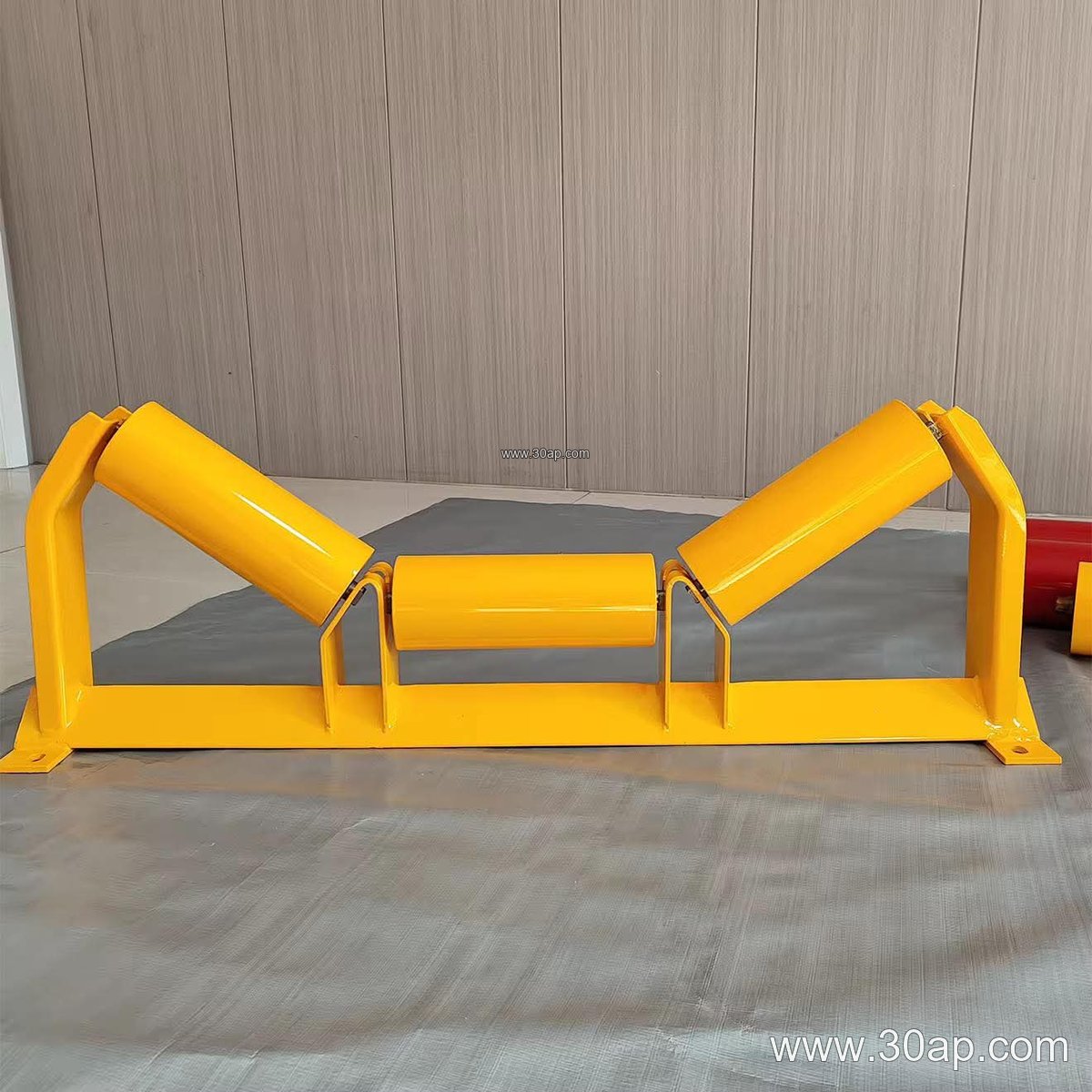
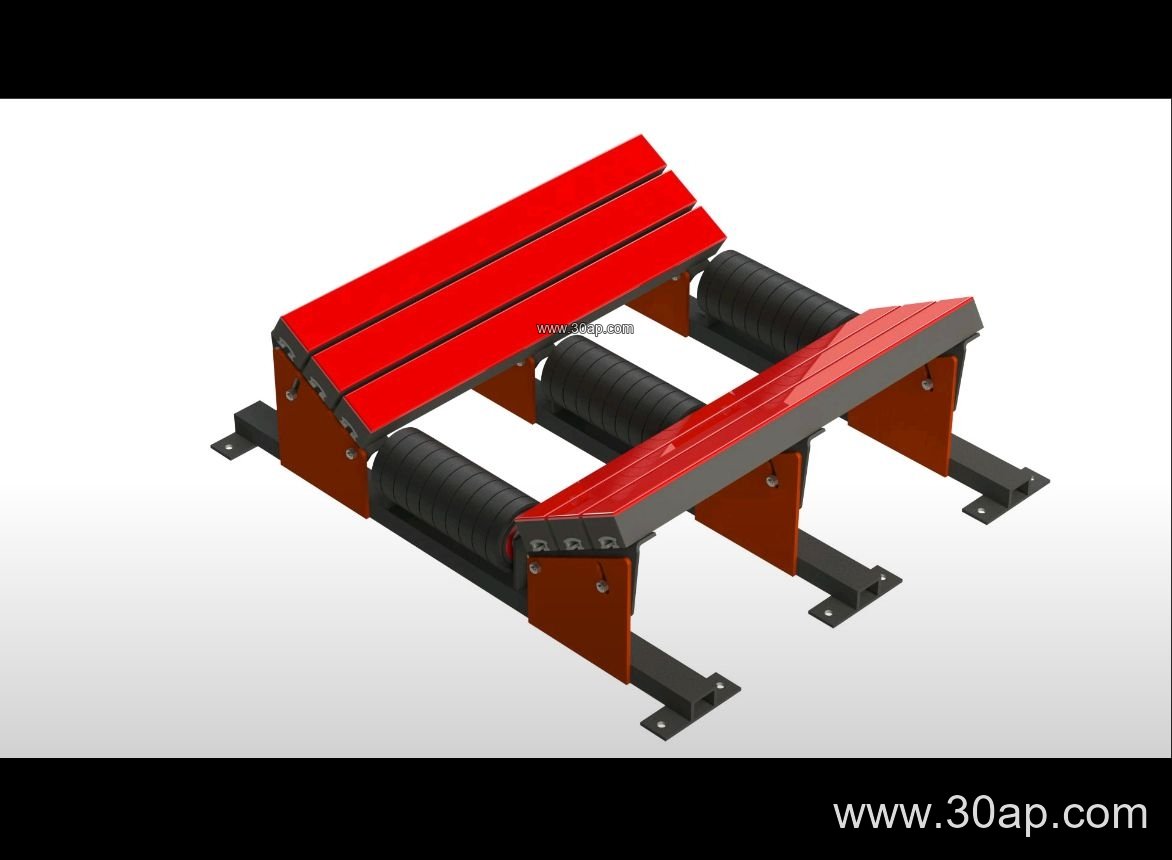
Carrying brackets, sometimes called upper trough brackets, form the trough that keeps bulk material centered. Transition brackets sit near the pulleys and ease the belt from flat to troughed. Return brackets support the empty run, with V-return brackets helping to train the belt. Impact brackets are placed under the loading point to absorb the drop of lumpy material, and self-aligning brackets correct tracking on long runs. A screw-tensioned adjustable bracket lets maintenance staff fine-tune the trough angle without replacing the frame.
Forward-leaning brackets, usually set at about 1.5 to 2 degrees, give a slight lead to the rollers so the belt tends to stay centered. This is a different function from the drive pulley or tail pulley and should not be confused with them.
Where These Supports Are Used
In a limestone mine, abrasion-resistant rollers and sturdy brackets work together to handle wet, gritty rock. In a cement plant, the same frame style carries clinker and raw meal on long inclined runs. The bracket choice usually follows the belt: a heavy-duty mining conveyor belt or steel cord conveyor belt needs a stiffer frame than a light fabric-core belt on a small transfer line. In coal handling, flame retardant and anti-static belts are common, and the bracket layout must keep the belt clear of the structure.
Typical site uses include crusher discharge, screening decks, stockyard feed and ship loading. At any of these points, a poorly aligned bracket shows up quickly as edge wear or spillage.
What Buyers Should Check
Before ordering, confirm the belt width, the required trough angle, the idler diameter and the mounting hole spacing. Ask for the bracket drawing with dimensions so it can be checked against the stringer and the roller frame. Check the material thickness and the coating or finish for the site conditions, especially in wet or corrosive areas. For a retrofit, measure the existing conveyor bracket rather than assuming a standard pattern.
It also helps to plan bracket spacing along the line. Too wide a gap lets the belt sag between supports; too narrow adds cost and weight. The right spacing depends on belt tension, load and belt type, so it is best confirmed with the conveyor designer.
Keeping the Frame in Service
Inspect brackets for bent wings, loose bolts and corrosion at the base. A bracket that has shifted will throw the idler out of line and cause tracking problems that look like belt faults. Replacing a single damaged bracket is usually quicker than adjusting a whole section, but check that the new part matches the original angle and hole pattern.
For more on matching belts, idlers and frames, see belt conveyor bracket and our notes on the conveyor belt and idler roller ranges at conveyor belt.