What a High-Angle Conveyor Trough Idler Does
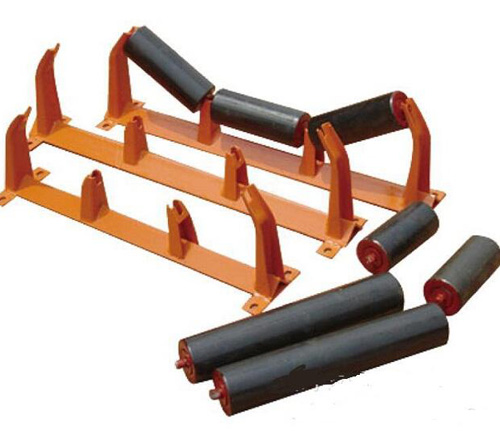
On a steeply inclined conveyor, the belt must hold material without letting it slide back or spill over the edges. A high-angle conveyor trough idler is the carrying idler assembly that supports the belt in a deep trough shape, usually with a larger trough angle than a standard flat or shallow arrangement. The idler roller set forms the belt into a U or V profile so that the load sits deeper and more securely, which helps on slopes where ordinary three-roll troughing may allow material to shift. This component is not a drive pulley, tail pulley, or bend pulley; it is part of the upper carrying run and works together with the conveyor belt, frame, and brackets.
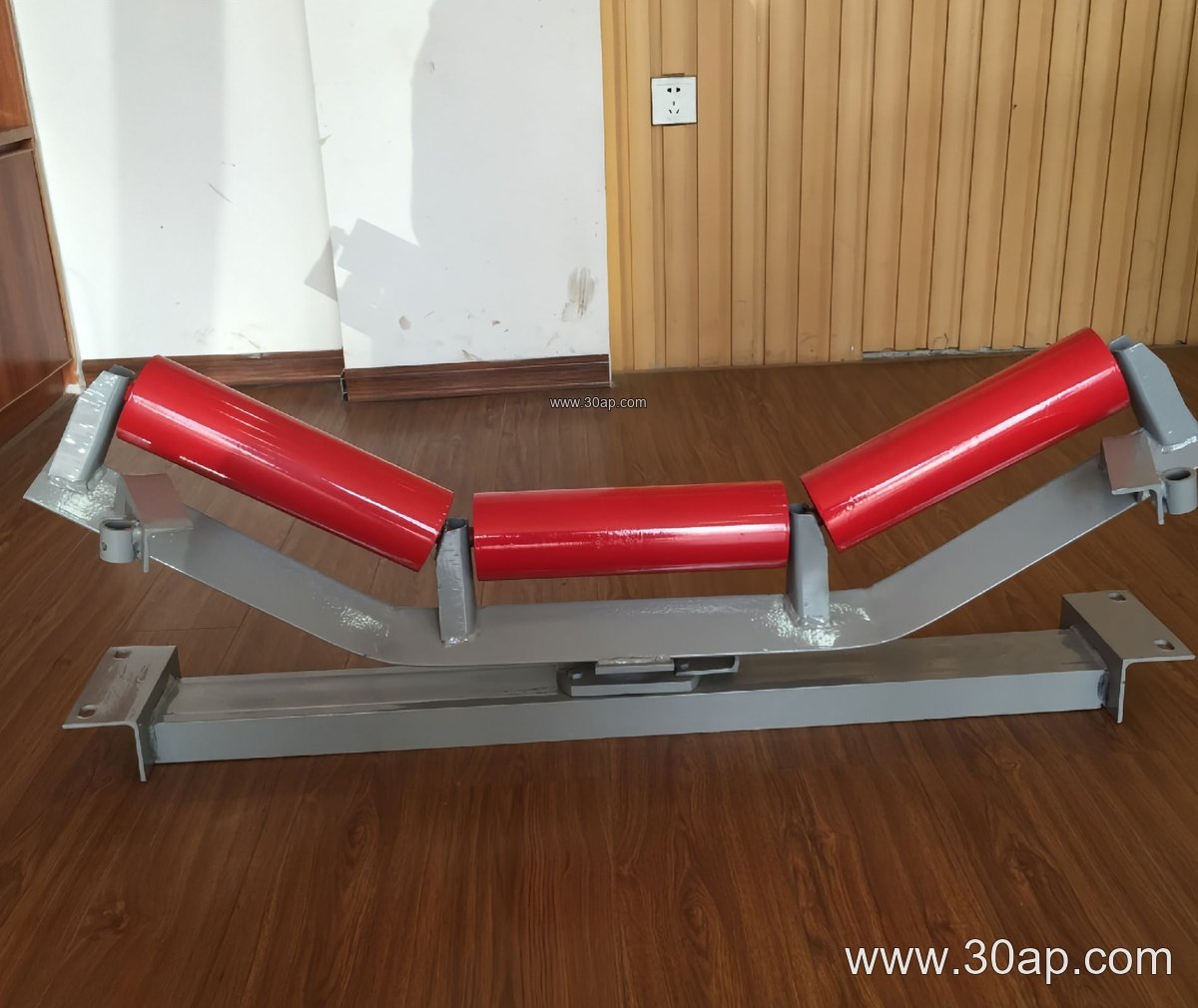
In practice, the high-angle trough idler is often specified as a three-roll troughing set with side rollers set at a steep angle. The exact angle and roll length depend on belt width, material characteristics, and the conveyor profile. For example, a 35-degree or 45-degree trough can be used where a deeper material cross-section is needed, while a 20-degree or 30-degree trough may suit gentler slopes or free-flowing bulk. Buyers should treat these as design choices, not fixed rules.
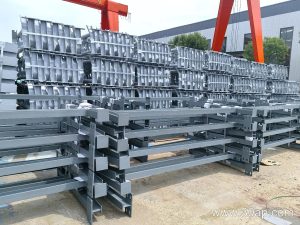
Construction and Key Parts
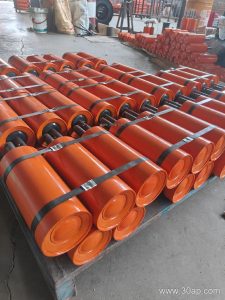
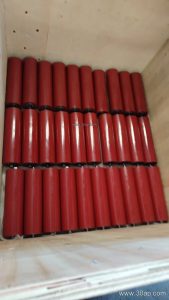
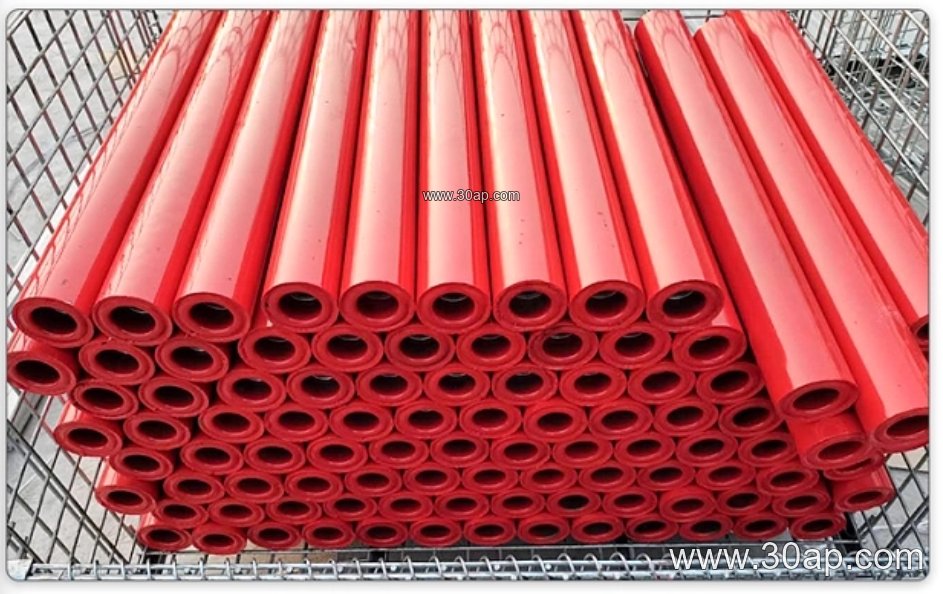
A typical unit consists of steel or polymer idler rollers, a shaft, bearing housings, seals, and a supporting bracket or frame. The roller shell may be mild steel, nylon, ceramic-coated, or fitted with rubber rings for impact absorption. Bearing sizes commonly range from 6204 and 6205 up to 6308 or 6310 depending on load and roll diameter, but no single bearing is tied to one roller diameter. Roll diameters such as Ø89, Ø108, Ø127, Ø133, Ø159, and Ø178 appear in many conveyor designs; the final choice follows belt speed, load, and space.
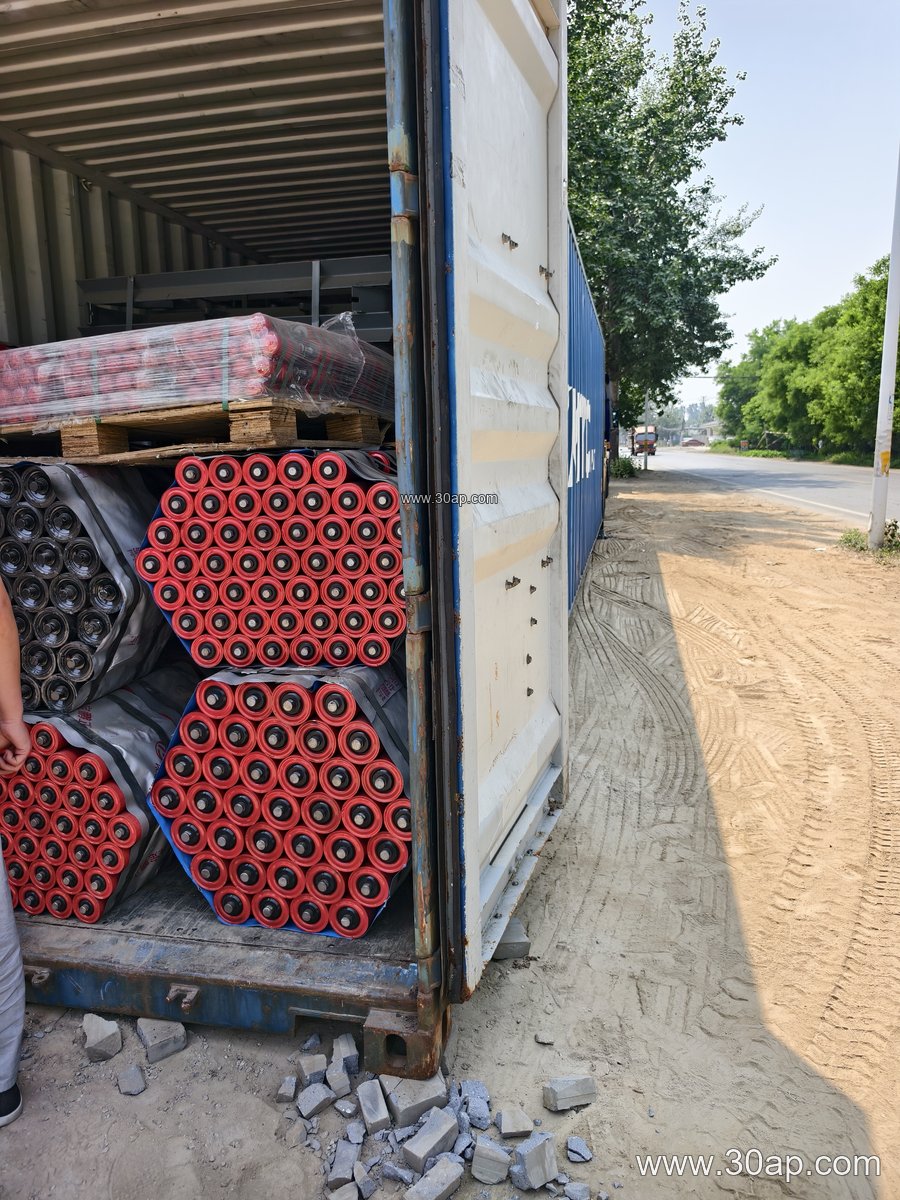
Sealing matters on high-angle installations because dust and fines tend to migrate toward the idler ends. Labyrinth seals and contact seals are common. The roller surface may be plain steel for general service, rubber-covered for cushioning at transfer points, or ceramic-lined where abrasive fines cause rapid wear. A high-angle conveyor trough idler should be selected with the same care as the conveyor belt itself, because a seized roller can damage the belt edge and disrupt the whole line.
Where It Is Used
These idlers appear in quarry and aggregate lines, coal preparation plants, cement plants, and power station coal handling. In a sand and gravel plant, a steep incline after screening may use a deep trough idler to keep crushed stone centered. In a coal mining conveyor, flame retardant conveyor belt and anti-static conveyor belt are often paired with robust troughing idlers to reduce spillage on gradients. Other industries include iron ore handling, copper ore transport, and port ship-loading systems where inclined conveyors lift bulk material.
They are also found in tunnel spoil removal and fertilizer plants, where material must be contained on a slope. The idler does not replace the conveyor pulley at the drive or tail; it works between them, supporting the belt on the carrying side. Related parts include the idler roller, conveyor bracket, and conveyor pulley, but the high-angle trough idler remains the main carrying component discussed here.
Sizing and Selection Notes
Belt width and trough angle together determine the roller length and the frame opening. Common belt widths include B500, B650, B800, B1000, B1200, B1400, B1600, B1800, B2000, and B2200. For a three-roll troughing set, roll length is usually chosen to suit the belt width and trough angle; for example, a B800 belt may use a roll length around 315 mm in some designs, while a B1200 belt may use about 465 mm. These are common examples, not fixed matches, and side rollers can differ from the center roll.
| Parameter | Common Reference |
|---|---|
| Roll diameter | Ø89, Ø108, Ø127, Ø133, Ø159, Ø178 |
| Belt width | B500 to B2200 |
| Trough angle | 20°, 30°, 35°, 45° |
| Bearing | 6204, 6205, 6305, 6306, 6308, 6310 |
| Roll surface | Steel, nylon, ceramic, rubber ring |
Selection should consider belt speed, material lump size, moisture, and the transition distance from the tail pulley. A high-angle conveyor trough idler with a forward tilt of about 1.5 to 2 degrees can help with belt training, but tilt is not a substitute for proper alignment. Buyers should ask for the idler assembly drawing, confirm the bracket hole spacing, and check that the roller seal suits the local dust and water conditions.
Maintenance and Buyer Checklist
Inspect rollers for smooth rotation, seal leakage, and shell wear. Replace damaged idlers before they cut into the conveyor belt. Keep the trough frame square and the brackets tight. On abrasive service, rubber or ceramic surfaces can extend life, while impact zones may benefit from rubber-ring cushioning. A spare set of high-angle trough idlers and a matching conveyor bracket can reduce downtime in a quarry, cement plant, or coal handling system.
Finally, match the idler to the belt type and duty. A heavy-duty mining conveyor belt, abrasion resistant conveyor belt, or heat resistant conveyor belt may require different roller clearance and seal protection. The high-angle conveyor trough idler is a small but critical part of the carrying system, and getting the angle, roll length, and bearing protection right pays off in cleaner operation and longer belt life.