What an Aggregate Conveyor Idler Does on a Crushing Line
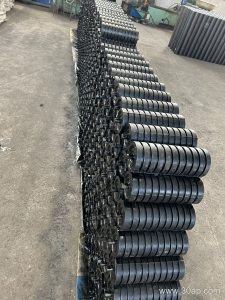
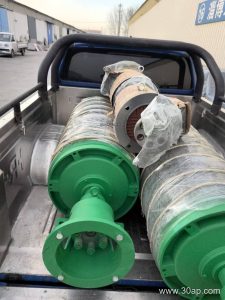
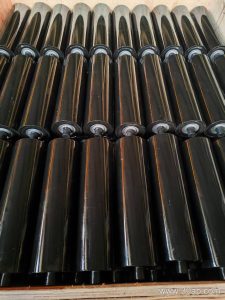
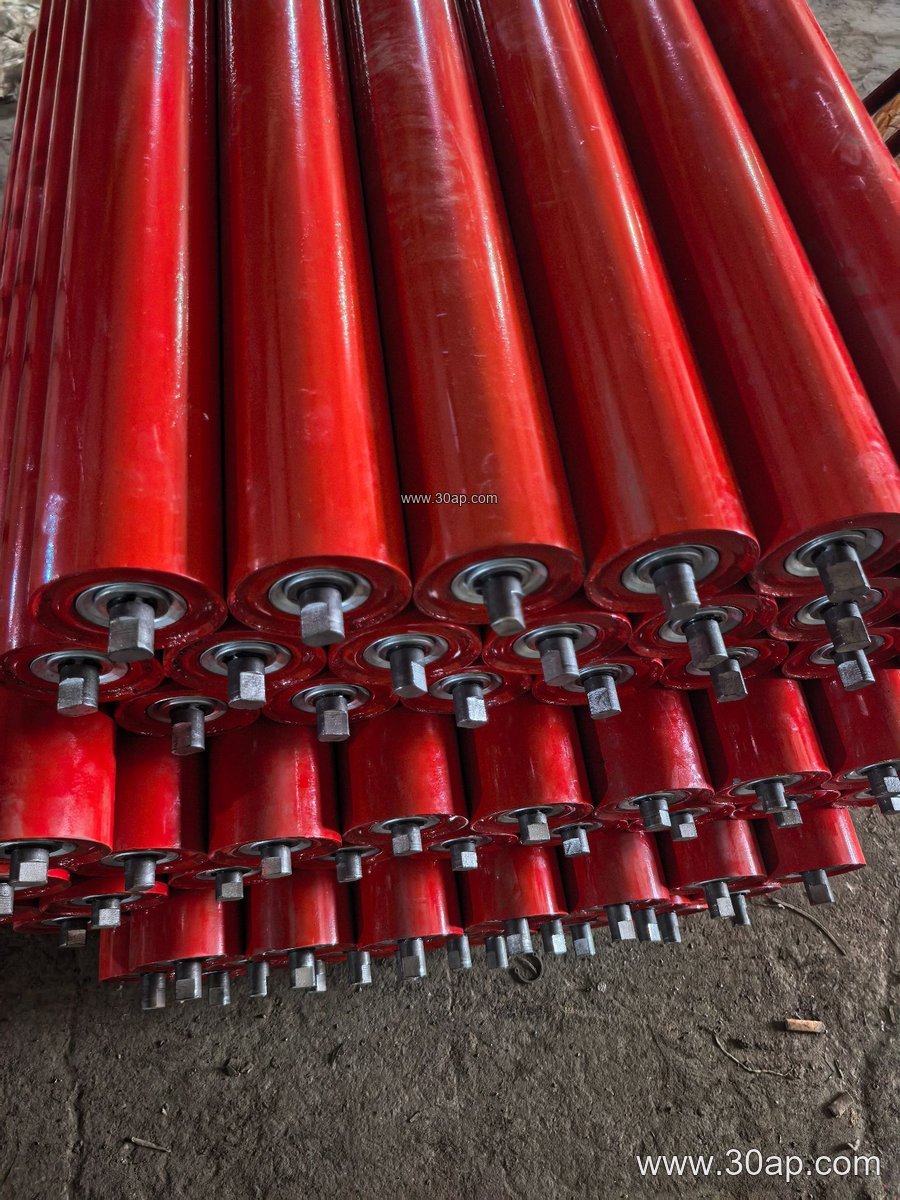
An aggregate conveyor idler is the rotating support that carries the loaded belt between the head and tail of a conveyor. In a quarry or sand and gravel plant, the belt may be moving crushed stone, screened gravel, sand, or recycled concrete, so the idler has to keep the belt tracking while absorbing steady abrasion and occasional impact. The idler roller itself is usually a steel tube fitted with bearings and a shaft, mounted in a frame or conveyor bracket that fixes the roll spacing and angle.
Because the load is heavy and the material is sharp, the choice of idler often matters as much as the belt. A crusher conveyor belt may see lumps dropping from a chute, while a fine sand section runs lighter but faster. Both rely on the same basic component, tuned to the duty.
How the Idler Is Built
Most aggregate idlers share a simple construction. A seamless or welded steel tube forms the shell, machined at both ends to seat the bearing housings. Deep-groove ball bearings are common, with sizes such as 6204, 6205, 6305, 6306, 6308, and 6310 appearing across different roll diameters. A through shaft or stub shaft connects the roll to the bracket, and a multi-stage labyrinth seal or a contact seal keeps dust out. In dusty aggregate service, seal quality is often the difference between a long life and a short one.
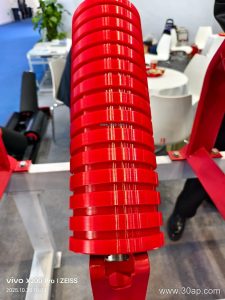
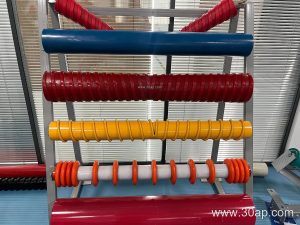
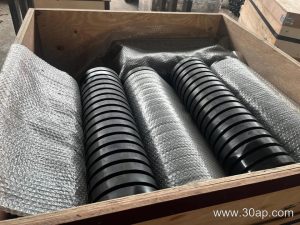
The roll surface can be plain steel, nylon, ceramic, or rubber rings. Rubber rings are typical on impact idlers under a transfer point, where they cushion falling rock. Ceramic or nylon covers are used where sticky material builds up on plain steel. No single surface is right for every section of the plant.
Common Roll Diameters and Belt Widths
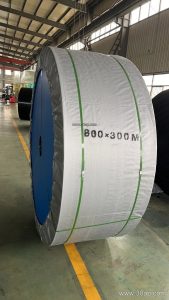
Roll diameter is chosen with belt width, belt speed, and load in mind. Common diameters include Ø63, Ø76, Ø89, Ø102, Ø108, Ø127, Ø133, Ø159, Ø178, Ø194, and Ø219 mm. Belt widths commonly run from B400 up to B2400, with B650, B800, B1000, B1200, and B1400 especially frequent in aggregate plants. A wider belt does not automatically require a specific shaft size; the shaft and bearing are set by the idler manufacturer’s load calculation, not by belt width alone.
Troughing, Return, and Transition Positions
On the carrying side, three-roll troughing sets are the standard arrangement for bulk material. Trough angles of 20, 30, 35, and 45 degrees are common, and the angle affects how the material sits in the belt. A deeper trough holds more stone and reduces spillage, but it also increases the flexing of the belt edges. Two-roll and single-roll sets appear where the belt is narrow or the load is light.
On the return side, flat return idlers, V-return idlers, and spiral return idlers handle the empty belt. V-return rolls help center the belt and shed fines. Transition idlers sit between the pulley and the first full trough set, gradually changing the belt shape so the edges are not overstressed.
Roll Length Examples for Troughing Sets
Roll length changes with belt width, trough angle, and the number of rolls. The values below are common examples for three-roll troughing sets, not fixed rules; side rolls and center rolls may differ.
- B500: about 200 mm roll length
- B650: about 250 mm
- B800: about 315 mm
- B1000: about 380 mm
- B1200: about 465 mm
- B1400: about 530 mm
- B1600: about 600 mm
- B1800: about 670 mm
- B2000: about 750 mm
Where Aggregate Idlers Are Used
These idlers appear throughout a quarry conveyor belt system: under the primary crusher discharge, along the screening deck feed, on the stockpile conveyor, and on the reclaim tunnel belt. In a sand and gravel line, they carry washed stone that drains as it travels. In a cement plant, they move clinker and limestone. In a power plant coal yard, they support a coal mining conveyor belt on the yard and transfer conveyors.
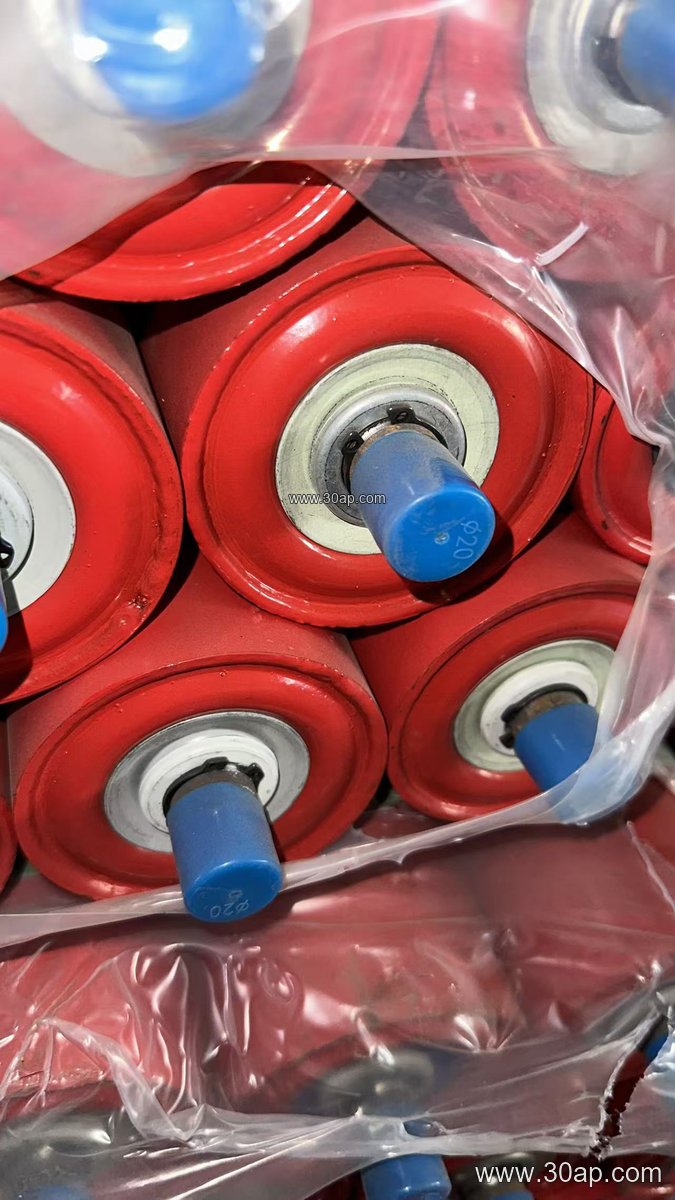
Dust, water, and temperature all shape the selection. A wash plant may call for sealed idlers with good water resistance, while a kiln feed area may need heat-tolerant bearings and grease. For the belt itself, matching an abrasion resistant conveyor belt or a heat resistant conveyor belt to the idler environment helps the whole conveyor run smoothly.
What a Buyer Should Check Before Ordering
Start with the belt width, the trough angle, and the roll diameter already in service. Then confirm the shaft ends, bracket spacing, and mounting hole pattern, because a replacement idler must fit the existing frame. Ask about the seal design, bearing brand or grade, and the wall thickness of the tube. For impact zones, specify rubber-ring cushion idlers rather than standard troughing rolls.
Ordering a complete set per conveyor section is usually simpler than mixing rolls from different batches. Keep a small spare stock of the most common sizes on site, and record the position of each idler so replacements match. For belt-related questions, the plant’s conveyor belt supplier and idler supplier should compare notes on load and speed. More conveyor component guidance is available at www.example-conveyor.com/aggregate-conveyor-idler and www.example-conveyor.com/idler-roller.
Maintenance Points That Extend Idler Life
Listen for squealing or rumbling bearings during walk-around inspections. Check for seized rolls, which can wear through a belt cover quickly, and for material buildup on return rolls. Align the frame and check the belt tracking after any idler change, since a single misaligned bracket can pull the belt to one side. Lubricate only where the bearing design allows it; many sealed idlers are greased for life.
In a busy sand and gravel plant, a planned idler inspection every few weeks is often more useful than reacting to a failure. The same discipline applies whether the conveyor moves ore, clinker, or coal, and it keeps the belt, pulley, and frame working together.