What a Pipe Conveyor Belt Does
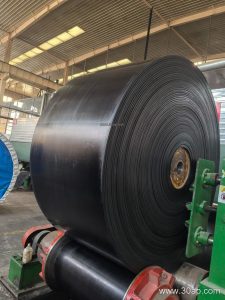
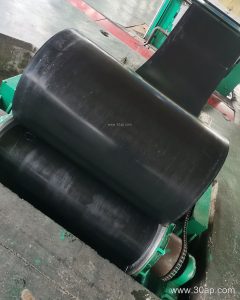
A Pipe Conveyor Belt is a specialist conveyor belt that rolls into a closed tube along the carrying run and opens flat at the head and tail. The same belt that forms the tube also returns flat underneath, so one continuous loop handles both the loaded and empty sides. This enclosed profile keeps dust inside, protects material from rain and wind, and allows routes with horizontal curves that a conventional troughed conveyor cannot follow. In a quarry, cement plant, or power plant, that can mean fewer transfer points and a cleaner transfer house. It also suits port and ship loading lines where spillage control matters.
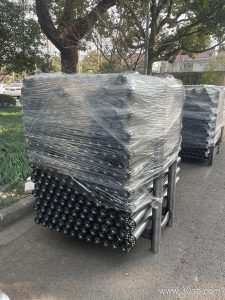
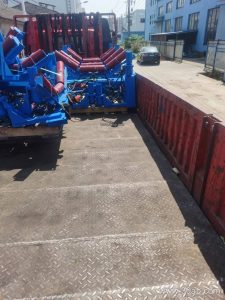
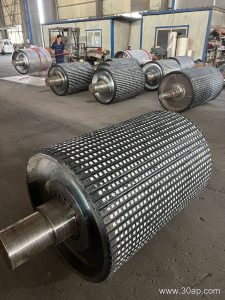
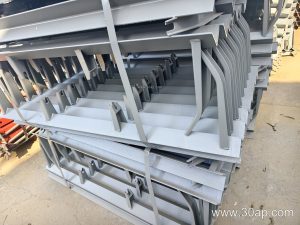
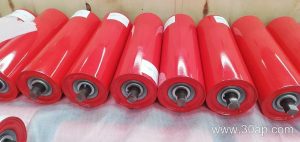
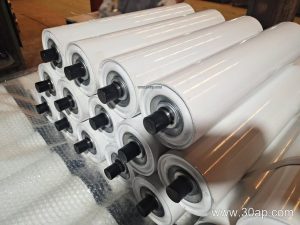
The product is sometimes called a pipe conveyor belt or tubular conveyor belt. Those names describe the same belt. The belt itself is not the same as a conveyor pulley or an idler roller; those are the rotating components that support and guide it. A pipe conveyor needs a particular arrangement of idler rollers and a carefully positioned conveyor bracket to hold the overlap. Drive, tail, and bend pulleys remain distinct parts and are selected separately.
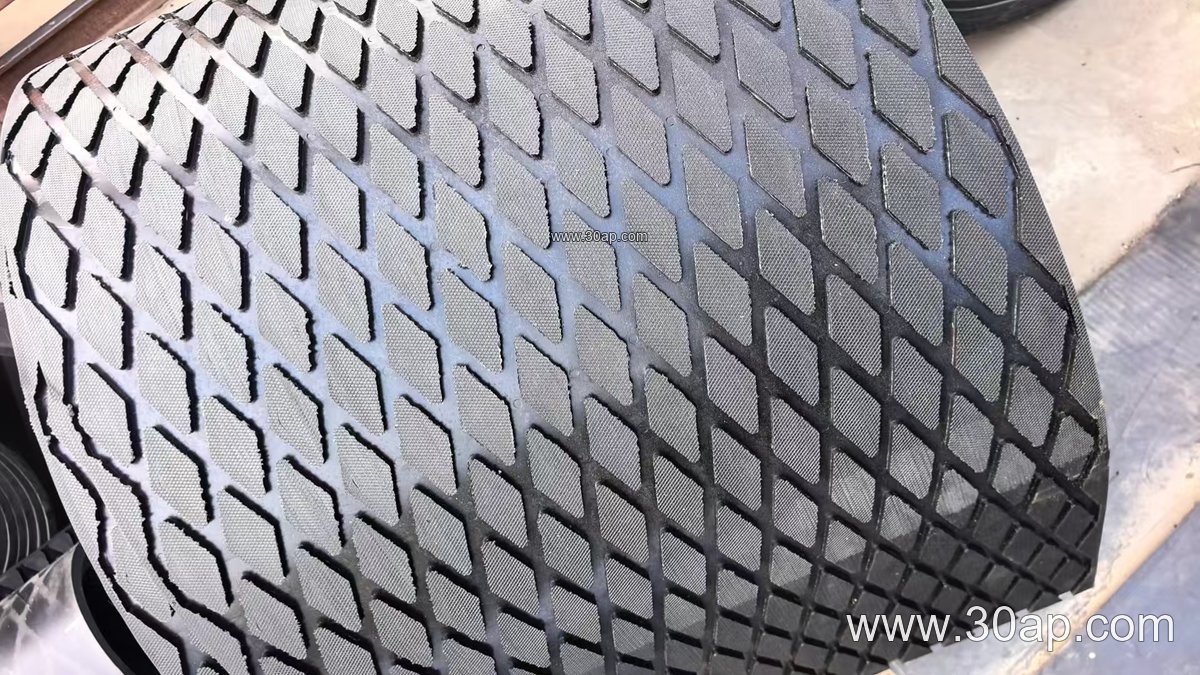
Construction and Belt Build
Most pipe belts use a fabric core or steel cord carcass covered with rubber. The carcass gives tensile strength and keeps the belt stable when it is forced into a circular shape. Fabric constructions such as EP or NN are common in medium-duty lines, while steel cord belts are chosen for long distances and high tonnage. Cover compounds are matched to the material: abrasion resistant rubber for ore and aggregate, heat resistant grades for clinker, flame retardant grades for coal, and oil resistant or anti-static versions where needed. An acid resistant or chemical resistant cover may be required in some processing plants.
The pipe shape is formed by a series of idler panels arranged in a hexagon or similar pattern. The belt edges overlap at the top, and the overlap direction should follow the belt travel so that material does not catch in the seam. Special edge reinforcement helps the belt keep its curl and resist fatigue at the overlap. A pipe conveyor belt usually has a thicker cover and a stiffer transverse build than a flat belt of the same width, because the belt must hold a tube shape through curves and transitions.
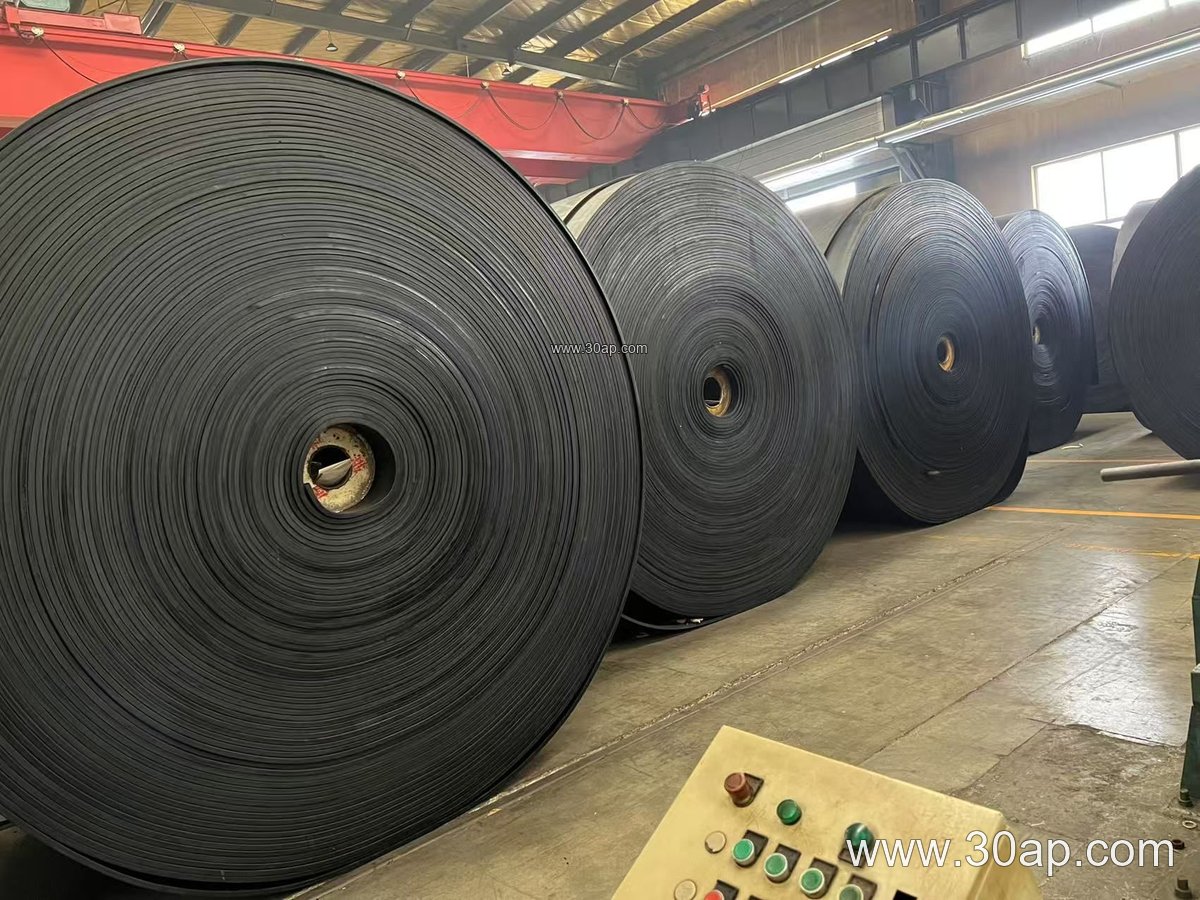
Where It Fits in the Plant
- Mining and underground coal mining lines where dust and spillage control are priorities.
- Cement plants moving clinker, raw meal, and additives between buildings.
- Power plants handling coal or biomass with enclosed routing.
- Steel plants and foundries transferring sinter, coke, or slag.
- Sand making and stone crushing plants linking crushers and screens.
- Ports and ship loading terminals where material must be protected from weather.
Pipe belts are not a universal replacement for a flat conveyor belt. A troughed line is usually simpler and cheaper for short, straight runs. A pipe belt earns its place when the route needs curves, environmental enclosure, or a narrow right-of-way through a congested plant.
Sizing and Specification Notes
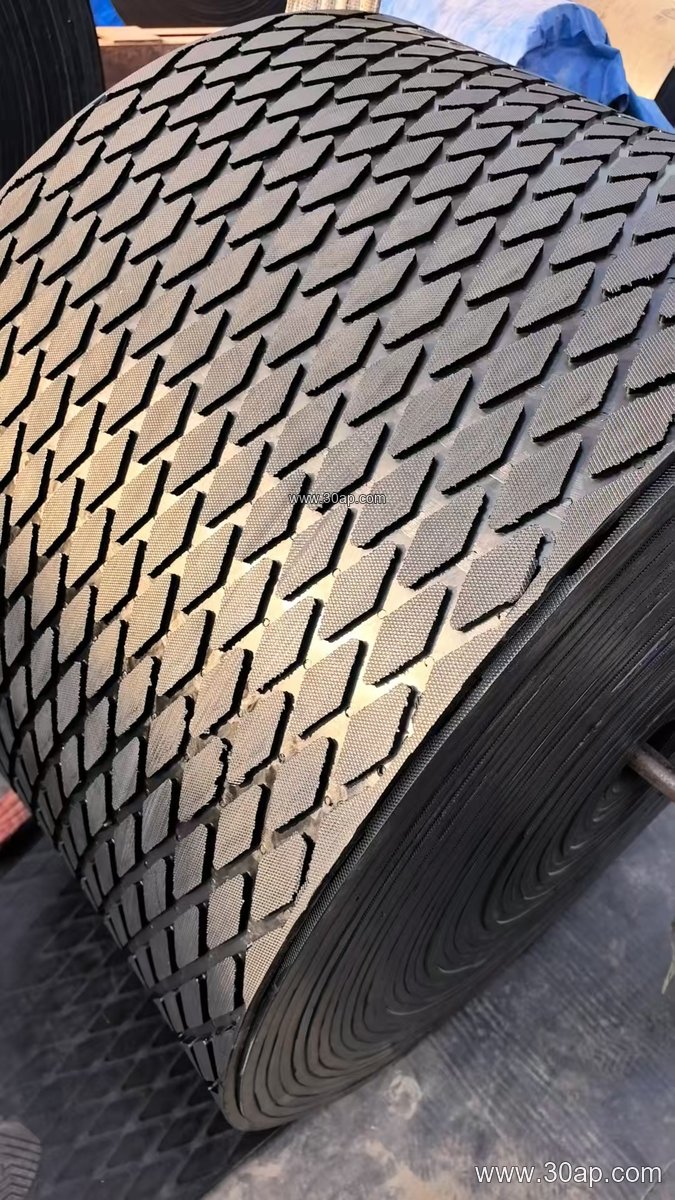
Pipe diameter is normally chosen from the required throughput, material lump size, and belt speed. Common belt widths for pipe service range from about 600 mm to 2000 mm, with tube diameters typically smaller than the belt width. Belt strength is stated by carcass grade, for example EP200, EP500, EP1000, or ST1600, but these values are design references rather than fixed pairings with a given width. A 1200 mm wide belt can be built in several strength classes, and a 1000 mm belt may use different cover thicknesses. The table below shows typical reference data; actual values should be confirmed with the belt designer.
| Parameter | Common reference range |
|---|---|
| Belt width | 600, 800, 1000, 1200, 1400, 1600, 1800, 2000 mm |
| Tube diameter | roughly 150 to 600 mm, by design |
| Carcass type | EP fabric, NN fabric, steel cord |
| Strength grade | EP200 to EP2000; ST1000 to ST3150 |
| Cover thickness | 4+2, 5+2, 6+2, 8+3 mm typical |
| Fabric plies | 2 to 6 layers, depending on grade |
Do not assume that one belt width dictates one pulley diameter or one shaft size. Those are calculated from belt tension, wrap angle, and shaft load. The drive, tail, and bend pulleys each have their own duty, and the bend pulleys in particular see repeated reverse bending as the belt opens and closes.
Buyer Checklist
Before ordering, confirm the material, lump size, bulk density, moisture, and temperature. State whether the line runs horizontally, on an incline, or through curves, and give the curve radii. Ask for the transition length at both ends, because the belt must open from a tube to a flat profile without over-stressing the edges. Check the idler roller layout and the overlap direction. For coal or underground work, specify flame retardant and anti-static properties. For hot material, confirm the heat resistant grade and any requirement for a heat resistant conveyor belt rather than a standard cover. Spare parts planning should include the belt, idler rollers, and pulleys, since a worn idler can damage the tube shape quickly.
Finally, request the belt data sheet with cover grade, carcass, ply count, and recommended minimum pulley diameters. A pipe conveyor belt is a system component, so the belt supplier and the conveyor designer should agree on the tube diameter, overlap, and transition geometry before production.