What a Ceramic Lagged Pulley Is
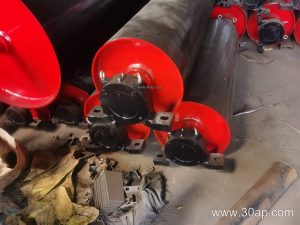
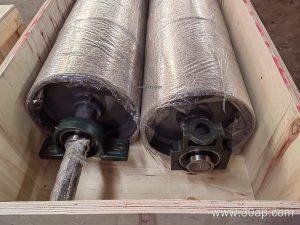
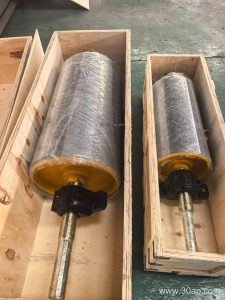
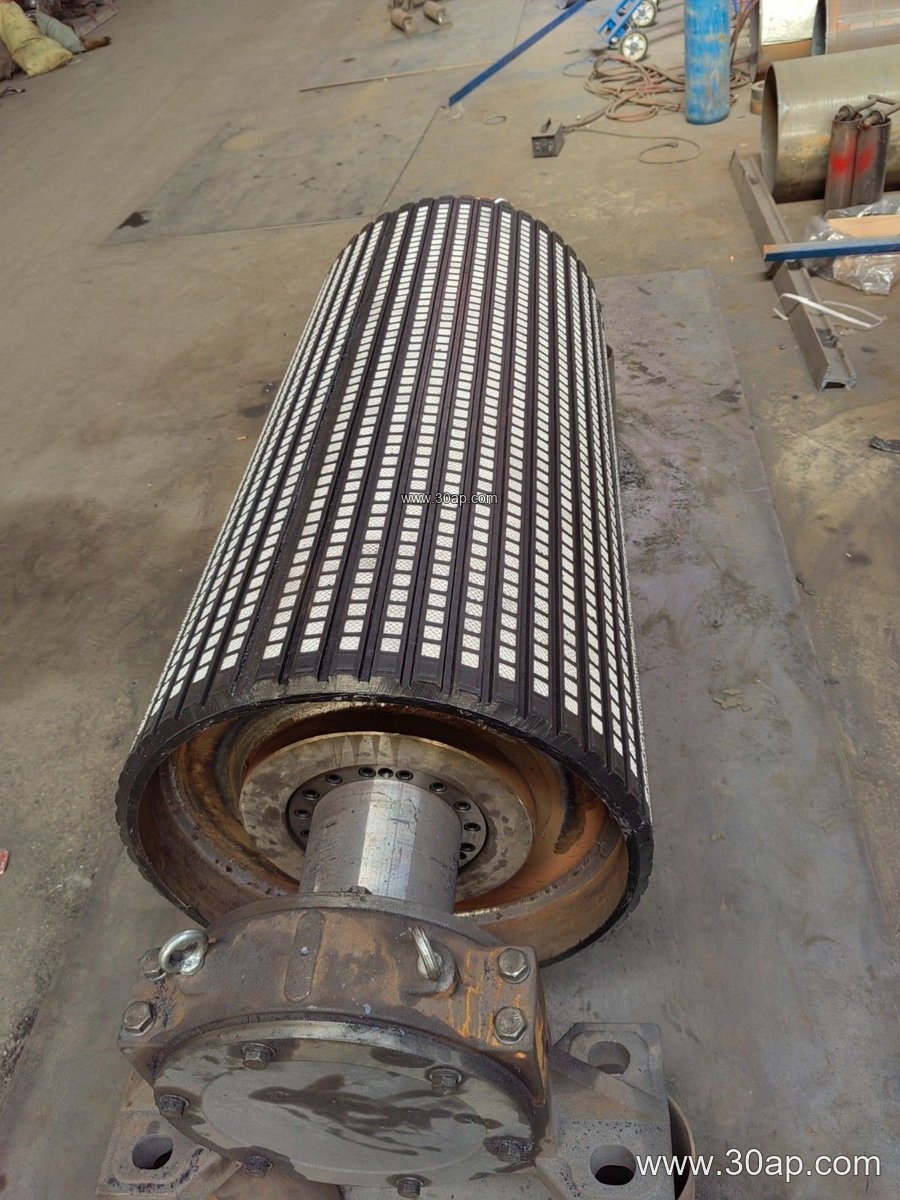
A ceramic lagged pulley is a conveyor pulley whose shell is covered with ceramic tiles set in a rubber or polymer backing. The ceramic pieces are embedded so that their hard surfaces stand slightly proud of the backing, creating a rough, long-wearing grip layer. In many plants this component is simply called a ceramic pulley, and it is most often installed as the drive pulley where torque has to pass from the shell to the conveyor belt. It is not a tail pulley or a bend pulley by definition; those positions may use other lagging, while the ceramic version is chosen mainly for driving duty in abrasive and wet conditions.
How the Lagging Is Built
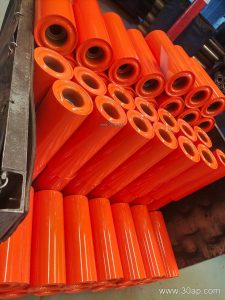
The pulley body is usually a welded steel drum with machined end discs and a shaft sized by torque and load, not by belt width alone. The ceramic lagging is applied in one of two common ways. In the first, ceramic tiles are bonded into a rubber sheet that is then vulcanized or cold-bonded to the shell. In the second, tiles are set directly into a cast or sprayed polymer layer. Tile shapes vary, and diamond or rectangular patterns are common. A ceramic surface is harder than plain rubber and keeps its grip when the belt is damp, muddy, or carrying fine grit.
Common reference dimensions
The figures below are typical reference values only. Final sizes are set by the conveyor design, and a given belt width can be paired with more than one diameter.
- Belt width range: B400 to B2400
- Pulley diameter range: Ø200 to Ø1800
- Lagging thickness: 8, 10, 12, 15, 20 mm
- Shaft diameter range: Ø50 to Ø200
| Belt width | Typical shell face width | Example diameter pairing |
|---|---|---|
| B800 | about 950 mm | Ø500 |
| B1000 | about 1150 mm | Ø630 |
| B1200 | about 1400 mm | Ø1000 |
| B1400 | about 1600 mm | Ø800 |
| B1600 | about 1800 mm | Ø1250 |
These pairings are examples, not fixed rules. The shaft diameter is calculated from drive torque and bearing loads, so it should never be guessed from belt width.
Where It Fits in the Conveyor
The main use is at the head or drive station, where the pulley transmits motion to the belt. In a quarry or sand and aggregate line, a ceramic lagged pulley helps keep grip on a conveyor belt that is often dusty and occasionally wet. In a coal handling plant or power plant coal yard, the same surface resists polishing and keeps friction more stable than plain steel. In a cement plant, where clinker dust and fines coat everything, the ceramic pattern can reduce slip at the drive. It also suits iron ore and copper ore terminals, port bulk handling, and crushing and screening circuits.
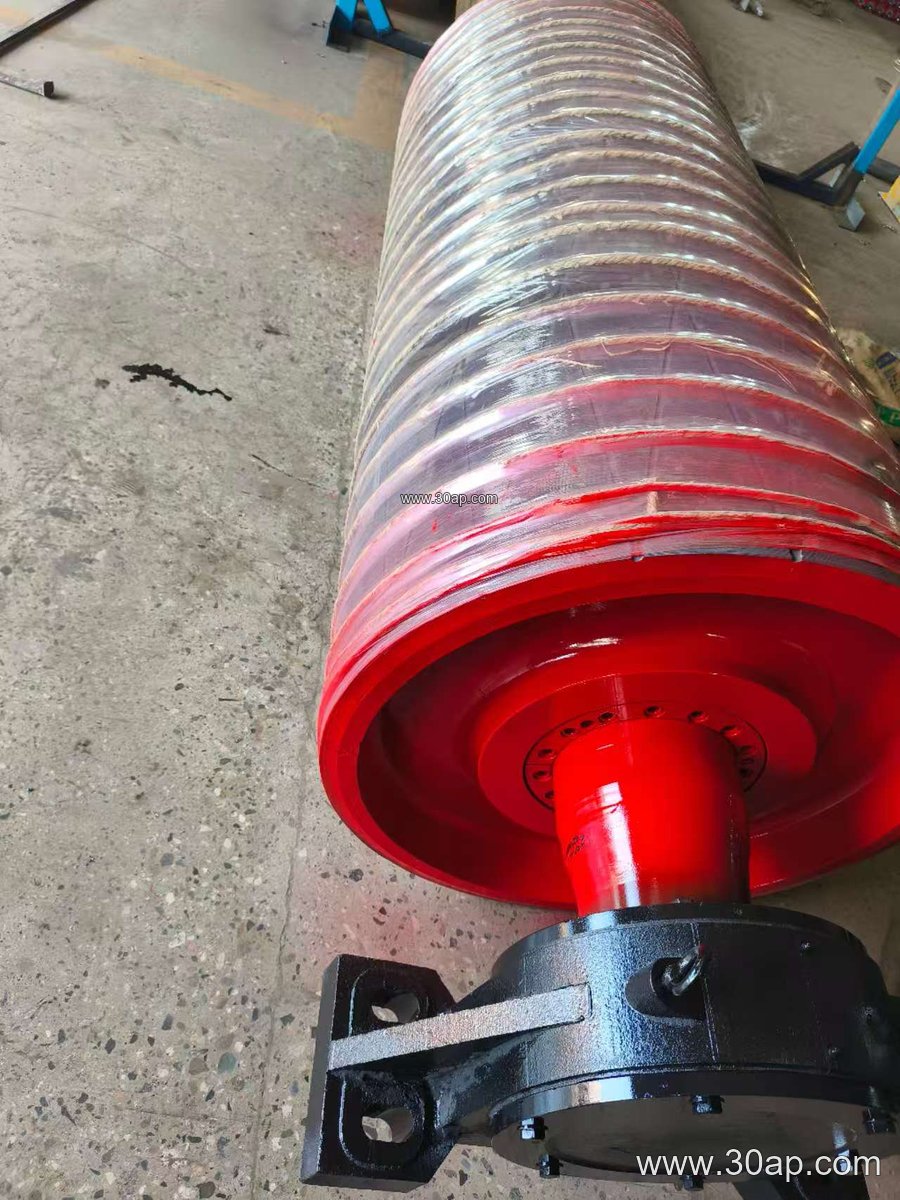
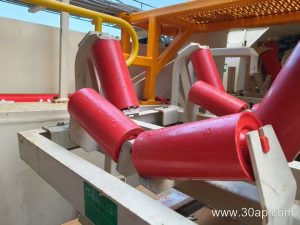
The pulley works together with the rest of the conveyor. A well tracked conveyor belt, properly aligned conveyor pulley and free-running idler roller reduce the load on the lagging. A conveyor bracket that holds the bearing housing squarely also helps the pulley run true. In heavy-duty mining conveyor belt systems, the drive pulley is often the most highly stressed rotating part, so surface quality matters.
Buyer Checklist
Before ordering, confirm the belt width, the required diameter, the shaft size and the drive torque. State the lagging thickness and tile pattern you need, and say whether the pulley is a drive, head, or other position. Check that the shell face width is wider than the belt, for example B650 with about 750 mm face. Ask how the tiles are bonded and whether the lagging can be replaced. Consider the material being carried; a high abrasion resistant conveyor belt and a ceramic lagged drive pulley are a sensible pairing in hard rock duty, while a heat resistant conveyor belt or oil resistant conveyor belt may need a different lagging compound. For long overland systems, EP conveyor belt or steel cord conveyor belt constructions change the torque demand and therefore the pulley design.
During operation, inspect the ceramic surface for cracked or missing tiles and check belt tracking. Keep the belt cleaner working so that sticky fines do not build up on the shell. A ceramic lagged pulley is a durable drive component, but it still needs correct alignment and reasonable belt tension to deliver its full service life.