What a Port Conveyor Belt Does
A Port Conveyor Belt is the heavy-duty carrying element in the continuous handling chain that links ship unloaders, stockyard stackers, reclaimers, transfer towers and shiploaders. In a bulk terminal the belt runs almost without pause, moving iron ore, copper concentrate, coal, cement clinker, fertilizer, grain or aggregate between vessels and yard stockpiles. Because the conveyor is often the only path between a berthed ship and the storage area, belt reliability has a direct effect on turnaround time. A single stopped line can idle a berth, so the belt is usually specified with a generous safety factor rather than sized to the bare minimum.
The same product is also described as a bulk terminal conveyor belt or a ship loading conveyor belt when it serves those specific duties. These are working descriptions of the same item, not separate product families.
Construction and Main Subtypes
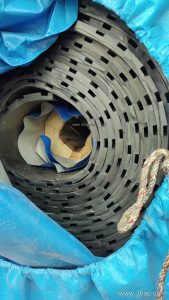
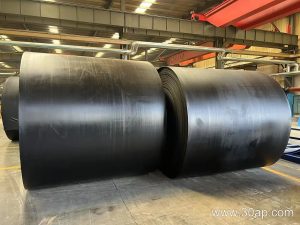
Most port belts are fabric-cored or steel-cored rubber belts. The carcass carries tension, the rubber covers protect the carcass and grip the material, and the edge construction keeps the belt tracking on the pulleys. Common constructions include:
- EP conveyor belt – polyester warp, polyamide weft fabric core, widely used on medium to long terminal conveyors.
- NN conveyor belt – all-nylon fabric core with good fatigue resistance for repeated flexing.
- Steel cord conveyor belt – steel wires embedded in rubber for high tension and long centre distances.
- PVC and PVG conveyor belts – solid-woven cores with PVC or PVG covers, often chosen for flame-retardant underground or enclosed galleries.
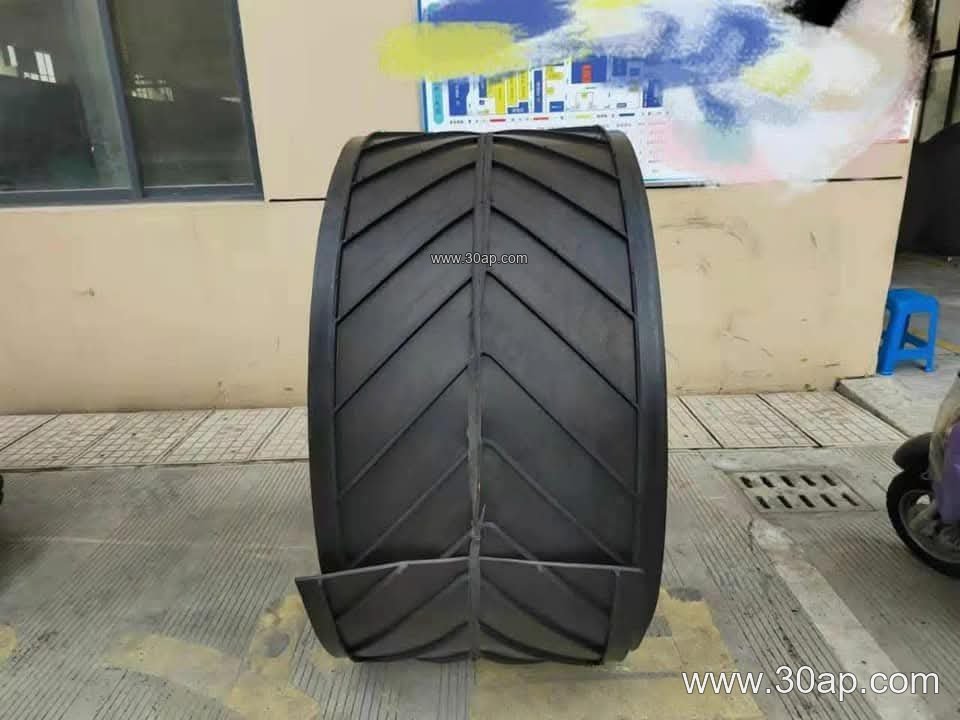
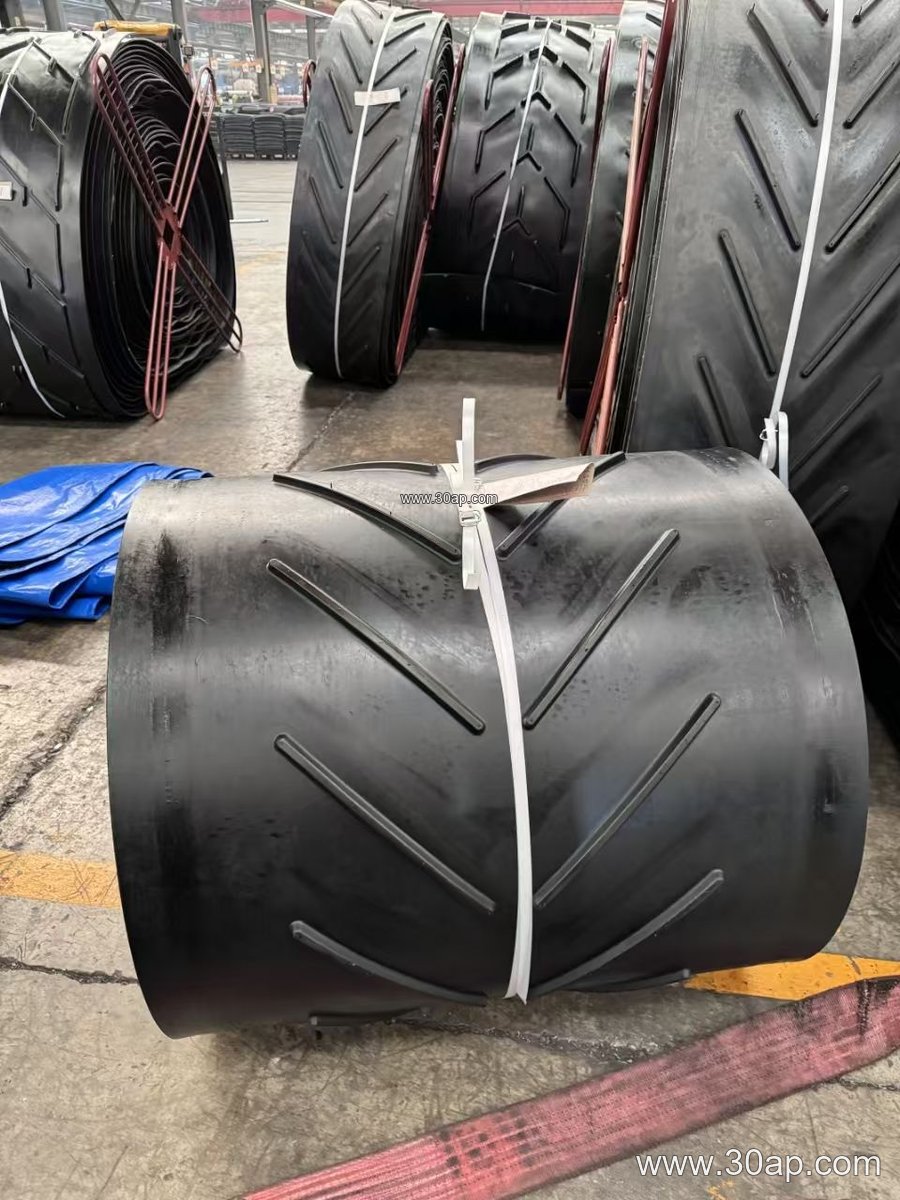
Where the line climbs steeply or material must be contained, a chevron conveyor belt, a corrugated sidewall belt with transverse cleats, or a pipe conveyor belt may be used instead of a flat belt. These are different constructions chosen for slope, spillage or routing reasons; they do not replace a flat Port Conveyor Belt on a normal horizontal run.
Typical Specifications
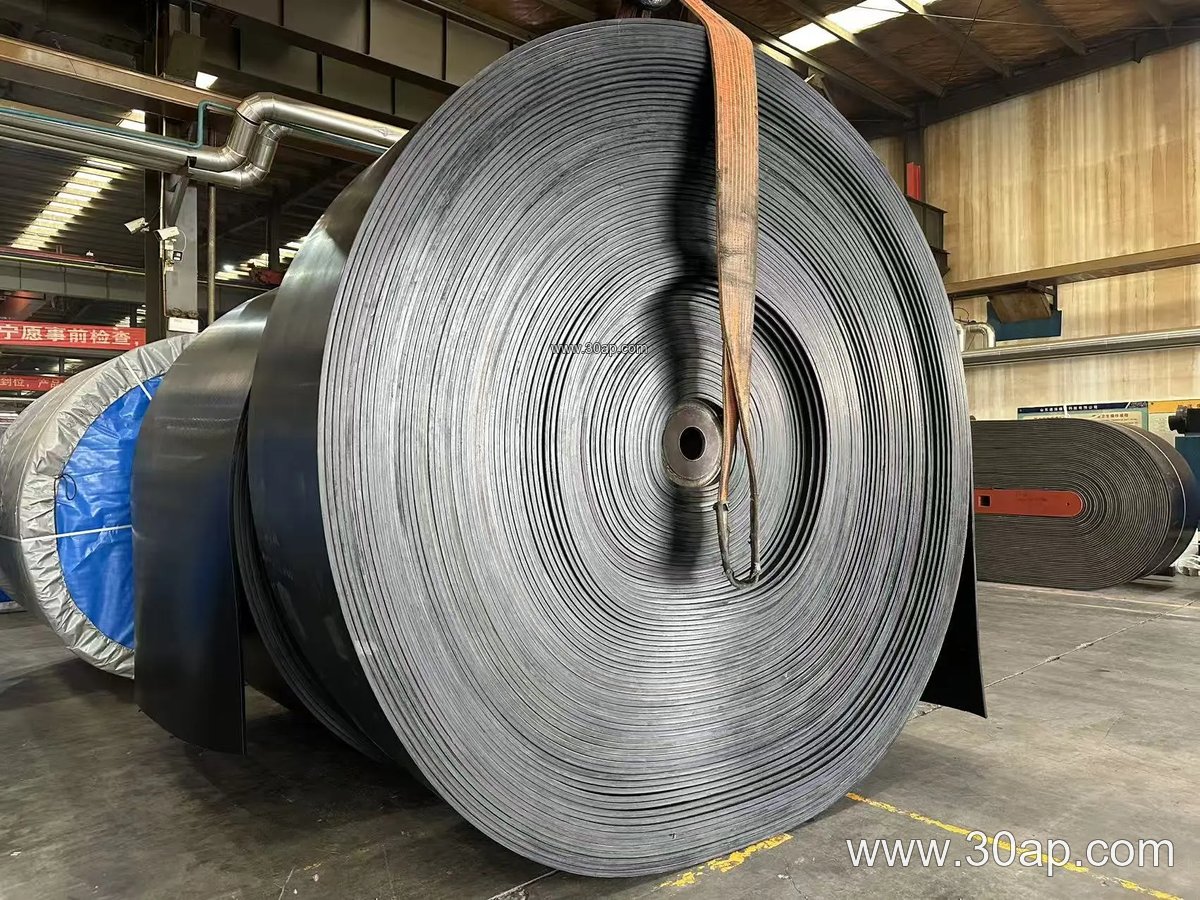
The figures below are common reference ranges, not universal rules. Actual values are fixed by the conveyor design, the material handled and the terminal’s operating profile.
| Parameter | Common reference values |
|---|---|
| Belt width | B650, B800, B1000, B1200, B1400, B1600, B1800, B2000 |
| Fabric core strength (EP) | EP200, EP315, EP400, EP500, EP630, EP800, EP1000, EP1250 |
| Steel cord strength (ST) | ST1000, ST1250, ST1600, ST2000, ST2500 |
| Cover thickness (top + bottom) | 4+2 mm, 5+2 mm, 6+2 mm, 8+3 mm |
| Carcass plies | Usually 2 to 6 fabric layers |
Belt width and pulley diameter are matched through the conveyor design, not by a fixed table. A wider belt does not automatically require a particular shaft size, and the drive pulley, tail pulley and bend pulley each have their own duty and should be specified separately.
Cover Compounds for Port Conditions
Marine terminals combine abrasion, moisture, salt air and sometimes heat. An abrasion resistant conveyor belt is the default for ore and aggregate; a heat resistant conveyor belt suits clinker or sinter; a cold resistant grade is needed in freezing winters; and an oil resistant cover is used where fuel or lubricant contamination is possible. Flame retardant and anti-static grades are common in enclosed galleries and anywhere dust ignition is a concern. Food grade belting applies to grain and fertilizer lines where contamination must be avoided.
What Buyers Should Check
- Duty cycle and tonnage – continuous ship unloading demands a higher safety margin than an intermittent yard line.
- Material – lump size, moisture, temperature and abrasiveness drive cover grade and carcass choice.
- Conveyor geometry – lift, curve radius and transfer points affect whether a flat belt, chevron belt or pipe belt is appropriate.
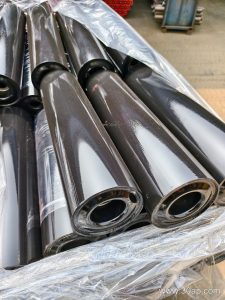
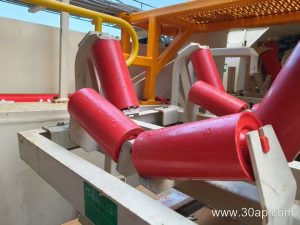
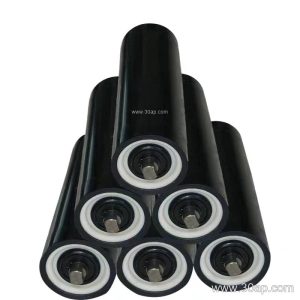
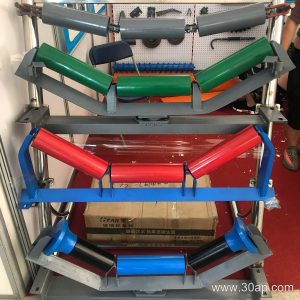
- Supporting equipment – idler roller spacing, conveyor pulley lagging and conveyor bracket condition all influence belt life.
- Splicing – an endless conveyor belt made at the factory reduces joint risk, but field splicing is often necessary on long terminal lines.
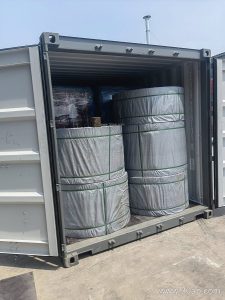
Spare strategy matters too. Terminals usually keep a length of matching belt, a set of idler rollers and pulley lagging on site so a damaged section can be replaced without waiting for delivery. For more on compatible components, see www.example.com/conveyor-pulley and www.example.com/idler-roller.
Installation and Maintenance Notes
Correct alignment at the transfer chute prevents edge damage, and skirt rubber should be adjusted so it seals without pressing hard on the cover. Tracking should be checked after every splice and after any structure movement. Cover wear, edge fraying and carcass exposure are the usual signs that a belt is nearing replacement. In dusty coal or ore terminals, cleaning around the tail pulley and checking the conveyor bracket bolts for corrosion are simple routines that extend service life. A well-matched Port Conveyor Belt, combined with sound pulleys and rollers, keeps a bulk terminal running at the pace the shipping schedule requires.