What a Three-Roll Idler Bracket Does
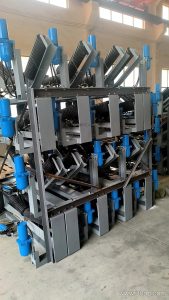
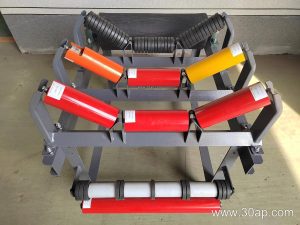
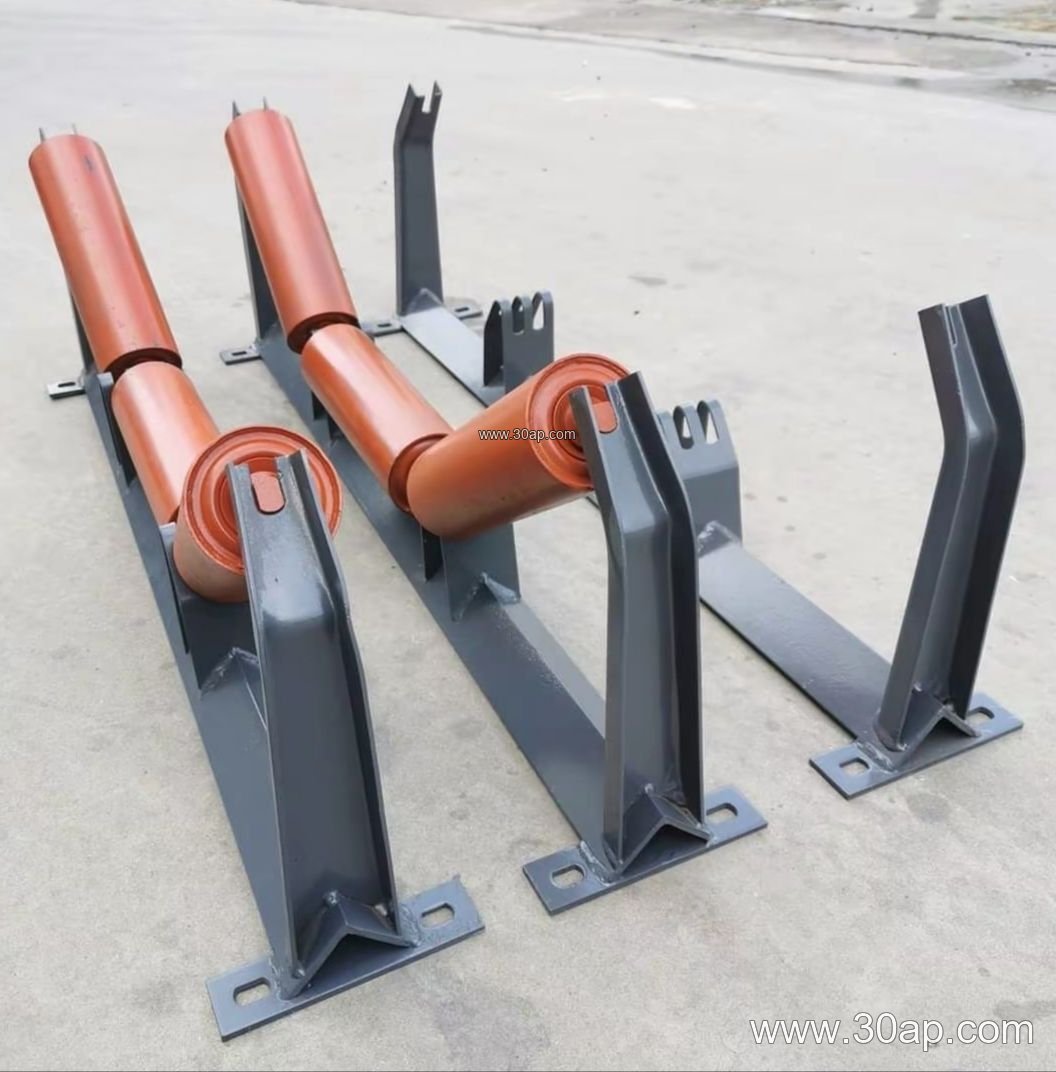
A Three-Roll Idler Bracket is the steel frame that holds the three carrying idlers of a troughing station in the correct geometric relationship. It sits between the conveyor stringers, supports the center roll horizontally, and holds the two wing rolls at an inclined angle so that the belt forms a trough. In a quarry, a coal washing plant, or a power station coal yard, this bracket is one of the most repeated components along the whole conveyor line, and a poor choice shows up quickly as belt wander, edge wear, or premature roller failure.
The same component is also called a three-roll idler frame or a troughing idler support bracket, and those names describe the same part. Drive pulleys, tail pulleys, and bend pulleys are separate items on the conveyor and are not alternatives to this bracket.
How the Bracket Is Built
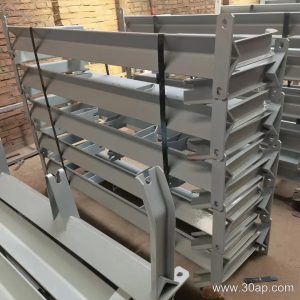
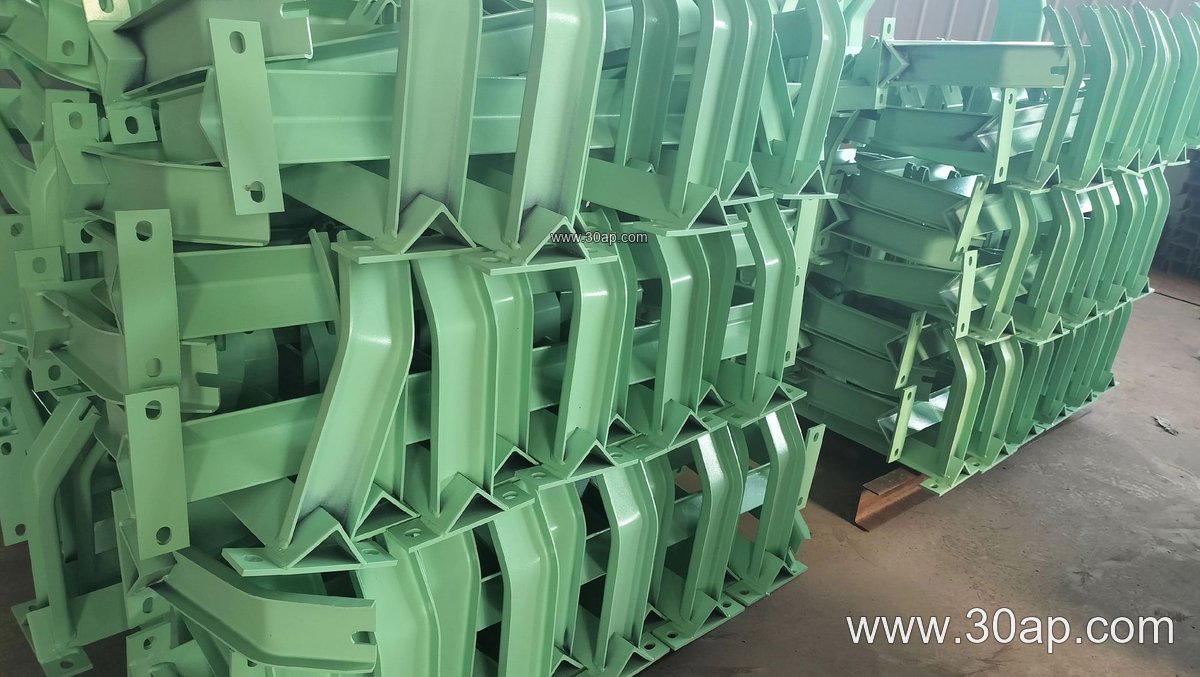
Most brackets are fabricated from angle steel, channel steel, or folded steel plate, then drilled or punched for the idler shaft ends. The two inclined arms are set at the design trough angle, and the center seat is positioned so that the three idler rollers stay in one plane when viewed from the belt direction. Welded gussets and a stiff cross member keep the frame from spreading under load.
- Fixed bracket: the trough angle is built into the frame and cannot be changed.
- Adjustable bracket: the wing arms can be reset between common angles, which helps when a conveyor handles mixed material.
- Transition bracket: placed near the head or tail to ease the belt from flat to troughed profile.
- Impact bracket: reinforced under a loading point, usually paired with impact idlers.
Surface finish matters in wet or dusty service. A painted finish suits general dry conditions, while hot-dip galvanized frames are common in ports and aggregate plants where washdown and humidity are constant. Bolt holes should be checked against the stringer spacing before the frames are shipped.
Matching Bracket, Roller, and Belt Width
Bracket size follows belt width and roller diameter, but there is no single fixed rule that ties one belt width to one trough angle or one roller diameter. Designers choose the combination that keeps the belt supported without over-stressing the edges. The table below shows typical reference combinations, not mandatory pairings.
| Belt width | Trough angle | Roller diameter | Typical duty |
|---|---|---|---|
| B650 | 30 degrees | Ø89 | Light aggregate, sand |
| B800 | 35 degrees | Ø108 | General bulk handling |
| B1000 | 35 degrees | Ø133 | Coal, cement raw material |
| B1200 | 45 degrees | Ø133 | Heavy ore, high tonnage |
| B1400 | 45 degrees | Ø159 | Mining and port loading |
| B1600 | 45 degrees | Ø194 | Large primary crushing lines |
Common trough angles are 20, 30, 35, and 45 degrees. A steeper angle gives better material containment on a wide, fast belt but raises edge tension. Forward-leaning brackets, usually about 1.5 to 2 degrees, are used to encourage belt tracking. Mounting hole spacing and crossbeam length change with belt width and trough angle and should always be confirmed from the drawing.
Where the Bracket Is Used
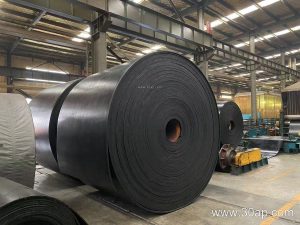
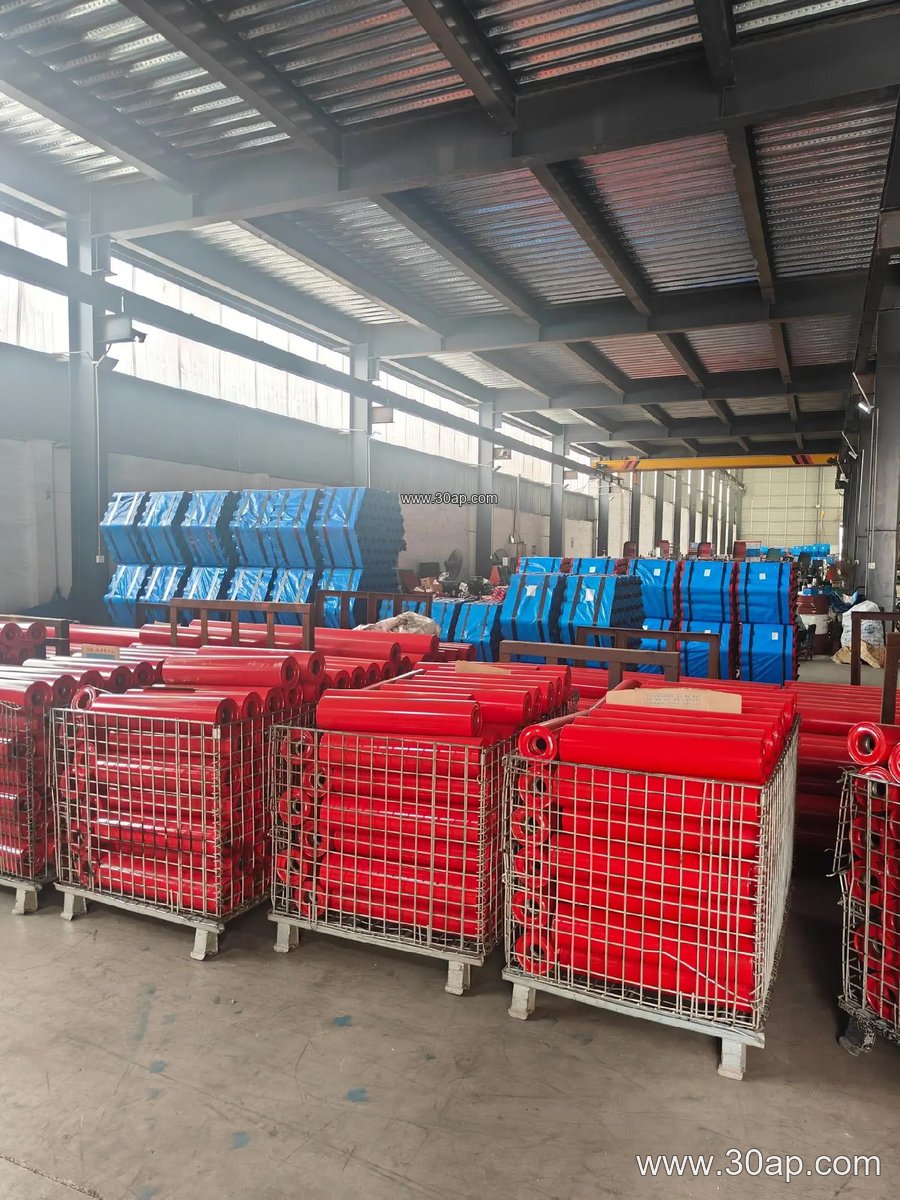
Three-roll brackets appear wherever a conveyor carries bulk material on the top strand. In a limestone mine they sit under a 1000mm belt moving crushed rock; in a cement plant they support the clinker and raw meal lines; in a steel plant sinter plant they handle hot, abrasive material together with heat resistant conveyor belt grades. A coal mining conveyor belt on an underground roadway uses flame retardant conveyor belt and matching frames, while a port terminal may run a 1400mm or 1600mm belt on heavy frames through the ship loading system.
The bracket works as part of a system. A well-aligned frame keeps the idler roller square to the belt, which in turn reduces abrasion on the rubber cover. Plants using EP conveyor belt or steel cord conveyor belt both benefit from correct frame geometry, because belt tracking problems are often traced to a mis-set bracket rather than the belt itself. For abrasive duty, an abrasion resistant conveyor belt paired with a properly aligned frame lasts noticeably longer than one running on tilted or loose frames.
Buyer Checklist
Before ordering, confirm belt width, trough angle, roller diameter, stringer spacing, and bolt hole pitch. State the material being carried and whether the site is wet, dusty, or corrosive, since that decides between painted and galvanized frames. Ask whether the bracket is fixed or adjustable, and whether it is a standard, transition, or impact position. For high-tonnage lines such as an iron ore or copper ore conveyor, thicker steel and closer support spacing are usually worth discussing. Spare frames should match the installed set so that maintenance crews can swap a damaged bracket without re-drilling the stringers.