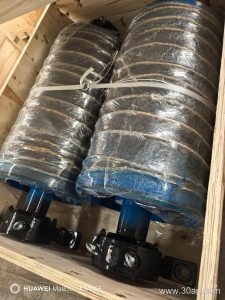
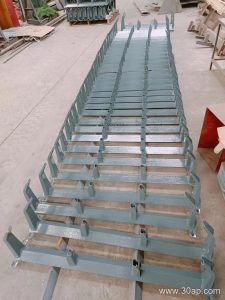
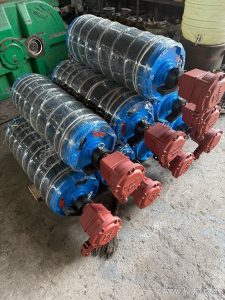
What a Custom Conveyor Bracket Does
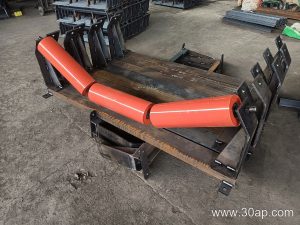
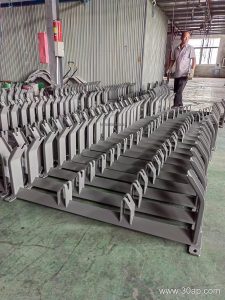
A custom conveyor bracket is the fabricated support that holds idler rollers in the correct position under or over the conveyor belt. Unlike a stock bracket, it is made to match a specific belt width, trough angle, roller diameter and frame layout. In a quarry, cement plant or power plant coal yard, the bracket is often the part that decides whether the belt trains well or wanders. It is not a pulley and does not drive the belt; it simply carries the idlers that shape and support the belt path.
How the Bracket Is Built
Most brackets are formed from angle steel, channel steel or folded steel plate. The fabrication is straightforward but the tolerances matter. Mounting hole spacing and crossbeam length usually change with belt width and trough angle, so they are confirmed per design rather than taken as a fixed number. A typical bracket may be supplied for B800, 35 degrees, with Ø108 idlers, or for B1200, 45 degrees, with Ø133 rollers. These are common reference combinations, not universal rules. A 650mm belt can be paired with different roller diameters depending on load and speed.
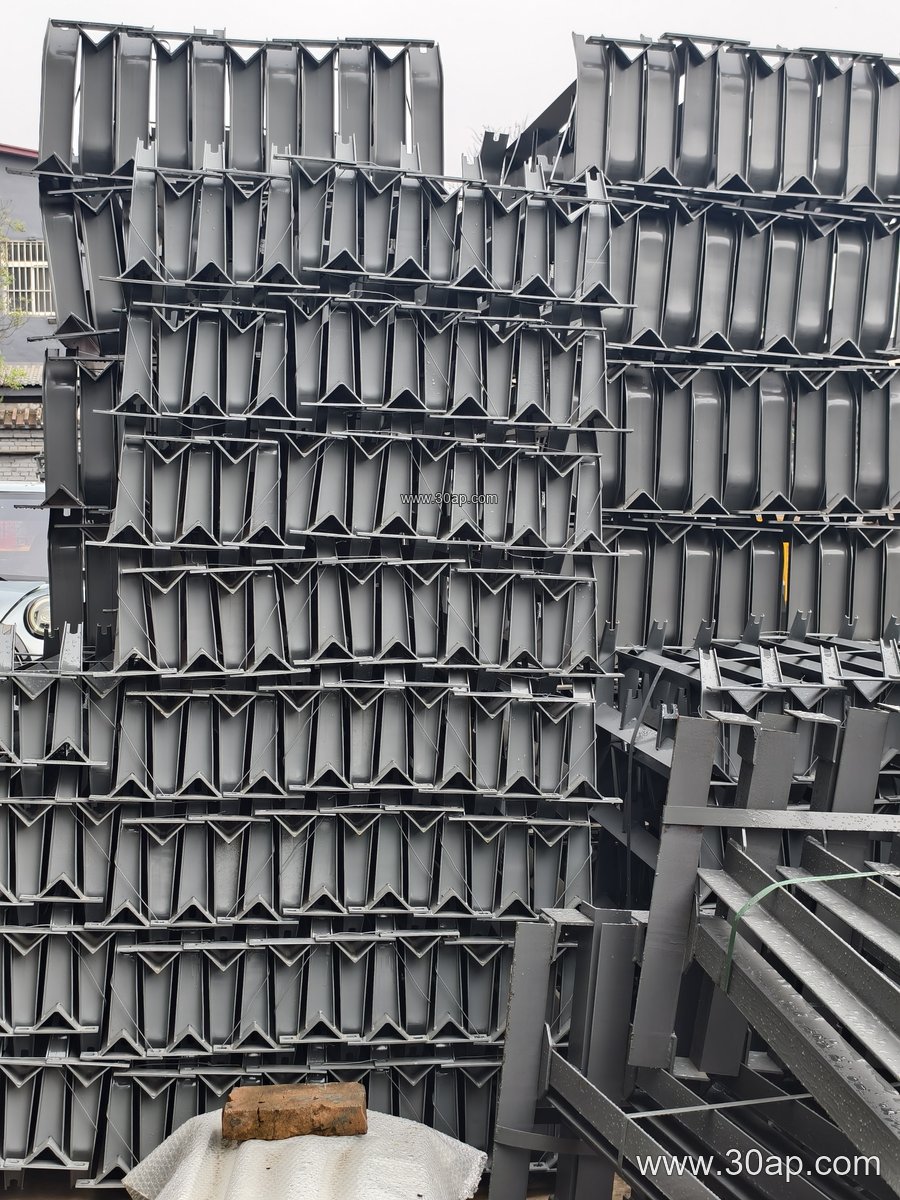
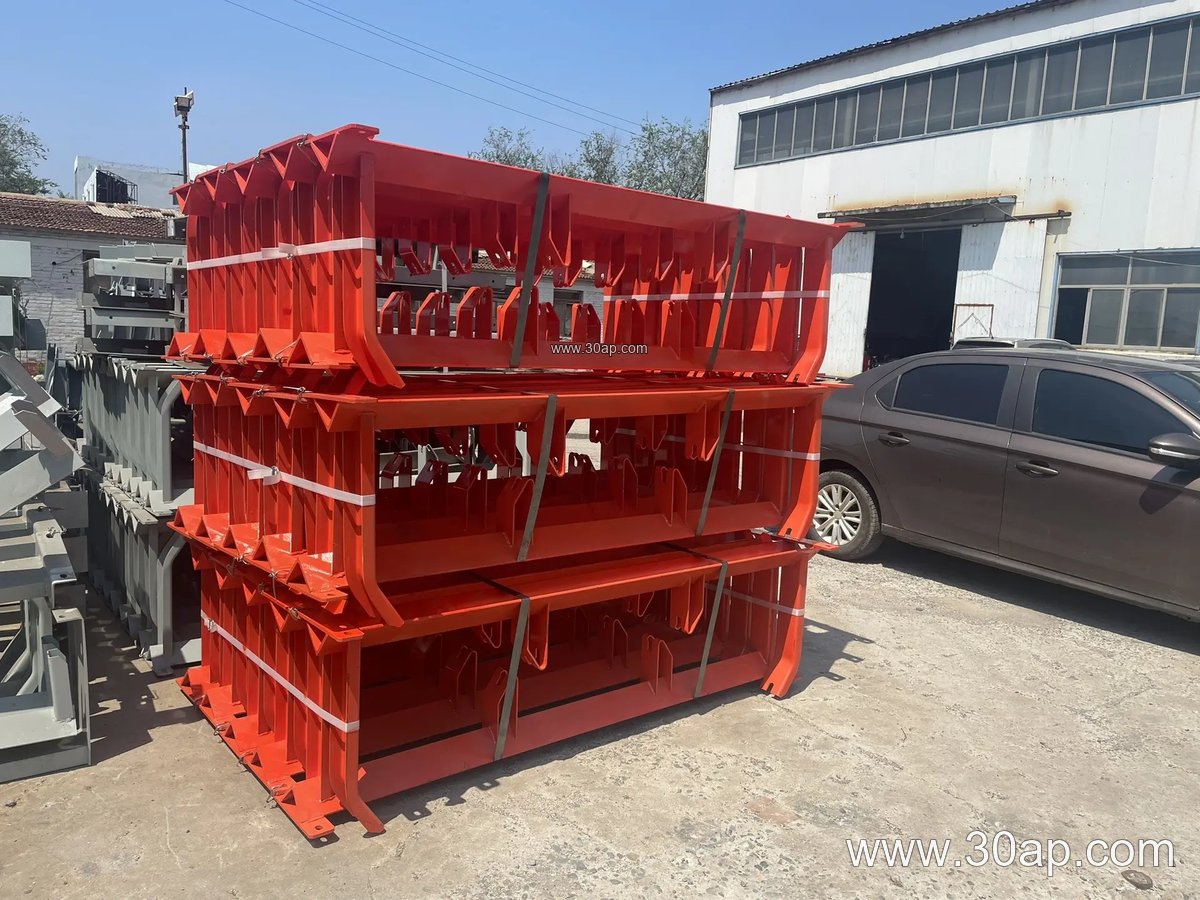
Common bracket forms
- Troughing bracket for the carrying side, usually set at 20, 30, 35 or 45 degrees.
- Transition bracket near the pulley, where the belt changes from flat to troughed.
- Return bracket or V-return bracket for the empty strand.
- Impact bracket under the loading point, often with cushion rollers.
- Self-aligning bracket and forward-tilt bracket for belt training.
- Adjustable bracket that allows the trough angle to be changed on site.
An adjustable bracket is useful where the same conveyor handles different materials, but a fixed bracket is simpler and stiffer. The choice depends on whether the trough angle is expected to stay constant.
Where Custom Conveyor Brackets Are Used
You will find them in limestone mines feeding a crusher, in sand and gravel lines, in cement plant clinker transport, and in power plant coal handling. In a coal washing plant, a flame retardant conveyor belt may run on brackets that must resist vibration and coal dust. In an iron ore yard, a heavy-duty mining conveyor belt needs sturdy brackets and well-spaced idler rollers. The bracket itself does not touch the material, but its alignment affects belt life, splice life and energy draw. A poorly fitted bracket can cause edge wear on an abrasion resistant conveyor belt within weeks.
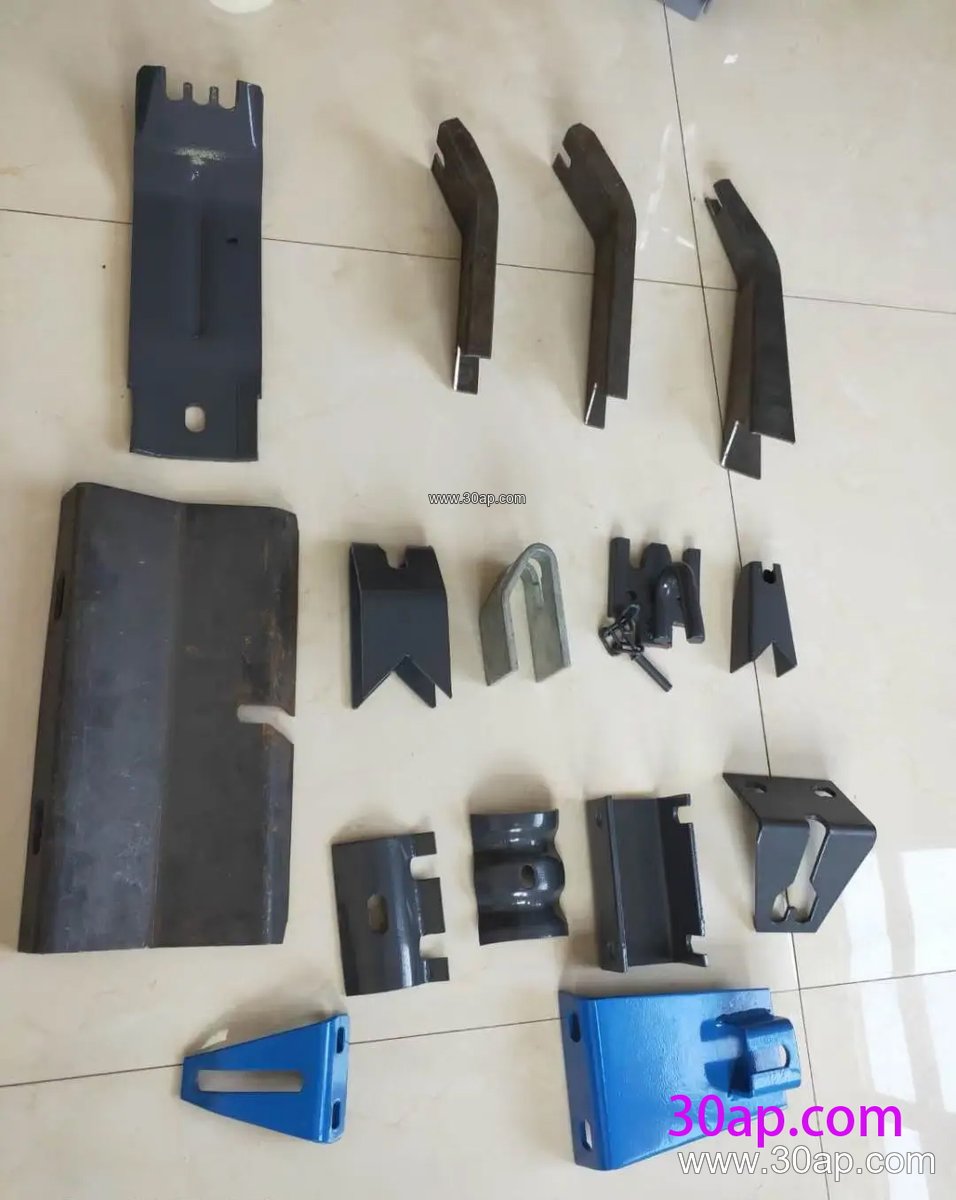
Matching Bracket, Belt and Roller
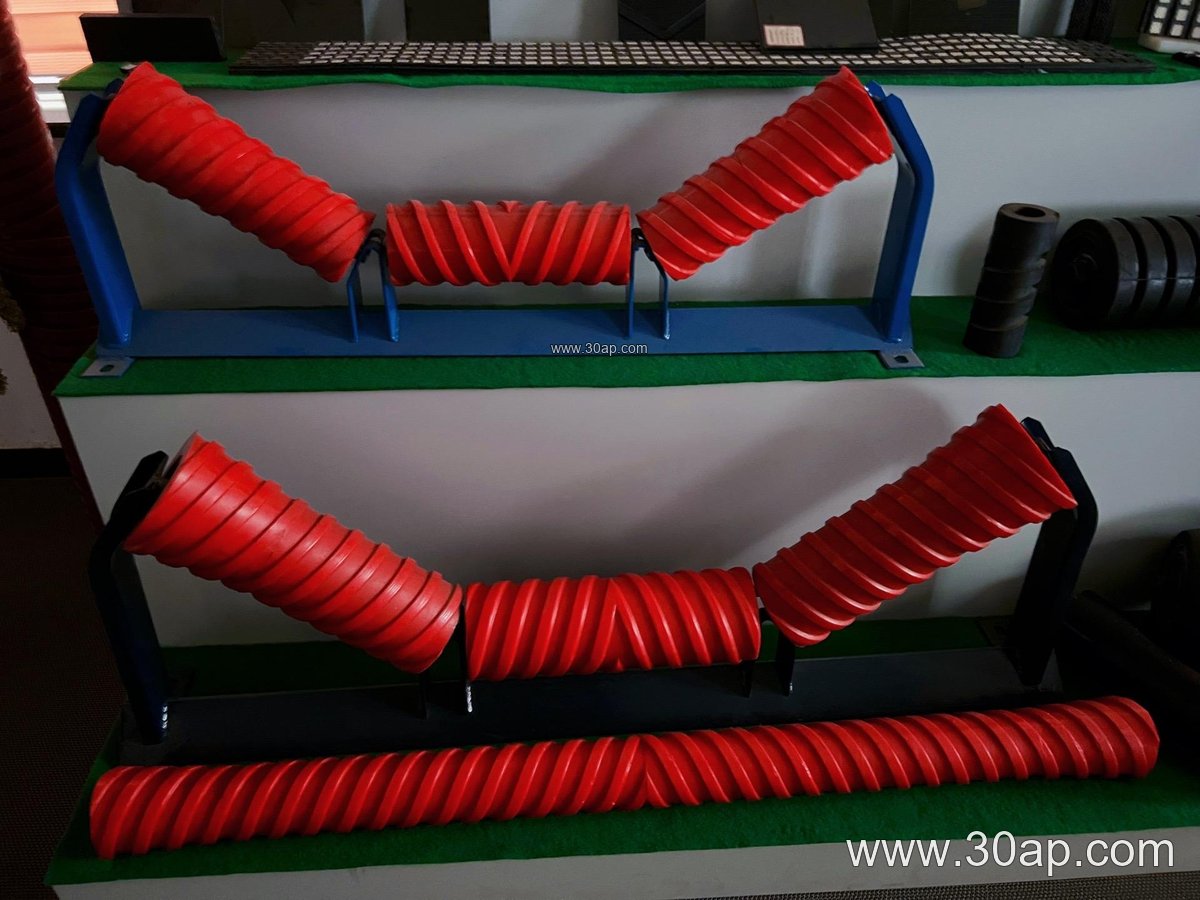
The bracket should be selected together with the conveyor belt and the idler roller, not in isolation. Belt width sets the crossbeam span, trough angle sets the roller arrangement, and roller diameter sets the mounting height. For a B1000 belt with a 35 degree trough, Ø133 rollers are common; for a B1400 belt with a 45 degree trough, Ø159 rollers may be used. The table below shows reference ranges only.
| Belt width | Common trough angle | Common roller diameter |
|---|---|---|
| B500 | 20–30 degrees | Ø89 |
| B650 | 30–35 degrees | Ø89–Ø108 |
| B800 | 30–35 degrees | Ø108–Ø133 |
| B1000 | 35–45 degrees | Ø108–Ø133 |
| B1200 | 35–45 degrees | Ø133–Ø159 |
| B1400 | 35–45 degrees | Ø133–Ø159 |
| B1600 | 35–45 degrees | Ø159–Ø194 |
| B1800–B2200 | 35–45 degrees | Ø159–Ø194 |
Forward tilt is often about 1.5 to 2 degrees on training brackets. This small angle helps keep the belt centered but should not be confused with the trough angle.
Buyer Checklist
Before ordering a custom conveyor bracket, confirm the belt width, the trough angle, the roller diameter and the frame hole pattern. Ask whether the bracket is fixed or adjustable. State the environment: a dusty quarry, a wet coal plant or a hot cement line each puts different demands on the steel and the coating. If the conveyor uses a steel cord conveyor belt, the bracket still supports idlers, but the loads are higher and the frame should be checked for stiffness. Mention any nearby conveyor pulley so the transition bracket can be set correctly. For a food or grain silo application, a smooth finish and easy cleaning may matter more than heavy steel.
Finally, keep spare brackets for the transition and impact zones, where damage is most likely. A small stock of standard troughing brackets and one or two adjustable units can reduce downtime in a sand making plant or a port terminal.