What the Trough Idler Bracket Set Does
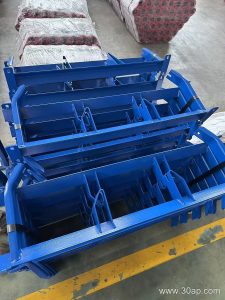
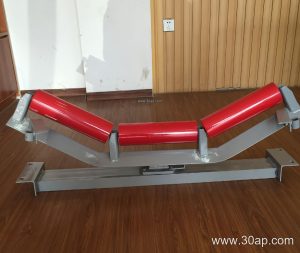
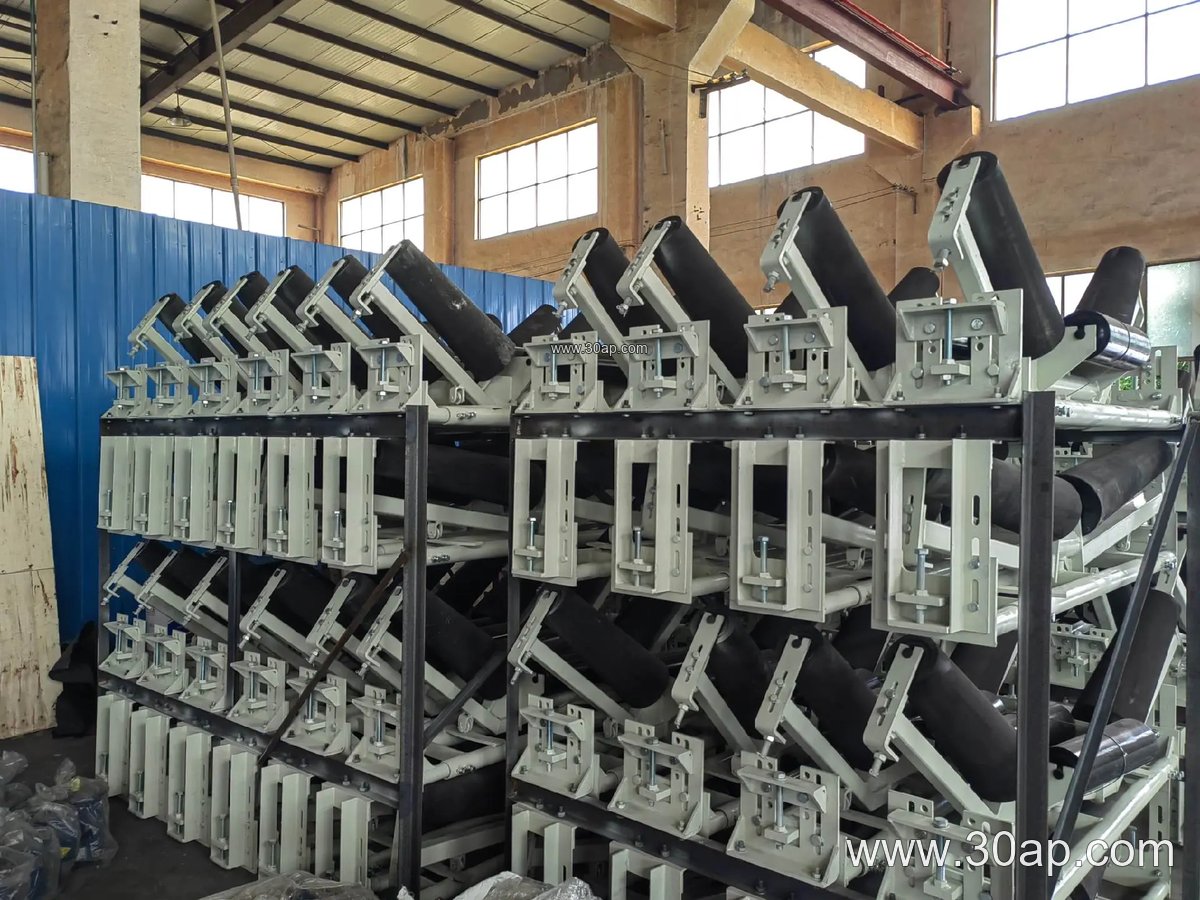
A trough idler bracket set is the steel support assembly that holds the carrying idlers in a troughed profile under a conveyor belt. Each set usually includes the base frame plus the angled brackets that position two or three idler rollers so the belt forms a trough. The set works together with the conveyor belt, the idler rollers and the conveyor pulley to keep material centered and moving smoothly. In a quarry, a cement plant or a power plant coal yard, this bracket set is one of the quiet parts of the system, but it decides how well the belt tracks and how long the idlers last.
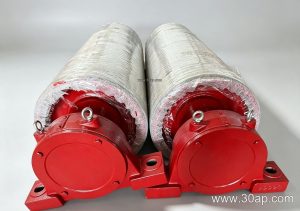
The same product is also called a troughing idler bracket set or a troughing roller support frame. These names describe the same assembly, not a different component. Drive pulleys, tail pulleys and bend pulleys are separate parts of the conveyor and are not interchangeable with the bracket set.
Construction and Common Materials
Most bracket sets are fabricated from angle steel, channel steel or folded steel plate, then drilled for mounting bolts and idler shafts. A typical set has a cross beam, two side brackets set at the trough angle, and mounting holes that match the idler frame spacing. The build should be rigid enough to resist vibration from lumpy material and to hold the trough angle without flexing.
Common reference values for trough idler bracket sets are shown below. These are typical ranges, not fixed rules, and final dimensions follow the conveyor design.
| Item | Common Reference |
|---|---|
| Belt width | B500, B650, B800, B1000, B1200, B1400, B1600, B1800, B2000 |
| Trough angle | 20, 30, 35 or 45 degrees |
| Idler diameter | Ø89, Ø108, Ø133, Ø159, Ø194 |
| Material | Angle steel, channel steel, folded steel plate |
A set might be described as B800, 35 degrees, Ø108, or B1200, 45 degrees, Ø133. These combinations are examples only. One belt width can work with more than one trough angle or roller diameter, and the correct match depends on the load, the belt and the idler layout.
Where It Fits in the Conveyor
The trough idler bracket set sits on the carrying side, between the head and tail of the conveyor. It supports the upper run where the belt carries material, while return brackets support the empty return strand. In a sand and gravel line, the set keeps the belt in a stable trough through the loading zone. In a limestone mine or an iron ore plant, heavier brackets help the belt handle abrasive rock. In a coal washing plant, the same frame type works with flame retardant and anti-static belting to keep the operation safe.
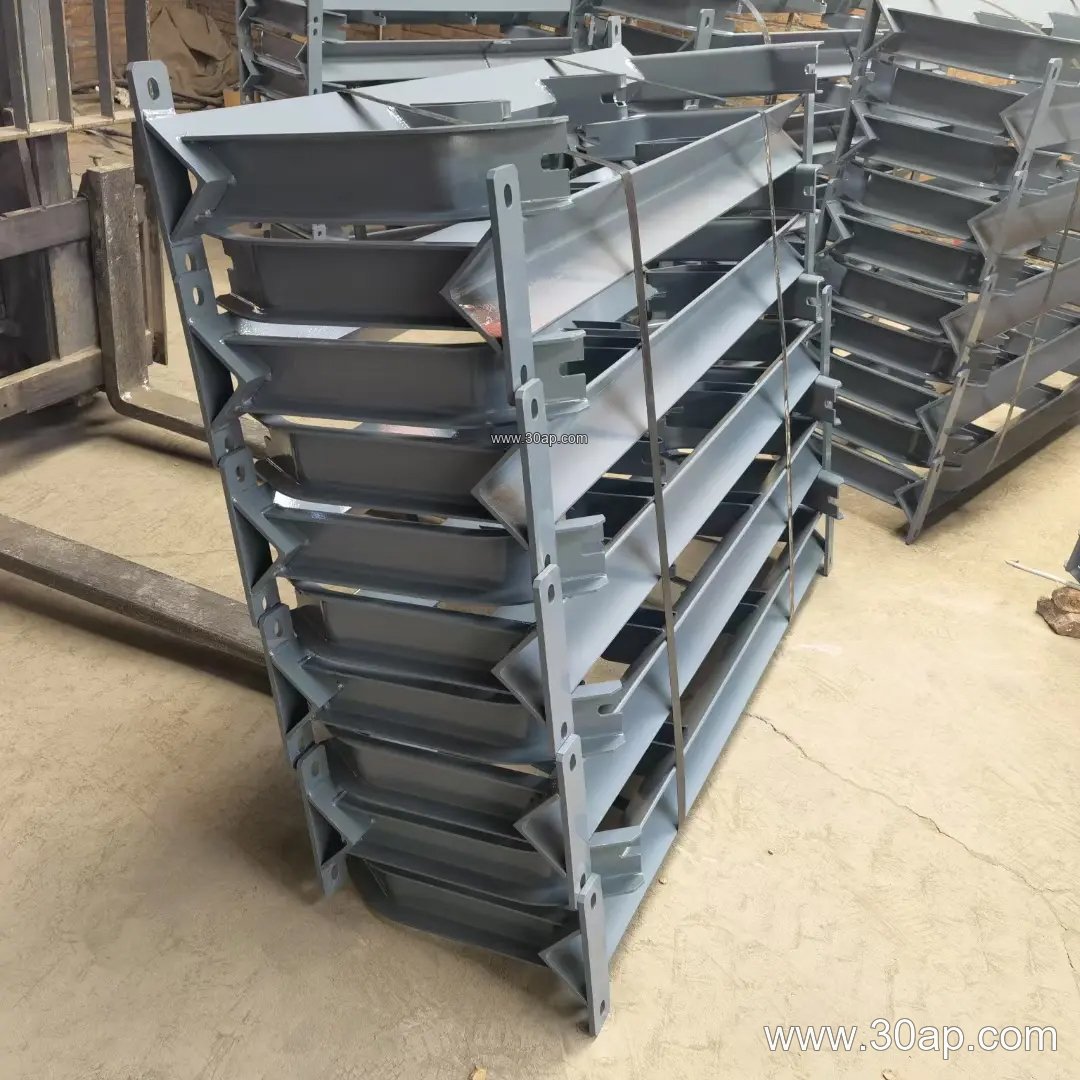
Bracket sets also pair with different belt constructions, such as EP conveyor belt, NN conveyor belt, steel cord conveyor belt or a multi-ply fabric core conveyor belt on shorter runs. The bracket itself does not change with the belt cover, but the load and the trough angle should match the belt stiffness and the material being carried.
Fixed, Adjustable and Transition Designs
Fixed brackets hold a set trough angle, often 35 degrees, and suit steady operating conditions. Adjustable brackets allow the angle to be changed between common values such as 20, 30, 35 and 45 degrees, which helps during commissioning or when material flow changes. Transition brackets are used near the head and tail to guide the belt from a flat profile into the trough without stress.
A forward-tilted bracket, usually about 1.5 to 2 degrees, can help belt tracking on some conveyors. Self-aligning and impact bracket variants are used where the belt wanders or where material drops onto the belt with force. Each of these is a different subtype, so the buyer should match the bracket to the actual duty rather than treating all brackets as the same.
Buyer Checklist
- Confirm belt width, trough angle and idler diameter before ordering.
- Check mounting hole spacing and cross beam length against the existing frame, since these change with belt width and trough angle.
- Match the steel thickness and finish to the site, especially in dusty, wet or corrosive areas.
- Confirm that the bracket set works with the selected idler roller type and the conveyor pulley layout.
- Plan regular inspection for loose bolts, bent brackets and worn idler seats.
For a fast quote, send the belt width, the required trough angle, the idler diameter and a sketch of the mounting points. A well-matched trough idler bracket set keeps the belt steady, reduces spillage and supports the longer service life of the idlers and the belt itself.