What Conveyor Bracket Fabrication Covers
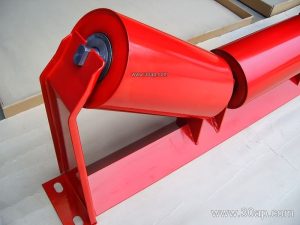
Conveyor bracket fabrication is the metalwork behind every stable idler station on a bulk handling line. A bracket, often called a conveyor support frame or idler bracket, holds the idler roller at the correct height, angle and spacing so the conveyor belt keeps its shape under load. In a quarry, a coal preparation plant or a cement kiln feed line, these steel parts carry the weight of the belt, the material and the rollers while resisting vibration and occasional impact.
The work is not a single item. A fabrication shop produces troughing brackets, transition brackets, return brackets, flat lower frames, V-return brackets, impact brackets and self-aligning brackets. Each has its own geometry, and each must match the belt width, trough angle and roller diameter chosen for the station.
How a Bracket Is Built
Most frames are cut and formed from angle steel, channel steel or folded plate. The fabrication sequence usually follows a simple path:
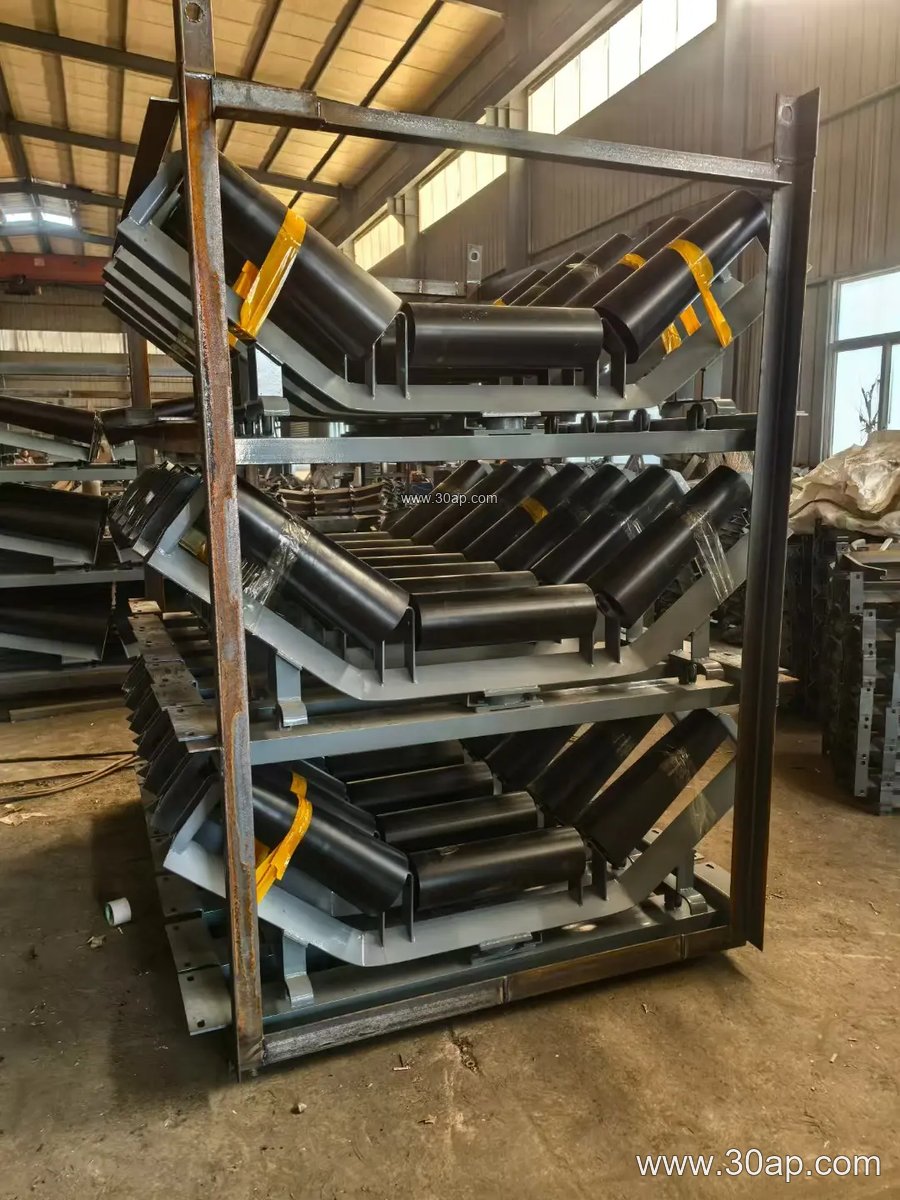
- Cutting the main beam, end plates and mounting pads to length.
- Drilling or punching holes for the idler roller shaft and the frame bolts.
- Bending the trough wings to the specified angle.
- Welding the assembly in a jig so the two sides stay symmetrical.
- Cleaning, then painting or galvanizing for the site environment.
Welding distortion is the main quality risk. A twisted bracket will tip the roller, wear one edge of the belt and shorten roller life. Good fabrication uses fixed jigs and checks hole pitch and wing angle before finishing.
Matching Brackets to Belt Width, Trough Angle and Roller Diameter
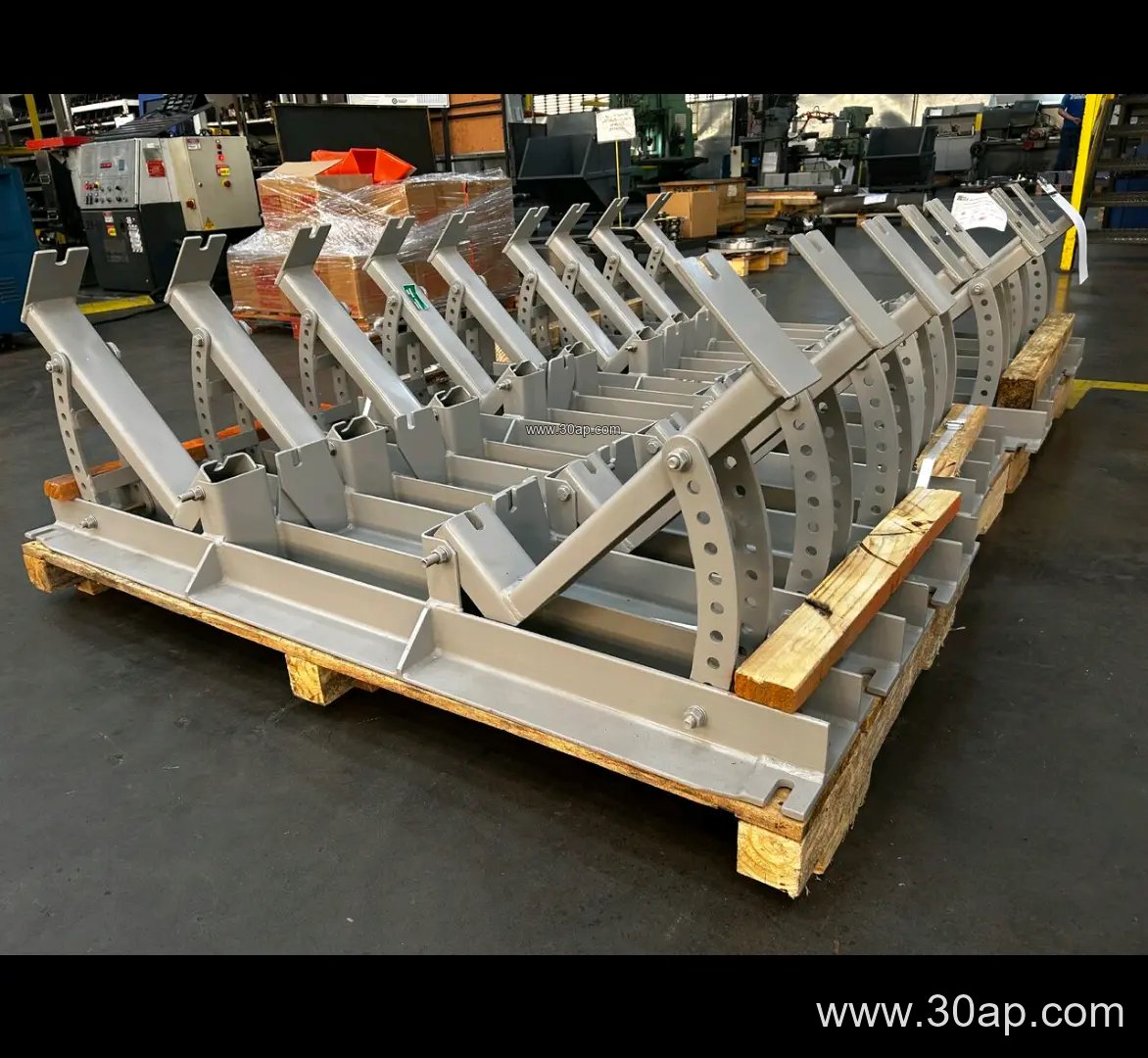
Trough angle is a design choice, not a fixed rule. Common values are 20, 30, 35 and 45 degrees. Adjustable brackets allow the wings to be set within a range, which helps when a plant handles several materials or wants to tune belt capacity later. Forward-leaning stations are usually set around 1.5 to 2 degrees to help belt tracking.
The table below shows typical reference combinations, not mandatory pairings.
| Belt width | Trough angle | Roller diameter | Typical station |
|---|---|---|---|
| B650 | 30 degrees | Ø89 | Troughing, return |
| B800 | 35 degrees | Ø108 | Troughing, transition |
| B1000 | 35 degrees | Ø108 / Ø133 | Troughing, impact |
| B1200 | 45 degrees | Ø133 | Heavy troughing |
| B1400 | 35 degrees | Ø133 / Ø159 | Main line troughing |
| B1600 | 45 degrees | Ø159 | High capacity troughing |
| B1800 | 35 degrees | Ø159 / Ø194 | Mining trunk line |
| B2000 | 45 degrees | Ø194 | Large tonnage stations |
Mounting hole spacing and crossbeam length change with belt width and trough angle, so a B1200 frame is not a scaled copy of a B800 frame. A bracket should be ordered against the actual roller shaft and belt width, not by width alone.
Where Fabricated Brackets Are Used
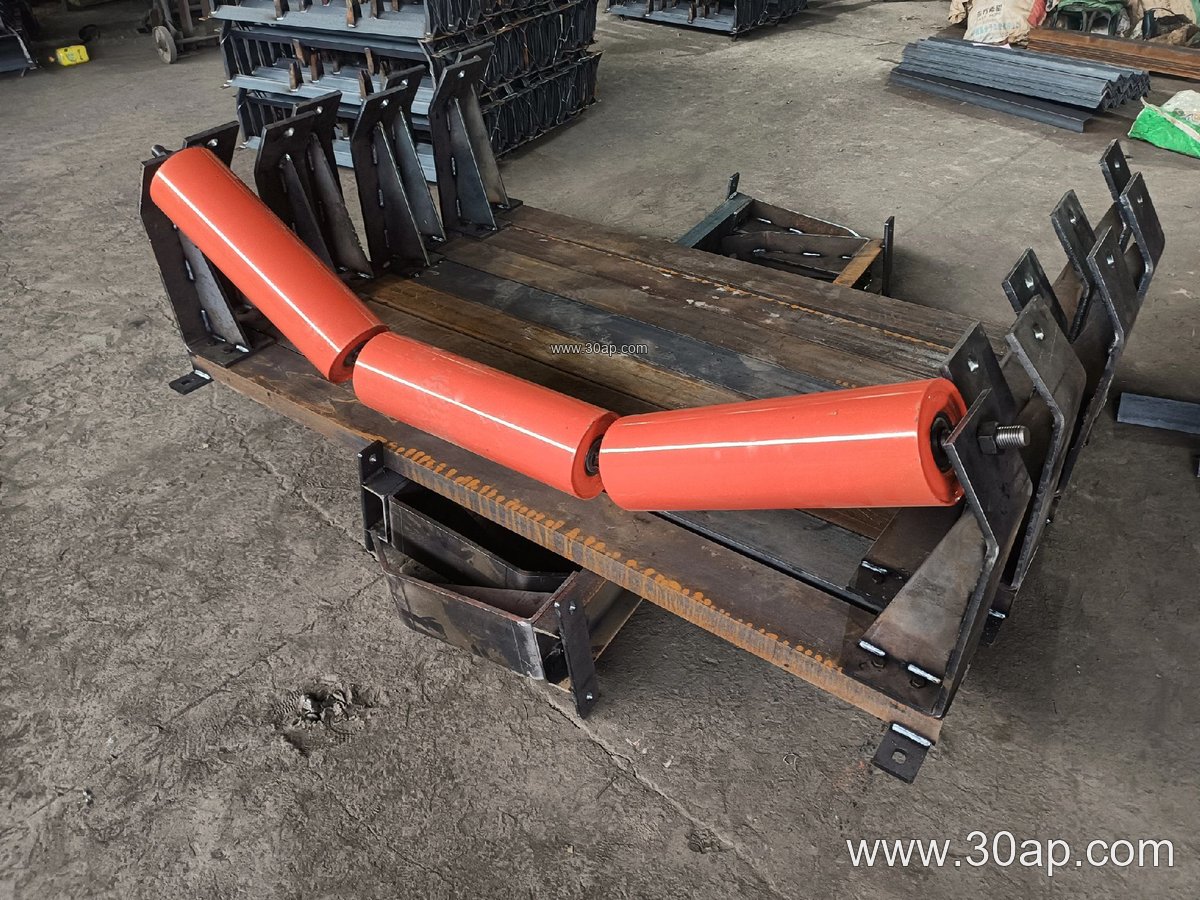
Two common settings show the range. In a limestone quarry, transition brackets ease the belt from the flat pulley face into the full trough, reducing edge stress and spillage at the crusher feed. In a power plant coal yard, impact brackets under the loading point protect the belt from lump coal, while V-return brackets keep the return run clean and centered.
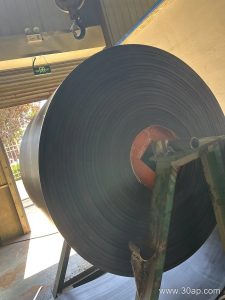
Bracket choice also follows the belt. A heavy-duty mining conveyor belt or a steel cord conveyor belt on a long trunk line needs stiffer frames and closer roller spacing than a short aggregate conveyor belt. Where a pipe conveyor belt or a corrugated sidewall belt is used, the bracket geometry is designed around the specific idler arrangement rather than a standard trough.
Buyer Checklist
- Confirm belt width, trough angle and roller diameter before quoting.
- State whether the frame is fixed or adjustable.
- Give the roller shaft size and fixing hole pattern.
- Specify material thickness and surface finish for the site.
- Ask for symmetry and weld checks, since frame twist shortens belt life.
Well-made conveyor bracket fabrication is quiet work, but it decides how smoothly the belt, idler roller and conveyor pulley run together. Ordering the right frame for the station is cheaper than replacing a worn belt later.