What a Heavy-Duty Lagged Pulley Does on the Line
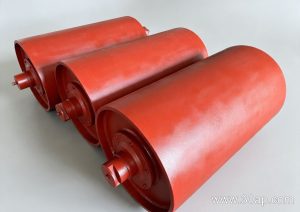
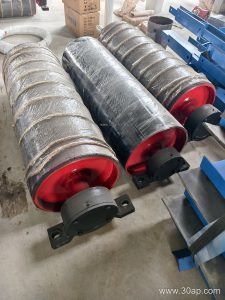
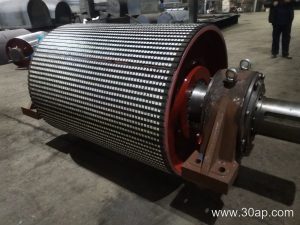
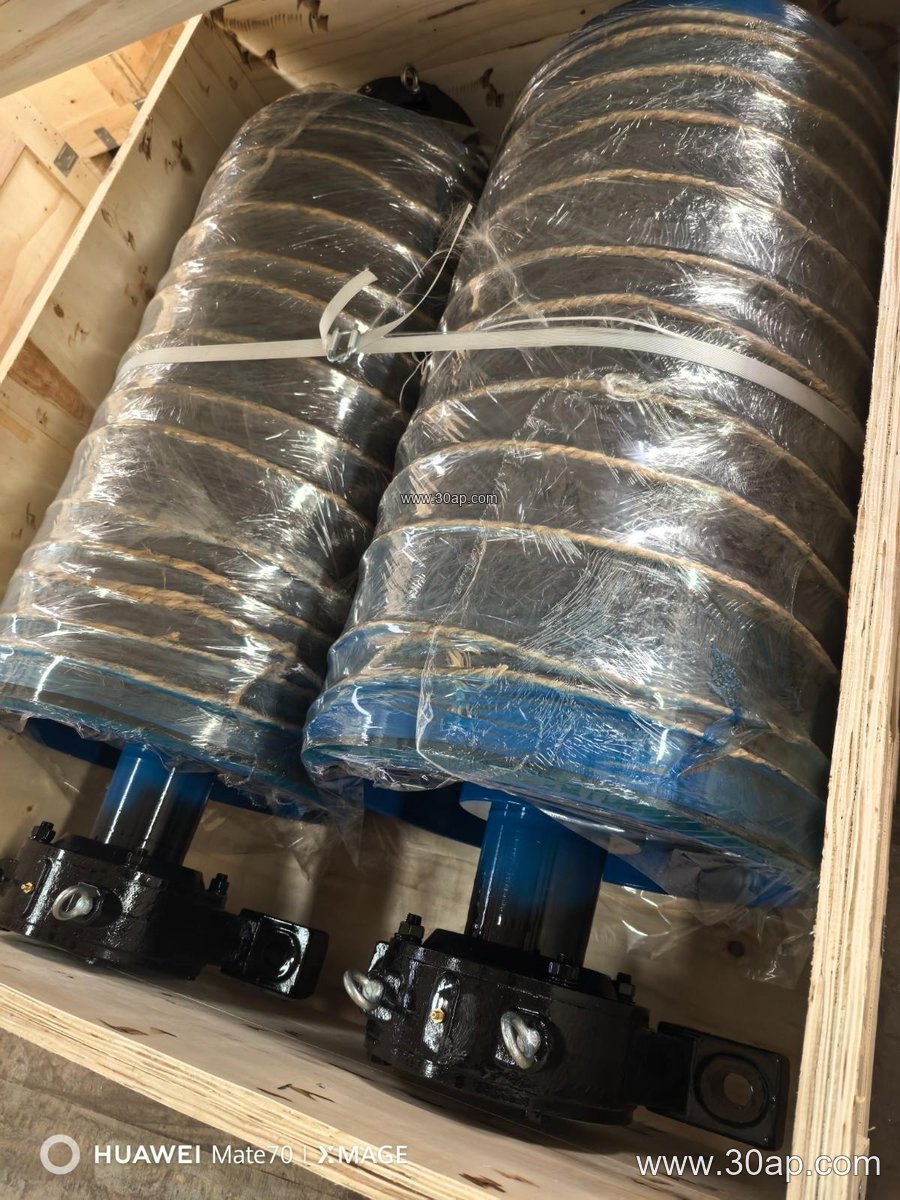
A heavy-duty lagged pulley is the rugged, rubber-covered drum that drives or redirects a conveyor belt in applications where loads are high and uptime matters. The lagging is the sacrificial rubber or ceramic layer bonded to the drum shell, and on a heavy-duty lagged pulley that layer is thicker, tougher and more carefully attached than on a light general-purpose drum. In a limestone quarry or a coal handling plant, this drum is often the difference between steady tonnage and a belt that slips under load.
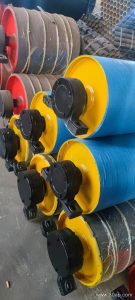
It is worth being precise about names. The same product appears in catalogs as a rubber-lagged conveyor pulley, a lagged drum pulley or a heavy-duty rubber lagged pulley. Drive pulleys, tail pulleys and bend pulleys are separate positions with separate jobs, and none of them is a substitute for another. A bend pulley only changes belt direction; a tail pulley mainly supports and returns the belt. This article stays with the heavy-duty lagged pulley itself.
Construction and the Lagging Surface
The core is a welded steel shell with end discs and a shaft, machined so the lagging sits true. Lagging is applied either as cast rubber, cold-bonded sheet, hot-vulcanized rubber, diamond-grooved rubber, herringbone rubber or ceramic tile. Each form has a purpose: plain rubber suits general grip, diamond and herringbone patterns shed water and fines, and ceramic tiles resist abrasion where the belt is coarse and wet.
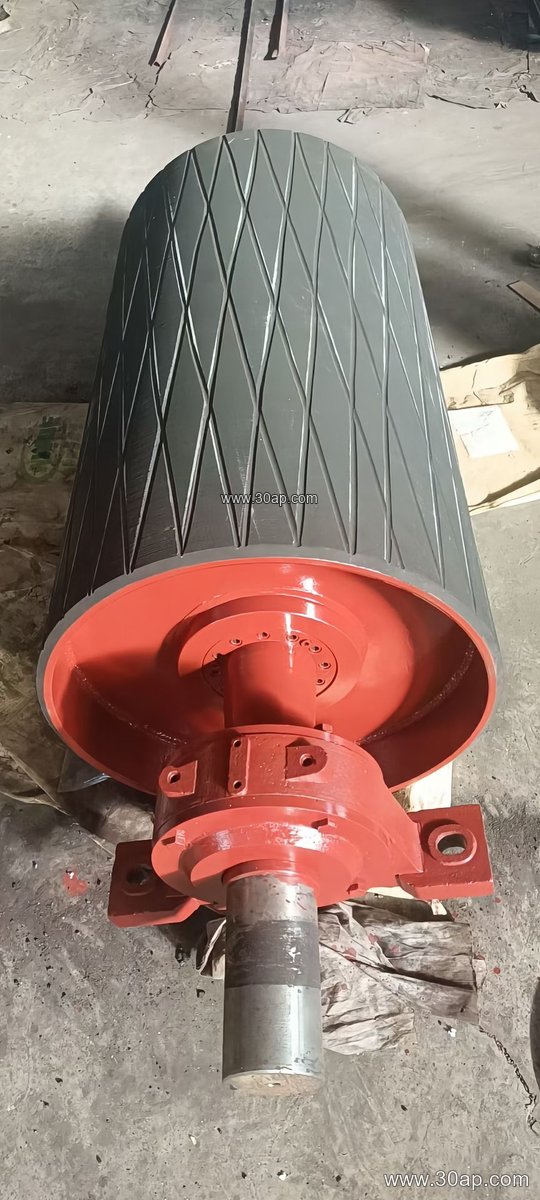
Common lagging thicknesses are 8, 10, 12, 15 and 20 mm. Heavier drives usually take the thicker end of that range, but the choice should follow belt tension and torque, not habit. Shell diameters commonly range from Ø200 to Ø1800, and shaft diameters from Ø50 to Ø200, all determined by calculated torque and bearing loads. There is no rule that ties one belt width to one shaft size; an engineer must size the shaft from the actual duty.
Where It Fits in Bulk Handling
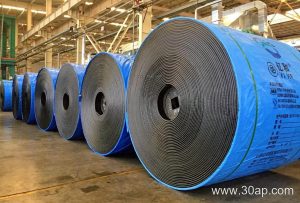
You will find heavy-duty lagged pulleys in iron ore and copper ore plants, cement clinker lines, power station coal conveying, port bulk terminals and aggregate crushing circuits. They also appear in tunnel muck removal and fertilizer handling. In these places the belt itself is usually a serious component, whether an abrasion resistant conveyor belt, a heat resistant conveyor belt near kilns, or a flame retardant conveyor belt underground. A well-lagged drive drum protects that belt by reducing slip and the heat that comes with it.
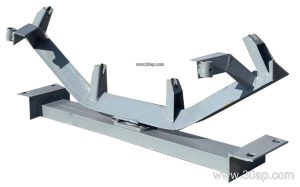
Surrounding equipment matters too. A conveyor pulley works with the conveyor belt, idler roller sets, and conveyor bracket assemblies in a single mechanical system. If the drum is under-specified, the belt and rollers suffer first.
Sizing Notes for Buyers
Face width normally exceeds belt width so the belt is fully supported. Typical pairings include B800 with a face around 950 mm, B1200 near 1400 mm, and B1600 near 1800 mm. Diameter is chosen from belt speed, wrap angle and tension, so a B1200 drum might be Ø800 in one plant and Ø1000 in another. Treat the table below as reference, not as a fixed catalog promise.
| Belt width | Typical face width | Common drum diameter | Common lagging |
|---|---|---|---|
| B500 | about 600 mm | Ø250 to Ø400 | 8 to 12 mm |
| B800 | about 950 mm | Ø400 to Ø630 | 10 to 15 mm |
| B1000 | about 1150 mm | Ø500 to Ø800 | 10 to 15 mm |
| B1200 | about 1400 mm | Ø630 to Ø1000 | 12 to 15 mm |
| B1400 | about 1600 mm | Ø800 to Ø1250 | 15 to 20 mm |
| B1600 | about 1800 mm | Ø800 to Ø1400 | 15 to 20 mm |
When ordering, confirm the pulley position, belt width, shell and shaft dimensions, lagging type and thickness, bearing type, and whether the drum is a drive, tail, take-up or snub position. Also state the belt family it will run against, since an EP conveyor belt, a steel cord conveyor belt and a PVC or PVG belt each load the drum differently.
Maintenance and Long-Term Value
Inspect lagging for wear, cracking and lifted edges during scheduled shutdowns. Worn lagging reduces grip, invites slip and shortens belt life. Keep the drum clean, check bearing temperature and confirm the shaft alignment. A heavy-duty lagged pulley chosen with correct lagging thickness and pattern usually outlasts a lighter drum several times over, which is why buyers in cement, coal and ore operations treat it as a wear part worth specifying carefully.