What the Main Drive Pulley Does
The main drive pulley is the powered drum at the head of a belt conveyor that transfers torque from the gearbox or motor to the conveyor belt. As the belt wraps around this drum, friction between the pulley surface and the belt cover pulls the loaded strand forward. In many plants the same component is called the head pulley or drive drum, and those names describe the same product in its driven position. It should not be confused with a tail pulley, which redirects the returning belt, or with a bend pulley that changes belt direction without driving the system.
Because the main drive pulley carries the full pull of the conveyor, its design has to match the belt width, the working tension, the duty cycle and the environment. A quarry line running abrasive rock, a coal handling system in a power plant and a cement plant clinker circuit each place different demands on the drum, its lagging and its bearings.
Construction and Surface Options
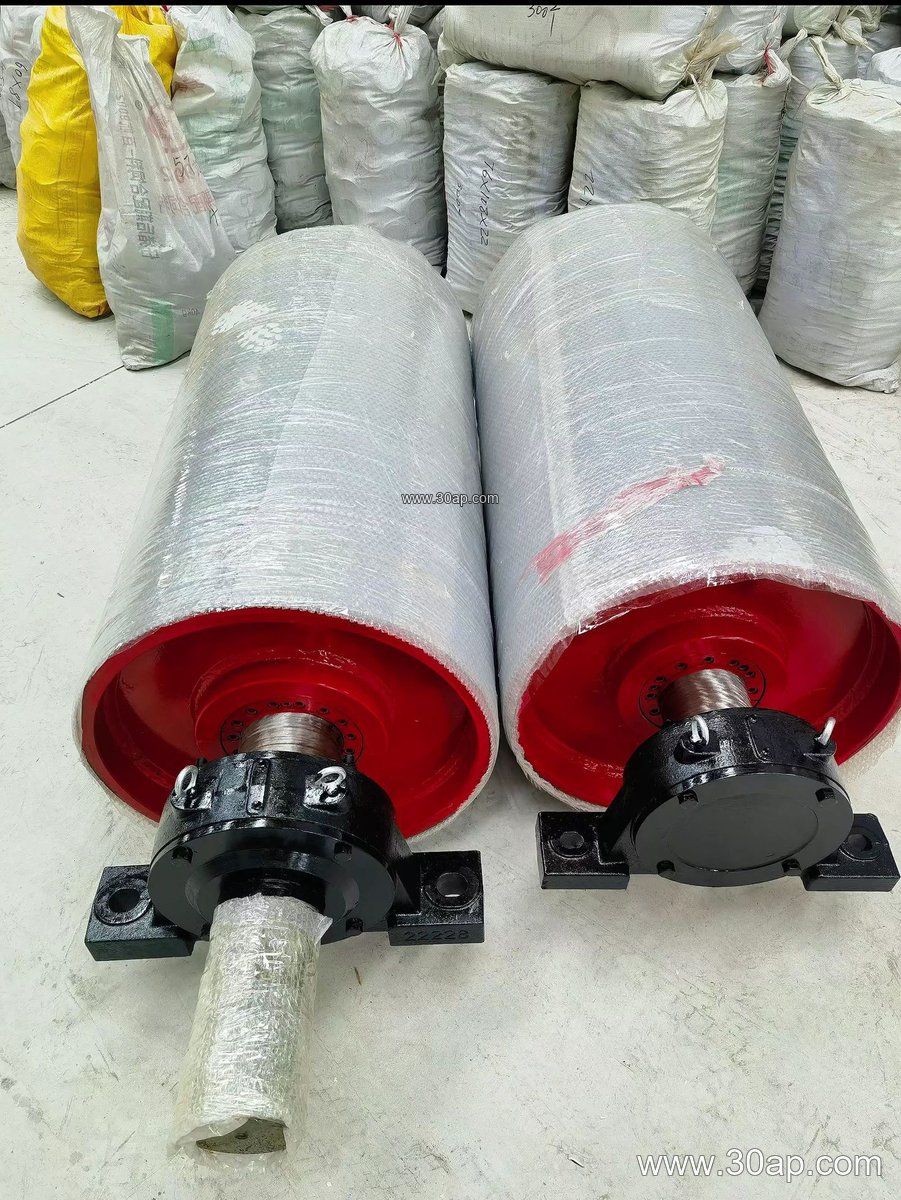
A typical drive drum is built from a rolled steel shell, welded end discs, a shaft and bearing housings, often mounted on a conveyor bracket or frame. The shell diameter and face width are selected together with the belt specification. Common face widths run slightly wider than the belt, for example B800 with roughly 950 mm face, B1000 with about 1150 mm and B1200 with around 1400 mm. Diameter choices such as Ø500, Ø630, Ø800 or Ø1000 depend on belt speed, tension and the allowable wrap angle rather than on belt width alone.
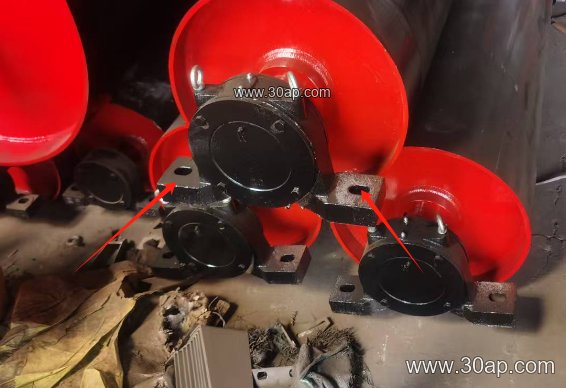
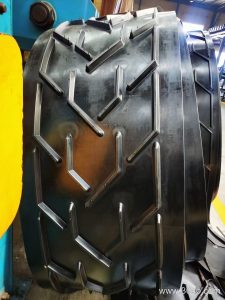
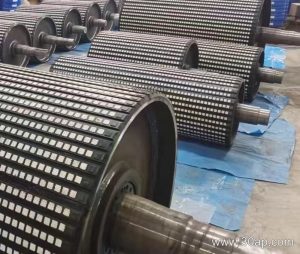
The surface is usually lagged to raise friction and protect the shell. Available forms include plain finish, cold-bonded rubber, hot vulcanized rubber, diamond grooving, chevron grooving and ceramic lagging. Lagging thickness is commonly 8, 10, 12, 15 or 20 mm. A high abrasion resistant conveyor belt in a stone crushing line may pair well with thicker rubber lagging, while a coal mining conveyor belt in a flame retardant conveyor belt installation needs lagging that meets the same fire safety expectations. Shaft diameter is not fixed by belt width; it is determined from torque and load, with common sizes such as Ø80, Ø100, Ø120, Ø140 or Ø160 appearing across different duty levels.
Where It Fits in the Conveyor
The drive drum sits at the discharge end in most systems, so material leaves the belt just after the wrap. In underground coal mining conveyor belts, the drive may be arranged at the return end or in an intermediate booster station, and the drum then works with a take-up pulley to hold tension. In a port ship loading conveyor belt, the main drive pulley often runs continuously at high speed, making balance and bearing quality important.
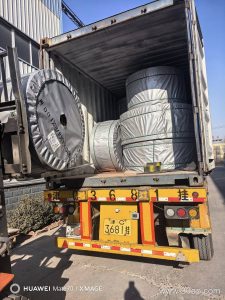
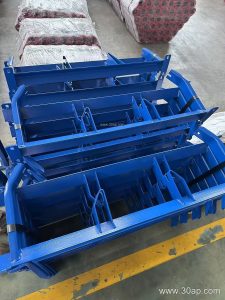
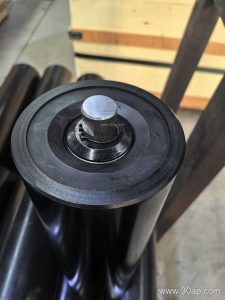
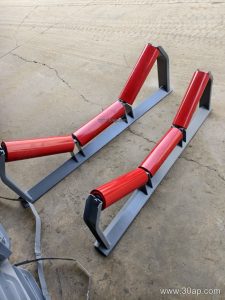
Around the drum, the belt is supported by idler rollers on the carrying and return sides, and the whole assembly is fixed to a conveyor bracket. The drive drum must be aligned with these components so the belt trains correctly and does not drift. A misaligned pulley can wear the edge of an EP conveyor belt or a steel cord conveyor belt long before the cover reaches its normal service life.
Matching the Pulley to the Belt
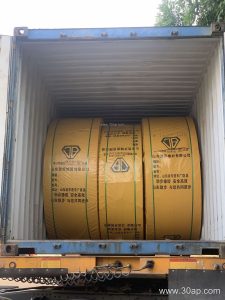
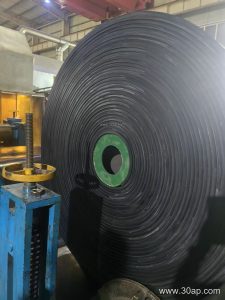
Selection starts with the belt type and tension. A multi-ply fabric core conveyor belt and an NN conveyor belt usually need a moderate drum diameter, while a high strength steel cord conveyor belt such as ST1600 or ST2000 requires a larger diameter to limit bending stress in the cords. Heat resistant conveyor belt service in a cement plant may call for heat-tolerant lagging and bearing protection, and an oil resistant conveyor belt in a recycling line should not be paired with lagging that swells on contact with oil.
Useful reference combinations include B800 × Ø500, B1200 × Ø1000 and B1400 × Ø800, but these are examples, not fixed rules. The same belt width can work with several drum diameters depending on speed, tension and wrap angle. Buyers should provide the belt width, belt type, calculated tension, shaft torque, pulley position and ambient conditions so the supplier can confirm the shell, shaft and lagging together.
Buyer Checklist
- Confirm whether the required item is truly the main drive pulley, not a tail or bend pulley.
- State belt width, belt construction and the conveyor’s rated tension.
- Specify lagging form and thickness, for example diamond rubber at 12 mm or ceramic lagging at 15 mm.
- Provide shaft diameter required by the gearbox coupling and bearing arrangement.
- Describe the site: quarry, coal wash plant, power plant coal yard, cement kiln line or port terminal.
- Ask for balancing, runout and inspection records rather than assuming them.
For related conveyor components such as conveyor pulley assemblies, idler roller sets and conveyor bracket frames, visit zhongyitransmission.com and review the matching drawings before ordering. A correctly specified main drive pulley keeps the belt tracking, protects the belt cover and reduces unplanned stops in bulk material handling.