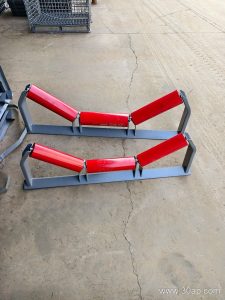
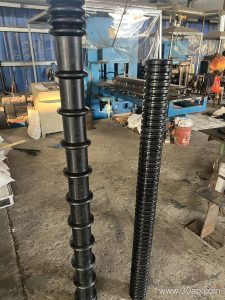
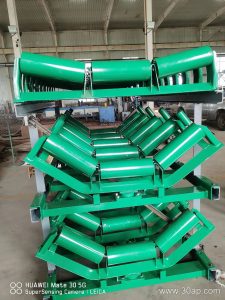
What a Guide Pulley Does
A guide pulley is a small-diameter roller mounted at strategic points along a conveyor to keep the belt tracking correctly and to prevent it from wandering off the pulleys. Unlike drive, tail, or bend pulleys that carry the main tension and transmit power, the guide pulley acts as a correction and support element. It is often installed near the head or tail, before the belt enters a critical pulley, or on long spans where misalignment tends to develop. In quarry, cement, and power plant applications, a well-placed guide pulley can reduce edge damage and extend the service life of the conveyor belt.
Construction and Common Configurations
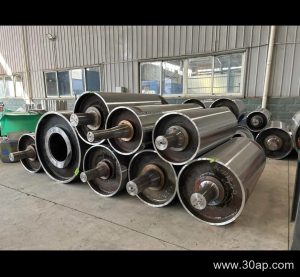
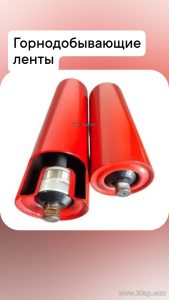
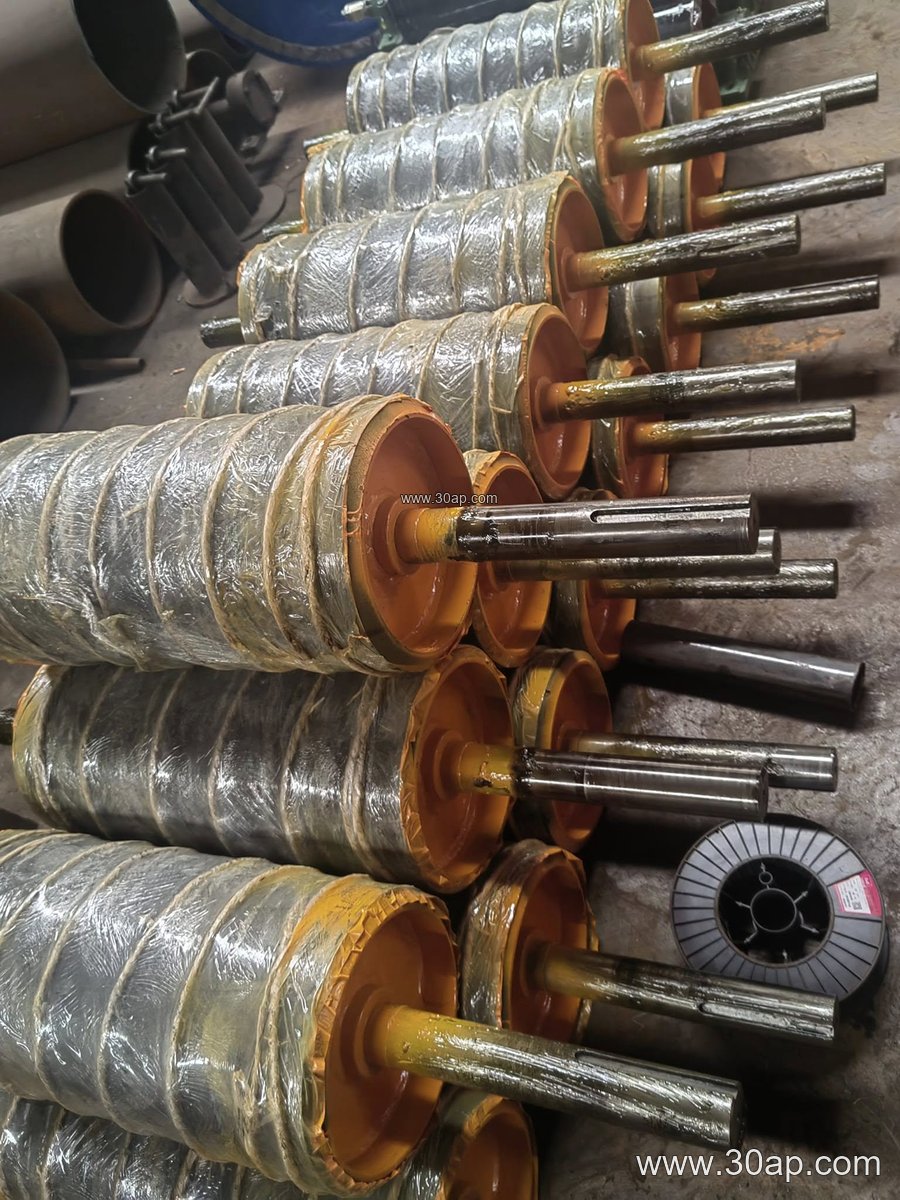
Most guide pulleys use a steel tube body with welded end discs and a through shaft. The surface may be plain, rubber-lagged, or fitted with a special profile to improve grip or self-cleaning. Common surface options include plain finish, cold-bonded rubber, hot-vulcanized rubber, diamond lagging, and ceramic lagging. Lagging thickness is often 8, 10, 12, 15, or 20 mm depending on the duty. The pulley face width is usually slightly wider than the belt width to allow for minor misalignment; for example, a B800 belt often runs on a pulley with about 950 mm face width, while a B1200 belt may use a 1400 mm face. Diameters are typically smaller than main pulleys, with Ø200, Ø250, Ø315, and Ø400 being common for guide duty, though larger sizes may appear in heavy-duty mining conveyors. Shaft diameters are selected by torque and load, not by belt width alone, and common shaft sizes range from Ø50 to Ø200.
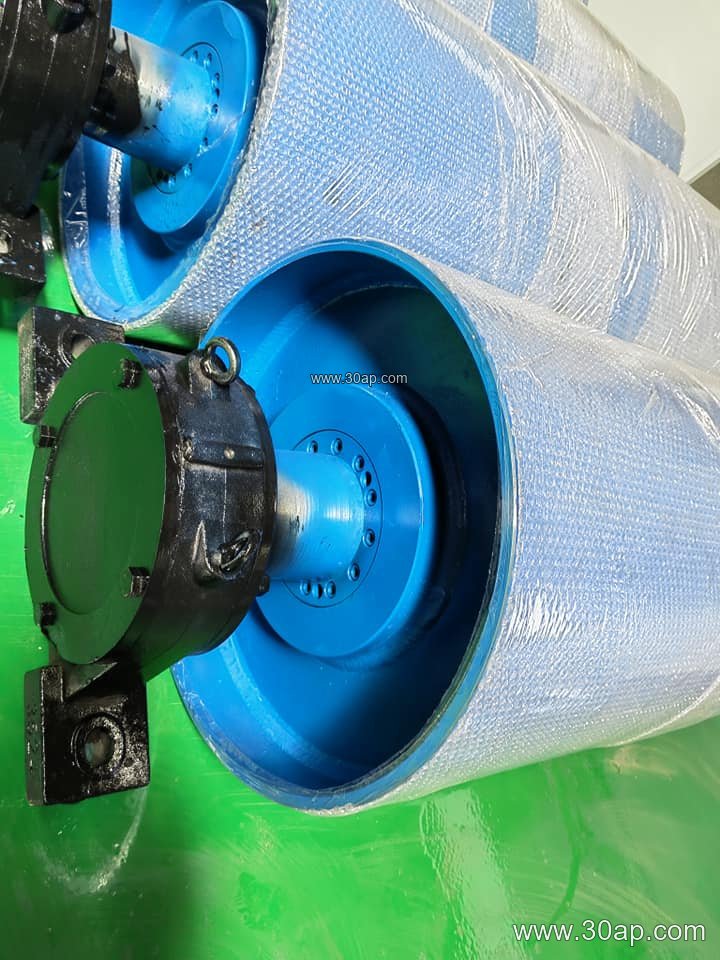
Where Guide Pulleys Are Used
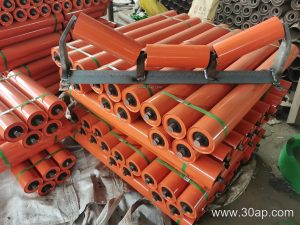
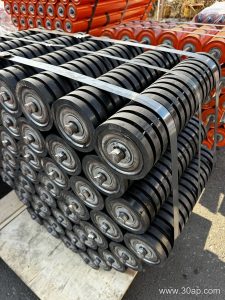
Guide pulleys appear in a wide range of bulk material handling systems. In a limestone quarry or aggregate line, they help keep the belt centered as it leaves the crusher and enters the screening section. In a coal washing plant or underground coal mining conveyor, they work alongside idler rollers and conveyor brackets to maintain belt alignment in confined spaces. Cement plants use them on clinker and raw meal conveyors where heat and dust are present, while power plant coal handling systems rely on them to protect the belt from rubbing against structural components. Port bulk terminals and iron ore operations also use guide pulleys on long overland conveyors to correct tracking before the belt reaches the drive pulley.
Matching the Guide Pulley to the Belt and the Job
Selection starts with the belt type and the material being carried. A heavy-duty mining conveyor belt or a steel cord conveyor belt may need a larger shaft and a robust lagging to resist impact and abrasion. A fabric core conveyor belt such as an EP conveyor belt or NN conveyor belt is more sensitive to edge loading, so the guide pulley should be positioned to avoid sharp contact. In food or clean applications, a plain or easily cleaned surface may be preferred, while in dusty quarry or cement service, a self-cleaning profile or ceramic lagging can reduce buildup. The guide pulley should not be confused with a bend pulley or a tail pulley; each has a distinct role, and mixing them up can lead to poor tracking or premature belt wear.
Installation and Maintenance Notes
Proper mounting is critical. The guide pulley should be aligned square to the belt centerline and supported by a sturdy conveyor bracket. Regular checks for bearing play, lagging wear, and buildup on the pulley face help prevent tracking problems. In severe environments such as underground coal mining or wet aggregate processing, sealed bearings and corrosion-resistant finishes are advisable. When replacing a guide pulley, verify the shaft diameter and face width against the original design, and confirm that the new unit matches the belt width and speed. Keep a spare on hand for critical conveyors to minimize downtime.
Buyer Checklist
- Confirm the belt width (e.g., B650, B1000, B1400) and choose a pulley face width slightly larger.
- Select a diameter that fits the space and the required correction angle; Ø250 to Ø400 is common for guide duty.
- Specify the lagging type and thickness based on material abrasiveness and environmental conditions.
- Verify shaft diameter and bearing size against the actual load and torque, not just belt width.
- Check compatibility with the conveyor belt, idler roller, and conveyor bracket layout.
For more information on conveyor components, visit our site at www.example.com/guide-pulley or explore our range of conveyor pulleys and related equipment.