What an Intermediate Bend Pulley Does
On a long conveyor run, the belt does not always travel in a straight line from the tail to the head. It may need to dip under a loading point, rise over an obstacle, or wrap around a tensioning carriage. An intermediate bend pulley is the component that guides the belt through these changes of direction without driving it. It is a non-drive conveyor pulley placed at an intermediate point along the belt path, typically between the head and tail, where the belt must be redirected or kept in firm contact with another pulley.
Unlike a drive pulley, which transmits torque to the belt, or a tail pulley, which serves as the terminal return point, the intermediate bend pulley only changes belt direction. It is also distinct from a take-up pulley, although a bend pulley may sit near a tensioning arrangement. These subtypes are not interchangeable, and specifying the correct one matters for both function and safety.
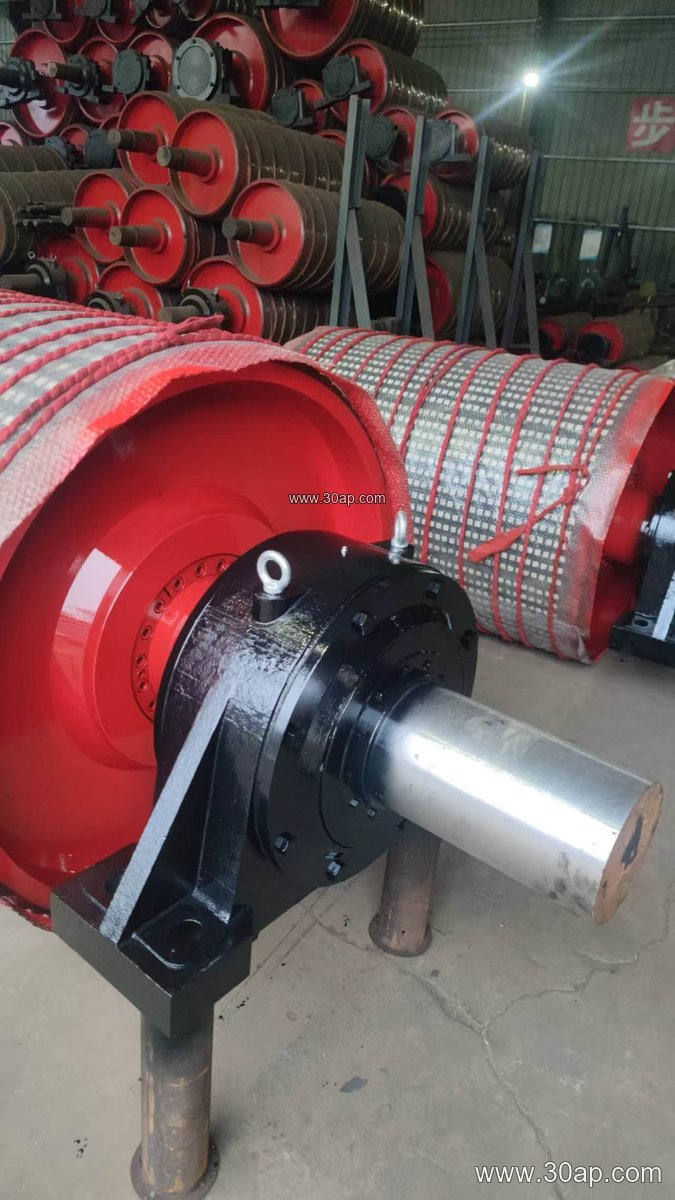
Construction and Surface Options
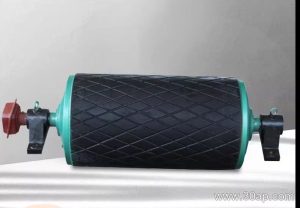
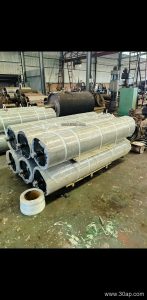
Most intermediate bend pulleys are built around a welded steel drum with dished or flat end plates, mounted on a through shaft with bearing housings at each end. The shell is machined to keep runout low, since belt tracking depends on a true cylindrical surface. Common shell diameters range from Ø200 to Ø800 for this duty, with larger sizes used where belt tension and wrap angle are high. Shaft diameters such as Ø80, Ø100, or Ø120 are typical, but the final size is determined by torque and bearing load, not by belt width alone.
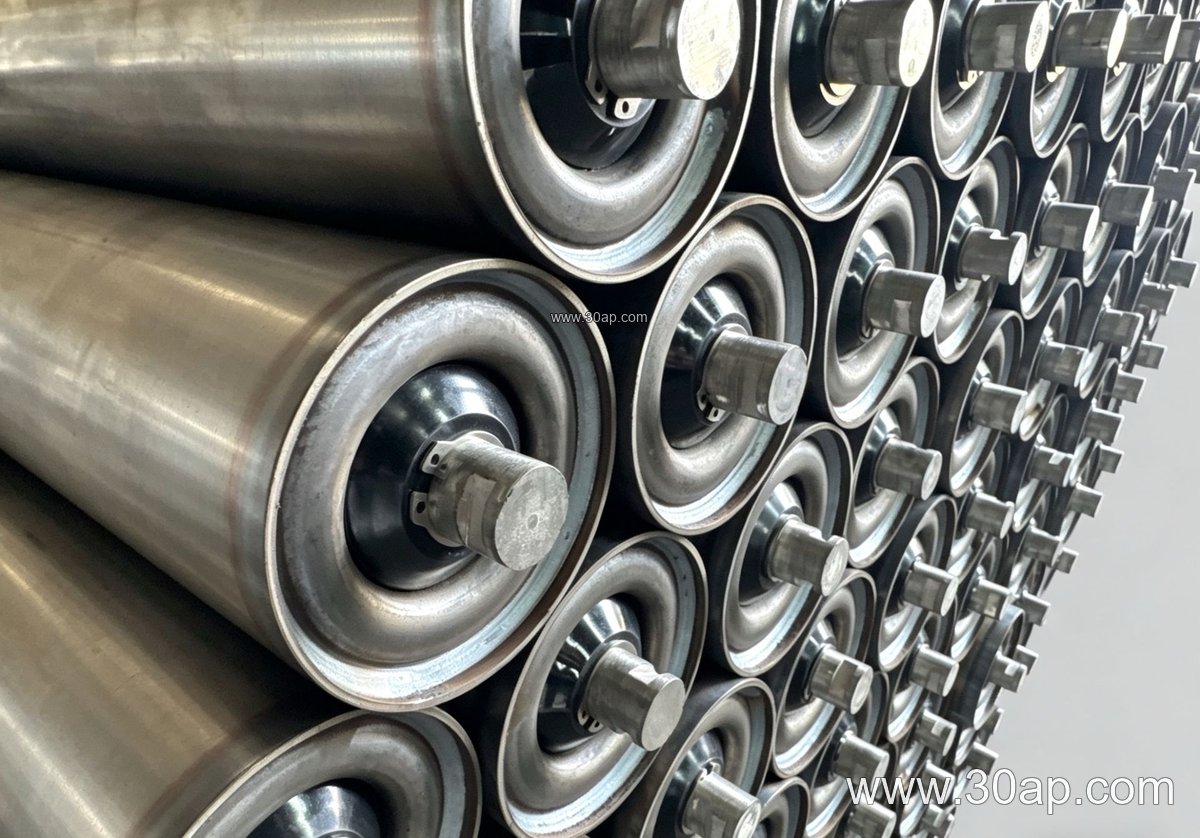
Surface finish is selected to match the belt and the environment:
- Plain finish for general redirect duty where slip is not a concern.
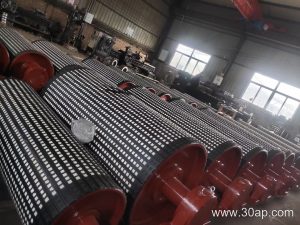
- Diamond or herringbone lagging to improve traction and shed water in wet or dusty service.
- Rubber lagging in cold-bonded or hot-vulcanized form, with thickness commonly 8, 10, 12, 15, or 20 mm.
- Ceramic lagging for high-tension, high-abrasion positions.
The pulley face width is usually slightly greater than the belt width. For example, a B800 belt is often paired with a roughly 950 mm face, and a B1200 belt with about 1400 mm. These are reference proportions, not fixed rules; a B1000 pulley may reasonably be built at Ø500 or Ø630 depending on wrap angle and tension.
Where It Fits in Bulk Handling
Intermediate bend pulleys appear in many industries where conveyors must follow site terrain. In a limestone quarry, they redirect the belt around a screening tower. In a coal washing plant or power station coal yard, they guide the return strand beneath a transfer chute. Cement plants use them on clinker and raw meal lines, while port bulk terminals rely on them to route long overland conveyors around stockpile areas.
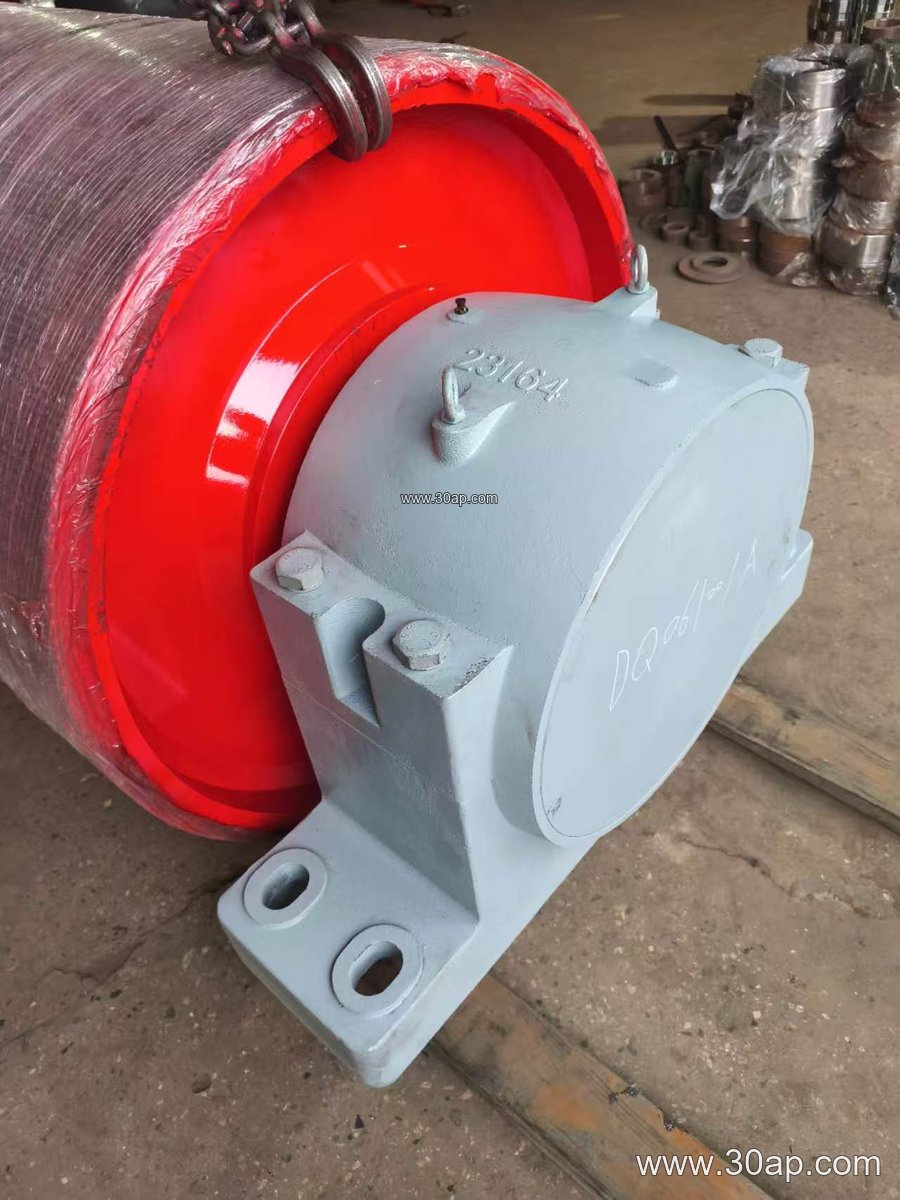
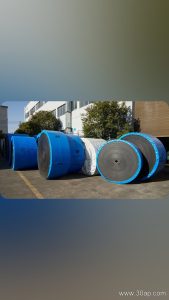
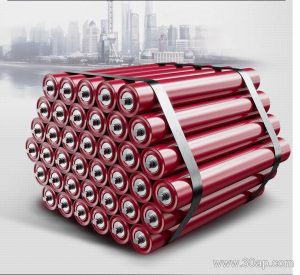
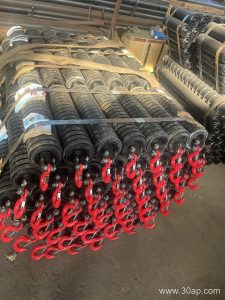
The pulley works together with the conveyor belt, the idler roller sets on the carrying and return strands, and the conveyor bracket that anchors the bearing housings. A properly aligned bend pulley keeps the belt centered and reduces edge wear, which is particularly important with a heavy-duty mining conveyor belt or an abrasion resistant conveyor belt carrying sharp ore.
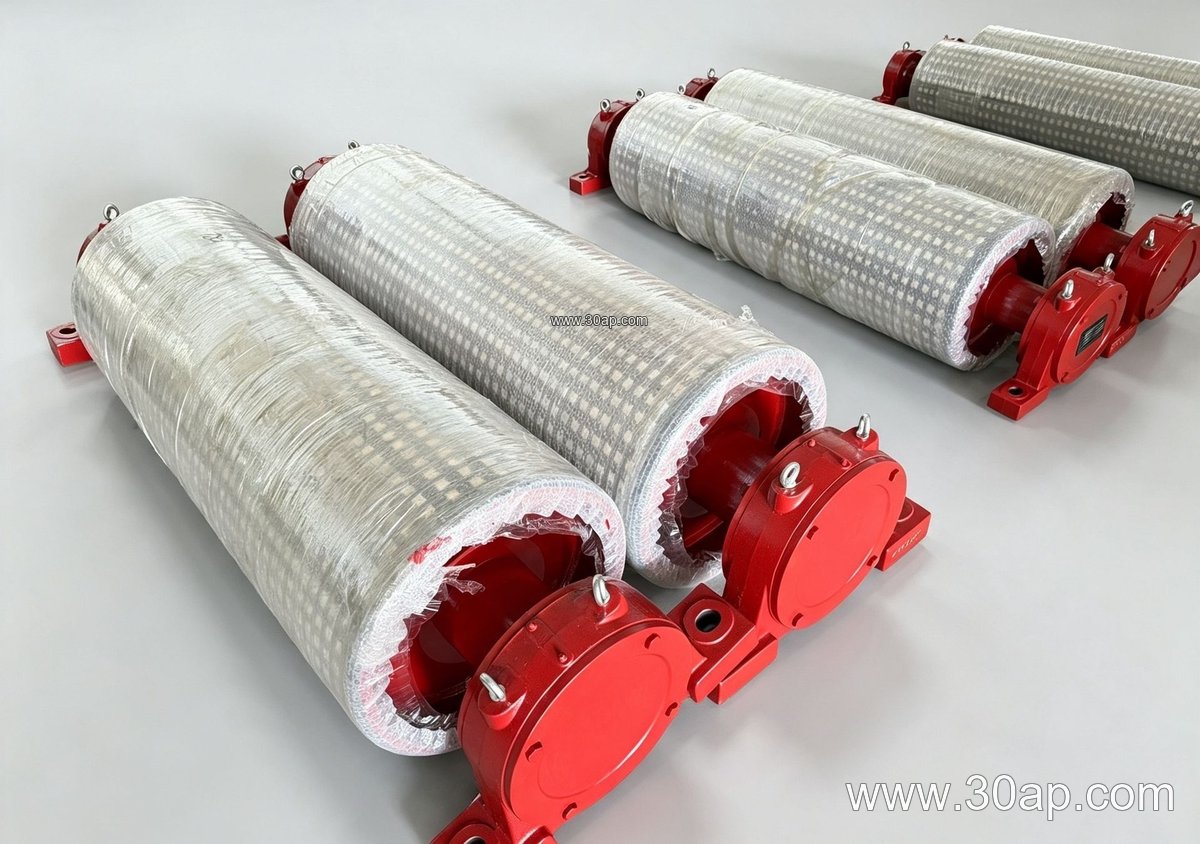
Matching the Pulley to the Belt
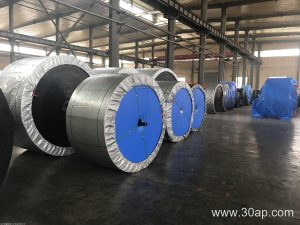
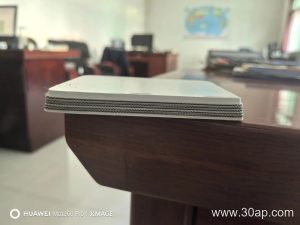
Belt construction influences pulley choice. A steel cord conveyor belt is stiff and tolerates larger diameters and higher tensions, while a multi-ply fabric core conveyor belt such as an EP conveyor belt or NN conveyor belt may call for a smaller diameter to maintain flexibility. In underground coal mining, a flame retardant conveyor belt or PVG conveyor belt is common, and the bend pulley should be specified with compatible lagging and anti-static considerations.
| Belt width reference | Typical pulley face | Common shell diameter examples |
|---|---|---|
| B650 | about 750 mm | Ø315, Ø400 |
| B800 | about 950 mm | Ø400, Ø500 |
| B1000 | about 1150 mm | Ø500, Ø630 |
| B1200 | about 1400 mm | Ø630, Ø800 |
| B1400 | about 1600 mm | Ø800, Ø1000 |
These combinations are illustrative. A B1200 × Ø1000 arrangement is valid in some layouts, while the same belt width may use Ø630 elsewhere. Buyers should provide belt tension, wrap angle, belt type, and shaft load to the pulley manufacturer rather than selecting by width alone.
Buyer Checklist
- Confirm the pulley is a bend (redirect) unit, not a drive or tail pulley.
- State belt type and construction, for example EP1000 or ST1250, since stiffness affects minimum diameter.
- Provide wrap angle and belt tension so bearing and shaft sizes can be calculated.
- Choose lagging based on moisture, dust, and slip risk; plain finish is often adequate for light duty.
- Check that face width suits the belt and that the bearing brackets match the conveyor frame.
- Plan for periodic inspection of lagging wear, bearing condition, and alignment.
For a reliable installation, treat the intermediate bend pulley as part of the whole conveyor system. Its diameter, lagging, and shaft should be confirmed against the belt, the idler roller layout, and the surrounding structure before ordering. For related conveyor components and technical guidance, visit belt-conveyor-pulley.com and review the pulley and belt options available for your site.