What a Ø108 Conveyor Idler Is and Where It Fits
A Ø108 conveyor idler is a roller assembly with a nominal shell diameter of 108 mm, widely used to support the conveyor belt on the carrying and return sides of a bulk material handling system. In everyday plant language this component is also called an idler roller or carrying roller, and it belongs to the same family as other troughing and return idlers. It is not a drive pulley, tail pulley, or bend pulley, and it should never be confused with those components when specifying a conveyor. The Ø108 size sits in the middle of the common idler range, making it a practical choice for medium to wide belt conveyors in mines, quarries, cement plants, power stations, and port terminals.
Construction and Main Parts
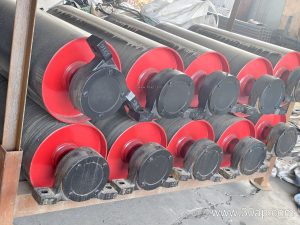
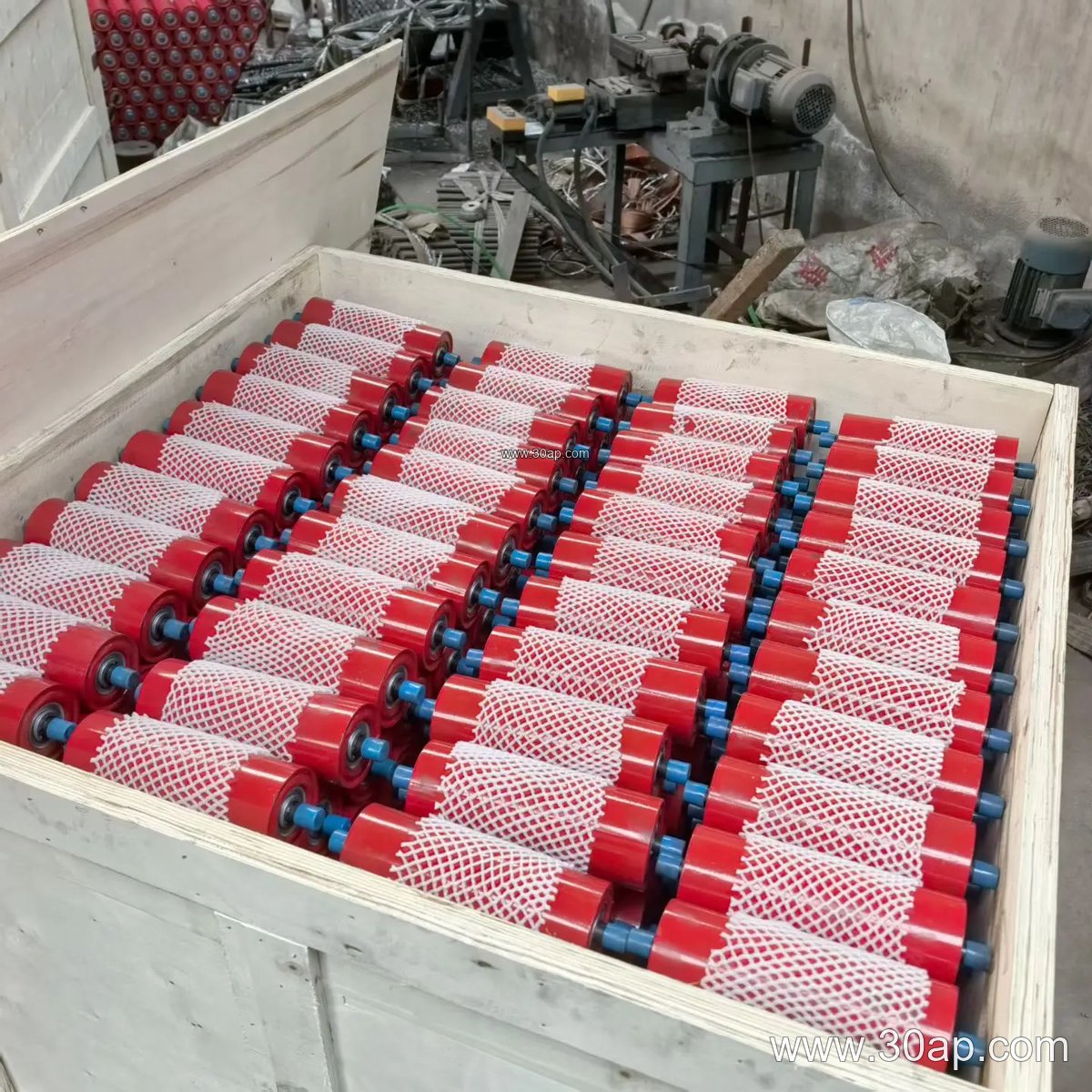
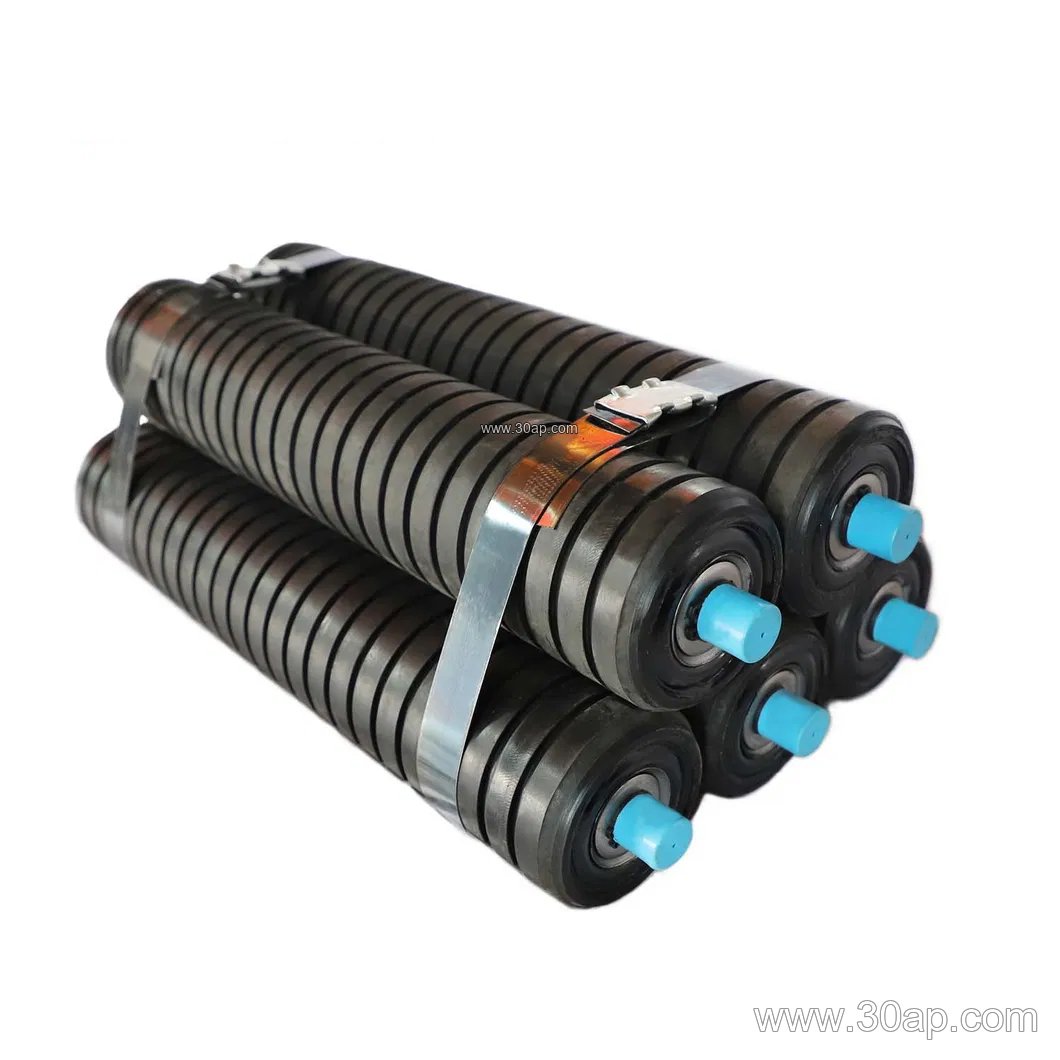
A typical Ø108 conveyor idler consists of a steel tube shell, a shaft, bearing housings, and a sealing arrangement. The shell is usually made from steel pipe, and the surface may remain plain steel or be covered with rubber rings for impact absorption. Bearing sizes commonly used in this class include 6204, 6205, 6305, 6306, 6308, and 6310, but the correct bearing must be selected by the idler manufacturer according to load, speed, and sealing design rather than by roller diameter alone. The seals are critical in dusty environments such as coal mining, limestone crushing, and cement grinding, where fine particles can shorten bearing life. A well-made idler uses labyrinth seals or similar multi-stage protection to keep grit out and grease in.
Common Arrangements and Belt Width Reference
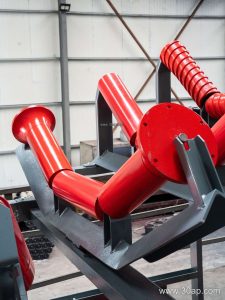
The Ø108 idler is often supplied in three-roll troughing sets for the carrying side, with side rollers inclined at 20, 30, 35, or 45 degrees. It can also appear as a single-roll flat return idler, a V-return idler, or a transition idler near the loading point. Roller length changes with belt width, trough angle, and set design. The following table gives common examples only; actual dimensions should be confirmed by the conveyor designer.
| Belt Width | Typical Roller Length for Three-Roll Troughing Set |
|---|---|
| B500 | about 200 mm |
| B650 | about 250 mm |
| B800 | about 315 mm |
| B1000 | about 380 mm |
| B1200 | about 465 mm |
| B1400 | about 530 mm |
| B1600 | about 600 mm |
| B1800 | about 670 mm |
| B2000 | about 750 mm |
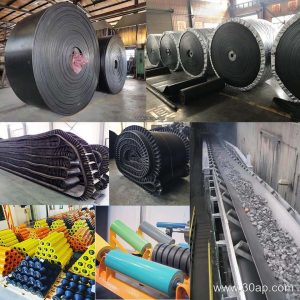
These figures are not fixed pairings. Side rollers and center rollers can differ, and a wide belt may use a different idler diameter depending on load and speed. A Ø108 idler can be combined with a rubber conveyor belt, an EP conveyor belt, or a steel cord conveyor belt, provided the belt tension and load are within the idler’s design capacity.
Where Ø108 Idlers Are Used
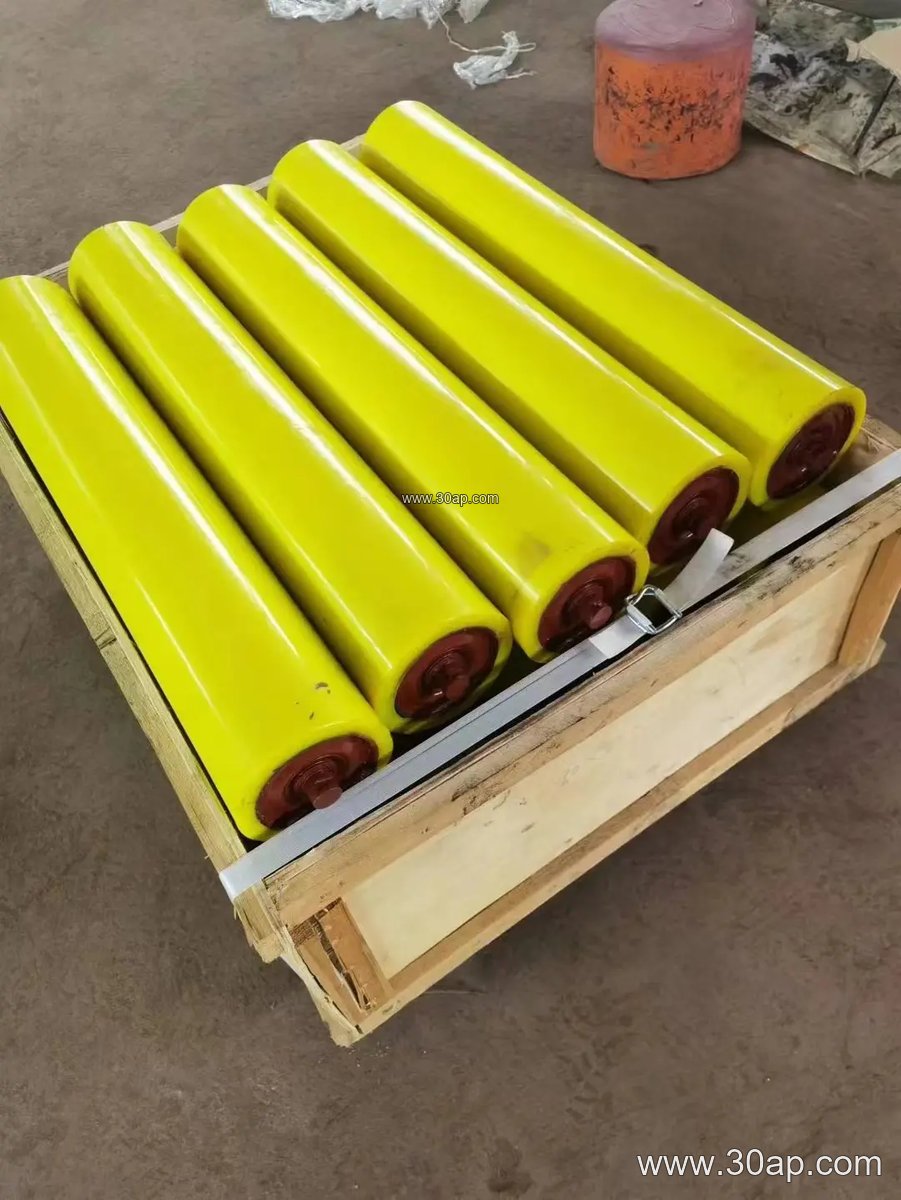
In a quarry or aggregate plant, Ø108 idlers support crusher conveyor belts and screen feed belts that carry rock and gravel. In a coal handling system, they are common on underground mining conveyor belts and surface coal conveyor belts, where flame retardant conveyor belts and anti-static conveyor belts are often required. Cement plants use them on clinker and raw material belts, while power plants rely on them for coal feeding lines. The same idler size can be found in iron ore and copper ore operations, where abrasion resistant conveyor belts and heavy-duty mining conveyor belts handle sharp, dense material. Port terminals and ship loading systems also use Ø108 idlers on long overland conveyors.
Selection and Maintenance Notes for Buyers
Buyers should match the idler to the actual belt width, trough angle, load, and environmental conditions rather than choosing by diameter alone. For dusty or wet locations, specify sealed bearings and check the housing protection. For impact zones below a crusher or transfer chute, consider impact idlers or rubber-ring idlers instead of standard troughing idlers. For return strands, V-return or flat return idlers may be more suitable. Regular inspection of idler rotation, shell wear, and seal condition helps prevent belt tracking problems and premature belt damage. Keep a small stock of common idler sizes and conveyor brackets to reduce downtime, and record the roller length and bearing number for each conveyor section. More information on matching idlers with rubber conveyor belts and conveyor pulleys is available from our product pages.