What a Parallel Idler Bracket Does
A parallel idler bracket is a support component that holds conveyor idler rollers in line with the belt path. In a troughing arrangement, the bracket carries the centre roller flat while the side rollers sit at the chosen trough angle. In a return run, a flat or V-shaped parallel bracket keeps the return idler roller steady beneath the belt. The part is simple, but it decides how evenly the conveyor belt sits, how freely the idler roller turns, and how quickly a maintenance team can replace a worn roller.
Buyers often call this part a conveyor bracket or idler support bracket. These refer to the same family of mounting hardware. The parallel version is distinguished by its straight, level mounting face rather than a tilted or offset one, which makes it a common choice for the centre position of a three-roller set and for flat return support.
Construction and Materials
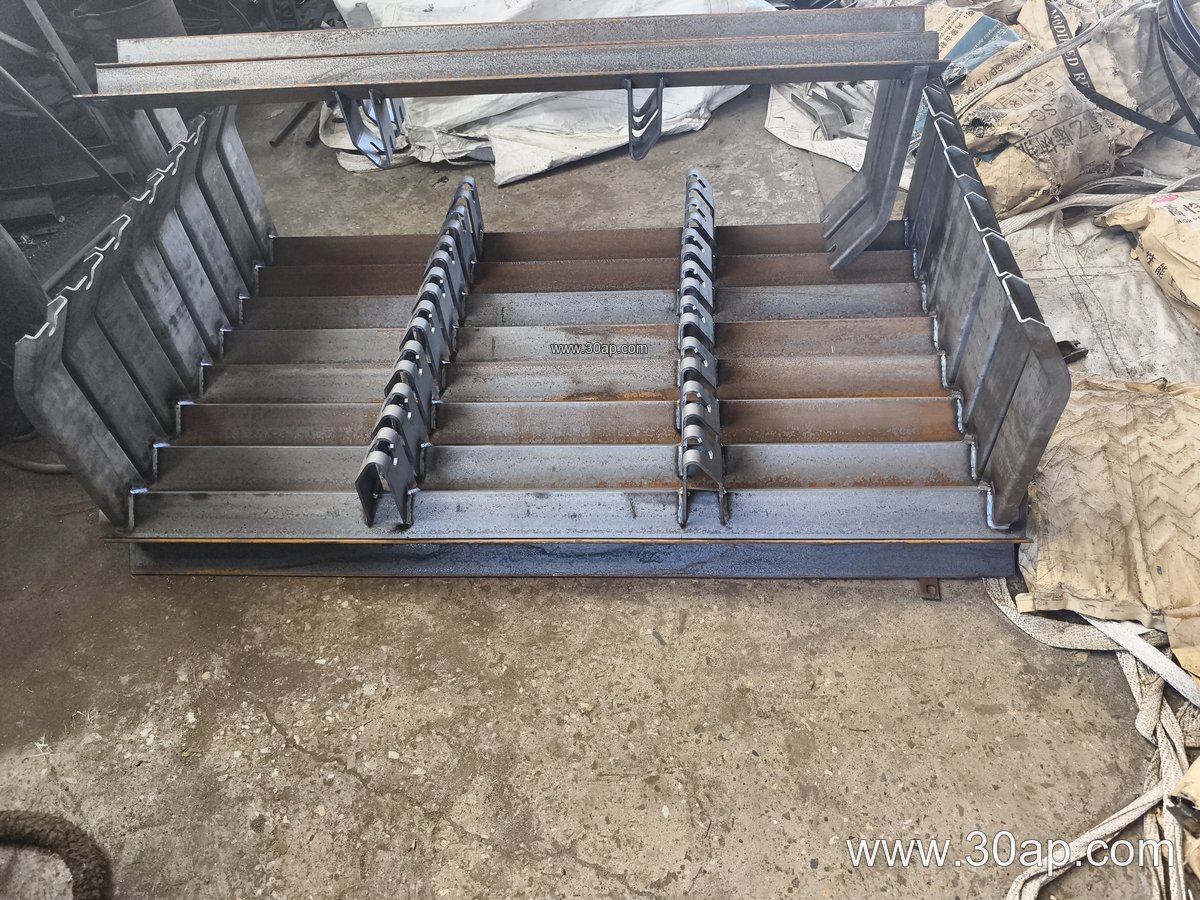
Most parallel idler brackets are fabricated from angle steel, channel steel, or folded steel plate. The frame is drilled or punched with mounting slots that match the idler shaft ends. Welds are usually continuous along the load-bearing edges, and the finished part may be painted or galvanised depending on the environment.
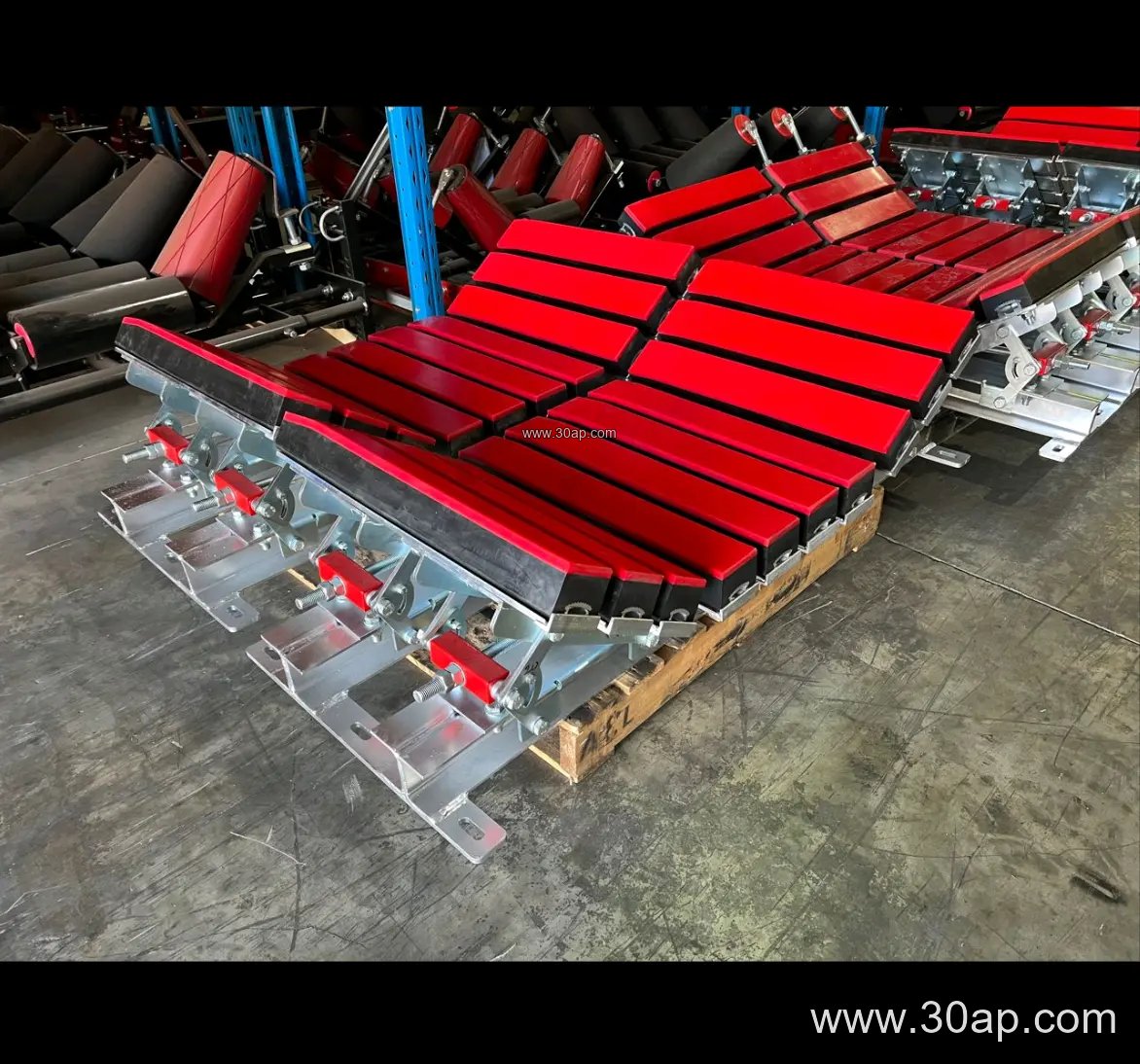
Because these brackets sit under a moving belt, they need stiffness more than decoration. A bracket that flexes will let the idler roller tilt, and a tilted roller can pull the belt to one side. For a quarry or cement plant with dust and vibration, a heavier gauge frame usually pays for itself in longer service between changeouts.
Where It Fits in the Conveyor
Parallel brackets appear in several places. On the carrying side, they support the centre idler of a troughing set. On the return side, they hold flat return idlers or the centre of a V-return assembly. In a crusher discharge or screen feed area, a parallel bracket may be paired with impact idlers to cushion falling rock.
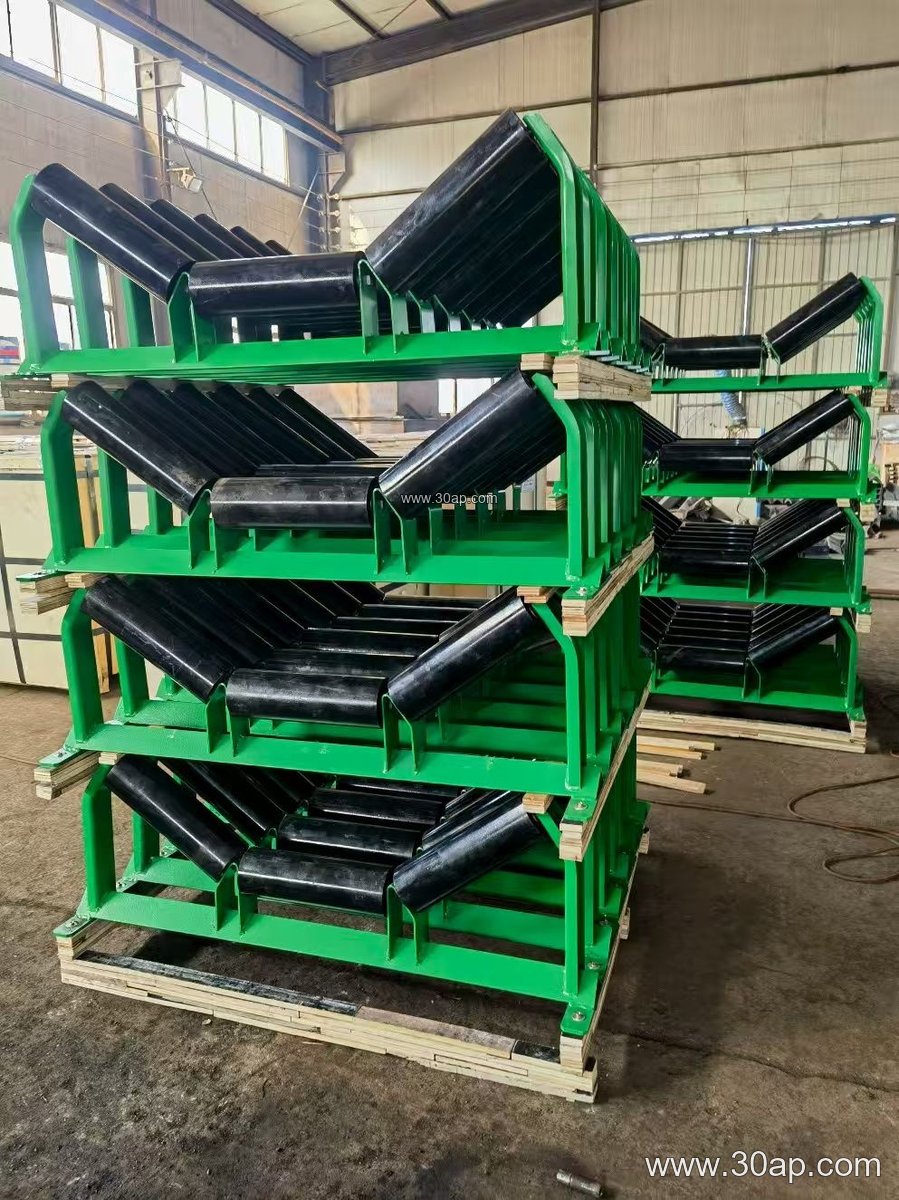
Typical sites include quarries, limestone mines, cement plants, power plant coal handling, and sand and gravel lines. In these places, a heavy-duty mining conveyor belt moves abrasive material at high tonnage, so the bracket must keep the idler roller aligned through constant load. A steel cord conveyor belt may need firmer support because the belt itself is stiffer and less forgiving of a sagging roller.
Common Dimensions and Configurations
Bracket dimensions are usually matched to belt width, trough angle, and roller diameter. The values below are reference examples, not fixed rules; the actual hole spacing and crossbeam length are determined by the conveyor design.
| Belt Width | Trough Angle | Roller Diameter | Typical Use |
|---|---|---|---|
| B650 | 30 degrees | Ø89 | Light aggregate lines |
| B800 | 35 degrees | Ø108 | Quarry and sand plant |
| B1000 | 35 degrees | Ø133 | Cement and coal handling |
| B1200 | 45 degrees | Ø133 | High-capacity bulk material |
| B1400 | 35 degrees | Ø159 | Ore and heavy-duty mining |
| B1600 | 45 degrees | Ø159 | Port and power plant |
| B1800 | 35 degrees | Ø194 | Large tonnage transfer |
Adjustable versions allow the trough angle to be set between 20 and 45 degrees. Forward-leaning brackets, often about 1.5 to 2 degrees, are a separate subtype used for belt training, and they should not be confused with the parallel centre bracket. Likewise, a bend pulley bracket and a tail pulley bracket serve different positions and are not interchangeable with an idler bracket.
Selection and Maintenance Notes
- Match the bracket to the idler shaft size and the actual mounting hole spacing, not only to the belt width.
- Confirm the trough angle required by the conveyor design before ordering a fixed bracket.
- Check that the frame material suits the site; dusty cement plants and wet coal yards have different corrosion concerns.
- Inspect bolts and welds during routine idler changes, since a loose bracket can wear the belt edge.
- Keep a small stock of common sizes to reduce downtime when a roller seizes.
For a conveyor moving an abrasion resistant conveyor belt or a heat resistant conveyor belt, the bracket itself is rarely the wear item, but it must hold the roller firmly so the belt cover is not rubbed by a misaligned idler. A flame retardant conveyor belt used in underground coal mining also depends on straight roller alignment to avoid edge damage and frictional heat.
At www.beltconveyorparts.com, parallel idler brackets are discussed alongside idler rollers, conveyor pulleys, and conveyor belts so that buyers can size the whole support set together. A second reference point is www.conveyorbeltguide.com, where belt width and roller diameter combinations are explained without treating any one size as universal.
Buyer Checklist
Before ordering, record the belt width, trough angle, roller diameter, shaft end type, and the distance between mounting holes. Ask whether the bracket is fixed or adjustable, and whether the finish suits the site. A parallel idler bracket is a low-cost part, but the wrong one can cost far more in belt tracking problems and unexpected stoppages.