What an Ore Conveyor Pulley Does on a Bulk Handling Line
An ore conveyor pulley is the rotating drum that turns, supports, and guides the belt on a bulk material conveyor. In a crushing circuit, a copper mine, or a limestone quarry, the pulley transfers drive torque into the belt and keeps the loaded strand tracking correctly. It is a different component from the conveyor pulley used at the tail or a bend position, and it should be specified as the drive or head drum when that is the duty it performs.
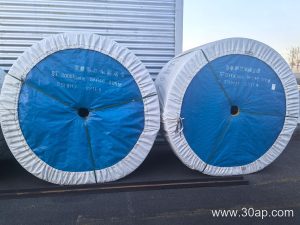
The working environment is usually abrasive and dusty. Ore Conveyor Belt grades such as abrasion resistant conveyor belt or heavy-duty mining conveyor belt run over these drums, so the pulley shell, lagging, and shaft must tolerate grit, impact, and continuous load. In a coal preparation plant or a power plant coal yard, a flame retardant conveyor belt may be paired with the same style of drum, but the lagging and bearing seals still need to suit the local dust and moisture.
Construction Details That Matter
A typical ore conveyor pulley is built from a rolled steel shell, end discs, a through shaft, bearing housings, and a lagging layer. The shell is machined for concentricity, and the shaft is sized by torque and radial load rather than by belt width alone. Common shaft diameters include Ø80, Ø100, Ø120, Ø140, Ø160, and Ø180 mm, but the final value comes from the drive calculation.
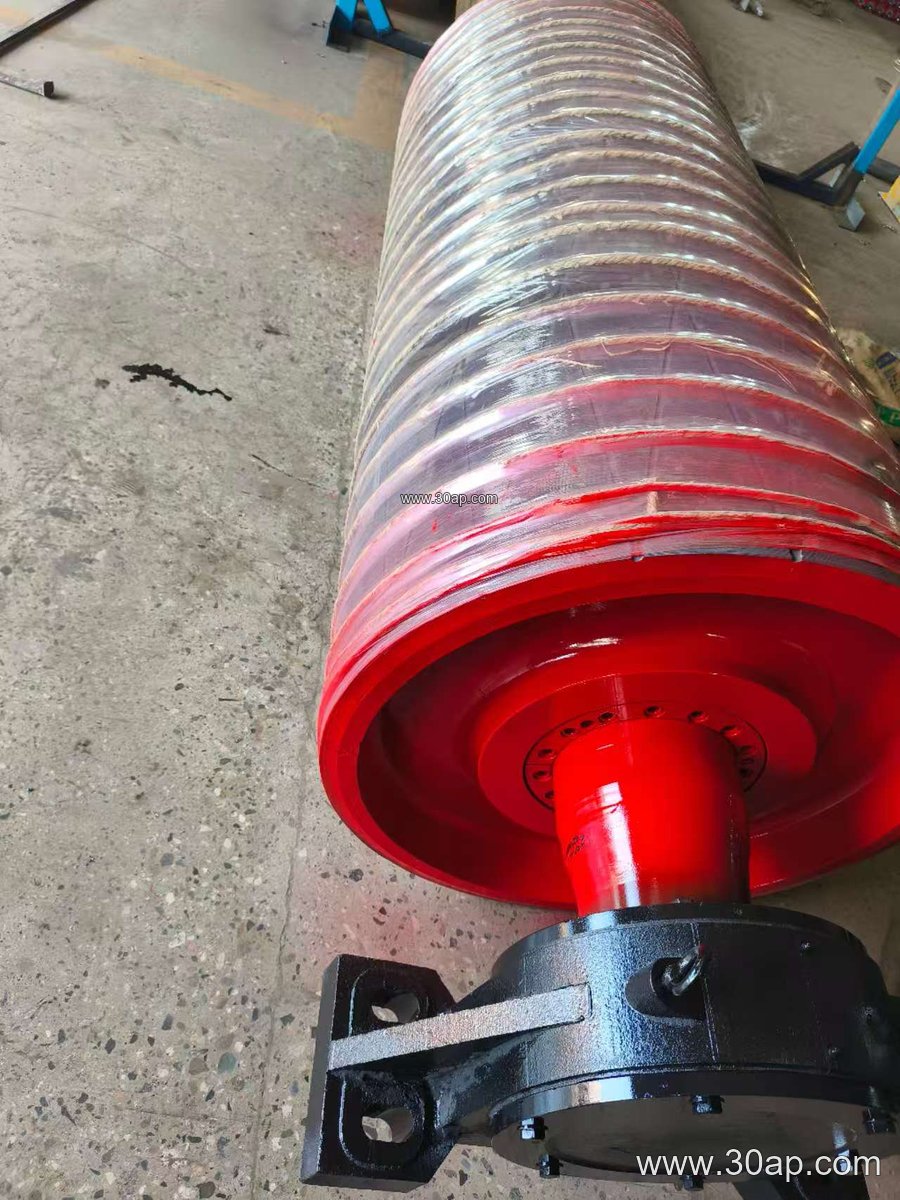
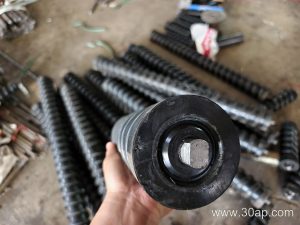
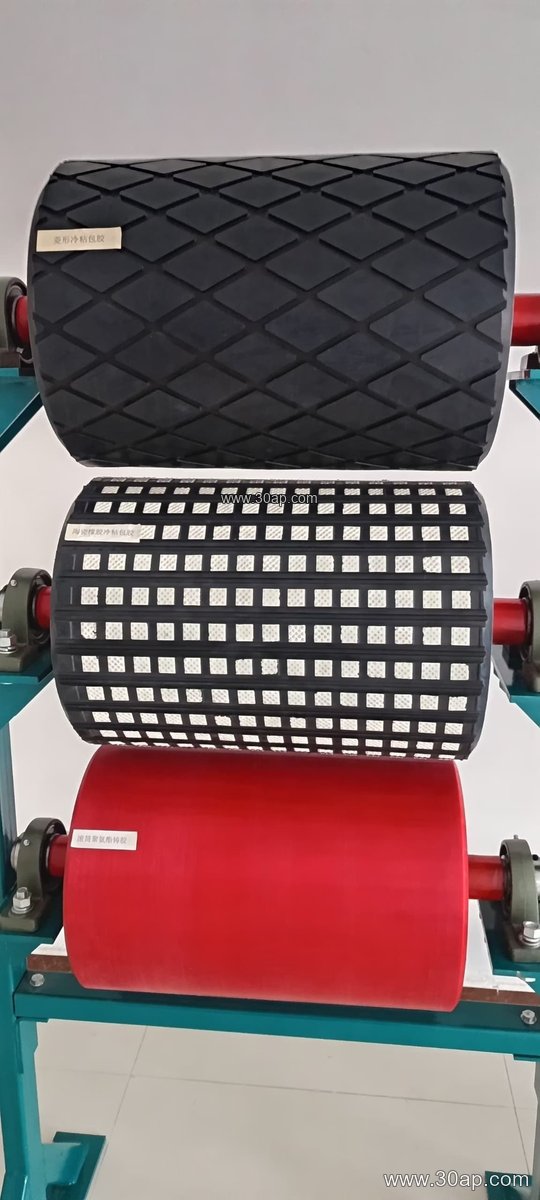
Surface finish is a key choice. Plain, cast rubber, cold-bonded rubber, hot-vulcanized rubber, diamond grooved, herringbone grooved, and ceramic lagging are all available. Lagging thickness commonly ranges from 8 mm to 20 mm. Diamond or herringbone patterns help shed water and fines, while ceramic tiles suit very abrasive iron ore or copper ore duty. A smooth face is still used where belt cleaning is easy and slip risk is low.
Matching the Pulley to the Belt and the Line
Face width is normally slightly wider than the belt. For reference, B800 may use a face around 950 mm, B1000 around 1150 mm, and B1400 around 1600 mm. Diameter is selected from belt tension, wrap angle, and space, not from a single fixed rule, so B1200 × Ø1000 and B800 × Ø500 can both be valid combinations in different installations.
| Reference item | Common range or example |
|---|---|
| Belt width | B650, B800, B1000, B1200, B1400, B1600, B1800 |
| Pulley diameter | Ø400, Ø500, Ø630, Ø800, Ø1000, Ø1250 |
| Shaft diameter | Ø80, Ø100, Ø120, Ø140, Ø160 |
| Lagging thickness | 8, 10, 12, 15, 20 mm |
| Surface form | Plain, diamond, herringbone, ceramic |
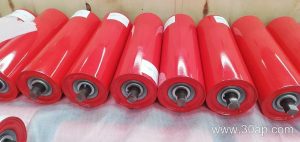
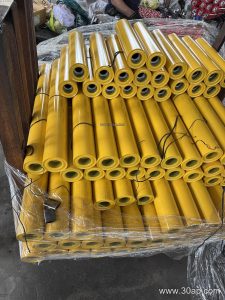
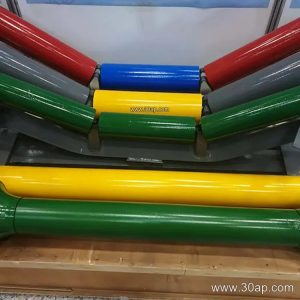
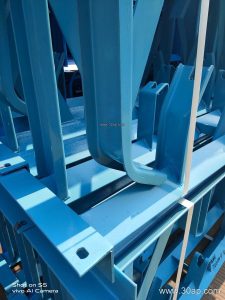
At the head end, the drum must handle the full belt tension and the discharge trajectory. At a tension position, a bend pulley or take-up drum may look similar but serves a different role, so the two should not be treated as interchangeable. The conveyor bracket and bearing housing also need to match the frame, and the idler roller set nearby should be checked so the belt enters the drum squarely.
Where These Drums Are Used
Iron ore and copper ore concentrators rely on large head drums to move crushed rock at high tonnage. A quarry or aggregate line often uses a smaller ore conveyor pulley on a primary crusher discharge belt, while a cement plant uses similar drums on clinker and raw meal conveyors. In a port bulk terminal, the same product handles ship loading and stockyard transfer, where dust control and lagging wear are the main concerns.
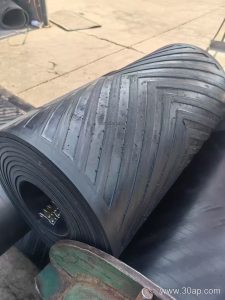
The belt side of the system matters too. A steel cord conveyor belt, an EP conveyor belt, or a multi-ply fabric core conveyor belt each has its own stiffness and tracking behavior, and the drum diameter should be chosen to keep belt stress within the belt maker’s recommendation. For steep inclines, a chevron conveyor belt or a corrugated sidewall conveyor belt may be used, and the pulley face must clear the cleats and sidewalls.
Buyer Checklist Before Ordering
- Confirm duty position: drive, head, tail, take-up, or bend, because these are not interchangeable names.
- State belt width, belt type, running tension, and desired wrap angle.
- Choose lagging form and thickness based on abrasion, moisture, and slip risk.
- Provide shaft diameter and bearing type from the conveyor design, not from belt width alone.
- Check face width, keyway, and mounting dimensions against the conveyor bracket and frame.
- Ask for balance and runout checks, and agree on inspection points before shipment.
For a reliable ore conveyor pulley, the best starting point is a clear duty description and a belt specification. Once the belt, load, and layout are known, the drum diameter, shaft, and lagging can be fixed with confidence. Visit www.bulkconveyorparts.com for related conveyor components and matching pulley options.