What a Vertical Guide Roller Does on a Conveyor
A vertical guide roller is a small-diameter roller mounted with its axis upright, usually at the edges of a conveyor frame or along a transfer point. Unlike the carrying idlers that support the belt from below, this roller contacts the belt edge or a guide structure from the side. Its job is to keep the belt centered, reduce edge wandering, and protect the belt from rubbing against fixed steelwork. In a quarry, a cement plant, or a power plant coal yard, a belt that drifts sideways quickly becomes a maintenance problem, so a well-placed vertical guide roller can be a simple and effective countermeasure.
The same component is also called a vertical edge roller or side guide roller. These are accurate equivalent names for the same product. It should not be confused with a drive pulley, tail pulley, or bend pulley, which transmit power or change belt direction and are not interchangeable with guide rollers.
Construction and Common Configurations
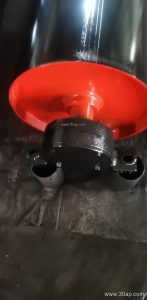
A typical vertical guide roller uses a steel tube shell, a sealed bearing housing, and a short shaft that is clamped or bolted to a bracket. The roller body may be plain steel, nylon-coated, or fitted with a rubber ring to soften contact with the belt edge. Bearing selection is usually matched to the load and shaft size rather than to belt width alone; common bearing numbers such as 6204, 6205, or 6305 appear in light-duty units, while heavier assemblies may use 6306, 6308, or 6310.
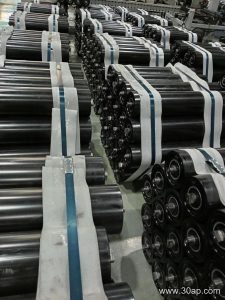
Roller diameters for guide duty are often smaller than carrying idlers. Typical shell diameters include Ø63, Ø76, Ø89, and Ø102 mm, with larger sizes used when the belt is wide or the side load is high. The roller length is short, often 100 to 300 mm, because it only needs to contact the belt edge. Mounting height and offset are set by the conveyor bracket design.
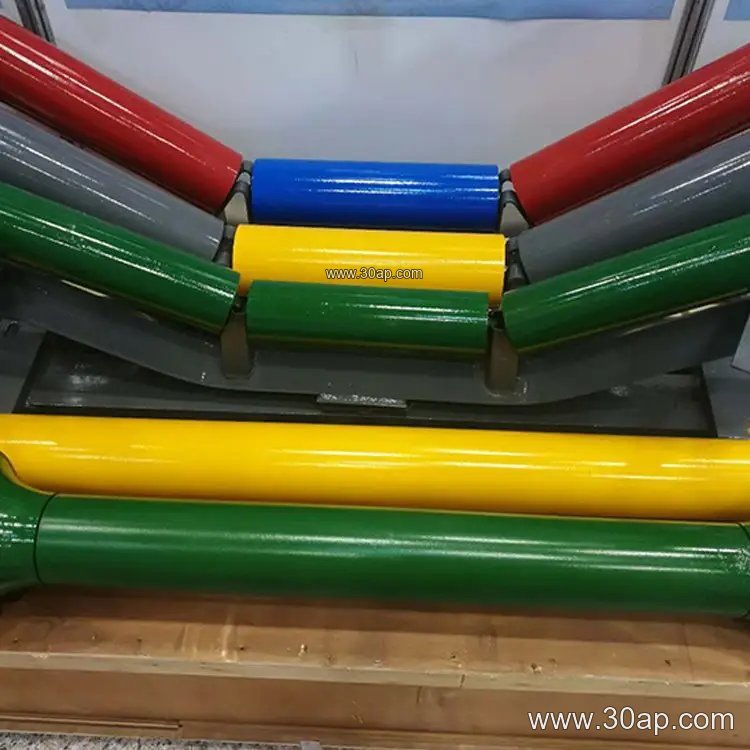
Reference dimensions for orientation
The values below are common examples for planning discussion, not fixed rules. Final dimensions follow the conveyor design and the bracket interface.
- Shell diameter: Ø63, Ø76, Ø89, Ø102, Ø108 mm
- Bearing options: 6204, 6205, 6305, 6306
- Belt width context: B500, B650, B800, B1000, B1200, B1400
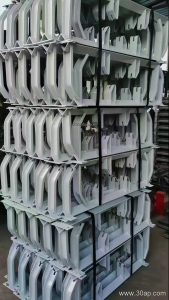
- Mounting: welded bracket, bolted bracket, or adjustable slot
Where Vertical Guide Rollers Fit in Bulk Handling
In a limestone quarry or an aggregate crushing line, belt misalignment often appears near the head end or after a loading point. A vertical guide roller installed just downstream of the skirtboard can hold the belt on center before it reaches the next carrying idler set. In a coal handling system feeding a power plant, side guide rollers help protect the belt edge where the conveyor transitions between structures. Similar arrangements appear in iron ore and copper ore concentrators, in cement clinker transport, and in port ship-loading conveyors where long belts are exposed to wind and uneven loading.
These rollers are frequently used together with a conveyor belt tracking idler, a self-aligning return roller, and a sturdy conveyor bracket. On a steel cord conveyor belt or a heavy-duty mining conveyor belt, edge control becomes more important because replacement costs are high and splice integrity depends on keeping the belt away from fixed structures.
Selection Points for Buyers
Start with the belt width and the space available at the frame edge. A B650 belt and a B1400 belt need different bracket reach even if the roller diameter is the same. Check the belt speed, the expected side load, and whether the roller will run continuously against the belt edge or only during occasional drift. Continuous contact calls for a smooth shell and a well-sealed bearing; intermittent contact may allow a simpler bushing arrangement.
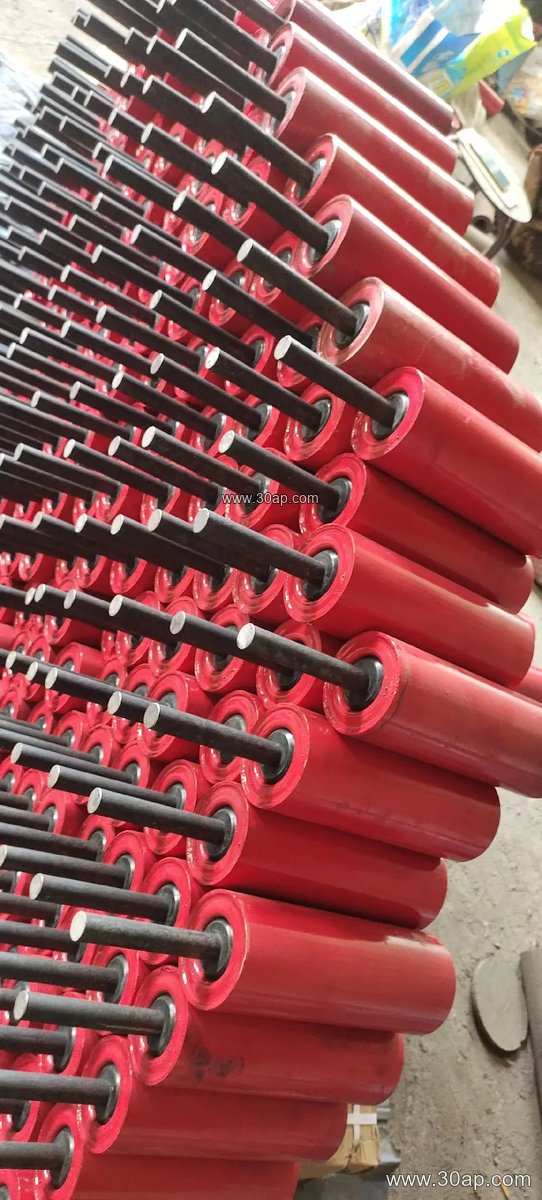
Ask how the roller is lubricated and sealed. Dust from a crusher, fine cement powder, or coal dust will shorten bearing life if the seal is poor. Confirm the shaft material and the mounting method, because a vertical guide roller that cannot be adjusted laterally is difficult to fine-tune after installation. Also verify that the roller does not pinch the belt against a skirt rubber or a fixed guard.
Compatibility with the rest of the conveyor
A guide roller does not replace a training idler, a troughing set, or a conveyor pulley. It works as a supplement. On a fabric core conveyor belt such as an EP conveyor belt or NN conveyor belt, edge stiffness differs from a steel cord belt, so the contact pressure and roller position should be reviewed with the belt supplier. The same applies to heat resistant conveyor belt, flame retardant conveyor belt, and abrasion resistant conveyor belt grades used in cement, coal, and ore handling.
Installation and Maintenance Notes
Mount the roller so that its axis is truly vertical and its face is parallel to the belt edge. A slight toe-in can push the belt rather than guide it. Leave a small clearance so the roller turns freely and does not rub when the belt is empty. During routine inspection, check for flat spots, seized bearings, and worn rubber rings. Replace a damaged roller before it cuts into the belt edge.
In dusty plants, clean the mounting area and confirm that the bracket bolts remain tight. A loose vertical guide roller can shift and create a new misalignment problem. Keep spare rollers and bearings on hand for critical conveyors, and record the shell diameter and bearing number so replacements match the original installation.